











Most people pull onto a trailer lot, choose a trailer, complete the paperwork, and drive away. That’s the part they see. What happens before that sale, and the work required to keep customers hauling safely afterward, is a much bigger picture. Running a trailer dealership is less glamorous than it may look from the road and more demanding than most people expect. It requires inventory planning, technical product knowledge, careful inspections, parts support, service work, accurate paperwork, and a willingness to ask customers more questions than they expected to answer.
Here’s what actually goes into it.
Picking the Right Inventory
Not every trailer belongs on every lot. A dealer in a dense metro area has different customers than a dealer in a rural county where people haul skid steers, compact tractors, building materials, landscaping equipment, tools, and farm supplies year-round. Inventory selection starts with understanding what local buyers haul, how far they travel, what tow vehicles they own, and which trailer configurations are difficult to obtain when demand is high.
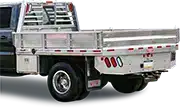
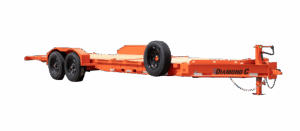
At a dealership like ours, that means stocking a range that covers light residential hauling through serious commercial equipment transport. Diamond C’s current lineup illustrates how wide that range can be. The Diamond C GST is a 6,000 lb. GVWR single-axle telescopic dump trailer for smaller hauling jobs. The Diamond C GTU is a premium 7,000 lb. GVWR tandem-axle utility trailer built with dual 3,500 lb. axles and a 4-inch channel frame. At the heavier end, the Diamond C LPX low-profile equipment trailer is offered in configurations ranging from 15,500 to 24,000 lb. GVWR. An LPX may be appropriate for a contractor hauling a skid steer, mini excavator, or other compact equipment, but only after the trailer’s empty weight, installed options, machine weight, attachments, fuel, and other cargo have all been included in the payload calculation. A Legend aluminum utility trailer may better suit a homeowner moving yard debris or a riding mower. A Wells Cargo enclosed cargo trailer can provide secured transportation for equipment, event supplies, or merchandise, while a Darkhorse Cargo enclosed trailer may serve a contractor who needs tools protected from weather and theft. None of those buyers has exactly the same requirements.
Ordering decisions go much deeper than brand preference. GVWR, actual payload capacity, axle configuration, brake type, tire load range, deck material, coupler rating, jack capacity, ramp system, deck height, cargo-control locations, spare-tire mounting, and overall trailer dimensions all matter. GVWR is the maximum allowable loaded weight of the trailer; it is not the amount of cargo the trailer can carry. Payload is determined by subtracting the trailer’s actual empty weight, including installed options, from its GVWR. On Diamond C’s premium lines, current factory configurations use Lippert axles, with axle quantity, individual axle rating, brake system, wheels, tires, coupler, and frame construction changing according to the selected package. Loading equipment also must be ordered correctly. Depending on the Diamond C model and configuration, the appropriate factory loading system may be MAX Ramps, XDR Ramps, or an X-Ramp rather than a generic ramp package. Buyers may also compare features such as the DM Difference Maker multi-stage coating system on steel Diamond C trailers. A 7,000 lb. GVWR utility trailer and a 15,500 lb. GVWR equipment trailer can both look substantial from across the lot, but their frames, running gear, tires, brakes, couplers, payload capacities, and intended uses are very different. Those differences matter enormously to the person towing them.
We also watch lead times, seasonal demand, and the mix of configurations already on order. Manufacturers build according to production schedules, and popular lengths, axle packages, colors, ramp systems, and optional equipment may not be immediately available. Getting caught without a commonly requested size means losing sales and frustrating customers who need a trailer for work, not six months from now. Staying properly stocked requires ordering ahead, studying what has actually sold, and avoiding the temptation to fill the lot with unusual configurations simply because they were available.
Pre-Delivery Inspection: The Part Nobody Sees
A new trailer may arrive from the factory by carrier looking complete and ready to work. That does not mean it should be handed directly to a customer. Transportation can loosen hardware, damage wiring, affect tire pressure, or expose a small issue that was not visible when the trailer left the production line. Hydraulic trailers, enclosed trailers, tilt trailers, and equipment trailers also have different systems that must be checked before delivery.
Every unit goes through a pre-delivery inspection, or PDI, before it is placed into service or handed to a buyer. That process covers much more than a quick walk around. The exact checklist depends on the type of trailer, but it includes items such as:
- Checking all required lighting, including tail lights, stop lights, turn signals, running lights, clearance lights, identification lights, license-plate illumination, and the trailer connector
- Testing the service brakes, breakaway switch, breakaway battery, charging circuit, and related wiring on trailers equipped with electric or electric-over-hydraulic brakes
- Visually inspecting the frame, tongue or gooseneck, crossmembers, suspension mounts, coupler area, ramp supports, welds, and other structural points for damage or abnormalities
- Confirming that the coupler, gooseneck connection, or pintle eye operates correctly, closes completely, and matches its stated capacity and hitch-ball or pintle size
- Inspecting safety chains, attachment points, hooks, retainers, wiring leads, and emergency-breakaway cable routing for damage and proper operation
- Checking tire size, load range, condition, cold inflation pressure, valve stems, wheel condition, and compatibility with the trailer’s rated configuration
- Verifying wheel-lug torque and inspecting suspension hardware, axle mounting components, U-bolts, equalizers, springs, and fasteners according to the manufacturer’s procedures
- Operating ramps, gates, dovetails, tilt decks, stabilizer legs, jack systems, door hardware, gate pins, and latches through their intended range of movement
- Operating dump and hydraulic systems through a complete cycle where equipped, while checking the pump, battery, controller, cylinder, hoses, fittings, fluid level, safety support, and surrounding structure
- Inspecting the deck, floor, roof, walls, doors, seals, trim, fasteners, tie-down points, stake pockets, and rub rail as applicable to the trailer type
- Confirming that the VIN and certification label agree with the manufacturer’s certificate of origin, invoice, ordered configuration, axle package, and other identifying documents
Anything that does not pass is addressed before the unit is delivered. That may involve repairing a wiring connection, replacing a damaged light, correcting tire pressure, charging or replacing a breakaway battery, adjusting a door or latch, tightening hardware, or contacting the manufacturer about a component that does not match the ordered build. The PDI also gives the dealership an opportunity to confirm that accessories were installed correctly and that nothing was damaged while the trailer was being transported or unloaded.
A customer driving away with a new trailer that has a dead brake light is a problem. A customer discovering that the coupler does not fully engage, the brakes are not receiving power, or a hydraulic hose is leaking is a much more serious problem. A thorough PDI cannot eliminate every issue that may ever develop, but it catches obvious defects, transportation damage, configuration errors, and setup problems before the trailer begins working under load. That is why it is one of the most important steps in the delivery process.
Parts and Service: The Backbone of the Operation
Sales get attention. Parts and service are what keep owners working after the original sale and help turn a one-time buyer into a long-term customer.
Trailers operate in a difficult environment. Bearings, brake components, suspension parts, tires, wiring, connectors, lights, hydraulic systems, jacks, couplers, ramps, doors, and decking are exposed to vibration, water, road salt, dust, mud, heavy loads, and repeated impacts. Owners eventually need replacement components. A trailer may arrive with a damaged 7-way plug, a worn brake assembly, a leaking hub seal, a broken clearance light, a bent jack, or decking that has reached the end of its useful life. Another customer may need the correct 2-5/16-inch hitch ball and properly rated ball mount because the trailer’s coupler does not match the smaller ball already installed on the truck. The solution is to use the correct hitch component, not to force or loosely connect mismatched hardware. Someone else may need a new breakaway switch or battery because the old system is weather-damaged or no longer holds enough charge to apply the brakes during a separation.
Stocking the right parts does not mean keeping every component for every trailer ever produced. It means carrying frequently used service items and knowing how to identify the correct replacement. That includes LED lights and sealed light assemblies, trailer plugs and junction boxes, wiring and connectors, breakaway components, hub caps and grease caps, bearings, races, seals, lug nuts, wheel studs, brake assemblies, magnets, drums, hydraulic fittings, jacks, coupler hardware, tie-down components, and common tire-and-wheel combinations. Bearings and seals should be matched by axle identification, hub or spindle measurements, and part numbers rather than by guessing from the trailer brand. Electric brake components also must match the axle capacity, brake size, mounting pattern, and left- or right-hand position. A 10-inch brake assembly for a lighter axle is not automatically interchangeable with a 12-inch assembly used on a heavier axle. Supporting H&H trailers, Legend aluminum trailers, United enclosed trailers, Delco equipment trailers, and the other brands customers bring in requires a broad working catalog and reliable access to model-specific parts. When an exact item is not on the shelf, identifying and ordering the correct component quickly is still far better than selling a part that merely looks close.
Service work ranges from straightforward maintenance to major repairs. One appointment may involve diagnosing a lighting fault, adjusting manually adjustable brakes, testing voltage at the brake assemblies, or replacing a trailer connector. Another may require removing hubs, inspecting spindles, replacing bearings and races, installing seals, servicing brakes, and setting bearing adjustment correctly. A well-used utility or equipment trailer may need a complete re-deck, structural evaluation, ramp repair, suspension work, or hydraulic diagnosis. Labor time varies with corrosion, previous repairs, trailer construction, parts availability, and the amount of disassembly required. The schedule often fills quickly in spring and summer, when customers begin using trailers heavily again and discover problems that developed during winter storage.
Matching Buyers to the Right Trailer
This is the part that takes the most time and does not always receive the credit it deserves. Selling the trailer closest to the showroom door may be easy, but it is not useful if that trailer cannot safely perform the customer’s job.
A buyer often walks in knowing only that they need “a trailer.” That is about as specific as knowing you need “a vehicle.” The right questions matter: What exactly are you hauling? What does the primary machine weigh? Are there buckets, forks, attachments, pallets, tools, fuel, debris, or other materials going with it? How often will the trailer be used? How far will it travel? What truck and hitch will tow it? Will the cargo be loaded from the rear, from the side, or by forklift? Is a low loading angle important? Does the trailer need ramps, a tilt deck, hydraulic operation, enclosed storage, removable sides, a dump body, or a gooseneck connection? Where will the load’s center of gravity sit, and how will it be secured?
The tow vehicle is often where the first serious conversation begins. A truck’s advertised maximum trailer rating applies only to specific configurations and does not replace the ratings on the actual vehicle’s certification labels and owner’s manual. The customer must consider the truck’s trailer-weight rating, gross combination weight rating, gross vehicle weight rating, rear-axle rating, tire ratings, receiver or gooseneck rating, ball or pintle rating, payload capacity, and allowable tongue or pin weight. Passengers, tools, fuel, aftermarket equipment, and cargo in the truck reduce the payload available for hitch weight. A half-ton pickup with an 8,500 lb. maximum trailer rating cannot tow a trailer that is actually loaded to 12,000 lb. simply because it can move the combination across a parking lot. At the same time, the number printed as the trailer’s GVWR is a maximum rating, not necessarily its current scale weight. The correct decision is based on the trailer’s actual expected loaded weight and every applicable truck, hitch, axle, tire, and combination rating. Commercial buyers also may need to consider driver-licensing rules. The general Class A CDL threshold is a combination GCWR of 26,001 lb. or more when the towed unit has a GVWR greater than 10,000 lb.; the threshold is based on the rated combination, not on the trailer’s rating by itself. Use, exemptions, and operating circumstances still need to be reviewed for the individual customer.
Here’s where it gets interesting: the trailer that appears to be the least expensive can become the most expensive choice if it is too small for the work. A 7,000 lb. GVWR tandem-axle utility trailer may cost less than a 9,890, 14,000, or 15,500 lb. GVWR equipment trailer, but its real cargo capacity is less than 7,000 lb. after the trailer’s own weight is deducted. If a customer regularly overloads the lighter trailer, the result can include overheated tires, damaged bearings, premature brake and suspension wear, bent structural components, poor handling, excessive stopping distance, and exposure to enforcement or liability. A heavier rating also does not give permission to overload the tow vehicle. The best value is the trailer that has enough payload, deck space, running gear, brakes, and structural capacity for the job while remaining compatible with the truck and hitch that will tow it.
We sell brands across a wide range of price points and applications. Diamond C offers everything from utility and dump trailers to LPX and HDT equipment trailers, LPT dump trailers, and FMAX flatbed goosenecks, with FMAX configurations ranging from 15,500 lb. GVWR to as much as 40,000 lb. on specific models and packages. H&H offers utility, equipment, dump, tilt, and enclosed solutions for a variety of users. Legend aluminum trailers appeal to buyers who value lower empty weight and aluminum’s resistance to ordinary red-rust corrosion, especially where winter road salt is common, although aluminum trailers still require cleaning, inspection, and protection from galvanic and chemical corrosion. Darkhorse Cargo, Wells Cargo, and United enclosed trailers serve cargo, trade, recreational, and mobile-workspace applications. Matching the buyer to the correct brand, model, axle package, size, loading system, and options, rather than simply selling whatever is sitting closest to the front of the lot, is how a dealership builds customer relationships that last.
A Quick Q&A on Things Buyers Often Wonder About
Q: Can I just buy the cheapest trailer and upgrade it later?
A: Accessories such as toolboxes, additional tie-down points, spare-tire mounts, winches, and some ramp or storage components may be added later when the trailer and manufacturer allow it. Do not assume that installing larger axles, tires, springs, or brakes increases the trailer’s certified GVWR. GVWR is established for the complete trailer, including the frame, tongue, coupler, running gear, brakes, wheels, tires, and other structural components. An axle swap by itself does not change the VIN certification label or legally recertify the trailer for a heavier load. Buy a trailer with the capacity and configuration your work actually requires.Q: Do I need electric brakes?
A: Indiana law requires a trailer or semitrailer operated at a gross weight of at least 3,000 lb. to have brakes adequate to control, stop, and hold it. The brakes must be controllable by the driver from the tow vehicle and must apply automatically if the trailer accidentally separates. The law requires an effective braking system, not one specific brake technology. Many utility, equipment, dump, and enclosed trailers use electric drum brakes, while some heavier or specialized configurations use hydraulic or electric-over-hydraulic systems. Conventional electric trailer brakes require a compatible brake controller in the tow vehicle, along with a correctly wired connector and a functional breakaway system.Q: How often do trailers need service?
A: Follow the maintenance schedule supplied by the trailer, axle, brake, tire, hydraulic, and component manufacturers. Service intervals vary with axle design and operating conditions. Current Lippert guidance calls for a physical wheel-bearing inspection at least every 12 months or 36,000 miles, whichever comes first, with more frequent attention appropriate for severe use, water exposure, extended storage, contamination, or signs of heat or lubricant leakage. Brakes, breakaway operation, lights, wiring, coupler components, safety chains, tires, wheel-lug torque, suspension, ramps, doors, tie-downs, and hydraulic equipment should also be inspected regularly and before a long trip. Any unusual tire wear, hub heat, noise, looseness, pulling, weak braking, fluid leakage, or electrical problem should be investigated immediately rather than waiting for the next scheduled service.
What It Looks Like Day to Day
Any given day at a trailer dealership involves conversations with buyers who know the exact model and options they want, buyers who need to be walked through the entire selection process, service customers dropping off trailers for repairs, parts customers carrying in an old bearing or light assembly that needs to be identified, and new inventory arriving from manufacturers. At the same time, employees may be preparing paperwork, verifying VIN information, installing accessories, charging hydraulic or breakaway batteries, checking incoming units, answering towing questions, coordinating warranty issues, and helping a customer understand how to connect and operate a trailer safely. None of it follows a perfectly predictable script.
The goal is straightforward: match every customer to the right trailer, make sure the trailer is correctly configured and ready to work when it leaves, explain the important operating and maintenance details, and be available when that customer needs service or parts later. That’s the whole job. The specifications, inspections, repairs, paperwork, deliveries, and conversations are what fill the hours.
If you’ve been thinking about a new trailer or have questions about a unit you already own, come talk to us. We carry brands including Diamond C, Liberty, Delco, H&H, Legend, Wells Cargo, and Darkhorse Cargo, and we’re happy to help you compare payload capacity, dimensions, loading systems, axle packages, brakes, hitch requirements, and the other details that determine whether a trailer is right for your work. You can also browse our current inventory before you make the drive out to Spencer. What’s the one job you’ve been putting off because you didn’t have the right trailer for it?


