













Your trailer is ten years old and the ramp feels like a punishment. It may weigh 80 pounds or more, flex when you load a zero-turn mower, drag at the hinge, and require a full-body pull every time you put it back into transport position. The trailer frame is still solid, the running gear is serviceable, and the deck has several working years left. The question is not automatically whether to buy another trailer. The better question is whether the existing trailer can safely accept a ramp upgrade and, if it can, which style matches the trailer and the equipment.
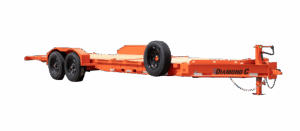
In many cases, a retrofit makes financial sense, but the old $200-to-$800 estimate is too narrow for the entire market. As of mid-2026, published examples include approximately $190 for a two-sided utility-gate lift assist, about $380 for a six-foot steel channel slide-in ramp set, and roughly $700 for a heavy-duty utility gate before freight, installation, welding, coating repair, or taxes. Custom equipment ramps and factory-integrated loading systems can cost considerably more. By comparison, current new utility trailers range from the mid-$3,000s for basic configurations to a base MSRP of $6,791 for the premium 7,000-pound-GVWR Diamond C GTU before options. The retrofit decision should therefore compare the complete installed cost with the remaining condition and value of the trailer, not just the price of the loose ramp.
Know Your Trailer’s Ramp Mount Before You Shop
Ramp storage and ramp attachment are two different things, and confusing them is one of the most common ordering mistakes. Removable ramps may store in rear carriers, side carriers, or under-deck trays, but they normally connect to the trailer through a formed hook, knife edge, angle lip, channel seat, pin, or manufacturer-specific bracket. Individual fold-over ramps use hinge pins or hinge tubes, while a full-width ramp gate generally hinges across the rear crossmember. Measure the loading connection itself as well as the storage opening. A ramp that slides into the carrier can still be unusable if its upper lip does not positively engage the trailer.
Record the clear rear opening, usable deck width, width between the fenders, deck height, dovetail length, ramp working length, ramp width, center-to-center tire or track spacing, hinge spacing, pin diameter, attachment-lip dimensions, and the inside dimensions of the storage carrier. Check whether the trailer has a removable rear rail, rub rail, formed ramp bar, or support sockets. Also look for a serial-number plate, build sheet, or original owner’s manual. Two trailers described as “83-inch utility trailers” can use completely different hinge and ramp geometry.
Deck height and ramp length determine the basic approach angle, but there is no universal angle that is safe for every machine. Assuming the stated ramp length is the sloped working length, a 24-inch rise with a 60-inch ramp produces an angle of about 23.6 degrees. Increasing the working length to 84 inches lowers it to about 16.6 degrees. A dovetail can reduce the effective rise, while a short wheelbase, low mower deck, long attachment, or limited breakover clearance may still cause the machine to hang up at the deck edge. Measure the equipment’s ground clearance and wheelbase instead of relying on one generic angle recommendation.
The ramp must sit squarely against its designed support surface. A removable ramp that rests on a narrow edge, rocks side to side, or can slide away from the deck is not properly fitted, even if its width and length appear correct. The upper connection should resist rearward movement and ramp kick-up, and any retaining pins, latches, or transport locks must be installed before towing.
Slide-In Ramps: The Practical Choice for Most Trailers
Removable slide-in ramps are a practical retrofit for many utility, car-hauler, equipment, and dump trailers because they do not leave a full-width gate standing in the airflow. They can be positioned to match different tire widths and stored under or alongside the deck when not in use. They still require maintenance: the storage carrier can fill with mud, the ramp lip can wear, retaining pins can seize, and an unsecured ramp can slide out during transport. The carrier needs a positive mechanical retainer rather than friction alone.
Do not order a ramp by brand name and deck width alone. Current Diamond C trailers use several purpose-built loading systems depending on model and configuration. The 7,000-pound-GVWR GTU utility trailer uses an EZ Bi-Fold Gate as a current loading option. The LPX equipment trailer can be equipped with 37-inch-wide spring-loaded MAX Ramps or, with the applicable Max-Width Package, a 92.5-inch-wide by 44.25-inch-long X-Ramp. Current FMAX gooseneck models use 44-inch-wide MAX Ramps, while XDR Ramps are 24 inches wide by 60 inches long and incorporate support knees for concentrated equipment. Those systems depend on specific hinges, frame extensions, dovetails, latches, springs, and support geometry, so they should be matched through the trailer’s VIN and build configuration rather than treated as universal bolt-on ramps.
For conventional removable ramps, current manufacturer catalogs show how much designs can vary. Liberty lists a six-foot set built from 3-inch channel, with a listed set weight of approximately 83.5 pounds. Delco offers six-foot slide-in rear ramps that store under the deck on applicable configurations, and H&H offers ramps in carriers on selected deckover models. None of those descriptions makes the ramps automatically interchangeable. The hook profile, carrier size, ramp spacing, support location, and written load rating still have to match the trailer and the machine.
Before using a removable pair, confirm that both ramps are the same model, length, material, and rating. Set them parallel to the direction of travel, place each one directly under the tires or tracks, and make sure both upper ends are fully seated. Keep the trailer coupled to the tow vehicle on firm, level ground, apply the tow vehicle’s parking brake, and use stabilizers or rear support stands when the trailer manufacturer calls for them. Never improvise extra ramp height with loose lumber, blocks, rocks, or stacked scrap steel.
Spring-Assist Hinges: Worth It If You’re Loading Alone
A lift-assist system can be one of the best upgrades for a heavy utility ramp gate, but the correct system depends on the gate and side-rail geometry. Common open-utility designs use enclosed springs with cables or chains mounted along the top rails. Current examples include the two-sided GORILLA-LIFT system, listed at approximately $189.85 and designed for open utility trailers with 12- to 24-inch side rails and four- to six-foot gates, and the Rack’em Double Barrel chain-driven assist, listed at approximately $279.95 and designed for top rails 10 to 15 inches above the floor. These are rail-mounted systems, not universal hinge-pin springs.
Individual fold-over equipment ramps may instead use left- and right-hand torsion springs engineered around a particular hinge tube, spring leg, ramp weight, and range of motion. A spring that physically fits over a hinge pin is not necessarily correct. Too little assistance leaves the ramp difficult to control; too much preload can make it rise unexpectedly, prevent it from staying on the ground, overload the hinge structure, or create a serious pinch and impact hazard. The manufacturer’s installation dimensions and adjustment procedure matter as much as the spring’s nominal size.
Do not assume that a lift-assist system will reduce every gate to a specific felt weight. The result depends on the gate’s actual weight, center of gravity, hinge friction, spring rate, cable or chain attachment point, and adjustment. A properly selected system should allow controlled movement throughout the travel range without slamming down, snapping upward, or going slack. Test it with the trailer unloaded and keep hands, feet, children, and bystanders outside the gate’s path.
Before installation, inspect the rear crossmember, top rails, hinge tubes, hinge pins, welds, cables, rollers, latches, and gate frame. Look for elongation around hinge holes, cracked weld toes, distorted tubing, deep corrosion, loose fasteners, broken mesh, and previous repairs that do not transfer the load into the main structure. Springs store substantial energy. Enclosed-trailer ramp-door torsion assemblies and any system requiring significant spring winding should be serviced by someone familiar with that mechanism.
Full Fold-Down Ramp Replacement
Sometimes the ramp itself is beyond economical repair. Expanded metal may be torn away from the frame, crossbars may be buckled, the gate may be twisted, hinge tubes may be worn through, or an earlier repair may have concentrated the load into a weak section. A replacement gate or complete ramp assembly is the right approach when restoring the old one would leave uncertain load paths or mismatched materials.
Current replacement offerings demonstrate why capacity should never be guessed from dimensions. Liberty lists heavy-duty utility gates in approximately 78-inch and 83-inch widths, built with 2-by-2-inch steel tube and 6-gauge expanded metal. The 83-inch version has recently been listed at about $710 before freight and installation. H&H currently uses model-specific fold-flat, bi-fold, and conventional rear gate designs across its utility lines, while Delco offers rear-gate and slide-in-ramp configurations according to trailer model. Width and mesh thickness describe construction, but they do not substitute for a published working load limit.
When comparing full replacements, check at least five things: the published ramp or gate working load limit, any individual-ramp limit, the conditions required to achieve that rating, the assembly’s own weight, and the compatibility of the hinges, stops, latches, springs, and rear crossmember. Some ramps reach their rating only when support knees are firmly planted on level ground. Others are designed to span from the deck to the ground without intermediate support. Never add a knee, center stand, or jack in a location that the ramp manufacturer has not identified as a structural support point.
Pay special attention to wheel and track loading. A machine’s total weight is not always divided evenly between four tires while climbing. A rear-engine zero-turn may place a high percentage of its weight on the drive tires. A compact tractor with a loader can become front-heavy, while a skid steer or mini excavator can impose concentrated track loads near one edge or crossmember. Turning, braking, dropping an attachment, or allowing one track to climb before the other can place much more load on one portion of the ramp than a simple machine-weight calculation suggests.
Mesh vs. Solid Steel Decking
This is one of the most argued topics in the trailer world, and the correct choice depends on tire size, track type, weather, ramp structure, and how often the ramp must be handled manually.
Expanded metal mesh allows mud, grass, gravel, and water to fall through, and raised expanded metal can provide useful tire traction. It is common on utility ramp gates used for mowers, ATVs, UTVs, and other rubber-tired equipment. The mesh is only the running surface; the surrounding tubes, channels, crossbars, welds, and hinge structure carry the primary bending load. Mesh thickness by itself does not establish the ramp’s capacity. Narrow casters, hand-truck wheels, small motorcycle tires, and solid rubber wheels can catch in large openings, while steel tracks can bend, tear, or polish the mesh unless the ramp is specifically designed for tracked equipment.
Solid steel plate provides a continuous surface for small wheels and can distribute contact across more of the ramp frame, but it is substantially heavier than many people expect. An 84-inch-by-24-inch sheet of 3/16-inch steel plate weighs approximately 107 pounds before adding side rails, crossmembers, hinges, latches, or reinforcement. Checker or tread plate adds texture but can still become slippery when coated with mud, oil, wet grass, or ice. A solid ramp intended for outdoor equipment normally needs cleats, punched traction, aggressive tread, a suitable coating, or another manufacturer-approved traction treatment.
Some of the best mixed-use ramps combine structural side rails and crossmembers with expanded-metal infill, closely spaced cleats, punched plate, or solid strips under the normal tire paths. A hybrid surface can accommodate mowers and ATVs while giving narrower tires a more continuous path. The added strips still have to be supported by the ramp frame; welding thin plate over unsupported mesh does not create a properly rated structural ramp.
Also consider wind resistance. A tall, single-piece mesh gate may create substantial drag and block rearward visibility during towing. A bi-fold gate reduces its upright height, while removable ramps eliminate the gate from the airflow entirely. The better option depends on whether fast loading, low lifting effort, flexible ramp spacing, or reduced towing drag matters most in daily use.
Weight Ratings: Don’t Guess
A ramp does not need to be selected from trailer GVWR alone. Trailer GVWR includes the trailer’s own weight and represents the maximum permitted weight of the loaded trailer. Ramp capacity concerns the machine crossing the ramp, its weight distribution, and the way the ramp is supported. A 14,000-pound-GVWR trailer might carry a machine well below 10,000 pounds after trailer empty weight and tongue weight are considered, but its ramps still must be approved for that machine and its concentrated wheel or track loads. Conversely, installing higher-capacity ramps does not increase the trailer’s GVWR, payload, axle ratings, tire ratings, coupler rating, frame rating, or brake capacity.
Use the following loading situations as a practical reference:
| Loading Situation | Rating That Controls | What Must Be Verified |
|---|---|---|
| Four-wheel mower, ATV, UTV, or compact tractor | Published pair or set working load limit must meet the machine’s actual operating weight | Both ramps remain fully seated and tires stay centered over the structural rails |
| Motorcycle, narrow machine, or uneven approach | Individual-ramp or full-width-gate rating controls | Do not assume each ramp carries exactly half the machine weight |
| Skid steer, excavator, backhoe, or steel-tracked equipment | Ramp system must be specifically approved for concentrated or tracked loading | Required support knees, cleats, spacing, ground conditions, and clearance are used |
| Disabled machine pulled aboard by winch | The same ramp working load limit applies as during self-propelled loading | A winch controls movement but does not remove the machine’s weight from the ramps |
Use the machine’s operating weight, not an optimistic dry or shipping weight. Include fuel, fluids, mower decks, loaders, buckets, counterweights, cabs, ballast, attachments, and any operator who remains on the machine during loading. Confirm whether the equipment manufacturer permits the operator to ride during loading and whether the trailer manufacturer recommends driving or winching that type of machine.
Ramp ratings are valid only under the conditions established by the ramp manufacturer. Do not apply a homemade “dynamic multiplier,” assume that two individually rated ramps automatically create twice the capacity, or add an arbitrary safety factor in place of a published rating. Load at a slow, steady speed. Avoid spinning tires, sudden acceleration, hard braking, turning on the ramp, bouncing an attachment, or stopping with the machine’s heaviest axle directly over an unsupported section. A winch is often the better choice when traction is poor or precise control is needed.
Keep the trailer coupled to a correctly rated tow vehicle during loading and verify that the site is level enough to prevent rolling or side loading. Chocks are a supplement, not a substitute for coupling and parking brakes. Rear stabilizer jacks may be required to prevent the trailer tongue from lifting or the rear suspension from unloading, but they must be placed at manufacturer-approved support locations.
Remember that a ramp upgrade does not alter legal weight classifications. In Indiana, a trailer with a GVWR over 3,000 pounds must have brakes as required by IC 9-19-3-3. For operations subject to commercial-driver licensing rules, the standard Class A threshold is a combination rating or weight of at least 26,001 pounds that includes a towed unit rated or weighing more than 10,000 pounds. A trailer rating above 10,000 pounds by itself does not create the standard Class A requirement when the combination remains below 26,001 pounds, although other commercial, passenger, hazardous-material, or state-specific rules may still apply.
A Q&A Aside
Q: Can I weld new ramp pockets onto an older trailer myself?
A: A properly qualified welder can fabricate a ramp connection, but the job requires more than attaching a pocket wherever it fits. The brackets must transfer the loading force into the rear crossmember and main frame rather than thin sheet, a light rear rail, or an unsupported flange. Do not assume that the frame is ordinary A36 or A572 steel. Trailer frames may use channel, tubing, formed sections, high-strength steel, aluminum, or manufacturer-specific materials and heat-affected-zone requirements. Current Diamond C MAX and XDR ramp frames, for example, use 50 ksi steel, but that does not identify the material in an older trailer from another model or manufacturer. Verify the frame material, section thickness, load path, weld procedure, and required reinforcement before cutting or welding.
Welding also removes the protective finish around the repair. On current Diamond C trailers, the DM Difference Maker coating is a multi-stage factory process that includes blasting, cleaning, primer, topcoat, and controlled curing. A field repair cannot duplicate the complete factory process, so the bare and heat-affected areas must be cleaned and protected with the manufacturer’s approved repair system as soon as possible. Fabrication cost varies with access, reinforcement, removal of wiring or lights, hinge alignment, coating restoration, and whether the old crossmember needs replacement. Get an inspection and written quote instead of relying on a flat per-pocket estimate.
Q: Are aluminum ramps a good upgrade for an older steel trailer?
A: Aluminum can be an excellent choice when daily handling weight is the main problem, and current manufacturers offer aluminum ramp upgrades on applicable configurations. The ramp must still carry a written rating for the machine, connection style, span, and loading method. A high-capacity aluminum ramp may use deeper side rails and substantial crossmembers, so it may not fit an old steel storage carrier even when it is lighter overall. Check for cracked welds, bent flanges, worn attachment hooks, and corrosion around fasteners. Where aluminum contacts steel, use an appropriate isolation method to reduce galvanic corrosion, and never attempt to weld an aluminum ramp directly to a steel trailer.
What Spencer Trailers Recommends
If you are running a utility trailer with a GVWR around 7,000 pounds or less and loading lawn equipment, ATVs, UTVs, or a compact tractor, start with the actual operating weight and tire spacing of the heaviest machine. A properly rated removable steel ramp pair is often the most flexible solution when several machines have different track widths. A full-width gate is more convenient for frequent mower work, and a correctly matched two-sided lift assist can make a heavy gate much easier to manage alone. Current Diamond C GTU trailers use a 7,000-pound GVWR and offer the EZ Bi-Fold Gate, but an older trailer should be matched according to its own serial number, structure, and hinge layout.
For equipment trailers in the 10,000- to 14,000-pound class, do not select ramps from the trailer rating or price difference alone. Identify the heaviest machine, its front and rear axle or track loading, attachment weight, tire or track spacing, and required approach angle. Rubber-tired compact equipment may work with conventional channel ramps when the written rating and support conditions are correct. Skid steers, mini excavators, backhoes, and other concentrated machines should use ramps designed for that loading pattern, including support knees, cleats, hinge systems, and rear-frame reinforcement where specified.
Do not overlook the cost of making the old trailer ready for the new ramp. A sound retrofit may require hinge repair, rear-crossmember reinforcement, new transport latches, spring-assist hardware, storage retainers, wiring relocation, fresh conspicuity tape, light protection, and coating repair. If those costs are added to worn decking, tires, brakes, suspension components, or a corroded frame, replacing the trailer may make more sense. If the frame and running gear are healthy, however, a correctly engineered ramp can add years of useful service without replacing an otherwise dependable trailer.
Spencer Trailers sells Diamond C, H&H, Liberty, and Delco trailers, and our team can help identify the appropriate OEM component or a properly rated retrofit for your application. Parts availability, manufacturer compatibility, freight, and lead time vary, so bring the trailer VIN or serial number whenever possible. Stop by our lot at 291 West State Hwy 46 in Spencer, Indiana, or reach out through our contact page with your trailer’s manufacturer, model, year, GVWR, deck height, rear opening, current hinge or ramp connection, and storage-carrier dimensions. Also provide the make, model, operating weight, tire or track width, and attachments for the equipment you plan to load.
If you are still deciding whether a retrofit is the right call or whether it is time for a new trailer altogether, take a look at what we currently have in stock and compare the complete installed repair cost with the features, payload, ramp system, warranty, and remaining service life of a replacement. A new trailer is not automatically the cheaper choice, but a ramp upgrade should never be used to hide a weak rear crossmember, overloaded running gear, inadequate brakes, or a frame that has reached the end of its working life.
What is on your trailer right now, what equipment are you loading, and what part of the process is making you miserable? Those details are usually the fastest path to the right ramp, gate, lift assist, or replacement trailer.


