








You haul every day. Your tools need to be where you need them, secured against theft, protected from weather, and accounted for in your truck and trailer weight limits. So here is the real question: does a crossbed toolbox in your truck make more sense than a tongue or A-frame box on your trailer? The answer is rarely one or the other. For many working haulers, the best setup uses both, with each box carrying a different category of gear.
Let’s break down where each type shines, where it creates problems, and how to match your storage setup to the way you actually work.
Crossbed Truck Toolboxes: The Go-Anywhere Option
A crossbed box, sometimes called a crossover or saddle box, mounts across the front of a pickup bed behind the cab and rests above the bed rails. Full-size boxes are commonly sold in roughly 69-inch to 72-inch classes, while compact, slim, deep, angled, and truck-specific versions use different dimensions. Many full-size bodies are approximately 19 to 22 inches front-to-back, but the advertised size does not guarantee a fit. The box’s overall width, the width and depth of the portion that hangs inside the bed, the height above the rails, and any interference with a tonneau cover, rear window, bed camera, cab guard, or wheel-well area all have to be checked against the specific truck. Current full-size UWS and Dee Zee boxes illustrate how much dimensions can vary even within the same general category. :contentReference[oaicite:0]{index=0}
The big win is accessibility and independence from the trailer. Many single-lid crossover boxes can be opened from either side of the pickup, although the lock location and opening method vary by model. You can reach your cordless tools, inspection equipment, paperwork, gloves, and basic repair supplies without unhitching or walking around the trailer. Because the box travels with the truck, those items remain available when you leave the trailer at a jobsite, storage lot, customer property, or service shop.
Weight is a real consideration, but broad rules such as “all aluminum boxes weigh 60 to 90 pounds” are not reliable. Current full-size aluminum examples can weigh around 45 to 60 pounds, while a comparable steel box may be around 90 pounds or more. Heavy commercial boxes, deep boxes, reinforced lids, drawer systems, and accessories can add substantially more. Products such as Delta Pro boxes and the WEATHER GUARD 127 family should be evaluated by their exact model specifications rather than by brand alone. The WEATHER GUARD 127 is a current aluminum saddle-box family with approximately 11 cubic feet of storage, while current UWS and Dee Zee listings show how construction and published weight differ by size and design. :contentReference[oaicite:1]{index=1}
The empty box is only the beginning. A few chains, impact sockets, jacks, recovery gear, power tools, batteries, and spare parts can turn a light aluminum box into several hundred pounds of cargo. That weight counts against the pickup’s payload, Gross Vehicle Weight Rating, rear Gross Axle Weight Rating, and tire capacities. Do not assume every half-ton has 1,500 to 2,000 pounds available. Payload varies widely by cab, bed, drivetrain, engine, trim, options, passengers, and installed equipment. Use the tire-and-loading label on the driver’s door jamb, then subtract passengers, the toolbox, its contents, hitch equipment, and every other item carried by the truck.
Low-profile aluminum boxes are worth considering when rear-window visibility, bed-camera visibility, or access to a gooseneck hitch matters. A low-profile lid generally sits lower above the bed rails, but “low profile” does not mean the entire box is shallow; much of the storage body may extend below the rails. UWS and Dee Zee both offer current low-profile aluminum configurations, along with multiple sizes and latch designs. Pricing changes by size, finish, lock system, seller, and freight cost, so a fixed price range quickly becomes outdated. Compare the delivered price of the exact model that fits the truck. :contentReference[oaicite:2]{index=2}
Steel can be a good choice when impact resistance, stiffness, and commercial-duty construction matter more than minimum weight. Its tradeoffs are additional payload consumption and the possibility of corrosion where paint or powder coating is chipped. Aluminum substantially reduces red-rust concerns and usually saves weight, but it can still oxidize, crack around stressed mounting points, or suffer galvanic corrosion where dissimilar metals remain wet. Neither material is maintenance-free.
What to Watch For
- Install the box with the hardware and mounting locations specified by its manufacturer. Many crossover boxes use J-bolts, clamps, brackets, or stake-pocket hardware, but the exact method varies. Make sure the hardware engages solid structure and is not tightened only against a plastic bed liner or loose rail cap. Use protective pads where specified, tighten fasteners evenly, and recheck them after the first few loaded trips. Do not drill an aluminum truck bed or other structural panel unless the truck and toolbox instructions specifically allow it. :contentReference[oaicite:3]{index=3}
- Single-lid, gull-wing, and dual-lid designs have different access advantages, but lid style alone does not determine weather resistance. Gasket design, lid stiffness, striker adjustment, drainage, installation alignment, and maintenance matter more. Look for a continuous gasket, reinforced lid, protected latch mechanism, replaceable lift supports, and a tub that does not twist when bolted down.
- If you run a gooseneck or fifth-wheel setup, check more than the distance between the box and the hitch. Verify clearance for the gooseneck coupler or fifth-wheel pin box, trailer overhang, safety-chain connections, hitch handle, ball access, electrical connection, and the truck’s tailgate through the full range of turning and articulation. A combination that clears while parked straight can still make contact during a tight turn, driveway transition, or uneven jobsite approach. Low-profile fifth-wheel-compatible chests are available, but compatibility still has to be confirmed for the complete truck, hitch, trailer, and toolbox combination. :contentReference[oaicite:4]{index=4}
Trailer Tongue Boxes: Storage That Stays With the Trailer
A tongue-mounted toolbox sits on or between the trailer’s tongue members, generally behind the coupler and ahead of the deck or front wall. Straight-tongue trailers may use a rectangular box, while A-frame trailers commonly use a tapered box designed to fit the converging frame members. These boxes are popular on utility trailers, equipment trailers, car haulers, dump trailers, and enclosed cargo trailers because they keep straps, chains, wheel chocks, load binders, spare electrical parts, gloves, and trailer-specific paperwork with the trailer that needs them.
The catch is weight distribution. The box, mounting hardware, and everything inside it increase the trailer’s actual weight and reduce its remaining payload capacity. Because a tongue box is mounted ahead of the axles, it will also usually increase the load carried at the hitch. The exact increase is not automatically equal to every pound placed in the box; it depends on the box’s position relative to the axle group and coupler. A box mounted farther forward generally transfers a larger share of its weight to the hitch than the same box mounted closer to the axle group.
For a conventional bumper-pull trailer, a commonly specified starting range is approximately 10 to 15 percent of the trailer’s actual loaded weight on the tongue, unless the trailer or tow-vehicle manufacturer specifies something different. That percentage applies to the weight the trailer actually carries during the trip, not automatically to its maximum GVWR. On a trailer loaded to 7,000 pounds, 10 to 15 percent would equal approximately 700 to 1,050 pounds. If that same trailer weighs only 4,500 pounds loaded, the comparable range would be approximately 450 to 675 pounds. The final setup should be confirmed with a scale and must remain within the trailer coupler, ball or pintle, receiver, weight-distribution hitch, truck payload, rear-axle, and tire ratings. :contentReference[oaicite:5]{index=5}
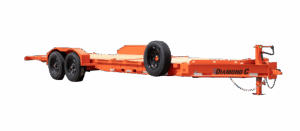
A current Diamond C GTU is a useful 7,000-pound-GVWR example. It is a bumper-pull tandem-axle utility trailer with two 3,500-pound Lippert brake axles, an 83-inch bed width, and a 4-inch channel frame. Its published standard features include a lockable steel tongue storage box. That factory configuration is engineered as part of the trailer, but the box and its contents still count toward the finished trailer’s empty weight, loaded weight, available payload, and tongue weight. Owners adding or replacing storage should not assume that GVWR increases simply because a larger box fits. :contentReference[oaicite:6]{index=6}
Aluminum tongue boxes can provide useful weight savings, but box width alone does not establish weight or capacity. A compact one-piece aluminum box may be relatively light, while a larger reinforced box with a thick lid, internal trays, multiple latches, or heavy mounting hardware can weigh considerably more. Better Built and Buyers Products offer trailer and utility-storage products, but fitment should be based on the exact drawing, lid-swing requirement, mounting instructions, and tongue geometry. UWS currently offers aluminum tongue boxes for both straight-tongue and A-frame trailers, including different width classes rather than one universal design. :contentReference[oaicite:7]{index=7}
Access is usually less convenient than a crossbed truck box because you have to walk to the front of the trailer, and the coupler, jack, spare tire, winch, battery enclosure, hydraulic components, or trailer nose may limit where you can stand. Most tongue-box lids open upward, often toward the trailer body, so the lid needs enough clearance to open fully without striking the front wall, jack handle, battery box, or other equipment. The lid must also remain positively latched while towing. A failed latch can allow the lid to lift into the airflow, damage the hinges, scatter cargo, or block the driver’s view.
Before mounting a box, check the coupler latch, safety-chain attachment points, breakaway switch and cable, seven-way plug, jack controls, wiring, brake lines, battery service access, hydraulic pump access, spare-tire removal, and any weight-distribution-hitch brackets. Do not drill, cut, or weld the trailer tongue without approval from the trailer manufacturer or a qualified trailer repair facility. Tongue members are structural, and hidden wiring or brake components may be routed through or alongside them.
Security on Tongue Boxes
This is where many low-cost tongue boxes fall short. An exposed padlock hasp, thin lid edge, light hinge, or mounting bolt that can be reached from outside the box may be defeated quickly. A better design uses a recessed or protected lock, a lid that overlaps the tub, reinforced latch points, concealed hinge hardware, and mounting fasteners that cannot be removed while the lid is locked. A lockable toolbox is a theft deterrent, not a safe, so expensive cordless tools and high-value equipment should not be left in an unattended trailer overnight simply because the lid is locked.
If the box uses a separate padlock, choose a weather-resistant lock that closely fits the hasp and leaves as little exposed shackle as possible. A shrouded or closed-shackle design is often harder to attack than a long, exposed shackle, but it must fit the box correctly and allow the latch to close without forcing it. For the box itself, through-bolts with appropriate backing plates and tamper-resistant or concealed hardware are generally more secure than light clamps that remain accessible from underneath.
Welding a box directly to the tongue is not automatically the strongest or safest solution. Welding can damage coatings, distort thin box material, create corrosion points, affect heat-treated or engineered components, and make future service difficult. It can also create a dissimilar-metal problem if an aluminum box is attached to a steel frame incorrectly. Use the box manufacturer’s mounting method, isolate aluminum from bare steel where appropriate, seal drilled holes, protect exposed metal, and confirm that any modification is acceptable to the trailer manufacturer.
A-Frame Toolboxes: The Enclosed Trailer Standard
An A-frame toolbox is a tapered tongue box designed to fit on or between the converging members of an A-frame trailer tongue. It normally mounts above the tongue structure behind the coupler and in front of the trailer body; it is not simply hung underneath the frame. This design is common on enclosed cargo trailers, utility trailers, car haulers, landscape trailers, and some recreational trailers because it uses the wedge-shaped area between the tongue rails more efficiently than a wide rectangular chest.
A-frame boxes are available in aluminum, powder-coated steel, and molded polymer, so they do not necessarily match the trailer’s exterior skin. Sizes and shapes vary considerably. A compact box may be intended only for chocks, straps, gloves, and electrical adapters, while a larger unit may hold chains, binders, a small jack, or service supplies. UWS, for example, currently offers tapered aluminum tongue boxes in more than one width and describes them as compatible with many A-frame applications. Compatibility still depends on the actual trailer dimensions and surrounding equipment. :contentReference[oaicite:8]{index=8}
Do not choose a box only because its maximum width fits between the tongue rails. Compare the front width, rear width, overall depth, height, lid overhang, hinge location, mounting flange, and required lid-opening arc. Measure the space with the jack in its operating positions and confirm that the tow vehicle can turn sharply without the box contacting the bumper, tailgate, spare tire, or hitch equipment. On an enclosed trailer, also verify that the lid will not strike the sloped nose or front trim.
Large tongue boxes are sometimes used to transport generators, compressors, batteries, or fuel-related equipment, but the box must be suitable for that use. Do not operate a portable generator or fuel-burning engine inside a closed toolbox. Heat, exhaust, carbon monoxide, spilled fuel, and electrical components can create severe fire and poisoning hazards. Battery installations also require correct securement, cable protection, ventilation where applicable, overcurrent protection, and separation from loose metal tools that could short the terminals.
The weight concern is the same as with any other tongue-mounted storage. An A-frame box mounted ahead of the axles increases total trailer weight and normally increases hitch load. Mounting it close to the coupler does not make that weight disappear; in fact, placing a load farther forward generally gives it more leverage on the hitch. The benefit of the tapered design is efficient use of space and a cleaner fit between the frame members, not a reduction in the laws of weight distribution.
An A-frame box may look more integrated than a rectangular box perched above a straight tongue, but it should not be treated as hidden storage. It remains visible and accessible at the front of the trailer. Real security comes from the box construction, latch, lock, concealed mounting hardware, trailer parking location, lighting, cameras, hitch security, and removing valuable items when the trailer is unattended.
Side-by-Side: Which Handles What Better
| Factor | Crossbed Truck Box | Tongue / A-Frame Box |
|---|---|---|
| Accessibility | Usually high; many models can be reached from either side of the pickup | Moderate; access may be restricted by the jack, coupler, trailer nose, or other tongue equipment |
| Travels with | Truck, so the tools remain available when the trailer is unhitched | Trailer, so load-control and trailer-service gear stays with the correct trailer |
| Weight impact | Consumes truck payload and can increase rear-axle and tire loading | Consumes trailer payload and usually increases hitch load because it is ahead of the axles |
| Theft resistance | Depends on lid, lock, mounting, truck security, and parking location | Depends on lid, lock, mounting, trailer security, and parking location |
| Best use | Personal tools, daily-use equipment, and items needed without the trailer | Trailer-specific gear such as straps, chains, binders, chocks, adapters, and spare electrical parts |
| Material options | Aluminum, steel, and reinforced polymer | Aluminum, steel, and reinforced polymer, depending on design |
Materials: Aluminum Wins in the Midwest
In Owen County and across southern Indiana, toolboxes are exposed to rain, winter deicers, road spray, mud, gravel, and humid summer weather. Aluminum is often the practical choice when reducing empty weight and limiting red rust are priorities. Steel remains a legitimate heavy-duty option, but its coating has to be inspected and repaired when scratches, drilled holes, worn corners, hinge areas, or mounting points expose bare metal.
There is no defensible rule that a powder-coated steel box will last only five years or that every aluminum box will last 15 to 20 years. Service life depends on material thickness, lid design, hinges, latch construction, mounting, road exposure, drainage, cleaning, coating quality, overloading, and whether damage is repaired. A well-built steel box that is cleaned and touched up can serve for many years. A lightly built aluminum box can fail early if its lid flexes, its mounting points crack, or heavy cargo repeatedly strikes the tub.
Many aluminum crossover and tongue boxes use formed or welded sheet aluminum, often with a diamond-tread surface. Extrusions may be used for rails, lid edges, or reinforcements, but it is inaccurate to describe every aluminum toolbox as an extruded-aluminum box. Products from Delta Pro and UWS use their own combinations of sheet thickness, reinforced lids, latches, trays, and structural features. Gauge, bracing, lid stiffness, hinge length, latch engagement, and mounting design are more useful comparisons than the appearance of the diamond plate alone. :contentReference[oaicite:9]{index=9}
Aluminum also needs correct installation. Bare aluminum resting directly against painted or bare steel can trap moisture and contribute to galvanic corrosion, especially in salty conditions. Use compatible isolating pads, coated brackets, washers, sealants, and fasteners as directed by the manufacturer. Clean road salt from the box and mounting area, keep drain paths open, lubricate locks with an appropriate dry or manufacturer-approved lubricant, and replace damaged lid seals before water intrusion becomes a routine problem.
Reinforced polymer boxes should not be dismissed automatically. A well-designed UV-stabilized polymer box will not rust and can work well for lighter trailer gear. The tradeoff is that security, hinge strength, lid stiffness, mounting reinforcement, and resistance to impact or prying vary widely. Judge the complete design and intended duty rating rather than assuming every plastic box is weak or every metal box is secure.
What Most Working Haulers Actually Run
A practical setup for many people pulling a utility or equipment trailer out of Spencer is a crossbed box in the truck for personal and frequently used tools, plus a compact tongue box on the trailer for load-management gear. The crossbed box can handle wrenches, meters, tape, inspection tools, cordless tools, batteries, first-aid supplies, and items used across multiple jobs. The tongue box can hold straps, binders, chains, softeners, chocks, spare light components, an electrical adapter, gloves, and the equipment used specifically with that trailer.
That division also makes inventory easier. When you inspect the trailer before a trip, you can confirm that its securement equipment is present without searching the pickup. When the trailer is left behind, you do not lose access to the tools needed for the rest of the workday. It also discourages using the tongue box as a catch-all until it becomes overloaded with tools that should have been counted against the truck’s payload instead.
If you are pulling an enclosed trailer from our current inventory and its tongue geometry accepts an A-frame box, the tapered design may provide a cleaner and more space-efficient installation than a generic rectangular chest. It is not automatically the right answer, however. The box has to clear the coupler, jack, breakaway equipment, wiring, battery, trailer nose, and tow vehicle while preserving proper tongue weight. Factory-installed storage or a trailer-specific mounting arrangement is generally preferable to improvising clamps or drilling structural members.
Different trailers also use tongue space differently. A dump trailer may need that area for a battery, hydraulic pump, charger, controls, tarp hardware, or spare tire. An equipment trailer may have a winch, toolbox, jack, adjustable coupler, or weight-distribution brackets. A Diamond C GTU includes a lockable steel tongue box as a published standard feature, while other models and manufacturers may use a different box, optional storage, or no tongue storage at all. Check the VIN-specific trailer, current manufacturer specifications, and the actual unit on the lot instead of assuming one configuration applies across an entire brand. :contentReference[oaicite:10]{index=10}
If you are still figuring out your trailer setup or want to see what tongue configurations are available on current Diamond C, H&H, Darkhorse Cargo, or other models, reach out to us at Spencer Trailers at (812) 829-0226. We are located at 291 West State Hwy 46 in Spencer, IN 47460, and we can help you compare the available tongue space, factory storage, trailer ratings, and compatibility concerns on a specific unit before you buy or modify it. :contentReference[oaicite:11]{index=11}
One Question Worth Asking Before You Buy
Will the gear in this box always travel with the trailer, or do I need it available when the trailer is unhitched? That answer settles most of the truck-versus-trailer decision. Trailer-specific gear such as straps, chains, binders, chocks, electrical adapters, and spare trailer parts usually belongs on the trailer. Personal tools and equipment used across multiple jobs usually belong in the truck. Mix those categories carelessly and you will either walk to the wrong rig, leave essential gear behind, or haul the same unnecessary weight every day.
Then ask a second question: what does the complete box weigh when loaded? Weigh or inventory the contents instead of relying on the empty-box specification. For the pickup, count the box and its contents against payload and verify the rear-axle and tire loads. For the trailer, count the box, brackets, and contents against payload, then measure the loaded tongue weight with the cargo positioned as it will be on the road. Moving equipment rearward merely to offset an overloaded tongue can create too little tongue weight and increase sway, so correct the complete loading plan rather than chasing one number.
If you are adding a tongue box to a trailer that already operates at or near its GVWR, the box does not create additional capacity. Its installed weight and contents replace payload that would otherwise be available for cargo. Aluminum may be the best choice when saving weight is important, but construction, security, corrosion isolation, and fit still matter. Check out our full trailer inventory to compare current tongue configurations, factory storage, GVWR, empty weight, and available options before your next build-out.


