







Imagine this: your crew rolls into the stadium lot three hours before kickoff, the rear ramp or cargo doors open on a 7×16 enclosed trailer, and within minutes you have a big-screen TV, a propane grill or griddle, a quiet inverter generator, folding tables, weather protection, and enough cooler capacity for the entire group. That kind of setup does not require a purpose-built concession trailer, but it does require realistic planning. The trailer must match the tow vehicle, every heavy item must be secured for highway travel, fuel-powered equipment must be operated safely, and the entire setup must comply with the stadium’s current tailgating rules.
The good news is that you do not have to commission a custom rig from scratch. An enclosed cargo trailer or a well-equipped utility trailer you already own, or can pick up from our current inventory, can serve as the foundation. The real work is choosing equipment that fits the trailer’s payload capacity, building around properly rated anchor points, keeping the electrical system safe, and developing a setup routine that lets you enjoy game day instead of spending an hour untangling cords and ratchet straps. Spencer Trailers’ inventory changes regularly and includes enclosed, utility, equipment, dump, and other trailer categories from several manufacturers.
Enclosed vs. Open Utility: Which Trailer Fits Your Tailgate?
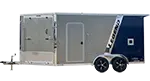
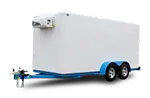
Both trailer styles can work, but they solve different problems. An enclosed cargo trailer, such as a Wells Cargo FastTrac or FastTrac Deluxe, a Darkhorse Cargo enclosed trailer, or a Legend enclosed model in the 6×12 to 7×16 range, gives you lockable, weather-protected storage for electronics, serving equipment, chairs, tables, and other gear. It also gives you walls and framing that can support professionally installed shelving, backing plates, cabinets, and television mounts. Interior height varies by model and option package, so do not assume every 7-foot-wide trailer has a 7-foot interior. Current 7×14 and 7×16 Darkhorse configurations in Spencer Trailers’ inventory are available with 7-foot interior heights, while many smaller single-axle models use a 6-foot-6-inch interior. Wells Cargo continues to offer FastTrac and FastTrac Deluxe cargo-trailer lines, while Legend offers single- and tandem-axle enclosed models in several common sizes.
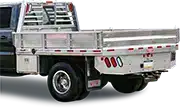
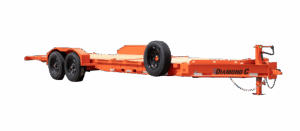
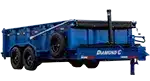
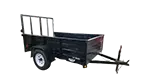
Open utility trailers are usually faster to load, easier to clean after a muddy or greasy weekend, and often less expensive than a comparably sized enclosed trailer. H&H’s current utility lineup includes steel and aluminum models with rail, solid, or wood-side configurations, bed widths up to 82 inches, and GVWR choices from 2,990 to 7,000 pounds in its standard utility range. A current Diamond C GTU is another strong open-trailer option: it uses an 83-inch-wide bed, tandem axles, a 7,000-pound GVWR, and available deck lengths from 14 to 20 feet. Either style has more than enough room for coolers, tables, a canopy, a generator, and outdoor cooking equipment when the load is distributed and secured correctly. The tradeoff is exposure to rain, road spray, dust, wind, and theft, so weather-sensitive equipment needs waterproof covers or enclosed storage boxes.
For repeat tailgaters who travel long distances, arrive the night before, or want a permanent storage and entertainment layout, an enclosed trailer usually provides the most convenience. For local, same-day events where everything will be unloaded into the parking space, an open utility trailer can reduce purchase cost, simplify cleanup, and provide easier access from all sides. Before choosing either one, check the stadium’s current rules for trailer length, parking-space limits, propane, open flames, generator hours, fuel storage, amplified sound, and whether oversized vehicles require a separate pass.
The Big Three: Grill, TV, Generator
Most high-effort tailgates revolve around three major pieces of equipment: outdoor cooking equipment, a television, and a power source. These are also among the heaviest, most expensive, and potentially hazardous items in the trailer. Each one needs a dedicated transport position, properly rated restraints, and a setup plan that keeps heat, exhaust, fuel, cords, and foot traffic separated.
Grills
A full-size freestanding propane grill can work well, but its tall cart, wheels, folding shelves, and top-heavy firebox make it vulnerable to tipping during sudden braking or evasive maneuvers. Lock the casters if they are designed to lock, fold or remove side shelves when possible, prevent the lid from opening, and secure the grill to rated floor or wall anchors using at least two independent restraints. Do not rely on wheel locks, bungee cords, the trailer wall paneling, or a single strap wrapped around the grill lid. Use straps and anchors with clearly marked working load limits, protect the straps from sharp edges, and follow the grill manufacturer’s transport instructions.
Disconnect a removable propane cylinder before transport unless the appliance manufacturer specifically provides an approved transport arrangement. Close the cylinder valve, install the required plug or protective cap when applicable, keep the cylinder upright, and secure it so it cannot slide, roll, or tip. A properly designed exterior cylinder rack or ventilated open-trailer location is preferable to leaving a cylinder inside a closed trailer. Remove the cylinder promptly after arriving, keep it away from ignition sources and excessive heat, and never leave it sitting in a hot enclosed trailer. At the tailgate, place the grill outdoors on a stable surface with the clearances specified by its manufacturer. Do not cook inside an ordinary cargo trailer or directly under a low canopy, beside an open trailer door, or against combustible wall panels.
TVs
Mounting a TV inside an enclosed trailer is worth doing correctly. The mount must be rated for the television’s size and weight, but the rating printed on the mount is only part of the job. The mount also needs to be attached to structural framing or substantial backing installed across multiple wall members. Thin aluminum skin, decorative wall paneling, adhesive fasteners, and hollow-wall anchors are not suitable primary supports for a television that will experience repeated vibration and impact loads on the road. Before drilling, identify the wall-stud material and spacing, avoid wiring and exterior seams, and ask the trailer manufacturer or dealer whether additional blocking or through-bolting is recommended. A locking travel position or removable TV arrangement is preferable to allowing an articulating arm to swing while towing.
For an outdoor setup, use a stand designed for the television’s size and outdoor conditions, then secure the stand independently to the trailer or another rated anchor. A weighted base alone may not be enough when wind hits the broad face of a television. Lower the screen when high winds are forecast, do not use an indoor television where rain or condensation can reach it, and route the power and signal cables where guests cannot trip over them. A weather-resistant display costs more, but it is the safer long-term choice for tailgaters who regularly operate in damp, cold, dusty, or windy conditions.
Generators
Choose a generator by adding the running watts of everything that may operate simultaneously and then accounting for the higher starting demand of refrigerators, freezers, fans, and other motor-driven appliances. A television, LED lighting, device chargers, and a small fan may need much less power than people expect, while a refrigerator, electric griddle, coffee maker, microwave, or space heater can change the calculation quickly. Compact inverter generators in roughly the 2,500- to 4,000-watt maximum-output class are common choices because they provide regulated power for electronics and usually operate more quietly than conventional open-frame generators. For reference, the current Honda EU3200i is rated at 2,600 running watts and 3,200 maximum watts, weighs 59.1 pounds dry, and is rated at 54 to 58 dB(A), depending on load. Do not select a generator solely from the large maximum-watt number printed on the housing; compare rated output, starting demand, outlet type, runtime, fuel capacity, and the stadium’s noise policy.
Never run a portable generator inside an enclosed trailer, under an enclosed canopy, between closely parked vehicles, or near doors, windows, roof vents, or occupied seating. Opening the trailer’s ramp or side door does not make indoor operation safe. The U.S. Consumer Product Safety Commission advises operating portable generators outside, at least 20 feet from homes and buildings, with the exhaust directed away from openings. In a stadium lot, position the generator as far from people, vehicles, tents, and air intakes as the designated space and event rules allow, and point the exhaust away from the gathering. A carbon-monoxide shutoff feature is valuable, but it does not make indoor or poorly ventilated operation acceptable. Allow the generator to cool before loading, shut off the fuel supply when the manufacturer instructs, and never refuel it while it is running or hot.
Weight Distribution and Trailer Ratings: Don’t Guess
A complete tailgate load can become heavier than expected once you count ice, beverages, propane, fuel, batteries, cords, cabinets, permanent shelving, spare tires, and every optional feature installed on the trailer. A reasonable planning estimate might look like this:
| Item | Approx. Weight |
|---|---|
| Full-size propane grill or griddle setup | 90-180 lbs. |
| 55-inch TV, mount, stand, and cables | 35-80 lbs. |
| Inverter generator and secured fuel supply | 60-140 lbs. |
| 2x large coolers with drinks and ice | 140-260 lbs. |
| Folding tables, chairs, canopy, and bins | 100-180 lbs. |
| Food, propane cylinder, battery, cords, and misc. | 120-240 lbs. |
| Total estimate | 545-1,080 lbs. cargo |
Payload is not the same as GVWR. The trailer’s available payload equals its GVWR minus its actual empty weight as equipped, and dealer-installed options, batteries, spare tires, cabinets, flooring, awnings, and permanently mounted equipment all reduce what remains for game-day cargo. Current Darkhorse 6×12 single-axle enclosed trailers in Spencer Trailers’ inventory are rated at 2,990 pounds GVWR, while current tandem-axle Darkhorse 6.5×12, 7×14, and 7×16 models are available with 7,000-pound GVWRs and electric brakes. Do not assume a particular payload from dimensions alone. Read the certification label, obtain the actual empty weight from the dealer or a scale, and compare every axle, tire, wheel, coupler, hitch, and tow-vehicle rating. The lowest applicable rating controls.
Tongue weight matters just as much as total weight. A conventional bumper-pull trailer commonly needs approximately 10% to 15% of its loaded weight on the hitch for stable towing, but the correct target must remain within the trailer manufacturer’s instructions, the hitch rating, the receiver rating, and the tow vehicle’s payload and rear-axle limits. Do not load every cooler and generator directly at the rear because the trailer appears level; rear-heavy loading can reduce tongue weight and encourage sway. Start with heavy cargo low and near the axle group, place enough weight ahead of the axles to produce the required tongue weight, and verify the result with a tongue-weight scale or a vehicle scale. Remember that tongue weight becomes cargo carried by the tow vehicle. In Indiana, a trailer or semitrailer with a gross weight of at least 3,000 pounds must have brakes adequate to control, stop, and hold it, with cab-applied control and automatic breakaway application.
Interior Build-Out Ideas for Enclosed Trailers
You do not need to turn a cargo trailer into a full concession trailer to make it effective for tailgating. A few carefully planned additions can improve setup speed without consuming excessive payload or creating electrical and fire hazards:
- Wall-mounted folding shelves: Use lightweight, sealed materials and brackets rated for the intended load. Fasten the system into structural framing or reinforced backing rather than only into the interior wall panel. Install positive travel latches so shelves cannot open while towing, round exposed corners, and keep the folded shelf from blocking the side door, emergency exit path, electrical panel, or cargo tie-downs. A six-foot counter-height surface can provide useful food-preparation and serving space, but all cooking appliances should remain outside unless the trailer was professionally designed, permitted, and equipped as a mobile food unit.
- Shore power inlet: A listed exterior power inlet allows you to connect the trailer to a generator or approved campground-style receptacle without pinching an extension cord in the door. The system may use a 15-amp, 20-amp, or 30-amp supply depending on the calculated load; bigger is not automatically better. Have a qualified RV or electrical professional install the inlet, breaker protection, appropriate wire, weatherproof enclosures, grounding, and GFCI protection. Never backfeed the trailer through a household receptacle, use a homemade male-to-male cord, or exceed the rating of the generator, inlet, panel, cord, or receptacle.
- LED lighting and battery power: A properly fused 12-volt system can run LED lights, USB charging ports, a router, and a small audio system without starting the generator. Size the battery by calculating actual amp-hour or watt-hour demand rather than assuming one battery will run everything all day. Secure the battery against movement, protect the positive terminal, install overcurrent protection close to the power source, use a charger approved for the battery chemistry, and follow the battery manufacturer’s temperature and ventilation requirements. A LiFePO4 battery with an appropriate battery-management system can be a useful option, but it still needs correct wiring and physical protection.
- Roof vent fan: A powered roof vent can reduce heat buildup and improve air movement while the trailer is parked. It does not make an ordinary enclosed cargo trailer safe for grilling, running a generator, storing leaking fuel, or operating unvented combustion equipment. Keep fuel-burning appliances outside. Verify roof-framing locations before cutting, use the vent manufacturer’s approved sealant and fasteners, and inspect the installation regularly for water intrusion.
Factory equipment varies by model and production year. For example, current Legend Deluxe specifications list two 12-volt LED dome lights and a 14×14 roof vent among the standard equipment on the single-axle models shown, while other configurations and brands may treat those features as options. Ordering the trailer with the correct interior height, wall framing, vents, lighting, electrical preparation, side door, ramp, and tie-down package is usually cleaner than modifying a basic trailer after delivery. Confirm the exact build sheet before purchase because photos and online listings may show optional equipment.
Securing for the Drive: A Quick Checklist
The parking lot is not where you want to discover that a cooler slid into the television, a generator broke loose, or the propane cylinder tipped over. Run through this list before every trip:
- Propane cylinder disconnected when required, valve fully closed, plug or cap installed when applicable, and cylinder secured upright in a ventilated transport location.
- Generator cool, fuel cap and fuel valve checked, and unit restrained to rated anchors using a tray, locking bracket, or straps positioned according to the generator manufacturer’s instructions.
- TV removed or locked in its travel position, articulating arm secured, mount and backing inspected, and cables disconnected or restrained so they cannot whip or snag.
- Coolers, cabinets, fuel containers, battery boxes, and other heavy items positioned to maintain the required tongue weight and secured with restraints whose working load limits are appropriate for the cargo and anchors.
- Loose items such as tongs, utensils, folding chairs, propane hoses, bags, extension cords, remotes, and canopy parts stored in latched bins, cabinets, cargo nets, or dedicated holders.
- Trailer brake controller adjusted and tested at low speed for the trailer’s current loaded condition, with the breakaway switch, breakaway cable, battery, plug, and brake wiring inspected.
- Correct hitch ball or coupler engaged, coupler latch pinned, jack fully raised, safety chains crossed beneath the coupler with adequate turning slack, breakaway cable attached independently, tires inflated cold, wheel fasteners inspected according to the manufacturer’s schedule, and all running lights tested.
A careful inspection takes only a few minutes, but it protects the trailer, the tow vehicle, the equipment inside, and everyone sharing the road. Repeat the walk-around after the first few miles whenever you have changed the load, installed new equipment, or used tie-downs that may settle.
Seasonal Maintenance After the Season Ends
Football season usually stretches from late summer or early fall into January, depending on the team and postseason schedule. When the last game ends, do not park the trailer with food residue, damp equipment, fuel, batteries, and dirty coolers still inside. A proper cleanup and inspection will make the next season’s first trip much easier.
Remove all food, trash, ice, standing water, disposable fuel containers, and anything that could attract rodents. Clean spills with products compatible with the trailer’s flooring and wall materials, rinse only when the construction allows it, and let the interior dry completely before closing the doors. Inspect wood or engineered-wood floors around the ramp opening, side door, roof-vent cutout, front corners, and wall edges for staining, swelling, softness, separated coatings, or fastener corrosion. Also inspect roof seams, trim, door seals, marker lights, vents, and exterior penetrations for signs of water intrusion. Repairing a small leak promptly is far less expensive than replacing floor panels or interior walls.
Lubricate the coupler, jack, hinges, latches, ramp hardware, and other service points only with the products and intervals specified by the trailer or component manufacturer. Inspect the suspension, spring hangers, equalizers, shackles, U-bolts, axle wiring, brake components, safety chains, breakaway system, D-rings, and welds. Check every tire, including the spare, for correct cold inflation, cuts, bulges, uneven wear, exposed cords, punctures, and weather cracking. Read the complete DOT Tire Identification Number to determine the week and year of manufacture. NHTSA notes that some vehicle and tire manufacturers recommend replacing tires when they are six to ten years old regardless of tread, but trailer and tire manufacturers may require earlier replacement based on service, storage, heat, loading, and condition. Age alone is not the only factor, and good-looking tread does not guarantee that an old trailer tire is safe.
For aluminum-skinned enclosed trailers, wash away road salt, grease, acidic food residue, and other contamination with products approved for the finish. Avoid harsh acids, aggressive pressure washing around seams, and abrasive cleaners that can damage coatings or sealants. A compatible wax or protectant may help preserve appearance, but follow the trailer manufacturer’s care instructions. On painted or coated steel utility trailers, clean chips and scratches before corrosion spreads, then use a manufacturer-approved primer and touch-up system. Inspect deck boards for splitting, rot, loose fasteners, and contamination from grease or fuel, and store the trailer where water cannot remain trapped against the frame or decking.
Before storage, charge and maintain the breakaway battery and any house battery according to their manufacturers’ instructions. Stabilize or drain generator fuel as directed in the generator manual, close fuel valves, and store propane cylinders outdoors in a secure, upright, well-ventilated location away from ignition sources. Do not leave propane cylinders, gasoline cans, food, or a fuel-filled hot generator locked inside the trailer. If the trailer will sit for months, protect it from standing water and direct ground contact, use wheel chocks, release unnecessary cargo-strap tension, and periodically inspect for tire-pressure loss, moisture, pests, and battery discharge.
And if this season showed you that your current trailer is too small, your tow vehicle is not well matched to the load, or you are ready to move from an open utility trailer to enclosed storage, give us a call at (812) 829-0226. Spencer Trailers is a family-owned dealership at 291 West State Hwy 46 in Spencer, Indiana. Our inventory changes as trailers arrive and sell, with current offerings from Diamond C, Darkhorse Cargo, Legend, H&H, Liberty, Delco, United, and other manufacturers. We can help compare GVWR, actual payload, interior dimensions, axle configuration, braking equipment, hitch requirements, tow-vehicle limits, storage options, and available factory features before the next season begins. You can also check our full inventory online anytime.
What’s the one piece of gear that would take your tailgate from decent to unforgettable? Start with that item, determine its true weight, power demand, storage requirements, and safe operating clearances, and then build the rest of the trailer around a legal, balanced, and properly secured load.


