


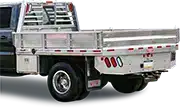
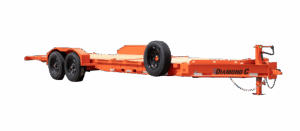






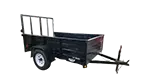

You spent real money on your trailer. Maybe it is a 7,000 lb GVWR Diamond C GTU tandem-axle utility trailer you use for mowers and equipment, or a single-axle H&H utility trailer you haul brush with every weekend. Either way, if it sits outside in direct sunlight year-round, ultraviolet exposure, heat, moisture, road salt, and temperature cycling are steadily aging its tires, decking, finish, wiring, seals, and other exposed components.
The question is not simply whether every trailer needs to be wrapped in a full cover. The better question is what kind of protection makes sense for your trailer, how often you use it, and where it is parked. A roof, carport, barn, or dry indoor space is usually the best solution. When that is not available, tire covers, a properly fitted breathable trailer cover, good drainage, and routine maintenance can meaningfully reduce weather-related deterioration.
What Sunlight Actually Does to a Trailer
Ultraviolet radiation initiates chemical changes in rubber, plastics, wood, coatings, adhesives, graphics, and sealants. Heat from direct sun accelerates many of those aging processes, while rain, dew, humidity, road grime, and Indiana freeze-thaw cycles add moisture-related damage. On an open steel trailer, four of the most visible trouble spots are the tires, wood decking, protective finish, and rubber or plastic components.
Tires: Dry Rot Happens Faster Than You Think
Trailer tires commonly spend more time parked than rolling. During long periods of outdoor storage, the same portion of each sidewall may remain exposed to sunlight, ozone, heat, and moisture for months at a time. Tire compounds contain protective additives that help resist oxidation and ozone cracking, but those protections are gradually consumed as the tire ages. Regular flexing can help protective compounds migrate through the rubber, while a stationary tire receives concentrated exposure without the normal movement associated with road use.
Small cosmetic lines are not automatically proof that a tire is about to fail, but visible weather checking should never be ignored. Replace a tire immediately if you find bulges, exposed cords, cuts into the casing, tread separation, severe cracking, impact damage, or another structural concern. Calendar age also matters even when tread remains. There is no single three-to-five-year replacement rule that applies to every trailer tire, so check the tire manufacturer’s guidance, read the four-digit DOT date code, and have older or questionable tires inspected by a qualified tire professional. Some manufacturers establish a maximum service interval around six years, while operating conditions may require replacement sooner.
Many trailers are equipped with ST-designated tires because they are engineered specifically for trailer service, but some heavier trailers are legitimately designed around appropriately rated LT or commercial-style tires. Do not substitute tire type, size, load range, load index, wheel rating, or speed rating based on appearance alone. Follow the trailer manufacturer’s specifications and make sure the combined load capacity of the tires and wheels is adequate for the trailer’s actual loaded weight. When the trailer is parked, opaque UV-resistant tire covers are one of the least expensive ways to shield the sidewalls from direct sunlight.
Wood Decking: Moisture and UV Together Are a Bad Combo
Many utility, flatbed, and equipment trailers use treated lumber decking. Current Diamond C LPX equipment trailers, for example, use 2-inch treated lumber as the standard floor, with other flooring options available depending on the configuration. Pressure treatment improves resistance to decay and insects, but it does not make lumber immune to sunlight, checking, warping, abrasion, or repeated wet-and-dry cycles. UV exposure degrades the wood’s surface, while solar heating can dry the exposed face much faster than the material underneath.
Over time, weathered boards may turn gray, develop raised fibers, cup, split around fasteners, or form deeper checks. Soft areas usually point to prolonged moisture exposure or decay rather than sunlight alone, especially around board ends, damaged fasteners, trapped debris, and places where drainage is poor. A breathable cover can reduce direct sun and precipitation, but it should not be laid tightly over a wet deck. Keeping the deck clean, allowing airflow, and applying a compatible penetrating exterior wood treatment when appropriate are just as important as covering it.
Paint and Finish: Oxidation Is Irreversible
A properly prepared powder-coat system generally provides strong resistance to corrosion, chips, abrasion, fading, and weathering, but no exterior coating makes steel maintenance-free. Long-term sunlight can reduce gloss or contribute to chalking, while impacts from chains, buckets, gravel, equipment, and road debris can breach the coating. Once steel is exposed, water, oxygen, mud, and deicing chemicals can begin corrosion at the damaged area. Chalking by itself may be mainly cosmetic, but chips, peeling, bubbling, and rust require attention.
Enclosed trailers have additional materials to protect. Painted or coated aluminum panels, fiberglass components, vinyl graphics, roof sealants, seam sealers, door gaskets, plastic trim, and exterior caulk can all age in sunlight. Aluminum panels do not rust like steel, but their finishes can fade or chalk, and damaged or shrinking sealant can allow water into roof joints, doors, windows, vents, and corner seams. Water intrusion can damage plywood, insulation, interior wall liners, electrical systems, cargo, and steel framing long before the leak becomes obvious.
Do Trailer Covers Actually Work?
Yes, a cover can reduce direct UV exposure, keep much of the rain and airborne debris off the trailer, and slow cosmetic weathering. It works best as part of a storage routine, not as a substitute for cleaning, drainage, inspections, and repairs. A full cover also has disadvantages: it takes time to install, can block ventilation, may abrade the finish in wind, and can conceal leaks, pests, corrosion, or standing water if the trailer is not checked periodically.
A basic non-breathable polyethylene tarp can create more problems than it solves when it is wrapped tightly around a damp trailer. Rainwater, dew, and humidity can become trapped underneath, especially when the tarp rests directly against steel or wood with no air space. Loose tarps also flap against fenders, rails, corners, lights, graphics, and painted surfaces, causing wear. A tarp may be useful as a temporary overhead shield when it is securely supported like a canopy, but it is a poor long-term fitted cover when it traps moisture against the trailer.
What Makes a Good Trailer Cover
Look for an outdoor-rated cover designed for the trailer’s shape and storage conditions. The material should resist UV exposure, shed precipitation, and allow moisture vapor to escape. Reinforced corners, covered seams, built-in vents, adjustable straps, and abrasion-resistant panels around high-contact areas are more meaningful than fabric weight alone. Even a heavy fabric can fail quickly if it fits poorly, rubs against sharp edges, or is allowed to collect water and snow.
Key specs to match:
- Measure the trailer’s overall body length, width, and height, including the nose shape, roof equipment, ramps, ladder racks, air conditioners, vents, spare tires, and permanent toolboxes. Follow the cover manufacturer’s sizing method rather than assuming the nominal bed size is the trailer’s total size. The cover should be secure without being stretched tightly across sharp corners.
- For an enclosed cargo trailer such as a Wells Cargo FastTrac or a Darkhorse enclosed trailer, choose a cover made for an enclosed-trailer profile. Look for reinforced roof and corner sections, ventilation provisions, secure underbody straps, and enough clearance for installed accessories. Do not block appliance exhausts, battery vents, solar components, or ventilation openings that must remain unobstructed.
- Use padded protectors over sharp ramp corners, stake pockets, jack handles, latch hardware, rub rails, roof edges, and other projections. Elastic hems can help with positioning, but adjustable straps and wind-management features are necessary to prevent movement. Never rely on loose tie-down loops alone, and do not allow straps or buckles to strike painted panels in the wind.
Open trailers are harder to cover because stake pockets, ramps, winches, goosenecks, hydraulic components, toolboxes, fenders, and tie-down points create irregular shapes and abrasion hazards. For a working utility, flatbed, dump, or equipment trailer that is used frequently, individual tire covers and a roofed parking space may be more practical than removing a full cover before every trip. A full breathable cover can still work for seasonal storage, but the trailer should be clean and dry, sharp points should be padded, and the cover should be inspected after storms. Use rubber and wood treatments only when they are approved for the specific material; never apply tire dressing to the tread, brake components, or walking surfaces.
Indoor Storage vs. Cover: The Honest Comparison
| Factor | Breathable Cover (Outdoor) | Indoor Storage |
|---|---|---|
| UV protection | Good to excellent when properly fitted | Excellent, except for light entering through open doors or windows |
| Moisture risk | Moderate; ventilation and a completely dry trailer are essential | Low in a dry, ventilated building; potentially high in a damp building |
| Temperature swings | Solar heating may be reduced, but outdoor temperature swings remain | Reduced by shade; reduced further if the space is insulated or conditioned |
| Tire weathering | Slowed when sidewalls are fully shaded | Generally slowest in a cool, dry, dark space away from ozone sources |
| Convenience | Requires removal, drying, folding, and reinstallation | Usually faster to inspect, hook up, and leave |
| Annual cost | Low to moderate; depends on size, quality, and replacement interval | Varies widely by building ownership, local rent, access, and trailer size |
A dry, ventilated barn or garage provides the best overall protection because it shades the trailer without placing fabric against the finish. Indoor storage is not automatically perfect, however. A damp dirt-floor barn, poorly ventilated storage unit, or building containing fertilizers, chemicals, welding equipment, electric motors, or other ozone and corrosion sources can still damage tires and metal. The ideal space is clean, dry, shaded, ventilated, and large enough to inspect the trailer without scraping walls or doors.
If indoor storage is not realistic, a roofed carport is an excellent middle ground. It blocks overhead sun, rain, snow, and ice while leaving the sides open for ventilation. A properly fitted breathable cover is the next option, particularly for seasonal storage. That protection matters in Indiana, where trailers may experience strong summer sunlight, high humidity, thunderstorms, road salt, freezing temperatures, and repeated freeze-thaw cycles within the same year.
What to Do Before You Cover It
Covering a dirty or wet trailer can trap the very contaminants you are trying to protect it from. Before installing a cover for more than a brief period:
- Wash the frame and deck. Remove mud, leaves, grass, road salt, fertilizer residue, and other material that holds moisture against steel or wood. Use mild soap and controlled water pressure. Do not direct a pressure washer into wheel bearings, axle seals, brake assemblies, electrical connectors, breakaway components, hydraulic equipment, door seals, or damaged coating. Allow the trailer, deck, seams, and enclosed compartments to dry completely before covering.
- Inspect the tires. Check pressure when the tires are cold and inflate them to the trailer or tire manufacturer’s specified pressure. Inspect both sides of every tire, including the inward-facing sidewall, for cuts, cracking, bulges, exposed cords, uneven wear, flat spotting, and separation. Read the DOT date code and inspect the spare as carefully as the tires on the ground. A cover cannot restore an aged, underinflated, overloaded, or structurally damaged tire.
- Touch up bare metal. Clean chips and scratches before corrosion spreads beneath the surrounding coating. Use a primer and touch-up coating compatible with the trailer manufacturer’s finish and preparation instructions. Diamond C’s current DM Difference Maker system is a multi-stage process that includes steel-shot blasting, a five-stage wash, force drying, a zinc-rich epoxy primer, and a durable powder topcoat, so a field repair will not duplicate the factory process. Its purpose is to seal localized damage until a more complete repair is needed.
- Use only approved protectants. Clean rubber with products permitted by the tire or component manufacturer. A water-based UV protectant may be suitable for some sidewalls, door seals, and exterior rubber, but avoid petroleum-based solvents, aggressive tire shine, and products that leave a slippery film. Never apply protectant to tire tread, brake parts, couplers, ramps, deck surfaces, pedals, or any area that requires traction.
- Park on a firm, drained surface. Concrete, asphalt, compacted stone, or suitable pads are preferable to grass and bare soil, which retain moisture around the frame and tires. Chock the wheels, secure the coupler, and set the trailer at a safe height that allows water to drain according to its design. Do not depend on the cover to support standing water, snow, or ice, and do not crawl beneath an elevated trailer unless it is supported with equipment rated for the load.
A Note on Enclosed Trailers Specifically
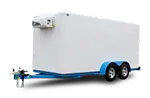
If you own a Wells Cargo FastTrac, a Darkhorse enclosed cargo trailer, or another enclosed model, sunlight affects more than the exterior skin. A closed trailer parked in direct sun can become substantially hotter than the outside air, particularly when it has a dark exterior, limited insulation, and little ventilation. That heat can damage temperature-sensitive cargo, batteries, adhesives, electronics, aerosol cans, finishes, plastics, food products, and other stored materials. Check the storage requirements of everything left inside rather than assuming the trailer is a safe outdoor storage room.
A light-colored or reflective cover designed for enclosed trailers may reduce solar heat gain, but it will not keep the interior at ambient temperature, and it must not seal off required ventilation. Roof vents or powered ventilation can help exchange hot air, but every roof opening must be properly sized, framed, sealed, and installed in accordance with the trailer manufacturer’s instructions. An improperly installed solar vent can become a leak source and may affect roof integrity or warranty coverage. Keep existing vents clear, inspect roof and corner sealant regularly, and open the trailer periodically to look for condensation, odor, mildew, pests, or water staining.
Spencer Trailers’ Take
We see trailers in every stage of ownership at our Spencer location. The ones that age poorly usually share a pattern: they stay parked outdoors on wet ground, remain loaded for long periods, collect leaves and mud around the frame, and go months without tire-pressure or seal inspections. The trailers that still look good years later are generally stored under a roof or in a dry building, cleaned after winter use, parked on a drained surface, and repaired when damage is still small.
Your trailer does not have to look neglected after five years. A cover can help, but the biggest gains come from combining shade with dry storage conditions, correct tire pressure, clean drainage paths, timely coating repairs, sealed roof joints, and regular inspections. A cover installed over dirt, standing water, wet lumber, damaged tires, or active rust only hides those problems.
If you are shopping for a new trailer with long-term outdoor storage in mind, compare more than paint color. Look at surface preparation, primer, topcoat, deck material, fastener protection, wiring routing, replaceable wear components, roof construction, sealant access, and how easily the trailer can be cleaned. Diamond C has manufactured open-steel trailers in Mt. Pleasant, Texas, since 1985, and its current trailers use the DM Difference Maker multi-stage powder-coating system. Current Diamond C premium lines such as the GTU, LPX, HDT, LPT, DEC, WDT, and FMAX use Lippert axles in their standard configurations. H&H construction and finish details vary by trailer series, so compare the exact model and options rather than assuming every trailer from one brand is built or coated the same way.
Browse our current trailer inventory or reach out to our team at (812) 829-0226 if you want a straight answer about which trailer best matches how you plan to store and use it. We are at 291 West State Hwy 46 in Spencer, Indiana, and we would rather help you choose the right trailer and storage plan now than see you return with prematurely weathered decking, neglected coating damage, failed sealant, or cracked tires.
What is your current storage setup, and is it actually protecting the trailer you own?


