







Nothing exposes a driver faster than a busy public boat ramp on a Saturday morning. There is a line of trucks, people are waiting, and you are trying to back a 20-foot trailer down a wet concrete slope toward water that may hide the end of the ramp. The good news is that backing a boat trailer is a learned skill. With a practiced setup, small steering inputs, and a clear stopping plan, you can launch without rushing or putting the truck, trailer, boat, or people around you at unnecessary risk.
This guide covers the practical technique behind a controlled launch: steering inputs, approach alignment, spotter communication, wet-ramp traction, launch depth, trailer-brake behavior, and the checks to make before returning to the road. Every ramp and boat-trailer combination is different, so the trailer manufacturer’s instructions, the tow vehicle owner’s manual, posted ramp rules, and actual conditions always take priority.
The Steering Counter-Intuition Problem
Most backing mistakes begin with the reverse-steering relationship. As the tow vehicle reverses, the hitch pushes the trailer. Turning the steering wheel one way moves the rear of the tow vehicle in that direction, causing the trailer to begin moving in the opposite direction. Turn the top of the steering wheel right and the trailer initially moves left; turn it left and the trailer initially moves right. Once the trailer begins turning, the driver must reduce or reverse the steering input to follow it and prevent the angle from tightening into a jackknife.
The bottom-of-the-wheel method makes that relationship easier to manage. Place one hand at the bottom of the steering wheel and move that hand in the direction you want the rear of the trailer to travel. If you want the trailer to move toward the passenger side, move your hand toward the passenger side. Watch both mirrors and make small corrections. Do not hold a large steering angle while waiting for the trailer to react; trailers respond with a delay, and an input that initially seems too small can quickly become excessive.
Practice on level pavement before visiting a busy ramp. Use cones or painted parking lines to represent the edges and centerline of a launch lane. Practice backing straight, correcting a small drift, pulling forward to reset, and stopping with the trailer at a chosen point. Short trailers generally react more quickly than long trailers, while a longer wheelbase between the coupler and trailer axle usually produces a slower response. Learning how your specific combination reacts is more useful than relying on a fixed steering formula.
Setting Up the Approach
The approach determines how much correcting will be required on the slope. Pull forward far enough to place the tow vehicle and trailer as straight as practical with the selected launch lane. Use the full legal and available space without crossing into another lane or blocking traffic. If the ramp entrance requires a turn, complete most of that turn while moving forward and leave enough room to straighten the combination before reversing.
There is no universal maximum starting angle that works for every ramp, truck, and trailer. The best starting position is normally close to straight, with the trailer centered between the lane boundaries and the tow vehicle positioned so the driver can see both sides. If the geometry is poor, pull forward and reset. A reset is normal trailer handling, not a failed attempt. Trying to rescue a large angle while descending a slippery slope increases the likelihood of crossing a lane, contacting a dock, or jackknifing the trailer into the tow vehicle.
Prepare the boat in the staging area, not on the active ramp. Install the drain plug, load equipment, attach dock lines and fenders, remove the transom tie-downs as directed for launching, check that the winch strap and bow safety connection remain secure, and verify that the engine support or transom saver is handled correctly. Keep the bow restrained until the boat is at the water and you are intentionally ready to release it. Never remove every bow restraint at the top of the ramp because a steep grade or abrupt stop can allow the boat to slide off prematurely.
Do not automatically disconnect the trailer electrical connector. Modern boat trailers commonly use sealed or submersible LED lighting and marine-grade wiring intended to remain connected during launching. The electrical connection may also operate a surge-brake reverse-lockout solenoid, electric-over-hydraulic brake equipment, reverse lights, or other safety systems. Follow the trailer and brake-system manufacturer’s instructions. If an older lighting system specifically requires disconnection, switch the tow vehicle lights off first and reconnect the plug before entering traffic. Never disconnect a system when doing so would disable brakes or a required reverse lockout.
Using a Spotter the Right Way
A trained spotter is valuable whenever the driver’s view is obstructed, the ramp is crowded, or the driver is still learning. The driver and spotter should agree on signals before the vehicle moves. If either person loses sight of the other, the driver stops immediately. A phone or hands-free radio can supplement hand signals, but it should not replace continuous visual awareness of the trailer, ramp, dock, and surrounding people.
A simple signal system is easier to understand under pressure:
- Both arms up with palms toward the driver = stop immediately and hold position
- One arm directing left or right = move the rear of the trailer in that direction
- Hands moving closer together = reduce speed and make smaller corrections
- A controlled backward motion = continue reversing on the present path
The spotter should remain where the driver can see them, usually near the driver’s side of the ramp and clear of the tow vehicle, trailer, water, dock traffic, and potential pinch points. The exact position changes as the combination moves. The spotter must never stand directly behind the trailer, between the trailer and the water, between the boat and dock, or anywhere the vehicle could roll or swing toward them.
The driver remains responsible for controlling the vehicle, but the spotter should immediately signal a stop for any person, animal, boat, vehicle, submerged obstruction, lane conflict, or other unexpected hazard. Children and bystanders can enter a driver’s blind area quickly. If a signal is unclear, the driver should stop, apply the service brake, shift into Park when appropriate, set the parking brake, and confirm the instruction before continuing.
Wet Ramp Traction and What Actually Happens
Boat ramps may be wet and coated with algae, aquatic growth, sand, gravel, silt, spilled fuel, or accumulated lake material. The area at and below the normal waterline can be substantially more slippery than ordinary wet pavement. Changes in water level can also expose surfaces that are muddy, damaged, undermined, or covered by debris even when the upper ramp appears clean.
Rear-wheel-drive tow vehicles can have less climbing traction than four-wheel-drive vehicles because engine torque is delivered through the rear tires. However, rear-wheel drive does not mean that braking occurs through only two tires; modern tow vehicles normally use service brakes at all four wheels. Traction is influenced by tire condition, actual axle loading, differential design, ramp slope, surface contamination, and the loaded trailer’s resistance. Do not place loose metal, boards, carpet, or improvised materials under tires unless the ramp operator permits it and the material is designed and secured for that use. Improvised objects can be thrown by spinning tires, become submerged debris, or interfere with other ramp users.
Four-wheel drive can provide additional traction when retrieving a boat, but it does not increase the friction available between each tire and the ramp and cannot overcome a severely contaminated surface. If the tow vehicle manufacturer permits four-wheel drive for the surface and operating conditions, select the appropriate mode before traction is lost. Use four-wheel-drive low range only as directed by the owner’s manual; driveline binding can occur when certain locked four-wheel-drive modes are used on high-traction pavement.
During the descent, use very low speed and smooth brake pressure. Avoid coasting in Neutral. Keep the transmission in an appropriate reverse gear so the driver retains normal control, and maintain enough space to stop before the tow vehicle’s rear tires, exhaust, electrical components, or body enter the water. Once stopped, hold the service brake, shift into Park, and firmly set the parking brake before anyone approaches the boat or trailer. On vehicles with specific parking procedures for slopes and trailers, follow the owner’s manual.
Tire pressure should not be reduced at the ramp in an attempt to gain traction. Inflate the tow vehicle’s tires to the cold pressure specified on its tire placard or to the vehicle manufacturer’s applicable loaded-towing recommendation. Never bleed pressure from tires that are hot from highway travel. Trailer tires must be inflated cold according to the trailer and tire manufacturer’s load-and-inflation requirements, often at the pressure needed to carry the actual load. Underinflation reduces load capacity, increases heat and sidewall flexing, and can lead to tire failure on the trip home.
How Deep Is Deep Enough (And Too Much)
The correct launch depth is the minimum depth at which the boat’s stern begins to float and the boat can be released in a controlled manner. There is no reliable universal water-depth measurement because the required position depends on ramp angle, trailer geometry, bunk or roller design, boat draft, hull shape, axle location, and current water level. Use the boat and trailer manufacturer’s loading instructions and learn a repeatable reference point on your own trailer, such as the water’s position relative to a fender or bunk support.
Back down in small increments while a helper watches from a safe location. When the stern begins to float, stop the tow vehicle, keep firm pressure on the service brake, shift into Park, and set the parking brake. Use prepared bow and stern lines to control the boat. Do not release the winch strap and safety connection until the tow vehicle is secured and the boat is ready to be controlled by a competent person or by properly arranged dock lines.
Backing too far can submerge components not intended for immersion and may place the tow vehicle on algae-covered concrete. It can also send trailer wheels beyond the end of a ramp, where a drop-off may make retrieval difficult or damage the axle, suspension, tires, or ramp. Wheel hubs on boat trailers are designed with water exposure in mind, but repeated immersion still requires correct marine-service seals, lubrication, inspection, and maintenance. Do not assume that a pressurized bearing protector repairs a worn seal or eliminates the need to inspect the bearings.
Rapidly immersing hot hubs can contribute to water entering through compromised seals as the hub cools. After highway travel, use the staging period to prepare the boat and visually inspect the hubs for grease leakage, looseness, unusual heat, or damaged seals. Keep people away from a suspect hub and service it before further towing. After saltwater use, rinse the trailer and brake components with fresh water as recommended by their manufacturers.
At an unfamiliar facility, inspect the ramp from a safe, dry position before committing the trailer. Read posted warnings and look for lane edges, dock position, current, crosswind, algae, potholes, changing water levels, and markers showing where the improved surface ends. Ask the attendant or an experienced local user about hidden drop-offs. Do not walk into murky water or onto an algae-covered section merely to inspect it; submerged holes, sharp objects, current, and slippery surfaces can create a serious fall or drowning hazard.
When recovering the boat, back the trailer only to the depth recommended for that boat and trailer. A trailer that is too deep can allow the stern to drift sideways and leave the bow misaligned with the bunks; one that is too shallow can require excessive winch force. Center the boat with guide-ons, dock lines, or careful low-speed control, then use the trailer winch within its rated capacity to bring the bow to the bow stop. Never use the winch strap or cable as the only roadgoing restraint. Attach the bow safety chain or secondary restraint before pulling away from the water, and install the transom tie-downs in the staging area.
Do not attempt to reposition a partly loaded boat by driving the tow vehicle forward while someone is standing on or beside the trailer. Power loading with the boat’s engine is prohibited at some ramps and can erode the bottom beyond the concrete, creating a dangerous hole at the ramp’s end. Follow posted rules and use the winch-loading method when power loading is prohibited or unsafe.
Trailer Brakes on a Boat Ramp
Indiana law requires brakes on trailers with a gross vehicle weight rating over 3,000 pounds under IC 9-19-3-3. The braking equipment must be functional and appropriate for the trailer. Requirements differ in other states, so interstate travelers should check each jurisdiction rather than assuming that one threshold applies nationwide. The boat, engine, fuel, batteries, gear, accessories, and trailer all count toward actual loaded trailer weight, which can be substantially higher than an estimate based only on the boat’s published dry weight.
Hydraulic surge brakes are common on boat trailers. A sliding or articulating coupler-mounted actuator responds when the trailer pushes against the tow vehicle during deceleration and sends hydraulic pressure to the trailer brakes. Reverse movement can also compress some actuators, so disc-brake systems and some drum-brake systems use an electric reverse-lockout solenoid, a manufacturer-approved manual lockout, or free-backing brake assemblies.
Know which system is installed before arriving at the ramp. An electric lockout generally receives power from the tow vehicle’s reverse-light circuit through a five-way flat, seven-way RV, or other suitable connector. This is one reason disconnecting the trailer plug can cause the brakes to resist backing. A manual lockout should be used only as described by the actuator manufacturer and must be removed or returned to its normal operating position before forward travel. Never improvise a lockout or tow on public roads with the actuator intentionally disabled.
Electric-over-hydraulic systems use an in-cab-compatible brake controller to command an electric hydraulic pump on the trailer. They do not depend on coupler compression, but they require a compatible, correctly configured controller, sound wiring, a charged breakaway battery, and marine-suitable installation. Conventional electric drum brakes are not automatically appropriate for immersion; brake and axle components must be specifically approved by their manufacturers for the intended marine service.
Before each trip, verify that the trailer brakes, coupler, safety chains, electrical connector, breakaway cable, and breakaway battery are in serviceable condition. The breakaway cable is an emergency device and should be attached to a suitable point on the tow vehicle independently of the safety chains, not wrapped around the coupler or attached where it will pull out during normal turning. Do not use the breakaway switch as a parking brake.
After the brakes have been immersed, allow water to drain and test the combination at very low speed in the designated staging or parking area. Apply the brakes gently to confirm that the tow vehicle and trailer stop normally before entering a public road. Several light, controlled applications while moving slowly can help dry friction surfaces, but do not drag the brakes continuously, attempt to heat them while stationary, or perform this check while people are near the trailer. If braking is weak, uneven, noisy, or locked, stop and correct the problem before highway travel.
Saltwater, sediment, and repeated immersion accelerate corrosion. Rinse the trailer as its manufacturer directs and follow the brake manufacturer’s inspection intervals for pads or shoes, rotors or drums, calipers, hydraulic fluid, hoses, lines, actuators, wiring, seals, and mounting hardware. A brake system that worked on the inbound trip should not be assumed to remain serviceable indefinitely without marine-use maintenance.
A Quick Q&A on Common Mistakes
My trailer keeps swinging to one side no matter what I do. What’s wrong?
Stop before the angle becomes severe. Pull forward far enough to straighten the truck and trailer, return to a centered setup, and begin again with smaller steering inputs. Also check whether the ramp has cross-slope, whether one tire is on loose material, and whether the boat or cargo is loaded unevenly. If the trailer repeatedly pulls or tracks abnormally on level pavement, inspect tire pressure, tire condition, wheel bearings, suspension, axle alignment, and the hitch before towing farther.The boat floated off the trailer before I was ready.
Keep the winch connection and bow safety restraint secured until the tow vehicle is stopped in Park with the parking brake set and a competent person has control of the boat with lines or from aboard. Prepare the lines in the staging area. If a steep ramp unloads the bow against the restraint, do not stand in line with a tensioned strap or cable; reposition safely and follow the winch manufacturer’s instructions.I went too deep and now the truck will not pull the trailer back up.
Keep everyone clear, straighten the wheels and trailer, and use smooth throttle rather than spinning the tires. Select an approved four-wheel-drive or low-range mode if the tow vehicle has one and its owner’s manual allows it. If the vehicle cannot climb without wheelspin, stop. Continued spinning can move the vehicle farther toward the water, damage the ramp, or throw debris. Request assistance from the ramp operator, a recovery service, or another properly equipped vehicle. Do not attach an improvised tow strap to a hitch ball or an unapproved recovery point.
The Right Trailer Setup Makes All of This Easier
A properly sized, correctly adjusted, and well-maintained boat trailer is easier to tow, launch, and recover than one that does not match the hull. Fit is not determined by deck length alone. The trailer must have adequate GVWR and payload capacity for the fully equipped boat, engine, fuel, batteries, water, gear, and accessories. The bunks or rollers, winch stand, bow stop, axle position, frame length, and rear support must also match the hull and the boat manufacturer’s designated support areas.
An overloaded trailer can exceed the ratings of its frame, coupler, axles, wheels, tires, suspension, brakes, or hitch even if it appears to sit level. Payload is generally the trailer’s GVWR minus its empty weight, but the certification label and manufacturer documentation control. The lowest-rated component in the towing system limits the combination, including the tow vehicle’s trailer-weight, tongue-weight, payload, axle, hitch, ball, ball mount, and gross combined weight ratings.
Boat-trailer tongue weight is commonly set lower than the 10-to-15-percent range often recommended for many conventional cargo trailers. Many boat-trailer manufacturers specify approximately 5 to 10 percent of the loaded trailer weight, with about 7 percent common for certain setups, but the correct target is the range stated by the boat-trailer and tow-vehicle manufacturers. Measure the loaded tongue weight rather than guessing from how the truck sits. Too little tongue weight can promote sway; too much can overload the hitch or tow vehicle’s rear axle and reduce steering or braking performance.
For example, a 4,000-pound loaded boat-and-trailer combination at 7 percent tongue weight would place about 280 pounds on the hitch, while a manufacturer-specified 10 percent would place about 400 pounds on it. The correct number cannot be selected from trailer weight alone. Axle placement, boat position, engine weight, batteries, fuel, and equipment storage all change the result. Adjust the boat or movable trailer components only according to the trailer manufacturer’s instructions; arbitrary axle or winch-stand changes can leave the hull unsupported or alter brake and suspension loading.
A purpose-built boat trailer should not be treated as a general utility or equipment trailer merely because another item physically fits between its fenders. Its bunks, rollers, tie-down locations, frame supports, tires, and load distribution are designed around a boat. ATVs, compact equipment, pallets, and other concentrated loads can impose forces the trailer was not designed to carry. Use a utility or equipment trailer with the correct GVWR, payload, deck, securement points, brakes, and loading system for those jobs.
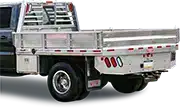
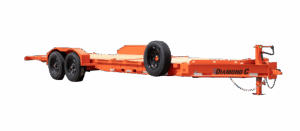
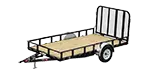
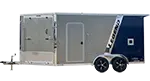
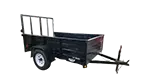
If you need a separate trailer for ATVs, equipment, landscaping work, or general hauling, Spencer Trailers can help match the trailer to the actual load and tow vehicle. Current inventory includes trailers from Diamond C, H&H, Liberty, Legend, and other manufacturers, with capacities and configurations that vary by model and installed options. Confirm every trailer’s GVWR, empty weight, payload, axle ratings, brake equipment, dimensions, and hitch requirements from its VIN-specific certification label and current build information. Call the shop at (812) 829-0226 or visit 291 West State Hwy 46 in Spencer to discuss the equipment, cargo, and tow vehicle you plan to use.
The ramp becomes easier with deliberate practice, but familiarity should not replace the checklist. Prepare in the staging area, begin nearly straight, back at walking speed, make small steering corrections, stop whenever the spotter disappears from view, secure the tow vehicle before leaving the driver’s seat, and release the boat only when it is under control. On recovery, connect the bow safety restraint before leaving the water, install all roadgoing tie-downs away from the active lane, reconnect or verify the electrical system, test the trailer brakes at low speed, and perform a walkaround before entering traffic. Browse current trailer inventory if you also need a properly rated utility or equipment trailer for the jobs a boat trailer was never designed to handle.


