


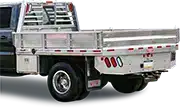
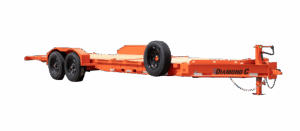






If you live in Terre Haute and have been shopping for a trailer, you may have found that the local selection depends heavily on what type of trailer you need. A farm-supply store or small used lot may be perfectly adequate for a basic 5×8 utility trailer, but buyers looking for multiple equipment, dump, enclosed cargo, flatbed, tilt, and truck-bed configurations often need a larger selection. Spencer Trailers gives western Indiana buyers the opportunity to compare different manufacturers, axle packages, loading systems, deck dimensions, and weight ratings in one visit. The dealership is roughly an hour east of Terre Haute, making it a practical day trip when you want to inspect several serious work trailers instead of ordering from a brochure or choosing from two or three units in a parking lot.
Spencer Trailers is located at 291 West State Hwy 46, Spencer, Indiana 47460, in Owen County. From central Terre Haute, a common route is I-70 East to the US-231 interchange near Cloverdale, followed by US-231 South into Spencer. Another option is US-40 East through Putnam County and then US-231 South. The trip is generally about 55 to 65 miles, depending on your starting point and route, and usually takes around an hour or a little longer under normal conditions. Check current navigation and road conditions before leaving, especially if you will be towing a newly purchased trailer back during construction, winter weather, or heavy traffic.
Why Terre Haute Buyers Make the Drive
Spencer Trailers is a family-owned dealership whose family business history in Spencer dates to 1973, with the trailer operation beginning in 2001. The exact mix changes as units are sold and new inventory arrives, but current inventory pages feature Diamond C along with Baseline, Liberty, Delco, H&H, Darkhorse Cargo, Legend, United, and Wells Cargo trailers. Truck-bed inventory includes Zimmerman and Martin products. That gives buyers access to several trailer categories and construction styles in one location, including steel and aluminum models, bumper-pull and gooseneck configurations, open and enclosed trailers, gravity and powered loading systems, and truck bodies for both pickups and cab-and-chassis applications.
The inventory mix also fits the kind of work performed throughout Terre Haute, Vigo County, and the surrounding western Indiana counties. Agriculture, construction, landscaping, manufacturing, warehousing, transportation, property maintenance, motorsports, mobile service businesses, and skilled trades all create demand for trailers that can safely carry equipment, materials, tools, vehicles, and freight. A contractor hauling a compact excavator has different axle, deck, ramp, and tie-down requirements than a lawn-care company carrying zero-turn mowers. An enclosed trailer used as a mobile workshop needs different interior height, electrical, ventilation, and door options than one used only for household moves. Being able to compare those differences in person is one of the strongest reasons to make the drive.
Check the full inventory listing before you leave Terre Haute. Listings normally include the stock number, dimensions, GVWR, axle configuration, major options, and current price or quote status. Because inventory can be sold, reserved, or moved quickly, call before driving to confirm that the specific units you want to inspect are still available. The VIN label, manufacturer build sheet, and individual inventory listing should always control over a general model description because axle ratings, tires, ramps, brakes, couplers, frames, and optional equipment can differ between two trailers carrying the same basic model name.
What to Look at When You Arrive
The lineup at Spencer typically covers the three categories that matter most to many western Indiana buyers: equipment and flatbed trailers, enclosed cargo trailers, and replacement truck beds or service bodies. Do not choose solely by advertised length or GVWR. Start with the heaviest real load you expect to carry, including attachments, buckets, fuel, pallets, tools, chains, binders, spare tires, and anything stored in a toolbox. Then compare that total with the trailer’s published payload, the tow vehicle’s ratings, the hitch or gooseneck rating, and the available tongue or pin-weight capacity.
Equipment and Flatbed Trailers
If you work in construction, excavation, landscaping, property maintenance, or farming near Vigo, Vermillion, Clay, Sullivan, or Parke County, the Diamond C and H&H equipment trailers deserve a close inspection. Diamond C’s current heavy-duty families include the LPX low-profile equipment trailer, the HDT hydraulically dampened tilt trailer, the DEC deck-over equipment trailer, and the FMAX Flatbed Max gooseneck flatbed line. Diamond C has manufactured trailers in Mt. Pleasant, Texas, since 1985. Its premium lines use Lippert axles as standard and receive the DM Difference Maker multi-stage coating process. Exact axle capacity, brake type, frame construction, tires, coupler, and GVWR depend on the selected model package.
A current 22-foot Diamond C LPX207 configuration, for example, may have an approximately 82-inch-wide usable deck between the fenders and a 15,500 lb GVWR. Higher LPX packages can be rated up to 24,000 lbs, with different Lippert axle, tire, frame, and coupler specifications. An 82-inch deck should not be confused with the trailer’s overall width, which may be close to the legal 102-inch maximum once the fenders are included. H&H also offers 22-foot equipment and electric-tilt configurations with 14,000 lb GVWR packages and dual 7,000 lb axles. Some extra-wide equipment builds provide drive-over fenders or deck extensions for wider vehicles, while others retain a narrower deck between fixed fenders.
GVWR is not the same as payload. Payload is generally calculated by subtracting the trailer’s actual empty weight from its GVWR. A 15,500 lb GVWR trailer weighing 3,200 lbs empty would have approximately 12,300 lbs of theoretical payload before accounting for the way the load is distributed. You must still remain within the trailer axle ratings, tire ratings, coupler rating, hitch rating, tow-vehicle GVWR, tow-vehicle rear-axle rating, and GCWR. A skid steer that appears to fit based on its base operating weight may exceed the expected load once a bucket, forks, hydraulic attachment, fuel, chains, and jobsite tools are added.
Loading equipment is another reason to compare trailers in person. Depending on the applicable Diamond C model and configuration, current loading choices may include MAX Ramps, XDR Ramps, or an X-Ramp system. Tilt trailers can reduce the need to handle removable ramps, but deck angle, breakover point, ground clearance, stationary-deck length, and hydraulic-dampening behavior should still be evaluated against the specific machine being loaded. A compact tractor with a rear implement may need more usable deck length than its wheelbase suggests, while a low sports car or scissor lift may require a shallower approach angle.
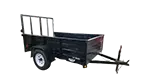
For smaller loads such as riding mowers, ATVs, UTVs, compact tractors, landscaping equipment, and palletized material, a heavy equipment deck may be more trailer than you need. The Diamond C GTU is a premium tandem-axle bumper-pull utility trailer with a 7,000 lb GVWR, dual 3,500 lb axles, and a 4-inch channel frame. Liberty and Delco also offer single- and tandem-axle utility configurations in several sizes and ratings. Spencer’s inventory commonly includes units around 2,990 lbs, 5,000 lbs, 7,000 lbs, and higher, but the available packages vary. A 2,990 lb GVWR trailer does not provide 2,990 lbs of payload; the trailer’s empty weight must be deducted before loading.
Enclosed Cargo Trailers
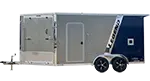
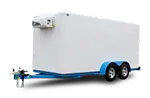
Terre Haute has an active base of small contractors, mobile vendors, service technicians, movers, recreational riders, and motorsport haulers, so enclosed trailers are a regular request. Spencer carries enclosed models from Darkhorse Cargo, United, Wells Cargo, and Legend, with the live inventory often ranging from compact 6×10 single-axle trailers through 7-foot, 7.5-foot, and 8.5-foot-wide tandem-axle units. Available specifications can include 2,990 lb, 7,000 lb, 9,900 lb, and heavier GVWR packages, as well as different interior heights, rear ramp doors, double rear doors, side doors, roof profiles, wall-stud spacing, floor thicknesses, and axle types.
Wells Cargo’s Road Force family is available in multiple dimensions and configurations, so a size such as 7×14 should not be assumed to have one universal axle package, GVWR, nose design, curb weight, or door arrangement. Inspect the individual trailer’s certification label and specification sheet. A V-front can provide a different interior layout and additional front storage shape, but real-world fuel consumption depends on the trailer’s total frontal area, height, weight, speed, tire pressure, wind, tow vehicle, and driving conditions. Buyers who regularly travel I-70 should pay particular attention to interior height and overall trailer height because a taller enclosed trailer can create considerably more aerodynamic drag at highway speed.
Legend offers both all-aluminum and steel enclosed trailer lines. Its aluminum models use an aluminum structural design that can reduce curb weight and resist structural corrosion, but the actual weight advantage varies by model, size, interior height, ramp door, wall spacing, cabinetry, flooring, and axle package. Do not rely on a blanket estimate that every aluminum 7×16 is a fixed number of pounds lighter than every steel 7×16. Compare the published curb weight and GVWR of the exact two units. A lighter trailer may provide more available payload and reduce the load placed on the tow vehicle, but only when the trailer’s GVWR, axle ratings, tires, coupler, and structural design are also appropriate for the cargo.
Truck Beds
If your pickup bed is damaged, rusted, or no longer suited to your work, Zimmerman and Martin truck beds can turn the truck into a more capable hauler. Spencer’s current truck-body inventory includes steel and aluminum flatbeds, ranch-style bodies, and service-body configurations. The correct fit depends on more than whether the truck is a 3/4-ton or 1-ton. You need to match the body to the truck’s frame width, cab-to-axle measurement, single- or dual-rear-wheel configuration, pickup or cab-and-chassis frame, fuel-filler location, rear-camera system, lighting, sensors, hitch arrangement, and intended load.
An installed flatbed or service body becomes part of the truck rather than a separately registered trailer, but that does not increase the truck’s factory GVWR, payload, rear-axle rating, tire capacity, or towing capacity. The replacement body’s weight must be included when calculating available truck payload and pin or tongue-weight capacity. For Terre Haute HVAC, plumbing, electrical, welding, farm, and maintenance contractors, a service body can keep tools organized and reduce the need to tow an enclosed trailer on every call. Professional installation is important because modern trucks may also require proper integration of wiring, lighting, cameras, sensors, fuel systems, and hitch components.
Indiana Trailer Registration: What Terre Haute Buyers Need to Know
Indiana title and registration work can be completed through an Indiana BMV branch, and a dealer may handle some or all of the paperwork depending on the transaction. For a new trailer, the ownership documents normally include a Manufacturer’s Certificate of Origin, purchase agreement or sales contract, and any dealer title paperwork. State Form 205, the Application for Certificate of Title for a Vehicle, may be required when the purchaser completes the title application. Bring valid identification and any additional documentation requested for the ownership or lien arrangement. Indiana requires the title application to be made within 45 days after purchase or acquisition; applying after that period can result in an administrative late-title penalty. Do not assume that a temporary permit extends the title deadline.
The BMV’s base trailer-registration fees are determined by the trailer’s declared gross weight. Indiana defines the declared gross weight of a trailer as its empty weight plus the heaviest load it will carry during the registration year. The amounts below are base state registration fees and do not represent the full out-the-door BMV total. Title fees, excise tax or Commercial Vehicle Excise Tax, applicable county or municipal taxes, plate transactions, temporary permits, and other charges may be additional.
| Trailer Declared Gross Weight | Indiana Registration Type | Base Registration Fee |
|---|---|---|
| 3,000 lbs or less | Annual trailer registration | $16.35 |
| 3,000 lbs or less | Permanent trailer registration option | $82.00 |
| 3,001 to 9,000 lbs | Annual trailer registration | $25.35 |
| 9,001 to 12,000 lbs | Weighted trailer registration | $72.00 |
| 12,001 to 16,000 lbs | Weighted trailer registration | $108.00 |
| 16,001 to 22,000 lbs | Weighted trailer registration | $168.00 |
| 22,001 lbs and above | Weighted trailer registration | $228.00 |
Indiana’s permanent trailer plate is available for a trailer with a declared gross weight of 3,000 lbs or less. The current base permanent-registration fee is $82, and the registration does not require normal annual renewal while the qualifying trailer remains registered to the same owner. That can be economical for a small utility or enclosed trailer you expect to keep for several years. The permanent plate does not authorize loading the trailer above its declared weight, does not change the manufacturer’s GVWR, and does not increase the tow vehicle’s capacity. If the trailer will carry more than 3,000 lbs gross during the registration year, it should be registered in the appropriate higher weight class.
Brake requirements are separate from registration pricing. Under Indiana Code 9-19-3-3, a trailer or semitrailer with a gross weight of at least 3,000 lbs must have brakes adequate to control, stop, and hold the trailer. The driver must be able to apply the brakes from the tow-vehicle cab, and the system must automatically apply the trailer brakes in an accidental breakaway. For an electric-brake trailer, confirm that the tow vehicle has a compatible, correctly adjusted brake controller, a functioning seven-way connection, and a charged breakaway battery before leaving the dealership.
There is not one universal Vigo County total that applies to every trailer. Trailers with a declared gross weight of 9,000 lbs or less are generally subject to Indiana’s flat $8 vehicle excise tax, while heavier trailers can fall under Commercial Vehicle Excise Tax rules. County or municipal excise and wheel taxes may apply to eligible vehicle classes depending on the registration address and current local ordinances. Ask the BMV for an exact calculation based on the trailer’s declared weight and your residence rather than relying only on the base-fee table. Indiana’s title fee is separate, and late title or registration penalties can also apply.
Also separate dealer charges from government charges when reviewing the purchase order. Indiana’s July 1, 2026 guidance states that the Auto Dealer Services Division will not take enforcement action against documentation-preparation fees at or below $261.72. A documentation-preparation fee must be included in the advertised sale price, disclosed in writing, and shown as a separate line item on the bill of sale. It is not the same thing as a BMV title fee, registration fee, sales tax, lender fee, or optional product.
Heavy-trailer buyers should verify driver’s-license requirements before choosing a configuration. For the common Class A CDL threshold, the combination must have a GCWR or actual gross combination weight of at least 26,001 lbs, whichever standard applies, and include a towed unit with a GVWR or actual gross weight greater than 10,000 lbs. A trailer rated over 10,000 lbs does not by itself trigger a Class A CDL when the combination remains below 26,001 lbs. Commercial use, hazardous materials, passenger transportation, farm exemptions, personal-use rules, and interstate operation can introduce additional requirements, so confirm your specific situation with the Indiana BMV or the appropriate motor-carrier authority.
Indiana does not generally require a separate trailer insurance card as one of the basic ownership documents described above, but insurance coverage is policy-specific. A tow vehicle’s liability policy may extend certain liability protection to a connected trailer, while theft, collision damage, cargo loss, roadside recovery, and damage to the trailer itself may require separate comprehensive or physical-damage coverage. Confirm coverage with your insurer before towing the trailer home, particularly when financing is involved because the lender may require specific insurance protection.
Questions Terre Haute Buyers Usually Ask
Can I get financing at Spencer Trailers?
Yes. Spencer Trailers currently offers financing through Sheffield Financial. Approval, down payment, term, interest rate, available amount, and documentation requirements depend on the lender and the applicant’s qualifications. Call (812) 829-0226 before driving out if you want to confirm the application process and what information to bring. Ask for a complete out-the-door figure that separates the trailer price, documentation fee, taxes, title and registration charges, accessories, delivery, warranty products, and finance costs.
Can a business deduct the cost of a work trailer?
A trailer used in a qualifying trade or business may be eligible for depreciation deductions, but the result depends on ownership, business-use percentage, financing, placed-in-service date, and the property’s tax classification. Federal law restored 100% bonus depreciation for eligible qualified property acquired and placed in service after January 19, 2025. That does not mean every buyer automatically receives a full deduction, and financing the purchase does not by itself determine eligibility. Discuss Section 179, bonus depreciation, state treatment, and business-use documentation with a qualified tax professional before relying on a deduction to justify the purchase.
Do they take trade-ins?
Trade-ins may be accepted, but acceptance and value depend on current demand, condition, ownership documents, lot space, and the type of trailer. Contact the sales team with the year, manufacturer, model, VIN, GVWR, dimensions, axle configuration, title status, condition, known damage, and clear photographs. A phone call can establish whether the dealership is interested, but the final value may require an in-person inspection.
What if I need something not currently on the lot?
Spencer can assist with special orders from participating manufacturers. Lead times, deposits, pricing, available options, model-year changes, and production schedules vary by manufacturer and season. For a custom build, provide the exact load weight and dimensions, tow-vehicle information, preferred hitch type, required deck length, usable width, loading method, tie-down needs, axle package, brakes, tires, toolbox requirements, and any future loads you expect to carry. The contact page is the fastest way to start that conversation.
Making the Most of the Trip
A few preparations can make the return trip safer and easier. The terrain becomes more rolling as you travel east from Vigo County into Putnam and Owen counties. A tow vehicle that is marginal on payload, hitch capacity, rear-axle rating, brake control, cooling, or GCWR is not made safe by choosing a flatter road. Before pickup, verify the tow rating, receiver or gooseneck rating, correct ball size, coupler height, safety-chain attachment points, electrical connector, brake controller, breakaway system, tire ratings, mirrors, and available payload. When purchasing a gooseneck, account for the trailer’s loaded pin weight and everything already carried by the truck, including passengers, fuel, tools, the hitch, and the truck body.
If you are unfamiliar with the new trailer, plan to return during daylight and allow time for a complete walkaround before leaving. Confirm the VIN, GVWR label, axle tags, tire pressures, wheel-lug instructions, coupler operation, jack operation, ramp or tilt system, lights, brakes, breakaway switch, spare tire, tie-down points, tarp system, hydraulic battery, charger, and included accessories. Ask how the trailer should be loaded to maintain appropriate tongue or pin weight. Too little tongue weight can contribute to sway, while too much can overload the tow vehicle’s rear axle, receiver, tires, or suspension.
Spencer Trailers’ lot is on the west side of Spencer along State Highway 46 and is visible from the road. The phone number is (812) 829-0226 if you need directions, want to confirm current sales hours, or need to verify that a particular stock number is still available. The dealership asks sales customers to arrive with enough time before closing to inspect the trailer and complete paperwork, so avoid planning to reach the lot at the last minute.
If you are still deciding whether the drive is worthwhile, browse the inventory first and identify two or three units that match your load. Write down the stock numbers and call to confirm availability. When you arrive, compare actual empty weight, payload, deck width, overall width, deck height, axle brand and rating, brake system, frame, coupler, tires, ramps, loading angle, tie-down locations, warranty, and out-the-door price. A lower advertised price may not be the better value if the trailer needs immediate additions such as a spare tire, upgraded ramps, extra tie-downs, a tarp, a winch plate, a battery charger, or heavier tires.
A family-run dealership can also help you work through the application instead of simply pointing to a row of trailers. Be specific about what you haul, how often you haul it, where it will be loaded, whether you travel interstate, and what truck will pull it. Bring the tow vehicle’s door-jamb ratings, owner’s-manual towing information, receiver or gooseneck rating, and the actual weight and dimensions of your equipment. Those numbers make it much easier to eliminate trailers that are too light, too short, too narrow, unnecessarily heavy, or incompatible with the truck.
So what is the actual task you need the trailer to perform? Start with the heaviest load, the load’s dimensions, the required loading angle, the roads you travel, the tow vehicle’s ratings, and the equipment you may purchase in the next few years. Once those details are clear, the right utility, enclosed, equipment, tilt, dump, flatbed, or gooseneck configuration becomes much easier to identify while you are walking the lot.


