


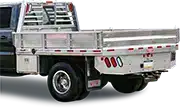
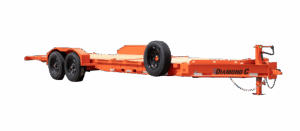






You just bought a new trailer. Maybe it is a Diamond C FMAX gooseneck flatbed, an HDT equipment trailer, or an H&H trailer for moving a skid steer. Now comes the part nobody warns you about: determining which Indiana registration category matches both the trailer’s declared weight and the way you will actually use it. Registering a trailer incorrectly can result in additional fees, citations, or enforcement problems during a roadside inspection.
Here is how farm trailer registration and general or commercial-use trailer registration work in Indiana, where each category fits, and what questions you should answer before filing the title and registration paperwork. One important point comes first: Indiana does not simply divide every trailer into “farm” and “commercial” categories. A farm trailer must meet specific agricultural-use requirements and generally must have a declared gross weight greater than 9,000 pounds. Many smaller trailers, including common 7,000-pound utility trailers, use Indiana’s general trailer registration even when a farmer owns them.
What a Farm Plate Actually Means in Indiana
Indiana farm registration is available for qualifying trucks, trailers, semitrailers, and semitractors used in agricultural operations. For a farm trailer, Indiana generally requires a declared gross weight greater than 9,000 pounds. The trailer must be used in agricultural pursuits that are usual and normal to the owner’s farming operation, such as transporting the farm’s products, livestock, machinery, or supplies to or from the farm or ranch. The operative word is agricultural. Owning rural property or occasionally carrying garden supplies does not automatically make a trailer eligible.
Indiana does not establish farm eligibility solely by acreage, income, trailer body style, or the owner’s occupation. The BMV may evaluate the declared weight, ownership, cargo, destination, and actual use. A qualifying trip might involve moving the farmer’s own cattle, grain, hay, seed, fertilizer, tractor attachments, or other supplies used in the farming operation. Indiana’s statutory definition of farm products does not include lumber, logs, wood chips, bark, or sawdust, so a timber, logging, or wood-products business should not assume that its cargo qualifies merely because it originated on rural land.
The main restriction is that a farm-registered trailer cannot become a general-purpose business trailer. It is not intended for hauling freight for compensation, supporting a separate construction or landscaping business, or transporting agricultural products beyond the first point of processing. Carrying your own harvested crop to the appropriate initial market or processing point can fit the farm use, but hauling processed products, moving another business’s equipment, or transporting a neighbor’s property for pay can move the operation outside the farm-registration rules. A qualifying farm vehicle may also be used for personal purposes, but that permission does not convert it into a vehicle for an unrelated commercial enterprise.
A farm plate is not subject to a blanket Indiana prohibition on Interstate travel, and Indiana’s registration law should not be confused with the federal covered-farm-vehicle exemptions. A covered farm vehicle must satisfy federal ownership, identification, cargo, and non-for-hire conditions. When its actual or rated weight is 26,001 pounds or less, the federal covered-farm-vehicle exemptions can apply throughout the United States. Above 26,001 pounds, those exemptions generally apply anywhere within the vehicle’s home state and during qualifying interstate travel within 150 air miles of the farm or ranch. Travel beyond those limits can trigger federal driver, carrier, inspection, hours-of-service, registration, fuel-tax, and operating-authority requirements. A farm plate therefore does not provide unlimited authority to cross state lines or haul commercially.
What a Commercial Plate Covers
“Commercial plate” is commonly used as shorthand, but Indiana’s actual registration categories are more specific. A lighter trailer may receive a general trailer registration, while a heavier non-farm trailer may receive a weight-based trailer registration. The deciding factors include the trailer’s declared gross weight and whether it qualifies for a special registration category. A trailer used in business does not automatically receive a plate with the word “commercial” printed on it, and a general trailer plate does not make business use exempt from commercial motor vehicle regulations.
Non-farm or commercial-use registration is generally appropriate when the trailer is used to carry equipment, materials, inventory, or goods for a business outside a qualifying agricultural operation. This includes:
- Landscaping businesses hauling mowers, compact equipment, mulch, soil, and job-site supplies
- Contractors moving skid steers, mini excavators, generators, attachments, building materials, and tools
- Dealers and other businesses transporting inventory, machinery, vehicles, or customer property under an applicable registration and operating arrangement
- Carriers hauling property for hire or compensation, subject to all required state and federal carrier rules
- Operations that regularly cross state lines for business and do not qualify for a farm or other statutory exemption
Indiana determines a trailer’s registration weight by its declared gross weight, not automatically by the manufacturer’s GVWR. For a trailer, declared gross weight is generally the trailer’s empty weight plus the heaviest load it will carry during the registration year. The manufacturer’s certification label remains essential because it identifies the VIN, GVWR, axle ratings, and other safety information, but it does not by itself determine the declared registration weight. A business cannot register a trailer at an artificially low weight and then legally operate above that declared amount, and registering at a higher weight never increases the trailer’s manufacturer-rated payload or GVWR. The certification-label location varies by manufacturer and model, so check the tongue, frame, gooseneck structure, or other location specified by the manufacturer.
Non-farm registration provides broader cargo flexibility than a farm plate, but it does not grant unrestricted authority to haul anywhere or for anyone. Depending on the truck, trailer, weight, cargo, route, and whether compensation is involved, an operator may also need a USDOT number, appropriate operating authority, Unified Carrier Registration, apportioned registration under the International Registration Plan, fuel-tax credentials, permits, commercial insurance, inspection compliance, or a properly licensed driver. Plate classification, vehicle safety rules, and motor-carrier authority are separate legal questions.
The Cost Difference: What the BMV Tells You vs. What You Actually Pay
Farm registrations receive reduced base registration fees, but the savings apply only when the vehicle and its use qualify. Under the Indiana BMV fee schedule effective January 1, 2026, the listed annual base fee is $16.35 for a trailer with a declared gross weight of 3,000 pounds or less and $25.35 for a trailer with a declared gross weight of 9,000 pounds or less. Weight-based trailer fees are $72 for 12,000 pounds or less, $108 for 16,000 pounds or less, $168 for 22,000 pounds or less, and $228 for more than 22,000 pounds. Qualifying farm-vehicle base registration fees are generally one-half of the corresponding listed amount. For example, the listed base fee for a non-farm trailer declared at 14,000 pounds is $108, while the corresponding qualifying farm base fee is generally $54.
Those figures are base registration fees, not necessarily the entire amount due. Excise tax, commercial vehicle excise tax, county or municipal wheel tax, title charges, administrative fees, and other transaction-specific charges can affect the total. Trailers with a declared gross weight of 9,000 pounds or less generally have an $8 flat excise tax, while heavier trailers can be subject to commercial vehicle excise tax calculations. Before registering, review the current BMV fee chart or contact the Indiana BMV with the trailer’s empty weight, intended maximum load, declared gross weight, county, ownership information, and intended use. You can start at in.gov/bmv or use the BMV branch locator.
What we can say confidently is that farm registration can reduce the lawful registration cost, but the discount comes with eligibility and use restrictions. Selecting a farm plate solely because it costs less can lead to payment of the non-farm fee difference, penalties, and enforcement action if the trailer is later used in an unrelated business. The correct comparison is not simply the farm fee against the non-farm fee. It is the total lawful cost for the actual work the trailer will perform.
A Practical Comparison
| Factor | Farm Plate | Commercial Plate |
|---|---|---|
| Who qualifies | Qualifying agricultural operations with a farm trailer declared above 9,000 pounds and used in the operation’s usual agricultural pursuits | General or weight-based registration for trailers that do not qualify for farm registration, including trailers used in non-farm businesses |
| Allowed cargo | Qualifying farm products, livestock, farm machinery, and supplies transported to or from the farm or ranch within the statutory limits | Any legal cargo or equipment consistent with the registration weight, manufacturer ratings, insurance, and applicable carrier rules |
| Hauling for hire | Not permitted as for-hire transportation under the farm and covered-farm-vehicle conditions | Possible only when the operator also satisfies applicable licensing, insurance, USDOT, authority, and carrier requirements |
| Interstate travel | Possible in qualifying situations, but federal covered-farm-vehicle limits and other-state requirements must be followed | Possible, but a plate alone does not replace IRP, IFTA, USDOT, operating-authority, permit, or safety requirements |
| Registration cost | Generally one-half of the corresponding base registration fee, plus applicable taxes and charges | General or weight-based fee determined by declared gross weight, plus applicable taxes and charges |
| Use flexibility | Limited to qualifying agricultural and permitted personal use | Broader cargo flexibility, subject to all vehicle, driver, carrier, and operating rules |
Which Trailer Gets Which Plate?
The trailer’s brand or body style does not dictate the plate. The declared gross weight and actual use do. A flatbed, dump trailer, equipment trailer, livestock trailer, or enclosed trailer can potentially serve an agricultural operation, but that does not mean every example qualifies for a farm plate. Indiana’s farm trailer category generally begins above 9,000 pounds of declared gross weight, so a common tandem-axle utility trailer declared at 7,000 pounds uses general trailer registration even when it carries supplies for a farm.
A heavier grain, livestock, dump, or equipment trailer can qualify when it is used by the farming operation to transport the farm’s products, animals, machinery, or supplies within the permitted scope. The same trailer should use non-farm registration when it is assigned to a construction company, landscaping company, rental operation, freight business, or other commercial enterprise. A Diamond C FMAX gooseneck flatbed used to move the farmer’s own tractor and baler can present a different registration case from an identical FMAX used to haul customers’ machinery for compensation.
The gray area is a mixed-use operation. A farmer may grow crops while also providing custom harvesting, excavation, trucking, or equipment-hauling services for pay. When the same vehicle has both qualifying farm use and unrelated commercial use, non-farm registration is generally the safer starting point. Indiana also provides a Certificate of Designation as a Covered Farm Vehicle, State Form 55669, for certain otherwise commercially registered vehicles while they are being operated in qualifying farm service. The form does not turn an unrelated commercial trip into farm use, and it does not excuse the owner from meeting every condition of the covered-farm-vehicle exemption.
On the trailers and truck equipment available through Spencer Trailers, the registration analysis commonly looks like this:
- Diamond C flatbeds and goosenecks: the FMAX line consists of gooseneck flatbeds with model-dependent GVWRs extending from approximately 15,500 pounds to 40,000 pounds. Diamond C HDT and LPX equipment trailers and DEC deck-over equipment trailers also fall into weight classes where farm or weight-based non-farm registration may be relevant. Their substantial ratings do not decide the plate; the declared weight and use do.
- H&H equipment trailers: these are frequently registered for contractor, landscaping, rental, or other non-farm business use, but a qualifying agricultural operation may use an appropriately declared heavier model under farm registration when every statutory condition is met.
- Liberty and Delco utility trailers: many smaller utility configurations fall at or below the 9,000-pound declared-weight ceiling for Indiana’s general trailer category. Even when used around a farm, those lighter trailers do not become farm-plated trailers because Indiana generally requires a farm trailer to be declared above 9,000 pounds.
- Darkhorse Cargo enclosed trailers: these commonly receive general or weight-based non-farm registration for personal, contractor, mobile-service, or inventory use. An enclosed body neither creates nor eliminates farm eligibility; the declared weight, cargo, ownership, and operation remain controlling.
- Zimmerman and Martin truck beds: a replacement or upfit truck bed is part of the truck rather than a separately registered trailer. The completed truck’s registration, declared weight, manufacturer or alterer certification, and commercial or farm use must be evaluated at the truck level.
A Quick Q&A
Can I switch from a farm plate to a commercial plate mid-year?
Yes. The BMV can reclassify the registration when the trailer’s use changes. You may owe the difference between the farm and applicable non-farm fees, along with any taxes or transaction charges. Make the change before beginning nonqualifying work rather than waiting for a registration renewal or roadside inspection. If the trailer will retain qualifying farm use while also being commercially registered, ask whether State Form 55669 is appropriate for the qualifying farm trips.
Does my trailer need its own plate in Indiana?
Generally, yes. A road-going trailer must be separately titled and registered and must display its own plate unless a specific statutory exemption applies. This includes trailers with a gross weight of 3,000 pounds or less. Indiana offers an annual registration for those trailers and also lists a permanent 3,000-pound trailer registration option. The 3,000-pound figure should not be treated as a general exemption from registration. It is also separate from Indiana’s braking requirement: a trailer over 3,000 pounds GVWR must have brakes as required by Indiana Code 9-19-3-3.
What happens if I use a farm-plated trailer for commercial hauling?
Improper commercial use can result in an Indiana infraction, assessment of the registration fees that should have been paid, and other enforcement consequences. Indiana law can also allow a law-enforcement officer to take the improperly registered vehicle into custody until the proper registration is obtained and the required fees are paid, subject to statutory handling of loads such as livestock or perishable agricultural products. Separate violations involving weight, brakes, driver licensing, carrier authority, or vehicle condition can create additional citations or an out-of-service order.
Does the axle count or GVWR affect farm plate eligibility?
Axle count alone does not establish farm eligibility. For registration, Indiana focuses on declared gross weight and qualifying use; a farm trailer generally must be declared above 9,000 pounds. The manufacturer’s GVWR and axle ratings still control the trailer’s safe and legal carrying capacity. They also matter for braking, inspection, and driver-licensing analysis. A Class A CDL is generally triggered when the combination has a GCWR or actual combined weight of at least 26,001 pounds and the towed unit has a GVWR or actual weight greater than 10,000 pounds, using the applicable greater values. That is a combined threshold, not a rule that every trailer over 10,000 pounds independently requires a CDL. A qualifying covered farm vehicle may have specific federal exemptions, but the operator must meet every condition before relying on them.
Before You Leave the Lot
When you pick up a new trailer, collect the Manufacturer’s Certificate of Origin or assigned title, purchase paperwork, and any properly issued temporary registration documents. Record the VIN, empty weight, GVWR, Gross Axle Weight Ratings, and tire information from the manufacturer’s certification label. You will need the empty weight and the heaviest load you reasonably expect to carry to calculate the declared gross weight for registration. A 7,000-pound GVWR does not automatically mean the trailer is registered at 7,000 pounds, but the declared amount can never authorize operation beyond the trailer’s manufacturer ratings.
Indiana generally requires the purchaser to apply for title and registration within 45 days after acquiring the trailer. Missing that window can result in a late-title penalty and a separate registration administrative penalty. The 45-day period is not permission to operate indefinitely without a valid plate, properly issued interim registration, or another lawful temporary arrangement. For classification and fee questions, contact the Indiana BMV. For farm-vehicle operating restrictions and roadside-enforcement questions, the Indiana State Police Commercial Vehicle Enforcement Division is the more appropriate enforcement resource. Interstate carriers may also need guidance from the Indiana Department of Revenue’s Motor Carrier Services division.
Got questions about what is on our lot and what GVWR ranges you are working with? Reach out to us directly or come by the lot at 291 West State Hwy 46 in Spencer. We can show you the manufacturer’s certification label, GVWR, axle ratings, and empty-weight information available for any trailer we sell. Browse our current inventory to see the latest Diamond C, H&H, Liberty, and other available trailers. We can help you identify the trailer specifications, while the BMV and applicable motor-carrier agencies make the final determination about registration, operating authority, and licensing for your specific use.


