












Trailer Financing Scenarios: Common Buyer Situations
Most people who walk onto our lot already have a job in mind for the trailer. A landscaper is pricing a 7×14 dump for mulch, brush, gravel, and cleanup debris. A horse owner is ready to stop borrowing a neighbor’s livestock trailer. A contractor wants to preserve working capital while purchasing equipment before the end of the tax year. Where buyers often get stuck is figuring out how financing works for their particular mix of trailer type, credit history, income, business use, down payment, and tow vehicle.
The examples below show how these situations commonly develop, but they are not financing offers or guaranteed approval terms. Rates, required down payments, loan lengths, and documentation vary by lender and applicant. Any payment example is based on a stated hypothetical interest rate so buyers can see the math instead of relying on a payment estimate that may not match their approval.
The Landscaper Financing a Dump Trailer
Picture a solo landscaper running several residential accounts each day. He has been renting a dump trailer for weekend cleanups, but rental charges, pickup schedules, mileage, and lost work time are starting to cost more than ownership. He is ready to buy a 7×14 tandem-axle dump with an electric tarp and enough capacity for landscaping and light construction work.
A current Diamond C LPT207 is a useful example of what a premium heavy-duty dump looks like in this size. The 82-inch-by-14-foot configuration is available with a 15,500 lb GVWR, two 7,000 lb Lippert axles, electric brakes, a three-stage telescopic cylinder, and a dump angle of approximately 45 degrees. Depending on the exact build, buyers may add an electric tarp, loading ramps, side extensions, upgraded tires, a solar charging system, or other job-specific equipment. Current Spencer Trailers listings for 2026 LPT207 units have generally ranged from the mid-$15,000s into the upper-$18,000s as equipment and option packages change.
GVWR should not be confused with payload capacity. The trailer’s empty weight, tarp, spare tire, ramps, side extensions, tools, and other installed equipment all count against the amount of material it can legally carry. A buyer should use the VIN plate and the actual configured trailer weight when determining available payload rather than assuming a 15,500 lb GVWR trailer can carry 15,500 pounds of cargo.
Assume the landscaper finances $16,500 for 60 months. At a hypothetical fixed APR of 10%, the payment would be approximately $351 per month. The actual financed amount may be higher or lower after the down payment, trade allowance, applicable sales tax, title and registration charges, and other disclosed transaction costs. The approved APR can also move the payment significantly, so the buyer should compare the total amount paid over the loan, not just the monthly number.
That payment may still compare favorably with repeated rentals, but ownership brings its own costs. The landscaper should budget for registration, insurance, tires, wheel-bearing service, brake maintenance, hydraulic-system care, battery charging, and eventual repairs. The right comparison is the total cost of renting against the total cost and productive value of owning the trailer.
If the trailer is used in an active landscaping business, the business-use share of loan interest and depreciation may be deductible, subject to federal tax rules and the buyer’s circumstances. Financing the trailer does not by itself prevent depreciation, but a tax deduction is not the same as receiving the purchase price back in cash.
The practical detail many self-employed buyers miss is documentation. Depending on the lender, a sole proprietor may be asked for recent bank statements, personal tax returns, Schedule C filings, proof of residence, identification, and evidence of current income. Some approvals rely primarily on personal credit, while others receive more complete commercial underwriting. Having accurate documents ready can prevent an otherwise straightforward application from stalling.
The tow vehicle also has to be matched to the loaded trailer. Buyers should verify the truck’s tow rating, payload rating, rear-axle rating, hitch rating, gross combination weight rating, and available payload after passengers, tools, and tongue weight are included. Indiana law requires a trailer or semitrailer with a gross weight of at least 3,000 pounds to have brakes that the driver can apply from the cab, along with automatic application in an accidental breakaway. A properly installed brake controller and charged breakaway battery are therefore essential equipment for a dump trailer in this class.
The Contractor Who Runs It Through Section 179
A general contractor buys a Diamond C LPX207 equipment trailer. A common configuration is 82 inches wide and 22 feet long overall, with approximately 20 feet of flat deck and a 2-foot dovetail. Depending on how it is ordered, an LPX207 may be rated at 14,900 or 15,500 lb GVWR and use two 7,000 lb Lippert axles. Loading choices can include heavy-duty Flip-Knee ramps, MAX Ramps, and other configuration-specific equipment. The contractor selects the ramp package, tie-down arrangement, spare tire, and winch provisions needed for compact equipment and jobsite materials. Assume his completed invoice is $13,800.
The LPX is a low-profile heavy-duty equipment trailer, and its exact payload depends on its GVWR, empty weight, deck length, width, options, and axle configuration. Buyers moving skid steers, mini excavators, lifts, or compact tractors should compare the actual machine weight, attachments, buckets, fuel, tools, and trailer weight before choosing a rating. The equipment also has to be positioned so that axle loads and tongue weight remain within their limits.
Section 179 allows an eligible business to elect to expense qualifying property placed in service during the tax year rather than recovering all of the cost through regular depreciation. For tax years beginning in 2026, the federal Section 179 limit is $2,560,000, with the deduction beginning to phase out when total qualifying property placed in service exceeds $4,090,000. Those limits are far above the price of one trailer, but they do not mean every buyer automatically receives a full deduction.
The trailer must qualify under the tax rules, be acquired for an active trade or business, and be placed in service during the year for which the deduction is claimed. Placed in service generally means the trailer is ready and available for its intended business work. Merely ordering it, paying a deposit, signing loan documents, or leaving it unused until the following year may not satisfy that requirement.
Section 179 is also subject to a business-income limitation. A business may not be able to use the entire election in the current year if it lacks sufficient qualifying taxable income, although an unused amount may be carried forward under the applicable rules. The contractor’s entity type, other equipment purchases, income, and existing deductions can all affect the result.
Financing does not limit the potential deduction to the cash down payment. If the contractor purchases and owns the trailer, places it in service, and otherwise qualifies, the financed portion can generally remain part of the trailer’s tax basis. He may therefore keep more cash available for payroll, materials, fuel, and receivables while paying the equipment note over time. At a hypothetical 10% APR, financing $13,800 for 48 months would produce a payment of approximately $350 per month, before any additional financed costs.
Businesses should also discuss bonus depreciation with their tax professional. Federal law restored a 100% additional first-year depreciation deduction for qualifying property acquired and placed in service after January 19, 2025, subject to the statutory requirements and transition rules. Section 179 and bonus depreciation work differently, and the best order or combination depends on the business’s income, entity structure, state tax treatment, and future plans.
For mixed-use property, Section 179 generally requires business use of more than 50%. Only the qualifying business-use portion is potentially deductible. If business use later falls to 50% or less during the recovery period, part of a prior Section 179 benefit may have to be recaptured as income. A contractor who occasionally uses the trailer personally should keep contemporaneous records showing dates, destinations, jobs, cargo, and business purpose.
The contractor should give his CPA the final purchase agreement, invoice, financing documents, title information, placed-in-service date, and business-use records. Spencer Trailers can provide the sales and title documents generated at closing, but the buyer’s tax professional must determine eligibility and prepare the return.
The Horse Owner Who Needs a Stock Trailer Fast
A boarding-stable owner needs to move horses between properties starting in six weeks. She is looking for a 24-foot steel gooseneck livestock trailer, such as a Delco steel livestock trailer or another current stock-trailer configuration, with gates or dividers appropriate for the animals she plans to haul.
A 24-foot Delco gooseneck livestock trailer is commonly found in a 14,000 lb GVWR configuration with tandem torsion axles, although ratings, axle packages, widths, roofs, gate arrangements, tack areas, and commercial configurations vary. A buyer should verify the VIN plate and build sheet rather than assuming every 24-foot trailer has the same running gear or capacity.
For horse use, length and price are only part of the decision. The owner should evaluate interior height and width, ventilation, floor condition, wall construction, gate spacing, divider design, rear-door operation, escape access, roof style, lighting, tire rating, and the suitability of the floor surface for horses. A stock trailer intended to carry horses must be configured and operated so the animals can be loaded, separated, ventilated, and transported safely.
Current market pricing for a new 24-foot steel Delco gooseneck livestock trailer generally falls in the high teens to low-$20,000s, with metal roofs, tack rooms, premium gates, added height, rubber flooring, and stock-combination layouts pushing some builds farther into the $20,000s. Actual Spencer Trailers inventory and pricing can change as units are sold, reordered, or configured differently.
Assume she finances $19,000 for 60 months. At a hypothetical 10% APR, the payment would be approximately $404 per month. A down payment would reduce the financed amount, while taxes, registration costs, optional equipment, and lender-approved add-ons could increase it. A payment under $200 would generally require a much smaller financed balance, a longer term, a substantial down payment, or an unusually low rate.
Good credit and stable income can make the application easier, but no credit-score range guarantees a rate or approval. The lender may evaluate personal credit, debt obligations, income, business history, time at residence, collateral value, and the amount requested. A boarding operation applying through a business may also be asked for an EIN, organizational documents, bank statements, tax returns, and a personal guarantor.
Some straightforward applications can receive a decision quickly, while commercial files, identity-verification issues, title questions, or requests for additional documents may take longer. Buyers working against a firm hauling date should apply early, confirm that the exact trailer is available, and allow time for insurance, a brake-controller check, hitch installation, registration, and any horse-specific preparation.
The tow vehicle is especially important with a gooseneck livestock trailer because live cargo moves. The owner should verify the truck’s gooseneck rating, payload capacity, rear-axle rating, tire capacity, hitch rating, and gross combination weight rating. The combined weight of the trailer, horses, water, feed, tack, panels, passengers, and other equipment must remain within every applicable rating.
The Side-Hustle Buyer With Mixed Personal and Business Use
This situation is more common than people admit. Someone hauls tools and material for a landscaping or handyman business on weekends, but the same trailer is also used to move furniture for family members or carry recreational equipment. The trailer can still be financed, but the correct application type and tax treatment depend on the actual use and the lender’s program.
Some lenders will finance a sole proprietor primarily on personal credit, while others may treat the transaction as commercial equipment financing. A buyer should answer use questions accurately. Describing a primarily commercial trailer as personal property to obtain a different program can create problems with the lender, insurance coverage, titling, or a later claim.
For tax purposes, only the documented business-use share is potentially deductible. A simple use log should record the date, destination, business purpose, customer or project, and miles or hours associated with each business trip. Receipts, invoices, calendars, and work orders can support the log. Personal hauling should be separated rather than included as a business expense.
Section 179 generally requires more than 50% qualified business use. A buyer at or below that threshold may still be able to depreciate the business-use portion under other rules, but should not assume the entire purchase qualifies for immediate expensing. If use begins above 50% and later drops to 50% or less, recapture rules may apply.
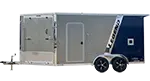
In terms of product, a buyer in this position often chooses a 6.5×12 or 7×14 enclosed trailer from Darkhorse Cargo or Wells Cargo. Current tandem-axle Darkhorse examples include 7,000 lb GVWR configurations with two 3,500 lb axles and electric brakes. Recent Spencer Trailers pricing has been approximately $6,750 for some 6.5×12 units, around $7,000 for some 6.5×14 units, and approximately $7,500 for certain 7×14 units, subject to model year, height, doors, interior construction, options, and availability.
A 7,000 lb GVWR enclosed trailer does not have a 7,000 lb payload. The empty trailer, spare tire, shelving, cabinets, flooring upgrades, generator, tools, and cargo all count toward gross weight. Buyers planning a mobile workshop should estimate the finished build rather than selecting the trailer based only on its empty factory configuration.
Financing $7,000 for 48 months at a hypothetical 10% APR would produce a payment of approximately $178 per month. That payment is an illustration, not a promised rate. A shorter term, higher APR, smaller down payment, or financed taxes and fees would increase the monthly obligation.
The trailer should also be titled and insured consistently with its real ownership and use. If the business owns the trailer, the insurance policy and loan documents should reflect that structure. If an individual owns it and uses it partly for business, the owner should tell the insurance agent how it will be used and what equipment or inventory will normally be inside.
The First-Time Buyer Who’s Never Financed Equipment
Not everyone who walks in has an established business or previous equipment loan. Some first-time buyers want a utility or cargo trailer for ATVs, lawn equipment, home projects, a compact tractor, or occasional vehicle hauling. Their credit file may be short, their score may fall in a middle range, or their income may be stable even though they have limited installment-loan history.
In this situation, the lender may offset risk through the approved rate, maximum term, loan amount, or required down payment. One lender may approve the full purchase amount, while another may ask for 10% to 20% down. A $6,000 trailer with 15% down would require $900 at closing before considering taxes, registration, insurance, or other disclosed charges. These percentages are examples rather than universal requirements.
A practical first-time choice might be a single-axle Liberty utility trailer below 3,000 lb GVWR, a tandem utility trailer in the 7,000 lb class, or a Diamond C GTU. The Diamond C GTU is a premium tandem-axle bumper-pull utility trailer with a 7,000 lb GVWR, two 3,500 lb axles, and a 4-inch channel frame. The right choice depends on cargo weight, loading method, tow vehicle, storage space, frequency of use, and the buyer’s realistic budget.
A trailer rated at 6,990 lb does not automatically become a personal-use vehicle or receive a particular consumer rate. Lenders classify transactions according to their own underwriting rules, including stated use, trailer type, loan amount, borrower profile, and ownership structure. Two nearly identical trailers can receive different terms when one is purchased for recreation and the other is purchased for daily commercial work.
Buyers should also understand the legal difference between lighter and heavier trailers. In Indiana, a trailer or semitrailer with a gross weight of at least 3,000 pounds must be equipped with adequate brakes that can be applied from the towing vehicle’s cab and that activate automatically during an accidental breakaway. A buyer moving from a small unbraked utility trailer to a tandem model may therefore need a compatible seven-way connection, brake controller, charged breakaway battery, and properly rated hitch equipment.
The truck or SUV’s advertised maximum tow rating is not the only number that matters. Passenger weight, cargo in the tow vehicle, hitch equipment, tongue weight, and accessories reduce available payload. The receiver, ball mount, hitch ball, coupler, tires, wheels, axles, and safety chains must each be appropriately rated. The lowest applicable rating controls the safe limit.
Indiana residents generally must apply for title and register a newly acquired, previously unregistered vehicle within 45 days of purchase or acquisition to avoid administrative penalties. Buyers should not treat that 45-day period as permission to tow without the registration, plate, temporary permit, insurance, or other documents required for the trip.
The takeaway is not to assume that a shorter credit history makes approval impossible. It may mean a different down payment, term, rate, co-borrower requirement, or trailer budget. A payment that fits comfortably after insurance, maintenance, storage, and towing expenses is usually better than stretching for the largest amount a lender will approve.
The Business Expanding Its Fleet
A roofing, excavation, construction, or property-maintenance company already owns two trailers and needs a third. The company is adding a crew and needs another equipment trailer, car hauler, or heavy-duty flatbed-style unit to move tools, machinery, pallets, and jobsite materials. This can be structured as a commercial transaction, with the business identified as the borrower and the trailer recorded as a business asset.
Using the company’s EIN does not necessarily remove the owners from the application. Many small-business equipment lenders require a personal guarantor, particularly when the business is closely held or the requested amount is modest. The lender may review both business and personal credit, along with time in business, industry, cash flow, existing debt, bank activity, and payment history.
Two years in business can strengthen an application, but it is not a universal minimum. A newer company may still qualify through the guarantor’s credit, a larger down payment, strong bank statements, contracts, prior industry experience, or a lower loan amount. An established company with weak cash flow can still face more scrutiny than a younger operation with strong financial support.
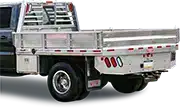
A Diamond C LPX207 in the 14,900 or 15,500 lb GVWR class can fit a company moving compact equipment, while LPX208 and LPX210 configurations provide higher GVWR and axle options for heavier work. Current Diamond C LPX models use Lippert axles, with the axle capacity changing by model. An H&H open car hauler or equipment trailer may be appropriate for lighter vehicles and machinery. Current pricing for these categories can run from roughly the upper-$7,000s or $8,000s for lighter car haulers into the mid- or upper-$10,000s for higher-capacity LPX and premium equipment configurations.
The company should choose the trailer by payload, deck dimensions, loading angle, ramp system, tie-down layout, axle rating, tire capacity, and intended cargo rather than price alone. Pallets of shingles, compact loaders, attachments, debris containers, and crew tools can consume payload quickly. Loads must be secured for the specific cargo, and weight should be distributed so that tongue weight and axle loading remain within their limits.
Commercial buyers should also evaluate licensing before selecting a higher-GVWR trailer. A Class A CDL threshold is based on the combination, not the trailer by itself. Under the federal Group A definition, the combination must have a gross combination weight rating of at least 26,001 pounds and the towed vehicle or vehicles must have a GVWR above 10,000 pounds. A trailer over 10,000 lb GVWR does not, by itself, trigger a Class A CDL when the combination remains below 26,001 pounds. Commercial operations may still be subject to other state or federal motor-carrier requirements, so the company should evaluate the complete truck-and-trailer combination and how it will be used.
Repeat fleet buyers may benefit from an existing payment record, familiar documentation, and an established lender relationship. That can reduce back-and-forth, but it does not guarantee automatic approval. New debt, changes in credit, increased utilization, late payments, or a larger requested amount can still affect the decision.
Quick Reference: Financing Scenarios at a Glance
| Scenario | Typical Trailer | Key Consideration |
|---|---|---|
| Landscaper, solo business | 7×14 Diamond C LPT207, 15,500 lb GVWR | Business-income documents, actual payload, and tow-vehicle capacity |
| Contractor, Section 179 | 22′ overall LPX207 equipment trailer, 14,900-15,500 lb GVWR | Must qualify and be placed in service by the end of the tax year |
| Horse/livestock owner | 24′ Delco steel gooseneck livestock trailer | Animal-safe configuration, tow capacity, insurance, and purchase timeline |
| Side-hustle, mixed use | 6.5×12 or 7×14 enclosed trailer, commonly 7,000 lb GVWR | Document business use and insure the trailer for its actual use |
| First-time buyer | Utility trailer from below 3,000 lb through the 7,000 lb class | Down payment, brake equipment, tow ratings, and lender program |
| Fleet expansion | Equipment trailer or car hauler, approximately 9,900-20,000 lb GVWR | Business underwriting, guarantor requirements, payload, and CDL threshold |
What Spencer Trailers Can Do for You
We’re a dealer, not a lender, tax preparer, insurance agency, or licensing authority. We work with financing sources that regularly handle trailer purchases, and we can help buyers understand which documents are commonly requested. Approval, rate, term, down payment, and lender conditions remain subject to the lender’s decision.
When you contact us about a trailer, tell us whether it will be purchased personally or through a business, how it will be used, what you plan to haul, and which truck will tow it. Those details help us identify a trailer with the correct deck dimensions, GVWR, payload, axle configuration, hitch type, brakes, and loading equipment before financing becomes the focus.
Business applicants can speed up the process by having identification, proof of residence, business name and address, EIN, entity documents, recent bank statements, tax returns, income records, and guarantor information available. Personal buyers should be prepared to provide accurate employment, income, residence, and insurance information. The lender may not request every document, but incomplete or inconsistent information is one of the most common causes of delay.
Buyers considering Section 179, bonus depreciation, interest deductions, or mixed-use allocations should review the transaction with a qualified tax professional. For 2026, the Section 179 maximum and phaseout thresholds are substantially higher than the cost of a typical trailer, and 100% bonus depreciation has been restored for qualifying property acquired and placed in service after January 19, 2025. Eligibility, business-income limits, business-use percentages, basis, state conformity, and recapture rules still matter.
Diamond C was founded in 1985 and builds its trailers in Mt. Pleasant, Texas. Its premium lines, including FMAX, HDT, LPT, LPX, WDT, and DEC, use Lippert axles as standard and receive the DM Difference Maker multi-stage coating process. Model, GVWR, axle, tire, ramp, brake, and frame specifications vary across the lineup, so we match the exact build to the work rather than treating every Diamond C as the same trailer.
We stock Diamond C, Liberty, Delco, Darkhorse Cargo, H&H, Legend, and Wells Cargo trailers at 291 West State Hwy 46 in Spencer, Indiana. Inventory, model years, options, and prices change as trailers are sold and new units arrive. You can browse current availability on the inventory page or reach out directly at (812) 829-0226.
Got a scenario that doesn’t fit neatly into one of these categories? That is often where a direct conversation is most useful. Give us the trailer type, cargo, tow vehicle, approximate budget, purchase timeline, and whether the use is personal, farm, or commercial, and we’ll help you work through the practical options.


