








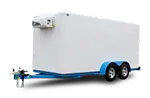


Two people, one trailer, and a handshake. That works fine until it doesn’t. Co-buying a trailer with a business partner is more common than most people realize, and it can be a smart way to preserve cash, share operating costs, and put better equipment to work sooner. But the financing, title, insurance, maintenance, and tax sides of joint ownership trip up buyers who assume everything will be simple because they trust the other person.
Trust matters, but it is not a legal document, a loan release, an insurance endorsement, or a title transfer. Here’s what you actually need to sort out before either partner signs a purchase order, finance contract, title application, or personal guarantee.
Why Co-Buying Makes Sense (and When It Doesn’t)
For illustration, split an $18,500 trailer purchase equally between two partners and each contributes roughly $9,250 instead of one person funding the entire amount. The actual out-the-door price may also include sales tax, title and registration charges, lender fees, optional equipment, delivery, and other properly disclosed charges, so base the split on the written purchase agreement rather than an advertised starting price. Sharing the purchase can preserve working capital for fuel, insurance, tie-down equipment, maintenance, payroll, and the truck needed to tow the trailer safely.
Joint financing may also be useful when both partners are legitimate borrowers or guarantors and both businesses contribute reliable cash flow. Equipment-finance terms vary by lender, loan amount, trailer age, collateral value, borrower history, down payment, and useful life. Some lenders offer multi-year terms on trailers, but a second applicant does not automatically produce a lower rate. The additional applicant may strengthen repayment capacity, or a weaker credit profile may make approval more expensive. Compare written offers based on interest rate, annual percentage rate when disclosed, total finance charge, payment schedule, prepayment terms, collateral requirements, and personal guarantees.
Where co-buying breaks down is when one partner uses the trailer 80% of the time, one partner’s truck cannot safely tow it, the two businesses need different insurance coverage, or the partnership itself is informal. Trailer ownership also does not change towing limits or driver-license rules. For commercial operation, a Class A CDL is generally triggered when the combination has a gross combination weight rating or gross combination weight of at least 26,001 pounds and the towed unit has a GVWR or gross weight over 10,000 pounds. A trailer rated over 10,000 pounds does not, by itself, create the Class A threshold when the entire combination remains below 26,001 pounds. Each partner must separately confirm the tow vehicle’s payload, GVWR, GCWR, hitch rating, receiver or gooseneck rating, axle ratings, tire ratings, and legal operating requirements.
Title and Registration: Who Goes on the Paperwork
In Indiana, the trailer’s title identifies the legal owner or owners, while the registration identifies who is authorized to register and operate it. Titling and registration are handled through the Indiana Bureau of Motor Vehicles, participating providers, or the selling dealer when dealer processing is available, not through a county title office. The purchaser generally must apply for an Indiana title within 45 days after acquiring the trailer to avoid the administrative late-title penalty. Depending on the transaction, the file may require the manufacturer’s certificate of origin or properly assigned existing title, purchase agreement, sales-tax documentation, identification, lien information, and signed title application. Company registrations require appropriate entity documentation and proof of insurance. Indiana also permits eligible owners to choose an electronic or paper title.
There are two practical ownership structures to consider:
- Both individuals as titled owners. Both partners’ legal names appear in the ownership record. Indiana’s published procedures require all owners to sign the application when an owner is added, and all titled owners generally must complete the seller portion when the trailer is transferred. Do not assume that punctuation, possession of the paper title, or one partner’s access to the trailer gives that person unilateral authority to sell a jointly titled asset.
- A jointly owned business entity as the titled owner. The LLC, corporation, or partnership’s exact legal name appears on the title. The person signing for the company must have authority under the operating agreement, bylaws, resolutions, or other governing documents. A lender may also require the entity’s federal tax identification number, organizational documents, beneficial-owner information, and personal guarantees.
For business partners who want mutual control, the title, operating agreement, loan documents, and co-ownership agreement should all point in the same direction. A private agreement stating that both partners must approve a sale is useful between the partners, but it does not eliminate a lender’s lien or override BMV requirements. If the trailer is individually titled, make sure both owners are properly recorded from the beginning and that the written agreement prohibits an unauthorized transfer, pledge, lease, or disposal.
If the trailer is owned by an LLC or another business entity, the company must be properly organized or authorized to do business in Indiana and able to provide the documents required for a company title and registration. Entity ownership can simplify accounting when the same company earns the revenue and pays all trailer expenses, but it does not automatically eliminate personal liability, personal guarantees, tax filing obligations, or the need to identify every actual driver and user to the insurance carrier.
Financing With a Co-Borrower
Lenders may use the terms co-borrower, co-applicant, co-signer, and guarantor differently, so read the actual contract instead of relying on the label. A true co-borrower is normally a direct obligor on the debt and may be responsible for the full unpaid balance, not merely one-half. A co-signer or guarantor also accepts substantial repayment responsibility but may have no ownership interest or right to possess the trailer. The names on the title and the names obligated on the loan are related issues, but they are not automatically identical.
Both personal and business credit information may be reviewed. A lender can consider payment history, debt obligations, cash flow, time in business, collateral value, down payment, guarantor strength, and the intended use of the trailer. There is no universal rule requiring lenders to average two FICO scores or use only the lower score. Ask each lender which applicants will be borrowers, which people must guarantee the debt, whether a hard credit inquiry will be made, and whether the quoted payment includes every financed fee. Compare at least two written proposals whenever practical.
For business financing specifically, you may be asked for:
- Recent business and personal tax returns, with the number of years determined by the lender and the age of each business
- Current business bank statements, financial statements, debt schedules, or evidence of recurring revenue
- Articles of organization or incorporation, an operating or partnership agreement, certificates of existence, ownership details, and proof that the borrowing entity is active
- A purchase order, trailer description, intended business use, insurance information, down-payment source, and personal-guarantee documents
A heavily optioned enclosed trailer, equipment trailer, dump trailer, or gooseneck can reach a loan amount where the lender asks for full business documentation, but the request is driven by the lender’s underwriting policy rather than a particular trailer brand or model. Before applying, decide whether one shared entity will borrow and own the trailer or whether two individuals will borrow jointly. Mixing an entity borrower, individual title, separate-business insurance, and informal cost sharing can create avoidable problems at closing and later during a claim or buyout.
The Written Agreement: Don’t Skip This
This is the part many partners skip because they assume a written agreement implies distrust. It doesn’t. A co-ownership or shared-equipment agreement establishes the rules while everyone is still cooperative. It also gives an attorney, accountant, insurance agent, and lender one consistent description of who owns the trailer, who pays for it, and how it will be used.
At minimum, your agreement should cover:
- Usage schedule. State how reservations are made, whether either partner has priority on certain days, how much notice is required, where the trailer must be returned, and how emergencies are handled. Include rules for lending, renting, or allowing employees, subcontractors, family members, or customers to tow it. Record mileage, trips, hours of hydraulic use when relevant, and the identity of the tow vehicle and driver.
- Cost sharing. Cover the down payment, loan payments, interest, insurance premiums, title and registration charges, storage, maintenance, roadside assistance, tolls, parking, cleaning, tires, brakes, bearings, hydraulic service, batteries, and unexpected repairs. Specify whether costs are split 50/50, allocated by ownership percentage, or adjusted according to actual usage. Also state what happens when one partner pays more than required or fails to contribute on time.
- Maintenance responsibilities. Identify who performs pre-trip inspections, schedules service, keeps receipts, and approves repairs. A 7,000-pound-GVWR tandem-axle trailer is clearly within Indiana’s brake requirements: a trailer or semitrailer with a gross weight of at least 3,000 pounds must have brakes adequate to control, stop, and hold it, operable from the tow vehicle, with automatic breakaway application. Inspection intervals should follow the trailer, axle, brake, tire, wheel, hydraulic, and coupler manufacturers’ instructions rather than relying on a vague annual check. Include wheel fastener torque, tire pressure and condition, brake operation, breakaway battery, lights, safety chains, coupler or gooseneck, bearings, ramps, deck, tie-down points, and hydraulic components.
- Damage and liability. If one partner backs an H&H car hauler into a fence, overloads the trailer, damages a ramp, loses cargo, or allows an unapproved employee to tow it, the agreement should define who reports the claim, pays the deductible, covers excluded damage, and compensates the other partner for loss of use. It should also address citations, impound charges, negligent loading, inadequate cargo securement, and damage caused by an unsuitable tow vehicle.
- Buyout terms. Define the valuation process, notice procedure, payment method, lender approval, title transfer, lien payoff, tax allocation, and deadline before anyone wants out. A buyout promise is incomplete if it does not explain how the departing partner will be released from the loan and personal guarantee.
- Dissolution terms. State what triggers a mandatory sale, how a deadlock is resolved, whether one partner can force an appraisal or auction, who controls the listing, how a minimum acceptable price is set, and how the net proceeds or deficiency will be divided after the lien, taxes, repairs, and selling expenses are paid.
You can prepare a basic outline yourselves, but having a business attorney draft or review the final agreement is money well spent. The agreement should be signed before the trailer purchase and should match the title, loan, insurance policy, entity documents, and bookkeeping. It should also state that neither partner may modify the trailer, change its registered use, place another lien on it, take it out of state for extended use, or enter a lease-to-own arrangement without the required written approval. Remember that your private agreement binds the partners, but it does not reduce the contractual rights of the secured lender.
Consulting a business attorney before signing any co-ownership, entity, title, guarantee, or financing document is strongly recommended. An insurance agent and qualified tax professional should also review the proposed arrangement. Laws, policy language, and tax treatment depend on the facts. Nothing here is legal, insurance, or tax advice.
Liability: It’s Not as Simple as “We’re Both Covered”
When a jointly owned trailer is involved in an accident, liability depends on much more than whose name appears first on the title. The driver may be liable for negligent operation. An owner or business may face claims based on agency, negligent entrustment, poor maintenance, improper loading, an unsafe trailer, or the conduct of an employee acting within the scope of work. Individually titled owners can have direct personal exposure. An LLC may protect members from certain company debts and obligations, but it does not protect a driver from liability for that driver’s own negligence, eliminate a signed personal guarantee, or prevent claims when the entity is misused or its separateness is disregarded.
Insurance deserves a dedicated conversation before delivery. The legal titled owner, registered owner, lender, actual towing businesses, regular drivers, storage location, trailer type, GVWR, radius of operation, and cargo must be disclosed accurately. If two separate businesses share the trailer, the insurer must decide how each should appear on the policy. Named insured, additional insured, additional interest, and loss payee are not interchangeable terms. The lender will commonly require evidence of physical-damage coverage and recognition of its lien, while each business may need liability protection for its own operations. Do not assume the towing truck’s policy automatically provides comprehensive or collision coverage for the trailer itself.
Also consider what is being hauled. Commercial auto liability generally addresses bodily injury and property-damage liability arising from covered vehicle operations; it does not automatically insure the tools, equipment, materials, or customers’ property inside or on the trailer. A business carrying its own mobile equipment may need inland marine or equipment coverage. A carrier transporting property belonging to others may need motor-truck-cargo coverage because of contract requirements and actual loss exposure. Federal cargo-insurance filing requirements do not apply uniformly to every general-freight carrier, although interstate household-goods carriers have specific cargo filing requirements. Tell the agent whether the trailer carries your own equipment, customer property, vehicles, household goods, regulated materials, or freight for compensation.
Buyout Terms: Set Them Before You Need Them
Partnerships end. People move, businesses change direction, one partner retires, one partner loses access to a suitable truck, or one business decides the trailer is no longer worth the expense. The time to agree on buyout mechanics is before any of that happens, not during a tense conversation when a payment is due and the trailer is already booked for a job.
A basic buyout clause should answer:
- How will the trailer be valued? Use a defined method such as an independent dealer appraisal, qualified equipment appraisal, or an average of comparable listings adjusted for age, condition, verified options, tires, brakes, damage, warranty, and local demand. A generic book value may not accurately capture a specialized or highly optioned trailer.
- Must the selling partner first offer the interest to the other partner, and on what terms? Define the right of first refusal, the information included in the offer, whether a legitimate third-party offer can establish price, and how long the other partner has to respond.
- What is the timeline after written notice, and who may use the trailer during that period? Include deadlines for appraisal, financing approval, payment, delivery of possession, removal of business graphics, inspection, repair of existing damage, and execution of BMV and lender documents.
- How will the remaining loan and recorded lien be handled? State whether the buying partner must obtain lender-approved refinancing, assume the debt only if the lender gives written approval, or pay the loan in full at closing. Transferring possession or signing a private agreement does not remove a borrower or guarantor from the existing obligation.
A lender will not automatically release one borrower simply because the partners sign a separation agreement or remove a name from their internal records. A release normally requires an approved refinance, payoff, formal assumption when the lender permits it, or another written modification. The lender’s lien must also be released or properly carried into the replacement transaction before a clean title transfer can occur. The new financing may involve a credit review, different interest rate, down payment, taxes, title charges, and documentation expenses, so build those possibilities into the original agreement.
A Quick Comparison: Individual vs. LLC Ownership
| Factor | Individual Co-Owners | Business Entity (LLC) |
|---|---|---|
| Liability exposure | Owners may have direct personal exposure based on ownership, operation, maintenance, agency, or negligent entrustment | May limit exposure for certain entity obligations, but not a person’s own negligence, personal guarantee, or improper use of the entity |
| Title simplicity | Both owners are identified, and required owner signatures must be obtained for title changes and transfers | Requires the entity’s exact legal name, proof of active status or authority, authorized signatures, entity records, and company insurance documentation |
| Financing | Lender may rely primarily on personal credit, income, assets, and joint borrower obligations | Business underwriting may include cash flow, business credit, collateral, ownership records, and personal guarantees from members |
| Tax treatment | Each tax owner generally accounts for the applicable business-use share; filing treatment depends on whether the arrangement is expense sharing, separate businesses, or a tax partnership | The tax owner claims allowable depreciation or Section 179 treatment based on its classification; qualifying property acquired and placed in service after January 19, 2025 may be eligible for 100% bonus depreciation |
| Exit process | Requires the agreed valuation, lender payoff or refinance, all necessary title signatures, and allocation of proceeds or deficiency | May involve an asset sale and title transfer or a transfer of ownership interests, subject to the operating agreement, lender consent, insurance changes, and tax consequences |
Neither structure is universally better. Mere co-ownership and expense sharing do not automatically create a federal tax partnership, but partners who jointly conduct a business or venture and divide profits may have partnership filing obligations. Likewise, an LLC can be taxed as a disregarded entity, partnership, S corporation, or C corporation depending on its ownership and elections. The 100% bonus-depreciation rule does not make every purchase fully deductible: the property must qualify, the correct taxpayer must own and place it in service, only the qualifying business-use portion is deductible, and Section 179, basis, recapture, passive-activity, and other limitations may apply. Have a CPA establish the tax owner and bookkeeping method before either partner claims depreciation.
Ready to Look at Inventory Together?
If you and a partner are determining which trailer fits the work before finalizing the ownership details, that’s a reasonable place to start. Browse the current inventory at Spencer Trailers to compare Diamond C, Liberty, H&H, and other available brands. Inventory and pricing change, so compare actual unit build sheets and written quotes rather than relying on a broad price range. Confirm the model, VIN, GVWR, empty weight, estimated payload, dimensions, axle and tire ratings, brake system, hitch type, ramp or tilt configuration, included options, warranty, and final out-the-door amount.
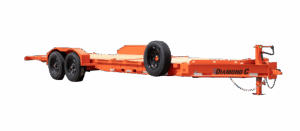
Once you’ve narrowed down the trailer, the financing, tow-vehicle, insurance, and ownership questions become much more concrete. Current heavy-duty Diamond C equipment lines illustrate why the exact configuration matters: LPX low-profile equipment trailers and HDT hydraulically dampened tilt trailers are available from 15,500 to 24,000 pounds GVWR, with Lippert axles used as standard equipment. That weight range can materially affect truck selection, hitch requirements, driver licensing, commercial compliance, insurance, and the amount each partner must budget. You can also reach out to the team at Spencer Trailers to discuss the available unit, manufacturer specifications, purchase documents, and financing sources that may be available for a commercial buyer.
The paperwork side is the unglamorous part of co-buying, but getting it right up front lets both partners focus on the work instead of arguing about a payment, repair, insurance claim, or asset sale. Choose the legal owner before applying for financing. Confirm that every intended tow vehicle and driver can legally and safely operate the combination. Put the usage, maintenance, damage, default, buyout, and dissolution rules in writing. Then have the lender, attorney, insurance agent, and tax professional review the same structure before you sign and put the trailer to work.


