







Most buyers are not going to own the same trailer forever. At some point, you may upgrade to a heavier model, switch trailer categories, downsize your operation, or sell the trailer to free up cash. So when you are standing on a dealer lot comparing two trailers with several thousand dollars between them, the right question is not only, “What does it cost today?” It is also, “Which trailer will be easier to sell, and what condition will it be in when that day comes?”
There is no reliable five-year resale percentage that applies to every trailer. Retained value changes with the trailer category, original purchase price, configuration, local demand, maintenance history, accident history, tire age, deck condition, corrosion, and the overall used-equipment market. A premium trailer that was overloaded or neglected can depreciate faster than a well-maintained mid-priced trailer. What recognized brands generally provide is a larger pool of informed buyers, better parts support, clearer specifications, and less uncertainty during a used-trailer inspection.
Here is a straightforward look at which brands tend to attract strong used-market interest, what drives that interest, and what to inspect when you are buying with resale value in mind.
Why Some Trailers Hold Value and Others Don’t
Resale value comes down to three broad factors: demand, durability, and trust. Used buyers search for manufacturers they recognize, compare the trailer’s VIN label and factory specifications, and discount trailers with an uncertain history or poor parts support. Frame design, weld quality, axle and brake serviceability, deck material, coating preparation, wiring protection, door construction, and the availability of replacement components all influence how confidently someone will buy the trailer several years later.
Finish quality matters, but it should not be reduced to a simple claim that one coating always lasts a certain number of years. Paint and powder coat can chip, while galvanized steel can develop a dull gray patina and aluminum can oxidize or suffer galvanic corrosion where dissimilar metals meet. The important questions are how the material was prepared, whether the coating reached difficult areas, how road-salt damage was handled, and whether exposed metal was repaired before corrosion spread.
The used trailer market in Indiana and the surrounding Midwest is heavily practical. Buyers want a trailer they can put to work without immediately replacing brakes, wiring, tires, decking, hinges, hydraulic hoses, batteries, or coupler components. Functional brakes are especially important because Indiana requires brakes on trailers with a gross vehicle weight rating over 3,000 pounds. A clean deck, working breakaway system, legible VIN and capacity labels, service records, matched tires, and properly operating lights can add more buyer confidence than cosmetic accessories.
Diamond C: Built for Long Haul, Priced to Match
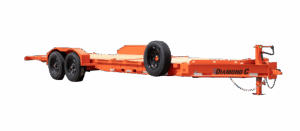
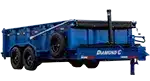
Diamond C trailers consistently attract attention in the used heavy-duty market because buyers recognize the manufacturer and can identify the model, axle package, GVWR, frame configuration, and loading system. Diamond C has built trailers in Mount Pleasant, Texas, since 1985. Its premium heavy-duty lines, including FMAX, HDT, LPT, LPX, WDT, and DEC, use Lippert axles as standard. The exact hub, brake, suspension, tire, and axle configuration depends on the model and GVWR package; oil-bath hubs are associated with certain heavier axle packages rather than every Diamond C trailer. :contentReference[oaicite:0]{index=0}
The LPX is Diamond C’s Low Profile Extreme-Duty Equipment Trailer, not a tilt model. Current LPX configurations cover approximately 15,500 to 24,000 pounds GVWR, with bumper-pull lengths from 16 to 30 feet. The base package uses two 7,000-pound Lippert axles, while higher-capacity packages may use two 8,000-pound axles, two 10,000-pound axles, or three 7,000-pound axles. Standard crossmembers are 3-inch I-beams on 16-inch centers, with 12-inch spacing available on appropriate configurations. Loading choices include spring-assisted ramps, MAX Ramps, and the X-Ramp system for compatible max-width builds. Buyers looking for a split-deck, hydraulically dampened tilt equipment trailer should compare the HDT line instead. :contentReference[oaicite:1]{index=1}
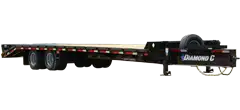
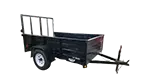
Diamond C’s dump, equipment, utility, deck-over, tilt, and FMAX gooseneck flatbed lines also benefit from identifiable model families and factory-supported options. That does not justify promising that every Diamond C will return a fixed percentage of its purchase price. A heavily optioned trailer may not recover the full cost of every upgrade, and resale depends on whether the next buyer values features such as hydraulic jacks, upgraded brakes, additional axles, premium decking, wider loading systems, or higher-capacity tires. The strongest used examples are accurately represented, properly rated for their work history, and maintained according to the installed components.
We carry Diamond C here at Spencer Trailers. You can see current inventory at our full inventory page.
Wells Cargo: Enclosed Trailer Resale is Its Own Market
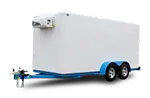
Enclosed trailers are a different category when it comes to resale. Contractors, mobile-service businesses, racing teams, powersports owners, and hobbyists care about more than the frame and running gear. They also inspect the roof, seams, floor, wall panels, ramp-door structure, side-door alignment, ventilation, interior height, tie-down placement, and evidence of water intrusion. A dry, square, well-maintained enclosed trailer from a recognizable manufacturer can attract buyers quickly because repairing a leaking or structurally damaged enclosed trailer can become expensive.
Wells Cargo was founded in 1954 and remains one of the best-known names in enclosed trailers. Its current products should be evaluated model by model rather than described as having one universal construction method. Current FastTrac literature lists a semi-screwless .080-inch aluminum-composite-panel exterior, with screws at the panel seams, while FastTrac Deluxe uses a bonded screwless .080-inch aluminum-composite exterior. Road Force models emphasize tubular-steel framing, including the manufacturer’s “triple 16s” construction approach. These distinctions matter because two Wells Cargo trailers of the same nominal size may have different framing, exterior attachment, doors, axles, GVWR, and standard equipment. :contentReference[oaicite:2]{index=2}
A 7-by-16 tandem-axle enclosed trailer is a common and highly searchable size, but its payload cannot be determined from dimensions alone. Some configurations have a 7,000-pound GVWR, while other enclosed trailers of similar dimensions may use different axle and GVWR packages. Actual payload is the trailer’s GVWR minus its as-built empty weight, and installed options such as additional height, cabinets, generators, spare tires, flooring, air conditioning, insulation, or concession equipment reduce the remaining cargo capacity. Used pricing also varies too widely by age, condition, height, axle package, doors, interior finish, and regional supply to support a universal price range.
The exterior-panel design is still worth examining. Bonded or semi-screwless panels can create a cleaner appearance and reduce the number of exposed fasteners, but they do not make an enclosed trailer maintenance-free. A base FastTrac still uses screws at seams, and any enclosed trailer can develop sealant failure, door misalignment, roof damage, frame corrosion, or water-damaged flooring. Used buyers notice smooth sidewalls, but they also look closely at the roof edges, lower trim, rear corners, ramp hinge, underside, and interior floor perimeter for evidence of leaks or hidden corrosion.
Aluminum Trailers: The Premium Tier
If corrosion resistance and lower empty weight are major priorities, an aluminum trailer can be a strong resale candidate. Aluminum does not develop the red rust associated with carbon steel, and a lighter trailer can provide more usable payload within a given tow rating. However, aluminum is not immune to damage. It can oxidize, crack after severe impact or repeated overloading, and develop galvanic corrosion around incompatible fasteners or components. Many aluminum enclosed trailers also use engineered-wood floors, so the decking can still absorb moisture, soften, or delaminate if the trailer leaks.
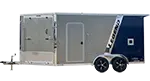
Legend Manufacturing’s current enclosed lineup includes all-aluminum models such as the Thunder V-Nose and Deluxe V-Nose. Depending on the model, Legend uses aluminum tube framing, torsion axles, aluminum roofing, and bonded or screwless aluminum exterior construction. Skin thickness, stud spacing, frame dimensions, GVWR, warranty coverage, and standard equipment vary across the lineup, so buyers should compare the factory model sheet rather than assume that every Legend is built identically. A clean Legend with a dry floor, straight doors, intact roof, and documented axle capacity generally appeals to shoppers specifically seeking an all-aluminum enclosed trailer. :contentReference[oaicite:3]{index=3}
H&H Trailers offers aluminum open car haulers and hydraulic tilt car haulers in several capacities. Current aluminum flatbed car-hauler configurations use an 82-inch bed, lengths generally ranging from 14 to 20 feet, and GVWR choices from 7,000 to 14,000 pounds. The aluminum Speed Loader tilt line covers longer 18- to 24-foot beds with the same broad 7,000- to 14,000-pound GVWR range. A 7,000-pound tandem configuration is popular for lighter cars, side-by-sides, and powersports use, but the correct choice depends on the trailer’s actual empty weight, the vehicle being hauled, tongue weight, and the tow vehicle’s ratings. :contentReference[oaicite:4]{index=4}
Wells Cargo also offers all-aluminum enclosed products such as the Wagon SS, while United Trailers supplies all-aluminum enclosed cargo configurations through dealers such as Spencer Trailers. These trailers can hold used-market appeal because buyers seeking aluminum often search by construction type as well as brand. Even so, a buyer will still inspect the floor, welds, roof, axle mounts, coupler, doors, fasteners, electrical system, and evidence of prior overloading. Aluminum construction improves corrosion resistance, but condition and configuration continue to determine the final selling price. :contentReference[oaicite:5]{index=5}
We carry Legend and H&H trailers, along with other enclosed and aluminum options. Contact us if you want to compare aluminum and steel trailers side by side.
Galvanizing vs. Powder Coat: What Actually Matters for Longevity
This is where buying decisions become technical, and it is also where broad marketing claims can be misleading. The finish matters, but so do the steel preparation, primer, coating thickness, application coverage, curing, drainage, hardware, road environment, and the owner’s maintenance habits.
| Finish Type | How It Works | Typical Lifespan | Resale Impact |
|---|---|---|---|
| Hot-dip galvanizing | Fabricated steel is immersed in molten zinc, creating a metallurgically bonded protective coating | Often measured in decades, but coating thickness, abrasion, salt exposure, moisture, and operating environment determine time to first maintenance :contentReference[oaicite:6]{index=6} | Often strong where corrosion resistance is valued; the finish normally weathers to a matte gray rather than staying bright |
| Powder coat over prepared steel | Steel is cleaned and pretreated before electrostatically applied primer and topcoat powders are oven-cured | No responsible fixed number; preparation, primer, cure, coating coverage, chips, road salt, storage, and touch-up practices control performance | Strong when the coating remains intact and damaged areas have been repaired before corrosion spreads |
| Wet paint | Liquid primer and topcoat are sprayed over prepared steel and allowed or forced to cure | Varies widely; a properly prepared multi-coat system can perform well, while minimal preparation can fail much sooner | Condition-dependent; faded paint is mostly cosmetic, but bubbling, exposed steel, and active frame corrosion reduce buyer confidence |
| Aluminum | Aluminum naturally forms an oxide layer, although trailers may still contain steel axles, fasteners, couplers, hardware, and wood decking | Potentially long-lived with inspection and maintenance; impact damage, fatigue, galvanic corrosion, leaks, and floor deterioration still matter | Frequently strong because buyers value low weight and resistance to red rust, but damage or poor repairs can erase the premium |
Diamond C’s standard finish is its DM Difference Maker Coating System. The current process includes steel-shot blasting, a five-stage wash using reverse-osmosis water, force drying, a zinc-rich epoxy powder primer, an ultra-durable powder topcoat, and controlled final curing. This multi-stage preparation is more specific than simply describing the finish as primer plus powder coat, and Diamond C states that the DM system is standard across its trailer lineup rather than an upgrade limited to a few premium models. :contentReference[oaicite:7]{index=7}
Lower-priced trailers should not automatically be dismissed, but buyers should inspect how the finish was applied. Paint or powder over mill scale, oil, weld residue, or poorly cleaned steel can lose adhesion early. Once chips or bubbles expose the base metal, moisture and road salt can spread corrosion underneath the surrounding finish. A trailer that was cheaper when new may still be a good value, but visible corrosion, seized hardware, damaged wiring, and a deteriorated deck will reduce resale offers and may cost more to correct than the original price difference.
What to Avoid If Resale Matters
A few patterns consistently create hesitation in the used market:
- Unknown manufacturers with no dependable dealer or parts network. A buyer may discount the trailer when replacement doors, hinges, latches, ramps, hydraulic components, suspension parts, or model-specific hardware cannot be identified or ordered.
- Running gear with unclear identification or poor parts support. Recognizable axle suppliers such as Lippert and other established manufacturers make it easier to locate bearings, seals, brakes, hubs, and suspension components. The important point is not the logo alone; it is having a legible axle tag, correct capacity, and service parts that are readily available.
- Enclosed trailers with leaks, damaged seams, soft floors, or neglected lower-frame corrosion. Steel framing is not automatically a resale problem, and screwed exterior panels are not automatically defective. Water intrusion, rusting fasteners, loose panels, failed sealant, and floor deterioration are what cause buyers to reduce their offers.
- Trailers with structural damage, overloaded components, or mismatched ratings. Cracked welds, bent tongues, twisted decks, patched main frames, overloaded axles, incorrect tires, and missing VIN or capacity labels create major concerns. Buyers should verify the GVWR on the certification label rather than estimating capacity from the number or apparent size of the axles.
A Quick Q&A on Common Resale Questions
Does brand name matter more than condition? Condition usually determines whether a buyer remains interested, while brand helps determine how many buyers look at the listing in the first place. A neglected premium trailer with structural damage, old tires, failed brakes, and a rotten deck will not automatically outperform a clean, properly maintained trailer from a less expensive manufacturer. When condition and configuration are similar, the recognized brand generally has the advantage because the buyer can research the model, obtain parts, and compare it with other listings.
Should I buy a galvanized trailer even if I don’t plan to keep it long? Not automatically. Galvanizing can be valuable for trailers exposed to road salt, moisture, fertilizer, landscaping materials, or outdoor storage, but the resale premium depends on whether buyers in that trailer category actively seek galvanized construction. Compare the additional purchase price with the trailer’s expected use, local market, finish quality, payload, features, and maintenance requirements. A high-quality powder-coated or aluminum trailer may be the better choice for a different application.
Do enclosed trailers hold value better than open trailers? It depends on the category and condition. Premium enclosed trailers can retain strong demand because they protect cargo and support contractor, motorsports, mobile-business, and recreational uses. They also contain more components that can deteriorate, including roofs, seams, walls, doors, flooring, trim, and interior electrical systems. Open utility, equipment, tilt, dump, and car-hauler trailers are easier to inspect and may attract a broader work-oriented buyer pool. Neither category automatically wins; the most desirable trailer is the one with the right specifications, clean documentation, and no expensive repairs waiting for the next owner.
What Matters: Buying Smart
The brands that generate dependable used-market interest around Spencer include Diamond C for heavy equipment, tilt, dump, utility, and FMAX gooseneck flatbed applications; Wells Cargo, Legend, and United in the enclosed category; and H&H for aluminum car haulers, utility trailers, and other open-trailer uses. That is not an exhaustive ranking, and the best choice still depends on the specific model. A recognized manufacturer’s entry-level trailer may be built differently from its premium line, so compare the frame, GVWR, axle package, brakes, floor, coating, doors, ramps, and warranty rather than buying on the badge alone. :contentReference[oaicite:8]{index=8}
Buy the right capacity and take care of it. Rinse road salt from the frame and running gear after winter use, repair coating chips promptly, keep enclosed-trailer seams sealed, protect wood decking, inspect hydraulic hoses and cylinders, torque wheel fasteners, maintain hubs and brakes according to the component manufacturer’s schedule, test the breakaway system, and replace tires based on condition and age rather than tread depth alone. Save receipts and record major service. A documented, accurately described trailer is easier to evaluate and usually easier to sell than one with an unknown history.
If you are shopping new and want to think through total cost of ownership before you buy, take a look at our current inventory. We are in Spencer, Indiana, at 291 West State Hwy 46. Call us at (812) 829-0226, and we will give you a straight answer about which trailers in your budget fit your load, tow vehicle, work, and long-term resale goals.


