


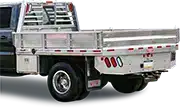
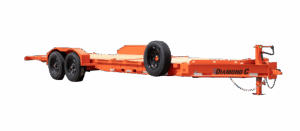



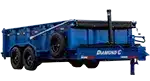

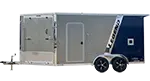
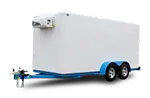
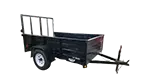

Walk through almost any serious trailer dealership or contractor yard in the Midwest and you are likely to recognize Big Tex. Headquartered in Mount Pleasant, Texas, with manufacturing and assembly operations in several states, Big Tex has spent decades building a broad catalog of utility, landscape, car-hauler, equipment, tilt, dump, deck-over, and gooseneck trailers. The company succeeds by offering familiar working configurations at many different capacity levels, supported by a large dealer and parts network. But wide availability does not automatically make every Big Tex model the best fit for every buyer. Here is what the current lineup actually looks like, where it makes a strong case, and where competing trailers offer meaningful advantages.
The Four Pillars of the Big Tex Lineup
Big Tex officially divides its current catalog into more than four categories, including a separate car-hauler line. For most contractors, farmers, landscapers, equipment owners, and commercial operators, however, the buying decision usually centers on four working groups: utility trailers, dump trailers, equipment and tilt trailers, and flatbed goosenecks or deck-overs. Each category covers several GVWR classes, lengths, floor choices, ramp arrangements, and axle packages, so buyers should compare the exact model and build sheet rather than relying only on the brand name.
Utility Trailers
The entry point for many buyers is the Big Tex 35SA single-axle utility trailer. Current specifications list a 2,995 lb GVWR, a 77-inch bed width, and 10-, 12-, and 14-foot bed lengths. Depending on length, listed cargo capacity runs from approximately 1,922 to 2,102 lb. The trailer uses one 3,500 lb cambered axle with quick-lubricating hubs, a 3-inch by 2-inch angle frame, treated-pine flooring, four in-bed tie-down loops, and a 2-inch A-frame coupler. Brake flanges are standard, while electric brakes and a breakaway system are optional. A rear ramp gate is also configuration-dependent rather than something buyers should assume is included on every unit.
Step up to the Big Tex 70PI tandem-axle pipe-top utility and the working envelope changes considerably. The 70PI is 83 inches wide and is offered in 14-, 16-, 18-, and 20-foot lengths. It carries a 7,000 lb GVWR, with listed cargo capacities ranging from approximately 4,980 to 5,220 lb. Its running gear consists of two 3,500 lb cambered axles with quick-lubricating hubs. Current factory information lists an electric brake on the front axle as the base configuration and brakes on the second axle as an available option. Because Indiana requires qualifying new trailers to have compliant service brakes, an Indiana buyer should verify that the delivered trailer has the brake equipment required for its registered and operating weight, including a functioning cab controller and automatic breakaway system.
The 70PI uses a 4-inch by 3-inch angle frame, treated-pine flooring, a 2-5/16-inch adjustable Demco EZ Latch coupler, LED lighting, open sides with a square-tube top rail, and a spring-assisted rear gate on commonly stocked configurations. Big Tex describes the axles on these current utility models as premium axles; its public specification sheets do not establish one universal axle brand across the entire lineup. The accurate buying approach is to inspect the axle identification tag on the actual trailer rather than assuming a component brand from an older listing or dealer advertisement.
The utility line is straightforward rather than extravagant. Current specification sheets list a professional painted finish with primer, not a galvanized chassis and not a universal powder-coat finish. Quick-lubricating hubs, radial tires, LED lighting, treated lumber, and multiple gate choices make the trailers practical, but option content can vary substantially between two units carrying the same basic model designation.
Dump Trailers
This is one of Big Tex’s deepest working categories. The Big Tex 14LP heavy-duty ultra-low-profile dump trailer carries a 14,000 lb GVWR and is available with 12-, 14-, and 16-foot beds, each 83 inches wide. Current listed cargo capacity ranges from approximately 9,750 to 10,130 lb, depending on length. The 14LP uses two 7,000 lb cambered axles with quick-lubricating hubs and forward self-adjusting electric brakes on both axles.
The frame and tongue are integrated from 8-inch, 10 lb-per-foot seamless I-beam, with 3-inch channel crossmembers on 16-inch centers. Standard floor material is 10-gauge smooth steel, while a 7-gauge floor is available for buyers who expect concentrated loading or frequent equipment use. The dump body has 24-inch, 10-gauge sides, a combination barn-door and spreader gate, four in-bed D-rings, rear stabilizer stands, side access steps, a formed tarp shroud and tarp, and provisions for slide-in equipment ramps.
The lifting system is a self-contained scissor hoist powered by a 12V hydraulic system. Current specifications list power-up, power-down, and gravity-down operation, a deep-cycle battery, a 5-amp onboard 110V charger, and available accessories such as a wireless remote or small solar maintainer. That is a conventional and serviceable arrangement, but it is still battery-dependent. Dump speed and the number of cycles available between charges change with battery condition, temperature, cable resistance, hydraulic-fluid condition, load placement, and how consistently the trailer is connected to shore power for charging.
For significantly heavier work, the Big Tex 25DU is a tandem-dual gooseneck dump trailer rather than a bumper-pull or combination pintle model. The current configuration is a 20-foot-long, 92-inch-wide dump body with 4-foot sides and a 25,000 lb GVWR. Big Tex’s current dimensional table lists an empty weight of approximately 8,500 lb and a cargo capacity of approximately 16,500 lb. The body is designed for a dump angle of about 45 degrees and is intended for high-volume material, debris, agricultural, and construction hauling. As with every heavy trailer, the certification label on the individual unit controls; advertised payload should never replace the actual GVWR-minus-empty-weight calculation for the trailer being purchased.
High-cycle dump users should focus less on unsupported brand folklore and more on measurable details: hoist design, cylinder geometry, battery reserve, charger output, electrical-cable size, hydraulic-fluid capacity, service access, gate design, floor gauge, and the availability of replacement pumps, solenoids, hoses, and cylinders. A properly maintained 12V system can serve a contractor well, but no electric-hydraulic dump should be treated as though it has unlimited continuous duty.
Equipment Trailers
Big Tex offers both conventional ramp-loaded equipment trailers and several different tilt arrangements. For a true full-tilt design, the current model to examine is the Big Tex 14FT. It is offered in 16-, 18-, and 20-foot lengths with an 83-inch width between the fenders, a 14,000 lb GVWR, and listed cargo capacities ranging from approximately 10,510 to 10,910 lb.
The 14FT uses two 7,000 lb drop axles with quick-lubricating hubs, forward self-adjusting electric brakes on both axles, a 6-inch channel frame, treated-pine decking, a quarter-inch diamond-plate rear knife edge, and six 5/8-inch D-rings. Its deck is hydraulically dampened, controlled by an adjustable valve, and secured with a side-operated pedal mechanism. The published loading angle is 12 degrees. That makes it suitable for many skid steers, compact tractors, trenchers, scissor lifts, forklifts, mowers, and other machines for which loose ramps would be inconvenient.
Buyers who want some fixed deck space can look at the Big Tex 14TL, which combines a stationary front section with a hydraulically dampened rear tilt deck. Current versions are offered in 20- and 22-foot overall lengths at 14,000 lb GVWR. The newer 14TI moves to an 8-inch I-beam chassis and a 15,400 lb GVWR, while the 16TI and 16TL cover higher-capacity applications. Those are distinct models with different frame, axle, deck, tire, and payload specifications; “14K tilt trailer” alone is not enough information to make an accurate comparison.
Frame construction should also be checked by model rather than generalized across the entire equipment line. Big Tex currently uses angle frames, channel frames, conventional I-beams, and newer seamless I-beam designs depending on capacity and layout. The same caution applies to tie-downs. The diameter of a D-ring does not, by itself, establish its working load limit. Equipment securement must be based on labeled or documented working-load limits for the rings, chains, binders, straps, stake pockets, rub rails, and attachment points used in the securement system.
Gooseneck Trailers
Big Tex’s flatbed goosenecks are among its most recognizable products. The current Big Tex 22GN is a tandem-dual-wheel gooseneck with a 23,900 lb GVWR, two 10,000 lb oil-bath axles, forward self-adjusting electric brakes on both axles, a heavy-duty adjustable suspension, and dual two-speed landing gear rated at 50,000 lb capacity. The main frame is a 12-inch, 19 lb-per-foot I-beam with 3-inch channel crossmembers, treated-pine decking, a lockable front toolbox, heavy rub rails, stake pockets, chain spools, LED lighting, and a sealed modular wiring harness.
The 22GN is offered in straight-deck and 5-foot dovetail configurations with published bed lengths from 20 to 40 feet. Listed empty weight and cargo capacity vary substantially with length and tail design. Current published payload figures run from approximately 15,110 lb on a long dovetail model to approximately 18,660 lb on the shortest straight-deck version. The standard current coupler is a 2-5/16-inch Demco EZ Latch gooseneck coupler. Ramp equipment depends on the selected tail package: dovetail configurations may use double-hinged, spring-assisted flip-over ramps, while straight-deck configurations can be ordered with slide-in ramps or without a rear ramp package.
The Big Tex 16GN occupies the next capacity class down. It carries a 17,500 lb GVWR and uses two 8,000 lb dual-wheel axles with quick-lubricating hubs. Current published cargo capacities range from approximately 10,120 to 13,070 lb depending on length and tail configuration. Its frame is a 12-inch, 14 lb-per-foot I-beam on shorter builds, with a heavier 16 lb-per-foot I-beam used on trailers 28 feet and longer. It also uses a standard 2-5/16-inch gooseneck coupler, treated-pine decking, stake pockets, chain spools, LED lighting, a breakaway system, and available straight-deck or dovetail arrangements.
Before putting either trailer behind a 3/4-ton or 1-ton truck, the buyer must verify more than the advertised tow rating. The truck’s payload rating, rear-axle rating, tire ratings, hitch and ball rating, GCWR, actual curb weight, passenger and cargo weight, and available bed clearance all matter. A truck can have enough advertised trailer-towing capacity while still exceeding its payload or rear-axle rating after gooseneck pin weight, passengers, tools, auxiliary fuel, and bed-mounted equipment are added.
Where Big Tex Sits in the Market
Big Tex occupies the high-volume professional working tier. Its catalog extends from 2,995 lb homeowner utilities through 7,000 and 14,000 lb commercial trailers, 17,500 and 23,900 lb goosenecks, 25,000 lb dump trailers, and heavier specialized transport models. It is not a single price-point brand: a basic utility trailer and a tandem-dual gooseneck may share the same badge while having almost nothing in common structurally.
Published retail prices should be treated carefully. Trailer prices change with length, axle and tire packages, ramps, spare tires, tarp systems, flooring, jacks, freight, financing promotions, dealer preparation, and regional inventory. A price attached to a short 14LP without the same options is not a reliable comparison for a longer trailer with upgraded flooring, ramps, tires, remote controls, or accessories. The useful comparison is an itemized, out-the-door quote tied to the exact stock number or ordered build.
That competition is real and worth a straight comparison.
Big Tex vs. The Competition: A Direct Look
| Category | Big Tex | PJ Trailers | Load Trail | Diamond C |
|---|---|---|---|---|
| Utility / Light Duty | Broad 2,995 to 14,000 lb lineup; treated-pine floors and professional painted finish on current core models | Broad utility selection with primer-and-powder-coat finishes on many current configurations | Utility and landscape models backed by the standard 232 warranty program and multi-stage powder-coat process | PSA and GTU utility models with standard Lippert axles and the DM Difference Maker powder-coating system |
| Dump Trailers | Large range from compact dumps through the 14LP, 16-series, roll-off, gooseneck, and 25DU | Multiple bumper-pull, gooseneck, roll-off, and low-profile dump configurations with several hoist and GVWR choices | Dump range from approximately 5,200 to 30,000 lb GVWR with Powdura OneCure powder coating | GST, MDT, LPT, DOD, and WDT families with telescopic-hoist and heavy-duty configurations, depending on model |
| Equipment / Tilt | Full-tilt, partial-tilt, over-the-axle, conventional equipment, and newer I-beam models across several capacity levels | Extensive channel-frame and I-beam equipment and tilt catalog with powder-coated finishes | Equipment and tilt trailers spanning roughly 7,000 to 30,000 lb GVWR, depending on product family | LPX, HDT, and DEC premium equipment lines with engineered frames, Lippert axles, and multiple loading systems |
| Gooseneck | Well-established 16GN, 22GN, 25GN, and heavier transport models with many lengths and tail arrangements | Large deck-over and gooseneck range with numerous axle, frame, ramp, deck, and suspension choices | Deck-over and gooseneck offerings extending to approximately 40,000 lb GVWR | FMAX family ranges from approximately 15,500 to 40,000 lb GVWR by model, with engineered-beam frames and standard Lippert axles |
| Finish / Warranty | Professional painted finish with primer; three-year structural, one-year general, and 90-day paint coverage under current published terms | Three-year frame and one-year limited warranty; primer and powder coat listed on many current models | Two-year comprehensive, three-year structural, and two-year roadside-reimbursement program | DM multi-stage powder coat; 2026-and-later models receive six-year structural and two-year comprehensive coverage under Warranty 2.0 |
The honest take is that no manufacturer can accurately be labeled “heavier” or “lighter” across every comparable GVWR class. Frame section, steel weight per foot, tongue integration, crossmember spacing, trailer length, deck width, suspension, running gear, and unloaded weight all change from model to model. A heavier empty trailer may indicate more material, but it also reduces available payload. An engineered frame may carry the same rating with less dead weight. The comparison should therefore be made between exact models, not broad brand reputations.
The most obvious documented difference is in the finish and warranty programs. Big Tex’s current core-model sheets list a professional finish with primer, while PJ and Load Trail advertise powder-coated systems on many or all current trailers. Diamond C, which we carry at Spencer Trailers, uses its multi-stage DM Difference Maker powder-coating process and standard Lippert axles. For 2026-and-later Diamond C trailers, Warranty 2.0 provides six years of structural coverage and two years of comprehensive coverage. Big Tex’s published warranty provides three years on the structure, one year against covered defects in materials and workmanship, and 90 days of paint coverage, subject to the stated exclusions.
The Case For Big Tex
Three things work strongly in Big Tex’s favor.
- Parts and dealer support. Big Tex has a large national dealer footprint, an active dealer locator, and a dedicated genuine-parts program. Common running-gear and service components may also be available through independent trailer-parts suppliers, although the exact axle, hub, brake, jack, coupler, hydraulic, and wiring part numbers should always be confirmed from the trailer’s VIN and component labels.
- Brand and model familiarity. Models such as the 70PI, 14LP, 16GN, and 22GN are widely recognized in the working-trailer market. That familiarity can make it easier for a future buyer or service shop to understand what the trailer is, although resale value still depends heavily on condition, title status, corrosion, tires, brakes, flooring, maintenance records, configuration, and local demand.
- Configuration depth. Big Tex offers many GVWR classes, bed lengths, deck widths, tail arrangements, ramp choices, flooring options, tire upgrades, jack systems, and dump-body styles. A buyer can often find a factory-defined configuration close to the job without commissioning a completely custom trailer.
The Case Against Big Tex
No brand is without tradeoffs.
- Finish system and paint coverage. Big Tex’s current specifications describe a professional painted finish with primer, while several direct competitors promote multi-stage powder-coat systems. Big Tex’s published paint warranty is 90 days and excludes normal exposure-related deterioration such as chips, scratches, fading, road salt, and tar. That does not mean every painted trailer will rust prematurely, but it makes washing, inspection, and immediate chip repair especially important in Indiana winters.
- Battery-dependent dump operation. Models such as the 14LP use a practical 12V electric-hydraulic system, but performance depends on battery charge, electrical connections, hydraulic condition, temperature, and operating cycle. Buyers running repeated loads every day should compare charger output, battery capacity, hoist geometry, cycle time, service accessibility, and replacement-parts support rather than assuming all 14,000 lb dump systems perform identically.
- Lumber is a maintenance item. Treated pine is standard on many Big Tex utility, equipment, and flatbed models. Big Tex’s published warranty covers lumber for 90 days, and floorboards are excluded from the three-year structural definition. Buyers hauling tracked machinery, storing outside, or operating in wet and salty conditions should inspect floor condition regularly and consider available rubber-infused lumber, hardwood, or steel options where the model permits them.
A Quick Q&A for Buyers Considering Big Tex
Q: Is Big Tex a good first trailer for a small landscaping business?
It can be. A 70PI gives a startup crew a 7,000 lb GVWR, an 83-inch deck, and roughly 4,980 to 5,220 lb of listed payload for mowers, compact equipment, debris, and materials. A 14LP offers a much larger dump and equipment-hauling envelope, but it also demands a properly rated tow vehicle, brake controller, hitch, tires, insurance, and operating plan. Buy for the heaviest realistic loaded condition, not the lightest job performed during the first month in business.
Q: Should I pay extra for a Big Tex powder-coat upgrade?
Do not assume that such an upgrade is available on the model being quoted. Current Big Tex specification sheets for the 35SA, 70PI, 14LP, 14FT, 16GN, and 22GN list a professional finish with primer. Ask the dealer to identify the exact preparation and coating used on the VIN being sold. In the Midwest, wash road salt and fertilizer residue promptly, inspect welds and leading edges, and touch up chips before exposed steel begins to corrode.
Q: Does towing a 14,000 lb trailer automatically require a CDL in Indiana?
No. A trailer rating above 10,000 lb does not, by itself, trigger a Class A CDL. The standard Class A threshold applies when the combination has a GCWR or qualifying gross combination weight of at least 26,001 lb and the towed unit has a GVWR or qualifying gross weight above 10,000 lb. Commercial use, actual weight, hazardous materials, passenger carriage, and specific exemptions can affect the analysis, so business operators should verify their exact truck-and-trailer combination rather than treating 10,000 or 14,000 lb as a standalone CDL line.
Q: What Indiana brake and registration rules should a buyer remember?
Indiana requires a trailer or semitrailer with a gross weight of at least 3,000 lb to have brakes adequate to control, stop, and hold it. The driver must be able to apply those brakes from the tow vehicle, and the system must apply automatically during an accidental breakaway. Indiana residents generally have 45 days after purchasing or acquiring an unregistered vehicle to complete registration, and a title application filed after the 45-day period can incur an administrative penalty.
Q: How does Big Tex compare to what Spencer Trailers carries?
We sell Diamond C, H&H, Liberty, and other lines rather than Big Tex. Diamond C’s standard Lippert axles, DM Difference Maker multi-stage powder coating, engineered heavy-duty frames, and expanded 2026 Warranty 2.0 coverage make a strong case for buyers focused on long-term finish protection and structural support. H&H and our other brands also give us useful options in the light-duty and general-purpose utility market. That said, a correctly configured Big Tex with adequate payload, compliant brakes, the right loading system, and a fair itemized price can be a capable working trailer. Call or stop by and we will compare the actual specifications for your truck, equipment, and operating conditions.
Bottom Line
Big Tex built its market position by offering a wide range of recognizable working trailers with practical configurations and broad distribution. The 22GN is a legitimate 23,900 lb tandem-dual flatbed with payload that varies from roughly 15,110 to 18,660 lb by length and tail design. The 14LP is a properly specified 14,000 lb low-profile dump with an 8-inch seamless I-beam frame, dual 7,000 lb axles, a scissor hoist, and approximately 9,750 to 10,130 lb of listed cargo capacity. Those are capable trailers when they are matched to the correct load and tow vehicle.
The documented tradeoffs are more precise than blanket claims about one brand being stronger or weaker. Big Tex uses a professional painted finish with primer on the models discussed here, offers shorter paint coverage than several competitors, and relies on configuration-specific option packages that must be checked carefully. Buyers prioritizing national familiarity and a broad factory catalog may find Big Tex appealing. Buyers prioritizing a multi-stage powder-coat system, standard Lippert axles, engineered-beam construction, and longer 2026 structural coverage should compare Diamond C closely.
The right trailer is the one that fits the actual machine weight, attachments, cargo distribution, securement plan, truck ratings, hitch, legal operating weight, service expectations, and budget. Want to see what is in stock and compare specifications side by side? Browse our current inventory or reach out at (812) 829-0226. We are at 291 West State Hwy 46 in Spencer, Indiana, and we do not do pressure sales.


