


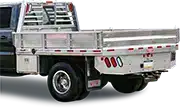
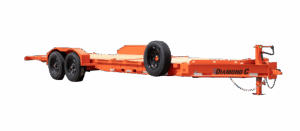


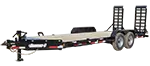

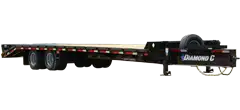
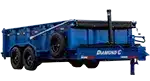


You’ve narrowed it down to two established manufacturers: PJ Trailers, based in Sumner, Texas, and Diamond C, which has manufactured trailers in Mt. Pleasant, Texas, since 1985. Both brands build equipment, dump, tilt, utility, deckover, and gooseneck trailers intended for real working conditions. Both also offer enough models and options that comparing one brand’s entry-level trailer with the other brand’s premium model can produce a misleading result. So which one actually belongs on your lot?
That’s not a trick question, but it does deserve a straight answer. We sell Diamond C here at Spencer Trailers, so we’ll be upfront about that. We also understand that PJ has a large owner base, an extensive product catalog, and several well-established commercial-duty models. The fairest comparison is not simply PJ versus Diamond C. It is a comparison of two trailers with the same length, GVWR, axle package, brakes, tires, frame construction, loading system, empty weight, and intended workload. Here’s what that comparison actually looks like for 2025-2026 model-year shoppers.
Frame Construction: The Biggest Difference
This is where the two manufacturers take noticeably different approaches, although the distinction is more nuanced than saying one brand uses channel and the other uses I-beam.
PJ offers several types of frame construction across its catalog. Current equipment models include channel-frame trailers such as the 5-inch Channel Equipment CE, 6-inch Channel Equipment CC and CD, and 8-inch Channel Equipment C8. PJ also offers conventional I-beam and proprietary beam designs, including the Seamless I-Beam Equipment EV and the heavier Pro-Beam equipment models. Its current gooseneck deckover trailers use I-beam construction, including a 12-inch I-beam neck and riser. In other words, channel is common in PJ’s lighter and midrange equipment lineup, but it is not accurate to describe every PJ trailer as a channel-frame product.
Diamond C also uses different frame designs according to model, length, and GVWR package. The major distinction is its patented Engineered Beam technology. Instead of purchasing one standard beam profile and applying it to multiple trailers, Diamond C designs and fabricates beam profiles for specific applications. The complete FMAX flatbed gooseneck family is built around this Fleetneck Engineered Beam concept. Engineered Beam construction is also used on models such as the DEC deckover equipment trailer, DOD deckover dump, and WDT dual-tandem gooseneck dump, as well as qualifying higher-GVWR and longer configurations of the LPX equipment trailer, HDT tilt trailer, and LPT dump trailer.
That qualification matters. A base LPX or LPT should not automatically be described as having the same Engineered Beam frame as a 40,000-lb FMAX312. For example, the LPX starts with a conventional 8-inch I-beam frame in its lower package, while Engineered Beam construction is incorporated into qualifying higher-GVWR packages on longer models. The correct way to evaluate any trailer is to inspect the specification sheet for the exact model, length, and package being quoted.
Frame material alone also does not determine payload. GVWR includes the trailer itself, so usable payload is the trailer’s rated GVWR minus its actual empty weight, subject to the ratings of the axles, tires, wheels, coupler, suspension, brakes, and tow vehicle. A lighter frame that maintains the required structural strength can leave more of the GVWR available for cargo. A heavier frame may provide advantages in a particular application but can reduce rated payload if the GVWR remains unchanged.
Neither construction method is automatically right or wrong. Channel-frame trailers can be dependable and economical for appropriate loads. Conventional I-beam and engineered I-beam designs become more important as trailer length, concentrated equipment weight, and commercial duty cycles increase. Buyers who regularly haul near the trailer’s rated capacity should compare frame design, crossmember spacing, axle placement, empty weight, and load concentration rather than shopping by GVWR alone.
Equipment Trailers: Head to Head
PJ’s current equipment lineup is broad. The CE is a 5-inch channel-frame trailer offered in 16- to 22-foot lengths with an 83-inch deck, a 9,899-lb GVWR, and tandem 5,200-lb electric-brake axles. Buyers needing a traditional 14,000-lb equipment trailer can move to the 6-inch Channel Equipment CC or CD, while the C8 reaches a listed 16,000-lb GVWR. Above those models, PJ offers the 15,400-lb Seamless I-Beam Equipment EV and Pro-Beam equipment trailers with listed GVWRs as high as 20,000 lb. PJ’s tilt catalog includes the 14,000-lb T6 channel equipment tilt, 14,000-lb T8 deckover tilt, 15,400-lb TY I-beam equipment tilt, and additional powered, hydraulic, and heavy-duty configurations.
Diamond C’s closest premium equipment choices are the LPX, HDT, and DEC rather than one universal equivalent. The LPX is a low-profile bumper-pull equipment trailer offered in 16- to 30-foot lengths, with an 80- to 82-inch bed and GVWR packages from 15,500 to 24,000 lb. Its standard package uses two 7,000-lb Lippert axles, with available triple 7,000-lb, tandem 8,000-lb, and tandem 10,000-lb packages. Higher-GVWR packages can add heavier I-beam construction and Engineered Beam technology where applicable.
The HDT covers buyers who prefer a tilt deck instead of removable or fold-down ramps. It is a low-profile, hydraulically dampened tilt equipment trailer with the same general 15,500- to 24,000-lb GVWR range and Lippert axle packages. The hydraulic damping controls the deck’s movement during loading and unloading; it should not be confused with a fully powered hydraulic tilt unless that separate equipment is specified. For equipment that is too wide to fit between conventional fenders, the DEC provides a 102-inch-wide deckover platform, 20- to 30-foot available lengths, and GVWR packages from 15,500 to 23,000 lb.
Lower deck height can make a substantial difference when loading compact track loaders, mini excavators, scissor lifts, paving equipment, or machines with limited ground clearance. A low deck generally reduces the breakover angle where the ramp meets the trailer. However, buyers should compare the complete loading geometry, including deck height, dovetail length, ramp length, ramp width, ramp rating, and the machine’s wheelbase. A low deck paired with short ramps may still produce a steeper approach than a taller trailer with a longer loading system.
Ramps deserve specific attention because the two brands offer multiple systems rather than one standard design. PJ equipment trailers may use slide-in ramps, stand-up ramps, fold-up ramps, or a tilt deck, depending on model and options. The CE, for example, is normally configured with slide-in ramps and rear support jacks. PJ’s tilt models eliminate separate ramps for many loads, although the usable loading angle and tilt-deck dimensions still need to match the equipment.
Diamond C’s LPX can be configured with spring-assisted flip-knee ramps, 37-inch-wide MAX Ramps on qualifying lengths, or the full-width X-Ramp when paired with the compatible max-width package. MAX Ramps use a spring-assisted two-position design that can be raised from the deck or ground and are paired with a longer self-cleaning dovetail. The X-Ramp spans approximately 92.5 inches and is designed to work with frame extensions and drive-over fenders. On FMAX goosenecks, available loading choices include MAX Ramps, XDR Ramps, a straight deck, and a 12-foot hydraulic dovetail on eligible configurations.
For a fair equipment-trailer comparison, match a PJ CC or EV against the appropriate Diamond C configuration rather than comparing a lighter CE with a 20,000- or 24,000-lb LPX. Then compare actual payload, axle and tire ratings, brake type, crossmember spacing, deck width, ramp capacity, coupler rating, jack capacity, and empty weight. That process will tell you more than the brand decal.
Dump Trailers: Where PJ Has Volume
PJ has one of the industry’s broadest dump-trailer catalogs, ranging from compact utility dumps to 25,000-lb tandem-dual models. Its current 14K Dump Trailer D7 is a straightforward commercial and contractor configuration: a 14-foot by 83-inch bed, 14,000-lb GVWR, tandem 7,000-lb electric-brake axles, 6-inch channel frame and tongue, 10-gauge steel body, 24-inch sides, and a hydraulic scissor-lift hoist. It also includes equipment-loading provisions such as ramps, rear stabilization, and interior tie-downs. PJ’s current dump line expands beyond the D7 to the 15,400-lb Low-Profile Dump PRO DL, 15,400-lb deckover D8, 17,600-lb DX, 21,000-lb DE, and 25,000-lb tandem-dual DD.
The D8 is specifically a 96-inch-wide deckover dump offered in 14- and 16-foot lengths, not PJ’s standard low-profile 14-foot dump. PJ states that its larger dump trailers rated at 14,000 lb and above use a scissor hoist as standard equipment. That design supports the dump body from a central lifting assembly and provides a stable lifting platform. Exact cylinder size, pump arrangement, battery package, gate, tarp, and charging equipment still vary by model and build.
Diamond C’s primary heavy-duty low-profile dump is the LPT. It is available in 12-, 14-, and 16-foot lengths, with an approximately 81- to 82-inch bed and GVWR packages from 15,500 to 24,000 lb. The standard axle package uses two 7,000-lb Lippert axles, with triple 7,000-lb, tandem 8,000-lb, and tandem 10,000-lb packages available. The LPT uses a front-mounted multi-stage telescopic cylinder rather than a scissor hoist, providing increased mechanical leverage at the front of the dump cycle, where the lifting demand is greatest.
The standard LPT body uses 10-gauge steel with the sides integrated into the floor and offers 24-, 32-, or 44-inch side heights. A 7-gauge body, floor, and side upgrade is available for operators who regularly haul demolition material, broken concrete, large rock, scrap, or other concentrated loads. The current LPT also offers a three-way rear gate, slide-in equipment ramps, rear stabilizer legs, tarp and charging options, hydraulic jack packages, and higher-GVWR configurations. Engineered Beam construction applies to qualifying higher-GVWR packages rather than every base LPT.
Diamond C also offers the DOD for buyers who need a 96-inch-wide deckover dump with fold-down sides and a telescopic hoist. At the top of the current dump range is the WDT, a 25,000- to 30,000-lb dual-tandem gooseneck dump using Engineered Beam construction, a telescopic cylinder, and two 10,000-lb Lippert axles as its base axle arrangement, with heavier packages available. Because manufacturers periodically revise heavy commercial models, WDT availability and final specifications should be confirmed with the dealer for the exact production slot.
The honest conclusion is not that one hydraulic design is universally stronger. A properly engineered scissor hoist and a properly sized telescopic hoist solve the lifting problem differently. Buyers should compare dump angle, cylinder size and placement, pump flow, battery capacity, charging system, body construction, floor support, gate design, and the material they expect to haul. Wet clay, gravel, logs, demolition debris, and landscaping material create very different loading and unloading conditions.
For occasional property maintenance, PJ’s simpler configurations can be attractive because the company offers many sizes and price levels. For daily commercial use, Diamond C’s LPT provides a premium low-profile platform with a telescopic hoist, extensive GVWR choices, Lippert axle packages, and heavier body options. The better purchase depends on duty cycle and configuration, not on a generalized claim that every trailer from one brand is heavier or more powerful than every trailer from the other.
Gooseneck Trailers: A Fair Fight
Both brands build serious gooseneck deckovers, but their current rating ranges and model structures are different. PJ’s present gooseneck deckover lineup includes the Low-Pro Flatdeck With Duals LD, Quest Flatdeck With Singles LQ, Low-Pro Flatdeck With 7K Singles LS, Low-Pro Flatdeck With 8K Singles LX, and Voyager Hydraulic Dovetail Gooseneck LY. Current published listings cover lengths from 20 to 44 feet and GVWRs from approximately 15,680 to 25,000 lb. The LD is PJ’s principal dual-wheel low-profile flatdeck and is available in lengths up to 44 feet with a listed 25,000-lb GVWR.
PJ’s goosenecks use I-beam construction, including a 12-inch I-beam neck and riser, and can be configured with equipment-loading ramps, hydraulic jacks, winches, deck and flooring options, integrated tie-down equipment, and other commercial features. The LY adds a hydraulic dovetail for operators who load machinery frequently and want to avoid manually positioning ramps. As with any gooseneck, actual payload varies by length and installed equipment; a longer hydraulic-dovetail trailer can weigh substantially more than a shorter straight-deck version with the same GVWR.
Diamond C’s FMAX family covers a wider published GVWR range. Current core models include the FMAX207, FMAX208, FMAX307, FMAX210, FMAX212, FMAX310, FMAX312, and FMAX216, with configurations ranging from approximately 15,500 lb to 40,000 lb GVWR. The model numbers identify different axle and wheel arrangements rather than trailer lengths. For example, the FMAX207 is a tandem single-wheel model rated at 15,500 lb, the FMAX208 is an 18,000-lb tandem single-wheel model, the FMAX307 uses three single-wheel axles and is rated at 24,000 lb, and the FMAX210 and FMAX212 are tandem dual-wheel models rated at 25,000 and 25,900 lb respectively.
For heavier commercial work, the FMAX310 uses three dual-wheel 10,000-lb axle assemblies and carries a 30,000-lb GVWR. The FMAX312 is offered at 30,000 to 40,000 lb GVWR, while the tandem-dual FMAX216 can also be configured at 25,900, 30,000, or 40,000 lb. Diamond C premium lines use Lippert axles as standard, with axle size, suspension, wheel, tire, and brake equipment determined by the selected FMAX package.
Every FMAX is built around Diamond C’s Fleetneck Engineered Beam platform. Available loading systems include 44-inch-wide MAX Ramps, XDR Ramps, straight-deck configurations, and a 12-foot hydraulic dovetail on eligible models. Depending on the model, buyers may also select air-ride suspension, hydraulic jacks, sway-control equipment, upgraded crossmember spacing, different flooring, disc brakes, and commercial tire packages. These options can materially change empty weight, payload, maintenance requirements, and final price.
At the 25,000-lb level, PJ’s LD and Diamond C’s FMAX210 are both credible working trailers, but they should be compared line by line. At 30,000 or 40,000 lb GVWR, Diamond C offers factory FMAX configurations beyond the current published GVWR ceiling of PJ’s standard gooseneck deckover lineup. That does not mean the highest rating is automatically the best purchase. A 40,000-lb trailer requires an appropriately rated tow vehicle, hitch, tires, braking system, driver qualifications, and operating plan. Buying more trailer than the truck and work require adds cost and empty weight without creating usable capacity.
Indiana operators should also remember that CDL classification is not determined by trailer GVWR alone. A Class A CDL generally becomes relevant when the combination is rated at 26,001 lb or more and the trailer’s GVWR exceeds 10,000 lb, subject to applicable commercial-use rules and exemptions. The tow vehicle’s ratings and the complete combination therefore matter just as much as the number printed on the trailer’s VIN label.
Finish and Corrosion Protection
Both manufacturers use powder coating on current steel trailers, so this is not a comparison between powder coat and ordinary single-stage liquid paint. Powder coat is a finish system, not a guarantee against corrosion. Its long-term performance depends on steel preparation, cleaning, primer use, powder chemistry, film thickness, curing, coverage, drainage, and how quickly damage is repaired.
PJ advertises powder-coated frames and publishes factory powder-coat color codes. Current model configurators show powder coat as the standard finish, with primer-plus-powder configurations offered on many Texas-built models. PJ also describes frame preparation that includes blasting and cleaning before coating. The exact finish option can vary by plant, model, color, and build code, so buyers should review the order sheet rather than assuming every trailer receives an identical coating stack.
Diamond C uses its DM Difference Maker Coating System across its current lineup. The published multi-stage process includes blasting the steel clean, a five-stage reverse-osmosis wash, controlled drying to reduce flash rust, a zinc-rich epoxy primer for corrosion resistance, and a powder topcoat. Diamond C designed the system around adhesion, corrosion resistance, chip and abrasion resistance, gloss retention, and color retention. The finish is powder coat, but the primer and documented preparation process are important parts of the system.
Neither coating makes a steel trailer maintenance-free. Gravel impacts, chain contact, loader buckets, standing material, deicing chemicals, and damaged wiring or fasteners can expose steel. Indiana owners should rinse road salt from the frame and running gear, keep dump-body seams and drain paths clear, touch up chips promptly, and inspect the underside, coupler area, fenders, ramp hinges, and suspension mounts. A premium coating can delay corrosion, but neglect can defeat any finish.
When comparing trailers in person, inspect more than the visible outer frame. Look at the underside, inside storage compartments, behind fenders, around welds, inside the dump body, beneath the tongue, and near suspension brackets. Consistent coverage and proper preparation are more meaningful than showroom gloss alone.
Warranty
PJ provides a three-year frame warranty and a one-year limited warranty on current trailers. The frame warranty covers qualifying defects under the manufacturer’s written terms, while purchased components may also carry separate warranties from their respective manufacturers. As with any trailer warranty, coverage is subject to exclusions, maintenance obligations, loading limits, modification rules, and the claim process described in the policy.
Diamond C’s Warranty 2.0 applies to 2026 and later models. It provides six years of structural coverage and two years of comprehensive coverage, subject to the complete policy’s requirements and exclusions. Pre-2026 Diamond C trailers remain under the earlier warranty program rather than automatically receiving the new six-year term.
The six-year structural term is a meaningful distinction for a buyer comparing new 2026 models. The two-year comprehensive portion is also important because a working trailer includes much more than its main frame: wiring, lights, hydraulics, charging equipment, jacks, gates, latches, brakes, suspension parts, and other systems all affect uptime. Some components may be handled under their individual manufacturer’s terms, so owners should keep the purchase documents, VIN information, maintenance records, and component manuals.
Warranty length is not proof that a trailer cannot fail, and it does not replace routine maintenance. It does, however, show how long the manufacturer is willing to accept responsibility for covered defects. Dealer support matters just as much. A strong written warranty is most useful when the selling dealer can document the concern, identify the correct parts, communicate with the manufacturer, and complete an approved repair efficiently.
Price: Honest Numbers
Static trailer price ranges age quickly because two trailers with the same model name can have very different equipment. Length, GVWR package, axle count, brake type, tires, suspension, ramps, hydraulic jacks, tarp, winch, flooring, spare tire, coating color, freight, and dealer setup can change the invoice by thousands of dollars. Older internet claims that a new 14,000-lb equipment trailer should cost roughly $4,500 or that a commercial 14-foot dump should remain below $10,000 no longer provide a dependable 2026 comparison.
PJ directs shoppers to local dealers for current pricing rather than publishing one nationwide retail price for every trailer. That means the honest PJ number is the written dealer quote for the exact VIN or build specification being considered. Advertised prices may also reflect prior model years, clearance inventory, financing incentives, or trailers without commonly expected options.
Diamond C publishes base MSRP figures for many models, but those are starting points rather than final sale prices. For 2026-model context, the manufacturer currently lists base MSRP figures around $10,012 for the LPX, $12,734 for the HDT, $14,819 for the LPT, and $17,399 for the FMAX207. Larger axle packages and premium options can increase those amounts substantially. Regional freight, dealer-installed equipment, taxes, title, and registration are not represented by a base MSRP.
Diamond C will often cost more than a lighter or more basic PJ configuration. The gap may narrow or disappear when the trailers are matched for GVWR, axle capacity, tire class, brakes, loading system, body gauge, hydraulic equipment, and warranty coverage. Conversely, a buyer who does not need premium ramps, higher-GVWR axles, hydraulic jacks, or advanced suspension should not assume those options will generate a return simply because they are available.
Total cost of ownership depends on utilization. A trailer working five days a week should be evaluated for payload efficiency, tire and brake life, hydraulic cycle time, corrosion protection, downtime, parts availability, warranty support, and resale demand. A lightly used farm or homeowner trailer may be better served by a simpler, lower-cost configuration. There is no honest universal dollar amount that makes one brand the better value for every owner.
A useful gut-check: compare current used listings for trailers with the same model, age, length, GVWR, axle package, and condition. Asking prices alone do not establish resale value, but local listings and recent trade-in experience can show which configurations buyers in your area actively seek.
Quick Comparison
| Feature | PJ Trailers | Diamond C |
|---|---|---|
| Frame construction | Channel, conventional I-beam, Seamless I-Beam, and Pro-Beam designs depending on model | Conventional I-beam on applicable base packages; patented Engineered Beam on FMAX and qualifying premium equipment and dump configurations |
| Standard finish | Powder coat; primer-plus-powder configurations shown on many current models | DM Difference Maker multi-stage primer and powder-coat system |
| Structural warranty | 3-year frame and 1-year limited warranty | 6-year structural and 2-year comprehensive coverage on 2026 and later models |
| Equipment range | Approximately 9,899-20,000 lb GVWR across current conventional equipment models, with additional tilt configurations | LPX and HDT from 15,500-24,000 lb; DEC from 15,500-23,000 lb |
| Equipment axles | Axle size and manufacturer vary by model and configuration | Lippert axles standard on premium lines, with 7K, 8K, and 10K packages depending on model |
| Loading systems | Slide-in, fold-up, stand-up, hydraulic dovetail, and tilt-deck systems depending on model | Flip-knee ramps, MAX Ramps, X-Ramp, XDR Ramps, tilt beds, and 12-foot hydraulic dovetail depending on model |
| Gooseneck GVWR range | Current standard gooseneck deckovers listed up to 25,000 lb | FMAX core lineup approximately 15,500-40,000 lb depending on model |
| Dump hoist designs | Scissor hoists standard on current large 14K-and-up dump models | Telescopic cylinders on LPT, DOD, and WDT |
| Published pricing | Local dealer pricing | Published base MSRP on many models; final dealer price varies |
So Which One?
PJ is a legitimate choice with a wide catalog and useful options at multiple duty levels. Its channel equipment trailers, I-beam and Pro-Beam models, tilt trailers, dump trailers, and 25,000-lb gooseneck deckovers cover a large portion of the working-trailer market. A properly configured PJ can be an excellent fit for a contractor, farmer, landscaper, equipment owner, or occasional user. The key is to compare the actual model and build sheet, not an outdated price or a generalized description of the brand.
Diamond C is the trailer we stock, and it is the one we recommend most often for buyers who prioritize premium frame engineering, extensive configuration choices, commercial loading systems, the DM Difference Maker coating process, Lippert axle packages, and longer 2026-model warranty coverage. The LPX, HDT, LPT, DEC, DOD, WDT, and FMAX families give buyers room to select a trailer around the actual machine, material, payload, and duty cycle rather than settling for one generic package.
That does not mean every customer needs the largest Diamond C available. A 24,000-lb LPX is unnecessary when the tow vehicle and cargo are suited to a lighter trailer. A 40,000-lb FMAX does not create legal or usable payload unless the truck, hitch, tires, brakes, licensing, and operating conditions support the complete combination. Likewise, choosing a lower-priced trailer is not a bargain if it requires an early upgrade because the deck, ramps, axles, tires, or payload do not match the work.
The fairest buying process is to bring the weight and dimensions of your heaviest machine, attachments, expected cargo, tow-vehicle ratings, preferred loading method, and annual mileage to the dealer. From there, compare trailers with matching capacities and equipment. That is where differences in empty weight, frame design, ramp usability, hydraulic equipment, coating, warranty, and dealer support become meaningful.
If you want to see Diamond C trailers in person, we keep equipment, dump, and gooseneck models on the lot at Spencer Trailers in Spencer, Indiana. Questions about a specific use case? Reach out or call us at (812) 829-0226 and we’ll give you a straight answer on what makes sense for your situation, even if it means pointing you somewhere else.


