


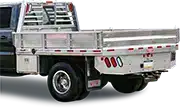






You’ve already decided you need a flatbed. You’ve written off the factory bed. Now you’re comparing two names that come up on working farms, service trucks, and job sites around Owen County: Martin truck beds and Zimmerman truck beds. Both are serious American-built products, but their current lineups approach materials, towing equipment, storage, and customization differently. Choosing the right one starts with the exact truck, the weight you carry, the trailer you pull, and the way you use the bed every day.
Here’s a plain-language comparison so you can make the call before you pull into our lot.
Steel vs Aluminum: The Core Difference
Martin’s current flatbed lineup is built around aluminum construction. Zimmerman gives buyers a choice: the 3000 XL Series uses a steel deck and steel structure, while models such as the 6000XL, Ranch Master, and Platinum Aluminum use substantial aluminum components, often combined with a steel structural frame. The real comparison is therefore not simply one brand against another. It is an all-aluminum Martin configuration against either a steel Zimmerman or one of Zimmerman’s aluminum-and-steel designs.
Do not rely on a generic advertised weight range when calculating payload. Bed weight changes with width, length, headache rack, underbody boxes, sideboards, hitch equipment, bumpers, lighting, and truck-specific mounting hardware. Neither a brand name nor the word “aluminum” tells you the completed truck’s legal payload. The accurate method is to obtain the installed or as-built weight, weigh the completed truck by axle, and compare those figures with the truck’s GVWR, front and rear GAWR, tire ratings, and any final-stage or altered-vehicle certification information. A lighter body can preserve more payload than a heavier body on the same truck, but it does not raise the truck manufacturer’s GVWR or towing ratings.
Steel remains attractive for work that involves repeated impacts, sliding steel, scrap, masonry, and field repairs. A steel deck can be easier for many local fabrication shops to straighten, patch, or weld. It still needs proper coating maintenance, especially where chains, forks, gravel, or road salt expose bare metal. Zimmerman’s 3000 XL Series is the logical configuration to examine when a steel work surface is a priority.
Aluminum is attractive when corrosion resistance and reduced body weight matter. Martin uses aluminum as the foundation of its flatbed range, while Zimmerman’s aluminum models pair a 3/16-inch aluminum tread-plate deck with a substantial supporting structure. Aluminum does not develop red rust, but it is not maintenance-free. Road salt should still be washed away, dissimilar-metal contact must be properly isolated, and repairs should be performed by someone experienced with aluminum fabrication. Fuel-economy gains from a lighter body are possible, but they depend on the actual weight difference, driving cycle, speed, trailer use, and load rather than the bed material alone.
Construction and Floor Options
Martin flatbeds use engineered aluminum construction rather than a steel tube platform. On the current BX Flatbed, Martin lists 6061 extruded aluminum flooring, LED lighting, stake pockets, and rub rail as standard features. The bed is available with options such as a rear hitch, gooseneck hitch access, work lights, D-rings, top-deck toolboxes, underbody toolboxes, a step and grab handle, and a step bumper. Martin’s skirted flatbed configurations add integrated storage while retaining the aluminum deck and body construction.
Zimmerman construction varies by model. The current 3000 XL Series uses a 1/8-inch steel tread-plate deck, a welded headache rack, heavy perimeter channel, and a double 4-inch steel channel frame. The 6000XL uses a 3/16-inch aluminum tread-plate deck and aluminum perimeter material over a double 4-inch steel channel frame. The Ranch Master also uses a 3/16-inch aluminum tread-plate deck with a steel structural foundation and integrated storage. These are solid metal working decks; wood-plank flooring is not a standard floor choice listed for the current 3000 XL, 6000XL, Ranch Master, or Platinum Aluminum flatbeds.
Both manufacturers cover multiple pickup and cab-and-chassis applications, but the dimensions are more specific than a simple choice between 8-foot and 9-foot beds. Martin’s current BX sizes include 84-by-88-inch and 84-by-100-inch single-rear-wheel configurations, 98-by-100-inch dual-rear-wheel applications, and longer 98-by-110-inch and 98-by-134-inch cab-and-chassis bodies. Zimmerman offers common lengths such as 84, 102, 109, 114, 136, and 144 inches, depending on the series, with widths commonly ranging from 84 to 97 inches. Ranch Master dimensions and widths differ from the standard flatbed lines. Fit must be confirmed using the truck’s year, make, model, wheel configuration, cab-to-axle measurement, frame width, fuel system, exhaust and DEF layout, and whether the truck is a pickup-box-delete or true cab-and-chassis model.
Hitch and Towing Setup
This is where the two product approaches show a meaningful difference. On Martin’s BX Flatbed, the rear receiver and gooseneck setup are available options. That lets the buyer configure the body around the truck and intended trailer, but the hitch package should be specified before installation. Martin also offers flatbed and skirted-body variations with different hitch, storage, bumper, and deck-access arrangements, so the exact equipment must be confirmed on the individual build sheet.
Zimmerman makes integrated towing equipment a central feature of several current models. The 3000 XL and 6000XL specifications list a 30,000-pound-rated B&W Turnoverball gooseneck hitch welded into the bed structure and a 20,000-pound-rated weld-in rear receiver, with receiver configuration depending on the order. The Ranch Master uses the same general integrated-hitch approach. Zimmerman also lists a compatible B&W Companion fifth-wheel option for certain configurations. That can be convenient for owners who regularly switch between an open gooseneck ball and an approved fifth-wheel setup.
Those hitch ratings are component ratings, not automatic permission to tow that amount. Actual towing capacity is limited by the lowest-rated part of the complete combination, including the truck’s GVWR, GCWR, rear-axle rating, tires, wheels, hitch, ball or coupler, trailer, and the manufacturer’s towing chart for that exact truck. Proper weight distribution over the truck’s rear axle also matters. A 30,000-pound hitch installed on a truck rated to tow less than that does not increase the truck’s rating.
Zimmerman’s current 3000 XL and 6000XL specifications include a 7-way round trailer connector and sealed wiring harness. Martin beds include required body lighting, but trailer-connector location and hitch wiring should be confirmed as part of the ordered hitch and installation package. Modern trucks may also require careful relocation or calibration of the factory camera, parking sensors, blind-spot components, trailer modules, license-plate lighting, and other driver-assistance hardware.
If you’re shopping our current inventory, you can see what hitch configurations are available right now on the inventory page.
Toolbox Layout and Storage
Ask a working farmer or contractor whether bed material or toolbox layout matters more, and storage will often win. A well-designed box that opens fully beside a trailer, keeps tools dry, and does not interfere with tires, fuel fills, exhaust components, or the gooseneck coupler can save time every day. Both manufacturers offer useful storage, but the exact arrangement depends heavily on the selected model.
Martin’s basic BX platform can be ordered with top-deck toolboxes and underbody toolboxes. Martin’s skirted flatbed line is the better comparison when integrated storage is a priority; current skirted configurations include four underbody compartments, a step bumper, aluminum flooring, and LED lighting, with additional options available by build. This lets a buyer choose between an open platform that maximizes deck access and a more enclosed work body designed around tools and supplies.
Zimmerman’s standard 3000 XL steel and 6000XL aluminum flatbeds can be ordered with front and rear underbody toolboxes in several listed lengths. The Ranch Master is the storage-focused choice, with two front side-hinged aluminum tread-plate boxes and two rear underbody boxes as part of its standard layout. Smooth doors, adjustable shelving, and pull-out drawers are available on Ranch Master configurations. The Platinum Aluminum body adds four underbody boxes, skirts, fold-down sides, and a removable tailboard for buyers who need both secure storage and better loose-cargo containment.
Do not assume one brand always has a taller or lower headache rack. Headache-rack height and design change with the body width, length, truck cab, lighting package, and selected model. Rearward visibility should be checked on the actual truck, especially when the body includes elevated boxes, work lights, a fuel tank, a ladder rack, or other equipment behind the cab.
A Quick Side-by-Side
| Feature | Martin | Zimmerman |
|---|---|---|
| Primary material | Aluminum flatbed and body construction | Steel or aluminum-and-steel construction, depending on model |
| Typical bed weight | Configuration-specific; request the installed or as-built weight | Configuration-specific; steel, aluminum, boxes, and length materially affect weight |
| Floor options | 6061 extruded aluminum flooring on current BX and skirted flatbeds | 1/8-inch steel tread plate on 3000 XL; 3/16-inch aluminum tread plate on aluminum models |
| Gooseneck integration | Available as an option on current flatbed configurations | Integrated B&W Turnoverball standard on several current flatbed lines |
| Toolbox style | Optional top-deck and underbody boxes; integrated compartments on skirted bodies | Optional underbody boxes or storage-focused Ranch Master and Platinum layouts |
| Best fit | Buyers prioritizing aluminum construction, corrosion resistance, and configurable storage | Buyers choosing between a steel work deck and aluminum models with integrated towing equipment |
Price Reality
There is no dependable rule that a Martin bed will always cost a fixed amount more or less than a comparable Zimmerman. The selected body style matters more than the logo. A basic open flatbed, a skirted flatbed with four boxes, and a storage-heavy Ranch Master or service body are different products even when they fit the same truck. Material, dimensions, hitch equipment, sideboards, boxes, lighting, shelves, drawers, bumpers, and special fabrication can move the final price substantially.
Compare installed prices, not bare-body prices alone. A complete quote may need to include removal of the factory box, truck-specific mounting brackets, gooseneck and receiver installation, trailer wiring, fuel-filler modifications, mud flaps, camera and sensor relocation, lighting, license-plate mounting, paint or protective finishes, and labor. It should also identify whether the factory bed is being retained, traded, recycled, or disposed of. Those details can be worth more than a small difference in the advertised bed price.
Payload should also be treated as a measured operating number, not a sales slogan. A lighter completed body can leave more capacity available under the truck’s existing GVWR, but only after accounting for passengers, tools, fuel, hitch weight, cargo, and trailer tongue or pin weight. The safest comparison is to review the finished truck’s certified ratings and obtain actual front- and rear-axle scale weights before loading it for work.
So Which One?
If you want an aluminum platform with corrosion resistance, an extruded aluminum deck, and the ability to choose between a simple open bed and a skirted storage body, Martin deserves a close look. It can be an excellent fit for farms, landscaping crews, contractors, and service users who want to preserve payload and avoid the coating maintenance associated with a conventional steel deck. Specify the rear hitch, gooseneck access, boxes, bumper, lights, and tie-down equipment you need before the body is built or installed.
If your work regularly involves scrap, masonry, steel materials, or repeated deck impacts, the Zimmerman 3000 XL steel may be the more natural choice. If you want an aluminum tread-plate deck while retaining Zimmerman’s integrated B&W gooseneck and receiver-hitch package, examine the 6000XL. For a truck that must carry tools, parts, recovery gear, or farm supplies every day, the Ranch Master or Platinum Aluminum layout may make more sense than either brand’s basic open flatbed.
And if you’re somewhere in between, that’s what we’re here for. Availability changes, and the correct body must be matched to the exact truck rather than selected by bed length alone. We can walk you through current inventory, ordering options, hitch equipment, storage layouts, and installation requirements in person. Call us at (812) 829-0226 or stop by 291 West State Hwy 46 in Spencer. You can also reach us online if you want to describe your truck, trailer, and workload before you make the drive.
What’s the one job your truck bed absolutely has to handle without fail? Start with that job, then confirm the truck’s ratings, the body construction, the hitch package, and the finished weight. Once those four pieces are clear, the right choice usually becomes obvious.


