










You pull up to the lumber yard, the forklift sets a full unit of 2x10x16s on your trailer, and the operator backs away. Now the load is your responsibility. Are those boards going to stay together on a two-lane county road at 55 mph? Is the rear overhang marked correctly? Do the trailer, truck, tires, hitch, and securement equipment have enough rated capacity? These are not trick questions, but they catch experienced homeowners and contractors every season.
Indiana has its own laws covering load dimensions, projecting-load markers, trailer brakes, and combination length. Commercial hauling may also be subject to the Federal Motor Carrier Safety Regulations, including the cargo-securement requirements in 49 CFR Part 393. A lumber run gone wrong is not only a ticket risk. It can create serious civil liability if boards shift, fall, or interfere with another vehicle. Here is how to handle the load correctly, from the flag at the rearmost board to the final ratchet click.
Overhang: How Far Is Too Far?
Indiana Code 9-21-7-7 requires a projecting load to be marked when it extends four feet or more beyond the bed or body of the vehicle. During daylight hours, the extreme rear of the load must carry a red flag or cloth at least 12 inches square, with the full area visible to a driver approaching from behind. During the hours when vehicle lights are required, the extreme rear must be marked by a red light or lantern visible for at least 500 feet to the sides and rear. Commercial motor vehicles subject to 49 CFR 393.87 face a stricter flag standard when a load projects more than four feet: red or fluorescent orange flags must be at least 18 inches square. If the projecting portion is wider than two feet, federal rules call for two flags marking its rear width. Commercial nighttime operation may also require red side-marker lamps, two rear red lamps, and two rear reflectors on the projecting load. Using an 18-inch fluorescent flag and a proper projecting-load light kit is the simplest way to meet the more conservative standard.
Practical translation: a 16-foot board positioned on a 14-foot deck may have approximately two feet of rear overhang, so the projecting-load flag requirement is not triggered. A 20-foot board positioned the same way may have approximately six feet of rear overhang, which requires daytime marking and nighttime lighting. Rear overhang by itself is not the only legal measurement. A typical pickup-and-trailer combination of two vehicles in Indiana, including its load, is generally limited to 60 feet overall unless an exception applies. The normal maximum legal width is 8 feet 6 inches. Indiana also prohibits a load from extending beyond the line of the fenders on the left side or more than six inches beyond the fenders on the right side. Commercial federal marking rules may apply when a load projects more than four inches beyond a vehicle’s sides.
The 500-foot visibility requirement applies to the nighttime red light, not to a daytime rag. The daytime flag must still be clean, securely attached, fully open, and clearly visible from behind. A faded shop towel folded under a strap is easy to miss and may not satisfy the law. Fasten the flag to the actual rearmost end of the lumber, not merely to the trailer’s tail, ramp, or license-plate bracket. Recheck it after the first few miles because wind can wrap a loosely attached flag around the load.
Banding Bundles Before They Even Hit the Trailer
Loose boards are harder to contain than a properly unitized package. When possible, ask the lumber yard to leave the mill bands intact or to rebuild a damaged unit before loading it. Inspect the package before accepting it. Broken bands, crushed corner protectors, bowed boards, ice between layers, and loose dunnage can allow the unit to spread as soon as the forklift sets it down. If the material is not banded, build a compact, square stack on sound dunnage and secure it as loose cargo under the general securement rules. Rebanding heavy lumber should be done only with appropriate steel or polyester banding tools, eye protection, gloves, and training; tensioned steel banding can cause severe injury if it breaks.
There is no universal weight for a “bundle” or “full unit.” Board count varies by mill, species, grade, length, treatment, and supplier. Dry spruce-pine-fir framing lumber can weigh much less than freshly pressure-treated southern pine of the same nominal size. A small hand-loaded group of 2x4x8s may weigh only a few hundred pounds, while a mill unit of long dimensional lumber can weigh several thousand pounds. A full unit of wet 2x6x16 pressure-treated material may weigh multiple tons. Do not estimate a commercial load from appearance alone. Ask the yard for the unit tally, listed weight, or scale ticket and compare that number with the trailer’s actual payload capacity.
The number and placement of packaging bands should match the package length and the lumber supplier’s unitization method. Two bands may be enough for a small, short hand-built package, but long or heavy units commonly need additional bands and protected corners. Packaging bands organize the boards so they behave as a bundle; they are not vehicle tie-downs and do not replace rated straps or chains. Under 49 CFR 393.118, bundled dressed lumber carried in one tier is secured under the general cargo rules. Bundles placed side by side must remain in direct contact or be prevented from shifting toward each other. Multi-tier loads can require stakes, blocking, high-friction material, spacers of adequate size, and additional tiedowns over intermediate or individual tiers.
Strap Spacing: The Every-10-Feet Rule
For an article or group of articles that is not blocked or otherwise prevented from moving forward, 49 CFR 393.110 generally requires two tiedowns when the cargo is longer than 10 feet, plus one additional tiedown for each additional 10 feet or fraction of 10 feet. That makes three tiedowns for a typical unblocked 16-foot load, three for a 20-foot load, and four for a 21-foot load. If cargo is positively blocked against forward movement by an adequate bulkhead, headerboard, secured cargo, or other suitable method, the general rule can be one tiedown for every 10 feet or fraction. That reduction should not be used as an excuse to under-secure a flexible lumber stack. Separate bundles may need to be treated and secured as separate cargo groups, and a tall multi-tier lumber load must also satisfy the bundled-building-products provisions of 49 CFR 393.118.
Working load limit, or WLL, matters independently of the minimum tiedown count. The aggregate WLL of the tiedowns securing an article or cargo group must be at least one-half of that cargo’s weight. A 3,000-pound lumber package therefore needs at least 1,500 pounds of aggregate WLL. Many commercial 2-inch ratchet straps are tagged with a WLL of 3,333 pounds, but that is not guaranteed for every strap. Read the sewn-in label and use the rating of the weakest component, including the webbing, ratchet, hook, chain adapter, and trailer anchor. A strap passing over the cargo and attaching to opposite sides of the trailer generally contributes its full WLL to the aggregate calculation. Even when one strap provides enough mathematical WLL, the length-based minimum tiedown count still applies.
Indirect tiedowns work by adding downward pressure and friction between the lumber and deck, so avoid very shallow strap angles that provide little clamping force. Place straps transversely across the load as close to vertical as practical, with anchors positioned so the hooks pull in their intended direction. Use edge protectors anywhere rough-sawn edges, sharp corners, banding, or uneven boards could cut or abrade the webbing. Edge protection must be strong enough to resist crushing and movement under tension. Keep straps away from tires, suspension parts, hot exhaust, and sharp trailer edges, and secure the loose strap tails so they cannot enter a wheel or whip themselves apart in the wind.
Flatbed vs. Utility: Which Trailer Fits a Lumber Run?
This depends on the lumber’s length and weight, how the yard will load it, the towing vehicle’s ratings, and how often you make material runs.
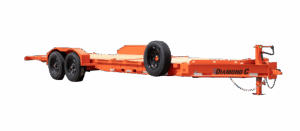
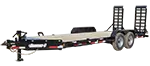
A 22-foot Diamond C LPX equipment trailer is a serious bumper-pull option for contractors who also haul machinery. The current LPX line is available in 16- to 30-foot lengths, with 80- or 82-inch bed widths and GVWR configurations ranging from 15,500 to 24,000 pounds. The standard axle arrangement is two 7,000-pound Lippert axles, with triple 7,000-pound, tandem 8,000-pound, and tandem 10,000-pound packages available on appropriate configurations. Higher-GVWR models 22 feet and longer use Diamond C’s Engineered Beam Technology where specified. A treated-wood deck, rub rail with stake pockets and pipe spools, and rated D-rings provide useful securement choices. Optional MAX Ramps or the X-Ramp are equipment-loading systems; they should not be treated as an extension of the cargo deck unless the specific configuration is designed and rated for that use. Always subtract the trailer’s certified empty weight, installed options, tools, and spare equipment from GVWR before determining available lumber payload.
An H&H 82-inch-by-14-foot steel utility trailer with a 7,000-pound GVWR is better matched to homeowner projects and moderate contractor loads. Current 14-foot tandem rail-side and solid-side versions use two 3,500-pound-rated axles and list an approximate curb weight of 1,610 pounds, leaving about 5,390 pounds of theoretical payload before options, tools, or other equipment are added. These trailers use pressure-treated decking rather than an open mesh floor. The solid-side model includes side-mounted D-rings, while tie-down equipment and anchor locations vary by configuration. The sides can help contain small offcuts, but they do not replace tiedowns and should not be used as anchor points unless H&H specifically rates them for that purpose. A 14-foot utility can handle a substantial renovation load, but a complete mill unit may exceed its payload, axle, tire, or tow-vehicle limits.
The Diamond C LPX low-profile series also reduces the lifting height compared with a deck-over trailer because the main bed sits between the wheels. Exact deck height depends on axle, tire, suspension, and frame configuration; selecting straight axles raises deck height and ground clearance by approximately four inches. The 80- to 82-inch standard bed can be side-loaded by a forklift when the yard has adequate approach room, but the operator must keep the forklift, mast, forks, and bundle clear of the fenders, rub rail, lights, and trailer frame. The optional 102-inch Max Width Package changes the loading surface and fender arrangement, so confirm the exact usable support area before ordering it primarily for lumber. Never allow a forklift to drive onto a trailer, dovetail, or ramp system unless the trailer and ramps are specifically rated and properly supported for that loading method.
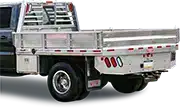
For rough-cut beams, trusses, and specialty timber in longer lengths, a Diamond C FMAX gooseneck flatbed opens up more options. FMAX models use a 102-inch deck-over bed and are offered in lengths from approximately 20 to 44 feet, depending on the model, with GVWRs ranging from 15,500 to 40,000 pounds. For example, the FMAX207 is a 15,500-pound-GVWR tandem-axle model available in 20- to 35-foot lengths with two 7,000-pound Lippert axles. Heavier FMAX models provide higher axle and GVWR packages for commercial work. A 20- or 22-foot deck can support more of a 20-foot board and may eliminate rear overhang depending on the exact deck, dovetail, and load placement. FMAX trailers require a properly installed and rated gooseneck-ball hitch, not an ordinary bumper hitch. They also place substantially more weight in the truck bed, so the truck’s payload, rear-axle rating, tire ratings, hitch rating, and GCWR must all be checked. Diamond C builds its trailers in Mt. Pleasant, Texas, and uses its DM Difference Maker multi-stage coating system on current production.
Common Mistakes That Lead to Shifting Loads
- Strapping over the middle of the bundle only. The ends can spread, bounce, or telescope out of the stack. Establish securement near the front and rear portions of the load and then add the intermediate tiedowns required for its length.
- Mixing lengths without securing each group. Short boards placed loosely on top of long boards can move independently during braking. Stack similar lengths together or secure the shorter material as a separate cargo group with its own blocking and tiedowns.
- Overtightening thin or finished stock. Excessive tension can bow one-inch boards, crush trim, damage drywall, or crack kiln-dried material. Use corner protection, broad webbing, and even tension while still making the load firm enough that individual pieces cannot move.
- Using utility-trailer rails as the only anchors. A rail that contains a mower or yard debris may not be rated for the concentrated force of a tensioned strap. Use manufacturer-provided D-rings, stake pockets, rub rails, pipe spools, or other anchors with adequate ratings.
- Forgetting forward restraint. Hard braking creates the strongest securement demand in the forward direction. Use an adequate headboard or bulkhead, sound blocking, properly secured dunnage, or direct diagonal tiedowns where the cargo and equipment permit them. Do not assume a decorative front rail is a rated bulkhead, and do not expect one additional strap laid straight across the load to provide the same forward restraint as proper blocking.
Weight and Axle Ratings: Don’t Assume
Lumber is heavier than it looks, and moisture can change the number dramatically. A nominal 12-foot pressure-treated 4×4 may weigh roughly 40 to 60 pounds depending on species, treatment retention, and moisture, so 20 posts can approach or exceed 1,000 pounds. A wet 16-foot pressure-treated 2×6 can weigh roughly 35 to 55 pounds, and a full unit may contain enough pieces to total several thousand pounds. Engineered beams, hardwood, green rough-sawn timber, and bundled sheet goods can be heavier still. Use the supplier’s unit weight, count the pieces, or obtain a scale ticket instead of relying on a generic internet weight chart.
Know the trailer’s GVWR, certified empty weight, payload, gross axle weight ratings, tire capacities, wheel ratings, coupler rating, and brake configuration before loading. GVWR is not payload. On the 7,000-pound H&H utility example, the listed 1,610-pound curb weight leaves approximately 5,390 pounds before options or cargo are added. A Diamond C LPX has a much higher available GVWR, but its empty weight changes substantially with length, axle package, frame, ramps, hydraulic equipment, and accessories. Indiana requires a trailer or semitrailer with a gross weight of at least 3,000 pounds to have brakes adequate to stop and hold it, controllable from the towing vehicle’s cab, along with an automatic breakaway function. Confirm that every required brake is operating and that the breakaway battery is charged before loading.
Position the cargo so its center of mass is slightly ahead of the trailer axle group and then verify the result rather than relying only on a visual 60/40 rule. Conventional bumper-pull trailers generally need tongue weight around 10 to 15 percent of the loaded trailer weight. Too much tongue weight can overload the hitch, receiver, truck payload, rear axle, and rear tires while unloading the truck’s front axle and reducing steering response. Too little tongue weight can create severe trailer sway. Gooseneck trailers normally place a higher percentage of their loaded weight on the truck, often around 15 to 25 percent depending on design and load position. Use a tongue-weight scale, portable wheel scales, or a certified public scale and stay within every truck, trailer, axle, tire, hitch, and combination rating.
A Quick Q&A
Q: Do I need a CDL to haul a loaded lumber trailer in Indiana?
A: A Class A CDL is generally triggered when the combination has a GCWR of 26,001 pounds or more and the towed trailer has a GVWR greater than 10,000 pounds. Both conditions must be present. A trailer rated above 10,000 pounds does not by itself trigger a Class A CDL when the combination rating remains below 26,001 pounds. Conversely, other CDL classes or endorsements can apply to a single vehicle rated at 26,001 pounds or more, passenger vehicles, or placarded hazardous-material transportation. Farm, recreational, and other limited exemptions have their own conditions. Commercial operators can also face USDOT-number, medical-card, inspection, hours-of-service, and insurance requirements below the CDL threshold. Check the truck’s door label, trailer certification label, manufacturer GCWR, and actual use rather than judging by the load’s current scale weight alone.
Q: Can I haul a 20-foot board on a 14-foot trailer?
A: It may be possible if the board is adequately supported, the truck-and-trailer combination remains within Indiana’s overall length and width limits, and the load is properly secured. With approximately six feet of rear projection, Indiana requires a red flag or cloth at least 12 inches square during daylight and a qualifying red light or lantern during lighting hours. A commercial motor vehicle subject to federal rules should use at least 18-inch red or fluorescent orange flags; a projecting load wider than two feet requires two rear flags under the federal rule. Federal nighttime lamp and reflector requirements may also apply. Keep the boards centered laterally, prevent forward and sideways movement, and use enough tiedowns for the cargo’s length and configuration.
Q: How many straps do I really need for a standard lumber run?
A: For a typical unblocked, single-tier 16-foot lumber package, the general federal length rule calls for three tiedowns. A 20-foot package also calls for three, while a load just over 20 feet generally moves to four. Positively blocking the load against forward movement can change the general minimum, but three or more properly placed straps remain a sensible baseline for long lumber on an open trailer. Every strap must have a readable WLL tag, the aggregate WLL must be at least half the secured cargo weight, and the trailer anchors must be rated for the applied load. Add securement when you have separate bundles, mixed lengths, multiple tiers, slippery wrapping, wet or icy lumber, tall stacks, or long highway travel.
Before You Leave the Lot
Walk around the entire combination before leaving. Check the coupler or gooseneck latch, locking pin, safety chains, breakaway cable, electrical plug, trailer brakes, lights, tires, wheel condition, load placement, dunnage, edge protectors, hooks, ratchets, strap tails, and projecting-load markers. Pull each tiedown by hand and confirm that it is tensioned evenly and that no individual board can slide out. Make a conservative first stop after a few miles because lumber, spacers, and packaging settle quickly. Commercial drivers covered by 49 CFR 392.9 must inspect the cargo and securement within the first 50 miles and reexamine it after a duty-status change, after three hours of driving, or after 150 miles, whichever occurs first. Even on a short private trip, recheck the load after rough roads, hard braking, rain, or any sign that a strap has lost tension.
If you are in the market for a trailer built for regular material runs, browse current inventory at Spencer Trailers to compare the exact trailers and configurations presently available. Inventory, model-year specifications, axle packages, empty weights, and optional equipment can change, so verify the certification label and build sheet for the individual trailer you are considering. An LPX equipment trailer, an FMAX gooseneck flatbed, a Diamond C GTU utility, or an H&H utility trailer may each be the right choice for a different size of lumber operation. You can also call us at (812) 829-0226 to discuss your typical board lengths, unit weights, towing vehicle, loading method, and securement needs. The right trailer gives the load adequate support, provides correctly rated anchor points, and makes every lumber run safer from the yard to the jobsite.


