








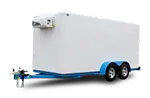


You get the call at 7 AM. A piece of farm equipment is down in the field, an excavator track needs attention, or a semi has a cracked bracket three counties away. The difference between getting paid for that job and losing it to somebody else is how quickly you can roll out with everything required to finish the repair safely. Not just the welder. Not just the torch. Everything: compressor, grinder, leads, hoses, parts, fasteners, consumables, lighting, fire protection, and a solid surface where you can measure, cut, and assemble components.
That is a very different trailer from what a welding artist might use as a compact studio or from what a contractor needs for occasional equipment transport. A mobile repair rig carries concentrated loads, compressed-gas cylinders, electrical equipment, tools, replacement parts, and sometimes fuel. It demands a deliberate plan for payload, weight distribution, ventilation, power, fire safety, security, and access before the first cabinet is installed.
Why an Enclosed Trailer (Not a Flatbed) for Mobile Repair
Flatbeds are excellent for hauling machines, steel, and oversized material. For a mobile repair operation, however, an enclosed trailer solves several problems that an open trailer cannot. Your MIG or TIG machine, plasma cutter, diagnostic equipment, compressor, leads, fittings, and consumables stay protected from rain and road spray. Parts bins remain organized instead of being exposed to wind. Lockable doors provide better overnight security, and enclosed walls give you places to install lighting, cable hangers, shelving, and properly supported cabinets.
An enclosed trailer can also provide a useful weather-protected area for diagnostics, paperwork, parts preparation, and tool storage. When it is 95 degrees, freezing, or raining sideways, being able to step inside to read a wiring diagram, crimp a connector, change consumables, or organize hardware makes the workday easier.
That does not mean the trailer should automatically become an indoor welding booth. Welding, cutting, grinding, engine exhaust, battery charging, fuel, and compressed gases all introduce hazards. Hot work should normally be performed outside, with the trailer used as the organized support station. When limited fabrication must be performed inside, the build needs suitable ventilation, fire-resistant surfaces, clear exits, spark control, and a hot-work procedure appropriate for the job.
Never operate a portable generator, engine-driven welder, unvented fuel-burning heater, or idling vehicle inside the trailer or immediately beside an open door or vent. Carbon monoxide can accumulate quickly even when a ramp or side door is open. For cold-weather comfort, use an appropriately rated electric heater on shore power or another professionally installed system designed for enclosed occupational spaces, while keeping combustible materials and cylinders away from the heat source.
The Right Size: Don’t Go Too Small
Many mobile repair operators regret undersizing because equipment dimensions tell only part of the story. A machine may physically fit through the rear door, but you still need room for airflow, service access, cylinder restraints, drawers, cable reels, a workbench, and a clear route between the rear ramp and side door. Door-opening width, width between the wheel boxes, interior height, ramp angle, and the location of wall framing can matter as much as the advertised exterior length.
A carefully planned 7×16 enclosed trailer can support a compact repair setup built around a smaller engine-driven welder or inverter machine, portable compressor, limited parts inventory, and folding bench. For a fuller combination rig, a 7×20 or 8.5×20 enclosed is often a more practical starting point. An 8.5-foot-wide trailer generally provides roughly a foot and a half of additional interior width compared with a 7-foot-wide model, although the exact usable difference depends on wall construction and fender design. That additional room can allow a 24-inch-deep bench along one wall while preserving a usable center aisle.
Do not choose the trailer solely by nominal dimensions. Make a scaled floor plan showing every permanent component, its service-clearance requirements, and the space needed to remove it later. Confirm the actual rear-door opening rather than assuming it matches the trailer’s exterior width. A compressor, toolbox, or welder that fits inside the box may still be too wide or too tall for the ramp opening.
For weight capacity, mobile repair builds commonly fall into several tiers. A lighter 7,000 lb GVWR trailer may work for an inverter welder, compact compressor, modest tooling, and limited inventory. A 9,990 lb GVWR configuration is popular because it offers more payload while remaining just below 10,000 lb on the trailer’s certification label. These trailers may use two 5,200 lb axles but be manufacturer-rated at 9,990 lb; the VIN certification label, not the sum of the axle ratings, establishes the trailer’s legal GVWR.
For a diesel engine-driven welder, large compressor, substantial steel cabinetry, multiple cylinders, and a large parts inventory, a properly engineered 14,000 lb GVWR trailer may be appropriate. Two 7,000 lb axles alone do not automatically make a trailer a legal 14,000 lb unit. The frame, suspension, coupler, tires, wheels, brakes, safety chains, ramp, and other components must support that rating, and the manufacturer must certify the completed trailer accordingly.
The tow vehicle must also be matched to the finished combination. Check the truck’s GVWR, rear GAWR, GCWR, receiver rating, hitch-ball or pintle rating, tire capacities, payload allowance, and maximum trailer rating. Tongue weight from a heavily equipped enclosed trailer can consume a large portion of a pickup’s available payload before passengers, fuel, toolboxes, or bed-mounted equipment are added.
What Goes Inside: The Combo Repair Build
This is where the mobile repair trailer separates from a dedicated welding trailer. A specialized welding rig may carry one process, a machine, cylinders, leads, and consumables. A combination repair rig adds pneumatic tools, electrical diagnostics, replacement hardware, lifting equipment, and enough organization to prevent every roadside repair from becoming a search through loose boxes.
- Air compressor, selected by required airflow, pressure, duty cycle, and power supply rather than tank size alone. A portable 20- or 30-gallon compressor may be enough for intermittent impact-wrench use and tire inflation. A 60-gallon stationary unit can support heavier use, but its weight, motor-starting current, ventilation, mounting, and service access must be considered. Check the cubic-feet-per-minute rating at the pressure required by your plasma cutter and air tools.
- Generator or engine-driven welder, sized from the equipment nameplates and intended simultaneous loads. A generator’s advertised peak wattage is not the same as its continuous output. Verify the welder’s input voltage, amperage, phase, and required generator capacity at the welding output you expect to use. Include compressor starting surge, lights, chargers, grinders, ventilation fans, and receptacle loads in the calculation. Gasoline engine-driven units can weigh roughly 450 to 600 lb, while larger diesel machines and models with integrated compressors may approach or exceed 1,000 lb.
- Gas-cylinder storage, using a dedicated, structurally supported restraint system appropriate for the cylinders carried. Cylinders should remain upright where required, protected from damage, restrained so they cannot tip or move, and fitted with valve-protection caps when applicable. Close cylinder valves during transport. Do not rely on thin interior wall panels or sheet-metal screws; use engineered backing and attachment points approved for the trailer structure. Oxygen, fuel-gas, shielding-gas, and refrigerant cylinders have different handling requirements, so follow the cylinder supplier’s instructions and applicable OSHA, DOT, fire-code, and Compressed Gas Association guidance.
- Parts bins, with positive latches that remain closed over potholes and railroad crossings. Lightweight consumables can be mounted higher, but bolts, fittings, bearings, chains, and other dense inventory should stay low and close to the axle group. Wall systems and cabinets must be fastened to structural members or factory-installed backing rather than decorative wall lining.
- Workbench, either fixed or folding, with enough depth for the repairs you actually perform. A steel-topped bench approximately 24 inches deep can work well, but its frame, top, vise, and stored material add meaningful weight. Keep sharp corners out of the aisle, preserve access to electrical panels and extinguishers, and avoid positioning the bench where it blocks a side-door escape route.
- Drawer unit, using road-rated latches rather than household cabinet slides alone. A steel toolbox that weighs 150 lb empty can become a 500 lb concentrated load after sockets, pullers, hammers, and specialty tools are added. Support it through the floor structure and secure it against forward, rearward, and lateral movement.
- Cable and hose management, including holders or reels for welding leads, extension cords, air hose, jumper cables, and torch hose. Mount reels where they can be reached from outside without dragging wet or muddy equipment through the entire trailer.
- Safety equipment, including properly selected and inspected fire extinguishers, a first-aid kit, eye-wash supplies where appropriate, hearing and eye protection, welding screens, wheel chocks, reflective warning devices, spill-control materials, and adequate task lighting. Fire extinguishers should be accessible from an exit, not buried behind the equipment most likely to catch fire.
Place permanent equipment only after considering axle loading and tongue weight. Mounting every heavy item against the front wall may create excessive hitch load, while putting too much mass behind the axles can reduce tongue weight and contribute to instability. Heavy equipment should generally be kept low and distributed around the axle group, but the final layout must be confirmed by weighing the completed trailer.
Trailer Brands Worth Looking At
Not every enclosed trailer is configured for a working repair rig. Look beyond exterior color and overall length. Compare frame design, crossmember spacing, wall-post spacing, ramp construction, brakes, axle capacity, tire ratings, floor material, roof design, electrical options, door openings, and the manufacturer’s approval for permanently mounted equipment. These four product lines illustrate the range of construction and capacity available, although exact specifications depend on model year and factory options.
Wells Cargo Road Force
Wells Cargo’s Road Force is positioned above a basic entry-level cargo trailer and is available in 8.5-foot-wide tandem-axle configurations suitable for contractor and service builds. Current published specifications for the 8.5-wide line include approximately 6 feet 6 inches of standard interior height, about 83 inches between the wheel boxes, a wide rear ramp opening, a beavertail transition, a side entry door, and tie-down provisions. Extra-height configurations are also commonly ordered, so confirm the completed unit’s interior and rear-door height rather than relying on a general brochure.
Road Force GVWR depends on the exact size and axle package, with 7,000 and 9,990 lb configurations available in the line. Some 9,990 lb inventory units use tandem 5,200 lb brake axles, but the build sheet and VIN label should be checked on the individual trailer. Floor composition, crossmember spacing, ramp rating, wall lining, electrical package, and tie-down locations can change with options. Before mounting a compressor or engine-driven welder, ask Wells Cargo or the dealer to approve the planned attachment method and concentrated load.
Legend Trailers Thunder Series
Legend’s current Thunder V-Nose is an all-aluminum enclosed trailer built in Michigan. The 8.5-foot-wide Thunder line is offered in lengths from approximately 18 through 26 feet, with published GVWR choices from 7,000 to 9,990 lb depending on configuration. Published dimensions include about 98 inches of interior box width, 83 inches between the fenders, 78 inches of interior height, and a rear opening approximately 90 inches wide by 73 inches high.
The Thunder’s published construction includes tube framing, 16-inch-on-center floor crossmembers, wall posts, and roof bows, an engineered wood floor, a bonded screwless aluminum exterior, torsion suspension, electric brakes, and a side entry door. Because axle packages and GVWR can vary with the order, confirm the axle ratings, brakes, tires, wheels, and certified payload on the specific trailer. All-aluminum construction can reduce empty weight compared with some similarly sized steel-frame designs, but installed cabinets, batteries, electrical systems, and extra-height options still reduce available payload pound for pound.
Darkhorse Cargo Trailers
Darkhorse Cargo, based in White Pigeon, Michigan, offers enclosed trailers in several construction and equipment levels, including current DHW models frequently seen in contractor-oriented sizes. Common inventory examples include 7×16, 8.5×16, 8.5×20, and 8.5×24 trailers. Many are rated at 7,000 or 9,990 lb, while heavier custom configurations may be available with upgraded axles, frames, running gear, and couplers.
Darkhorse specifications vary considerably by series and option package, so do not assume that every 8.5×24 has the same framing, interior height, axle rating, ramp capacity, or GVWR. For a heavy mobile repair build, ask for the factory order sheet showing crossmember spacing, main-frame construction, wall-post spacing, floor material, rear-door opening, ramp rating, tire capacities, brake configuration, and actual certified GVWR. A heavier axle option is valuable only when the rest of the trailer is engineered and certified for the corresponding capacity.
United Trailers UXT/UXTV
United Trailers’ current commercial cargo offerings include the flat-front UXT and V-front UXTV lines. These are available in 7-, 8-, and 8.5-foot widths, with a broad range of lengths and GVWR packages. Across the commercial line, available suspension choices include torsion axles in several ratings, and overall GVWR options extend from lighter single-axle models to heavy tandem- and triple-axle configurations.
Published commercial-grade construction includes closely spaced floor crossmembers, wall posts, and roof bows, along with steel-frame designs and electric brakes on applicable axle packages. Approximately 7 feet of interior height is common on many 7- and 8.5-foot-wide configurations, although the exact height and door opening must be confirmed. An 8.5×20 can be ordered in different weight classes, so specify the payload, frame, axle package, side-door arrangement, ramp, and electrical preparation around the actual mobile-repair inventory rather than ordering by exterior dimensions alone.
A Quick Spec Comparison
| Trailer | Size | GVWR | Axles | Interior Height |
|---|---|---|---|---|
| Wells Cargo Road Force | 8.5×20 to 8.5×24 examples | 7,000 to 9,990 lb by configuration | Tandem; 5,200 lb brake-axle package common on certain 9,990 lb builds | Approximately 6’6″ standard; extra height available |
| Legend Thunder V-Nose | 8.5×18 to 8.5×26 | 7,000 to 9,990 lb by configuration | Tandem torsion; verify ordered axle package | Approximately 6’6″ |
| Darkhorse DHW | 7×16 to 8.5×24 examples | 7,000 and 9,990 lb common; heavier builds vary | Tandem; rating varies by build | Approximately 6’6″ to 7′ or more by configuration |
| United UXT/UXTV | 8.5×20 example; broader line available | Varies widely; commercial line extends to heavy-duty configurations | Single, tandem, or triple torsion depending on model | Approximately 7′ on many 7- and 8.5-wide builds |
These figures describe current product-line ranges and representative configurations, not a promise that every length is available at every GVWR. The individual trailer’s certification label and factory build sheet control. Ask for the trailer’s actual empty weight as equipped, because extra height, finished walls, cabinets, spare tires, heavier ramps, air conditioning, batteries, and electrical packages all reduce cargo capacity.
The Weight Math You Need to Do First
Before choosing a trailer, list and weigh the equipment you intend to carry. A surprising number of mobile rigs are overloaded not because of one enormous machine, but because hundreds of small tools, fittings, steel offcuts, chains, jacks, batteries, extension cords, and replacement parts accumulate after the trailer enters service.
A realistic combination-repair inventory may include:
- Engine-driven welder or welder-generator: approximately 450 to more than 1,000 lb, depending on gasoline or diesel engine, output, enclosure, fuel capacity, and whether an air compressor is integrated
- Standalone electric welder, plasma cutter, and associated carts: approximately 100 to 400 lb combined, depending on machine class
- Air compressor: approximately 100 to more than 500 lb, depending on portability, tank, pump, motor, and mounting frame
- Compressed-gas cylinders and restraints: approximately 100 to more than 400 lb, depending on cylinder sizes, quantity, contents, and rack construction
- Steel workbench, vise, shelving, and cabinets: approximately 250 to more than 800 lb
- Toolbox and hand tools: approximately 300 to more than 1,000 lb
- Parts bins, fasteners, hydraulic fittings, bearings, electrical supplies, and repair stock: approximately 300 to more than 1,500 lb
- Welding wire, electrodes, torch equipment, leads, hoses, grinders, jacks, cribbing, chains, and recovery equipment: approximately 300 to more than 1,000 lb
- Batteries, inverter or charger, shore-power equipment, ventilation, spare tire, extinguishers, and miscellaneous supplies: approximately 150 to more than 500 lb
The correct payload calculation is the trailer’s certified GVWR minus its actual ready-to-load weight. Suppose a trailer is rated at 9,990 lb and weighs 4,900 lb after permanent cabinets, electrical work, cylinder rack, spare tire, and bench have been installed. That leaves 5,090 lb for machines, tools, cylinders, parts, and consumables. It does not mean every one of those pounds should be used without considering axle balance, tire capacity, tongue weight, or a practical operating margin.
Factory-listed empty weight may not include every option, and registration paperwork may use a generic model weight. After the build is complete, take the working rig to a certified scale. Weigh it fully loaded as it normally travels, then obtain axle-group and tow-vehicle axle weights when possible. Compare the results with the trailer GVWR, trailer GAWR, tire and wheel ratings, tow-vehicle GVWR and rear GAWR, GCWR, receiver rating, and hitch-component ratings.
Secure equipment for highway forces, not merely for remaining upright while parked. Casters should not carry the entire restraint load. Use structural attachment points, wheel chocks or cradles where appropriate, and restraints designed to prevent forward, rearward, vertical, and side-to-side movement. A 500 lb toolbox can generate far greater force during a collision or emergency stop.
One Thing Most People Overlook: Electrical
Plan the electrical system before drilling holes or lining the walls. Start with a load worksheet showing every 120V and 240V appliance, its continuous current, motor-starting current, duty cycle, and whether it may operate while welding. Then select the shore-power inlet, generator, distribution panel, wiring, receptacles, grounding arrangement, and transfer equipment around that calculation.
A common 30-amp RV-style TT-30 connection is a 120V supply, not a 240V welding circuit. It can provide about 3,600 watts at its rated voltage and current, but it will not run a welder that requires 240V simply because both are described as “30 amp.” A properly installed 50-amp 120/240V service offers substantially more capacity and can supply 240V loads, but the inlet, cord, panel, breakers, receptacles, wire sizes, and source must all be compatible. Some operations use industrial connectors rather than RV-style hardware.
At minimum, a professional build may include a listed shore-power inlet, a correctly sized panel, dedicated lighting and ventilation circuits, GFCI-protected receptacles where required, separate circuits for chargers and bench tools, and clearly labeled disconnects. A 12V battery circuit can keep LED lights and ventilation operating without running a generator, but the battery must be securely mounted, fused close to the source, protected from tool contact, and charged by suitable equipment.
If the trailer can accept both shore power and generator power, use approved transfer equipment or an interlocked system that prevents backfeeding one source into another. Do not connect a generator to the trailer through an improvised double-male cord. Neutral-to-ground bonding and grounding-electrode requirements depend on the generator design and how it is connected. A qualified electrician familiar with mobile equipment should design or inspect the system under the electrical rules applicable to the installation.
Operate the generator or engine-driven welder outdoors, away from doors, windows, vents, and occupied work areas. Route exhaust away from the trailer and customer buildings. Use appropriately rated cords, protect them from vehicle traffic and sharp edges, and do not exceed the continuous rating of the generator, inlet, cord, panel, or receptacle.
Ventilation, Fire, and Cylinder Safety
An enclosed repair trailer combines several hazards in a small space: ignition sources, hot metal, grinding sparks, oil, solvents, batteries, fuel, compressed gases, and combustible wall or floor materials. Organization is part of the safety system. Keep flammables away from welding and grinding areas, provide metal containers where appropriate, maintain clear access to exits, and inspect the trailer regularly for damaged cords, gas leaks, loose restraints, overheated connections, and accumulated grinding dust.
Cylinders should be secured against movement with restraints designed for highway travel. Valve caps should be installed when required, valves should be closed when the cylinder is not in use, and regulators should be protected from impact. Acetylene cylinders must be handled and used in the proper orientation. Oxygen must be kept away from oil and grease, and oxygen and fuel-gas storage is subject to separation or barrier requirements. A small trailer can make compliant storage challenging, so a ventilated exterior compartment or properly engineered rack may be preferable to placing every cylinder inside the occupied workspace.
Transporting compressed gases for business use may also bring DOT hazardous-material rules into the picture depending on the materials, cylinder quantities, and operation. Do not assume that securing the bottles is the only requirement. Confirm shipping papers, labeling, quantity exceptions, fire-extinguisher requirements, and any placarding or driver-qualification obligations that apply to your specific load.
Ventilation must address both fumes and heat. A roof vent is helpful for general air exchange but is not automatically adequate for welding fumes, solvent vapors, engine exhaust, or plasma cutting. Use source capture or mechanical exhaust appropriate for the process, provide replacement air, and avoid directing fumes toward the operator or another worker. Never use oxygen to ventilate the trailer or blow dust from clothing.
What to Ask When You’re Shopping
“What are the certified GVWR, actual empty weight, axle ratings, tire capacities, wheel ratings, coupler rating, and payload of this exact trailer?” Ask to see the VIN certification label and build sheet. Do not estimate capacity by adding axle ratings or comparing the trailer with another unit on the lot.
“How is the floor constructed, and will the manufacturer approve my concentrated loads?” Ask about floor material, thickness, crossmember size and spacing, main-frame construction, and the approved method for mounting the welder, compressor, cabinets, and cylinder rack. A general payload number does not automatically establish a safe point-load rating.
“What is the rear ramp’s rated capacity and usable opening?” Confirm whether the rating is for a distributed load, how equipment casters affect it, whether stabilizer jacks are required, and whether the ramp angle works with low-clearance machines. Measure the opening between cables, hinges, trim, and door hardware.
“Can structural backing be added before the interior walls are installed?” Factory-installed backing for cabinets, reels, shelving, and cylinder restraints is generally cleaner and safer than guessing where to through-bolt after the trailer has been completed.
“Can I add or reposition a side door?” A well-placed side door allows access to common tools without lowering the ramp and provides another route out of the trailer. Verify that the door location does not conflict with cabinets, fenders, wiring, the awning rail, or the tow vehicle during tight turns.
“What’s the wall-post and floor-crossmember spacing?” Closely spaced structural members can simplify cabinet installation, but spacing alone does not confirm load capacity. Ask what may be attached to those members and whether additional reinforcement is required.
“Which electrical preparations can the factory install?” Extra roof-vent framing, air-conditioner bracing, generator compartments, shore-power inlets, conduit, lighting, receptacles, and battery boxes are easier to plan before walls and ceilings are finished. Confirm voltage and amperage rather than asking only for a generic 30- or 50-amp package.
“How will options change empty weight and payload?” Extra height, thicker floors, finished interiors, heavy ramps, cabinets, batteries, spare tires, and air-conditioning equipment can add hundreds of pounds. Get the finished unit’s weight when available and scale it again after the repair build is completed.
Indiana Towing, Licensing, Registration, and Tax Details
Every trailer discussed here is heavy enough that brake requirements matter. Indiana requires brakes on a trailer or semitrailer with a gross weight of at least 3,000 lb. The braking system must be capable of controlling and stopping the combination, and required brakes must be controllable from the towing vehicle. A functioning breakaway system is also essential. Match the in-cab brake controller to the trailer’s electric or electric-over-hydraulic brake system, test it before departure, and maintain the breakaway battery.
A trailer with a GVWR above 10,000 lb does not automatically require a Class A commercial driver’s license by itself. The federal Class A threshold applies when the combination has a GCWR or actual combined weight of at least 26,001 lb and the towed unit has a GVWR or actual gross weight over 10,000 lb. For example, a 14,000 lb trailer paired with a combination rated below 26,001 lb does not meet that weight-based Class A definition. Hazardous-material, passenger, and other endorsements or licensing rules can apply independently.
Commercial operators also need to distinguish CDL thresholds from general motor-carrier rules. A vehicle or combination used in interstate commerce may become a federal commercial motor vehicle at 10,001 lb or more, potentially bringing USDOT registration, vehicle marking, inspection, driver-qualification, hours-of-service, or other requirements even when no CDL is required. Intrastate Indiana operations can have additional state requirements. Review the actual business route, weight ratings, cargo, and exemptions rather than treating “no CDL” as “no commercial rules.”
Complete the Indiana title and registration process promptly after purchasing the trailer. Indiana BMV guidance provides a 45-day period to apply for title before an administrative penalty is added. That title deadline should not be confused with the duration of a temporary permit, registration-renewal dates, or commercial operating requirements.
Ask for an itemized buyer’s order showing trailer price, options, freight, preparation, document fee, sales tax, title, and registration separately. Indiana announced that it would not take enforcement action against a motor-vehicle document preparation fee at or below $251.05 beginning July 1, 2025. Because the threshold can be adjusted and government charges are separate, verify the current treatment when the trailer is purchased.
For qualifying business equipment, federal law restored 100% bonus depreciation for eligible property acquired and placed in service after January 19, 2025, subject to the tax rules, elections, business-use requirements, and limitations that apply to the buyer. That does not mean every trailer purchase produces the same deduction or that the purchase price is automatically deductible regardless of use. Keep the invoice, financing documents, placed-in-service date, equipment records, and business-mileage information, and have a qualified tax professional determine the correct treatment.
Start With the Inventory, Then Spec the Trailer
The best mobile repair rigs are planned inventory-first. List the machines, tools, cylinders, parts, electrical loads, and safety equipment you expect to carry. Record their dimensions and actual weights. Decide which items are permanent, which must roll out through the ramp, and which need to be accessible from the side door. Then select the box size, GVWR, axle package, door openings, frame, floor, ramp, and tow vehicle that can support that plan.
After choosing the trailer, refine the layout with weight distribution, structural mounting, ventilation, electrical service, and workflow in mind. Leave room for the inventory that will inevitably grow, but do not buy capacity that your tow vehicle cannot legally and safely handle. The goal is not merely to fit everything inside. The goal is to arrive with a stable, road-legal rig, find every tool quickly, work safely, and leave without making a second trip.
We stock Wells Cargo, Legend, and Darkhorse Cargo enclosed trailers at Spencer Trailers in Spencer, Indiana, and we can walk you through the available specifications before you buy. Browse the current enclosed trailer inventory to see what’s on the lot, or reach out directly at (812) 829-0226 and tell us what you’re loading. Bring the weights and dimensions of your welder, compressor, cabinets, cylinders, and heaviest parts inventory so the trailer and axle package can be matched to the real build. What does your biggest job usually look like, and is your current setup making you drive two trips when one properly planned trailer should cover it?


