








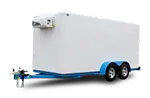


You’re loaded up, the trailer is connected, and a semi passes you on the highway at 70 mph. The trailer moves left, then right, and your hands tighten on the steering wheel. Was the movement caused by the load, the hitch, tire pressure, speed, or equipment you should have installed before leaving the driveway?
Many tow-vehicle owners look at two related pieces of equipment: a sway control device and a weight distribution hitch. They are frequently discussed together, and some modern hitch systems combine both functions, but they do not perform the same job. Choosing the wrong equipment can waste money, exceed a receiver-hitch rating, or leave a serious stability problem uncorrected.
What Each One Actually Does
A weight distribution hitch (WDH) uses spring bars and leverage to redistribute part of the load imposed by the trailer tongue. Without weight distribution, tongue weight pushes down behind the tow vehicle’s rear axle. That can make the rear suspension settle while removing some load from the front axle. The result may be reduced steering response, altered headlight aim, less stable braking behavior, and excessive load on the rear axle, tires, or receiver.
When a properly selected and adjusted WDH is engaged, some of that load is transferred forward to the tow vehicle’s front axle and some is transferred rearward to the trailer axles. The hitch does not make tongue weight disappear, increase the vehicle’s payload rating, or raise the trailer’s legal GVWR. Every component must still remain within its individual rating, including the tow vehicle’s GVWR, front and rear GAWR, tire capacities, receiver limits, hitch rating, trailer GVWR, and the manufacturer’s maximum trailer-weight and combined-weight limits.
A sway control device resists relative side-to-side rotation between the tow vehicle and trailer. A common add-on friction sway control mounts between the trailer A-frame and a small ball beside the main hitch ball. Other sway-control designs are incorporated into a weight distribution hitch through friction surfaces, spring-bar geometry, cams, or other centering mechanisms. Sway control can help resist or dampen yaw, but it does not correct excessive rear-axle loading or restore front-axle load by itself.
One system primarily manages fore-and-aft load distribution through the hitch connection. The other resists lateral articulation. An integrated weight distribution and sway control hitch can perform both functions, but a basic weight distribution hitch should not automatically be assumed to provide meaningful sway control.
When You Need Weight Distribution
There is no universal rule stating that every trailer over 5,000 lbs or every hitch carrying more than 500 lbs of tongue weight must use a WDH. The correct threshold comes from the tow vehicle’s owner’s manual, towing guide, receiver label, and hitch instructions. Some vehicles specify weight-carrying and weight-distributing limits separately; others prohibit weight distribution or permit it only with particular equipment. Certain unibody vehicles and surge-brake trailers also require careful compatibility checks.
A loaded 20-ft enclosed cargo trailer from Wells Cargo may have a 7,000-lb GVWR, depending on its exact model and configuration. GVWR is the trailer’s maximum permitted loaded weight, not necessarily what the trailer weighs on a particular trip. A bumper-pull trailer loaded to 7,000 lbs with 10% to 15% tongue weight could place approximately 700 to 1,050 lbs on the hitch before accounting for other cargo that the hitch manufacturer may require you to include when selecting spring-bar capacity.
That amount can exceed the weight-carrying rating of some receiver hitches even when the truck has enough advertised towing capacity for the trailer. The only dependable answer is to check the receiver label and vehicle-specific towing instructions. A truck’s headline tow rating does not replace its payload, axle, tire, receiver, or tongue-weight limits.
A ride-height check is useful, but appearance alone does not determine whether a WDH is required. On level ground, measure the front and rear wheel-opening heights before coupling, after coupling without spring-bar tension, and after engaging the WDH. Better still, verify axle loads on a certified scale. Follow the tow-vehicle manufacturer’s front-axle load restoration target rather than applying a universal measurement. For example, current Ford towing guidance recommends 50% front-axle load restoration when load bars are used, while other manufacturers may specify a different target.
WDH systems are selected using the loaded trailer and hitch setup, not an empty-trailer brochure number. The Equal-i-zer 4-Point Sway Control Hitch is offered in multiple gross trailer-weight and maximum tongue-weight ratings, including commonly used 600-lb, 1,000-lb, and 1,400-lb tongue-weight versions, as well as other capacities. Reese also offers several weight distribution designs, including round-bar systems and integrated sway-control systems. The proper rating must cover the hitch manufacturer’s defined loaded tongue weight without using bars that are substantially too light or unnecessarily stiff for the application.
When You Need Sway Control
Trailer sway can be initiated or aggravated by crosswinds, passing trucks, abrupt steering input, excessive speed, uneven pavement, low tire pressure, worn suspension components, insufficient tongue weight, poor cargo placement, or a trailer and tow-vehicle combination operating near its limits. Sway control is useful, but it is not a repair for an unstable trailer.
Before adding hardware, verify that the trailer is level or slightly nose-down as permitted by its manufacturer, the load is secured, the tires are correctly inflated and properly rated, the wheel bearings and suspension are in good condition, and the loaded tongue weight is appropriate. For many conventional bumper-pull trailers, approximately 10% to 15% of loaded trailer weight on the hitch is a commonly recommended range. The trailer manufacturer and hitch instructions remain controlling because specialized trailers can have different requirements.
Standalone friction-style controls, such as the Reese Towpower Friction Sway Control, create adjustable resistance as the trailer pivots. They are typically used on conventional A-frame bumper-pull trailers. Installation requires the correct mounting location and sufficient clearance throughout turns. The adjustment procedure and operating restrictions must follow the particular product’s instructions.
Many friction-control manufacturers instruct owners to remove or release the unit before backing, especially when making sharp turns, because the device may bind or be damaged. Some also require removal in slippery conditions. This is product-specific rather than a rule for every sway-control design, so the owner’s manual must be followed.
Integrated systems use different mechanisms. The Equal-i-zer hitch creates sway resistance through friction at the spring-bar sockets and at the two L-brackets. The Andersen Weight Distribution Hitch uses chains, urethane springs, and friction within its hitch assembly rather than a conventional add-on friction bar. These designs should not be grouped together as a single cam-and-ball system.
If you’re pulling a lightweight trailer and the tow vehicle and receiver permit ordinary weight-carrying operation, a standalone friction sway control may be appropriate. A small enclosed 6×12 Darkhorse Cargo trailer is one possible example, but trailer dimensions alone do not determine the correct hitch. Its actual loaded weight, measured tongue weight, frontal area, tow vehicle, receiver rating, brakes, and manufacturer instructions all matter.
A 16-ft car hauler carrying a 3,500-lb vehicle can easily exceed 5,000 lbs when the trailer’s empty weight, cargo, tools, and accessories are included. Vehicle position on the deck can also change tongue weight dramatically. Move the vehicle only within the trailer manufacturer’s loading instructions, keep the trailer within its GVWR and axle ratings, and confirm the loaded tongue weight with a suitable scale. If the combination requires weight distribution, verify that the trailer frame, coupler, brakes, and WDH are mutually compatible.
When You Need Both
Travel trailers and larger enclosed trailers frequently benefit from both weight distribution and sway control. A 28-ft travel trailer with an 8,500-lb GVWR is not automatically loaded to 8,500 lbs, but if it is, a 10% to 15% tongue-weight range would equal approximately 850 to 1,275 lbs. The hitch must be selected using actual loaded tongue weight plus any additional weight the hitch manufacturer instructs you to include, such as cargo carried behind the tow vehicle’s rear axle.
A long, tall trailer also presents considerable side area to crosswinds and passing traffic. That can make an integrated weight distribution and sway control system a sensible choice when the tow vehicle and trailer manufacturers allow one. Even the best system cannot compensate for overloading, inadequate tongue weight, excessive speed, worn tires, or an undersized tow vehicle.
The Equal-i-zer 4-Point Sway Control Hitch combines weight distribution with four friction points: two at the spring-bar sockets in the hitch head and two where the bars rest on the trailer-frame brackets. No separate friction-control arm is needed. The Blue Ox SwayPro is another integrated system, but its operation is based on loaded spring bars, rotating latches, and hitch-head geometry that continually encourages the trailer to remain centered. It should not be described as an ordinary trunnion hitch with add-on friction pads.
Current retail prices vary by capacity, shank, ball, included hardware, installation labor, and promotions. Instead of shopping by a broad price range, compare complete packages. Some systems include a preinstalled hitch ball or shank, while others require those components separately. Professional setup can also be valuable because hitch-head angle, bracket location, ball height, spring-bar selection, and fastener torque all affect performance.
If you already own a basic round-bar or trunnion-bar WDH, a compatible separate friction sway control may be an economical upgrade. Do not assume every hitch head already has the required sway-control ball or mounting tab. Confirm that the head accepts the correct hardware, that the trailer A-frame has an approved mounting location, and that there is adequate clearance for the control throughout the full turning range.
Side-by-Side: Which Problem Does Each Solve?
| Problem | Weight Distribution Hitch | Sway Control Bar |
|---|---|---|
| Rear squat on tow vehicle | Can reduce it when properly adjusted | No |
| Front axle unloading / reduced steering response | Restores load according to vehicle guidance | No |
| Trailer sway side-to-side | Only if sway control is built into the system | Resists or dampens sway |
| Crosswind stability | May improve overall balance | Can add lateral resistance |
| Braking performance | Can restore handling balance; does not guarantee a shorter stop | No direct braking benefit |
Setup and Common Mistakes
A common mistake is using too little or too much spring-bar tension. A WDH is not adjusted by feel, and the goal is not simply to make the truck and trailer look perfectly level. Correct setup starts on level pavement with the trailer loaded as it will be towed. Measure the uncoupled tow vehicle, couple the trailer without engaging the bars, and then measure again after the system is engaged. Follow the tow vehicle manufacturer’s specified front-axle load restoration or wheel-opening procedure.
The often-repeated instruction to return the front wheel opening to within 1/2 inch of its unhitched height applies to certain hitch instructions, not every tow vehicle. Some manufacturers call for partial restoration instead. Restoring too much weight to the front axle can also be undesirable. If the correct adjustment cannot be achieved, investigate hitch-head angle, bracket placement, spring-bar rating, hitch height, trailer attitude, cargo placement, and component compatibility rather than simply applying more tension.
Fastener torque is another critical setup item. Spring-bar tension is adjusted through the system’s prescribed method, while bolts and ball nuts must be tightened to their specified torque values with suitable tools. A loose fastener is not a tuning adjustment. Recheck the installation at the intervals stated in the hitch manual, especially after the first trips.
The second major mistake is using sway control to mask a nose-light or rear-heavy trailer. Cargo positioned too far behind the trailer axles can reduce tongue weight enough to make the combination unstable. An add-on sway control may temporarily resist movement, but it cannot make poor load balance safe. Reposition cargo within the trailer’s loading limits, secure it against movement, and measure the resulting tongue weight. Never exceed the trailer’s GVWR, axle ratings, tire ratings, coupler rating, or the tow vehicle’s limits while trying to reach a target percentage.
Third, don’t assume that the hitch receiver installed on your truck supports every towing configuration. The receiver label may list separate maximum trailer-weight and tongue-weight ratings for weight-carrying and weight-distributing operation. A truck advertised with a particular maximum tow rating may need a specific engine, axle ratio, cab, bed, wheelbase, cooling package, receiver, brake controller, or WDH to achieve it.
A WDH does not raise the tow vehicle manufacturer’s maximum towing capacity or payload. If the receiver or towing guide requires weight distribution above a stated threshold, towing without it means the higher weight-distributing rating is unavailable. Conversely, never install a WDH on a vehicle or trailer that prohibits one.
Fourth, owners sometimes select spring bars using the trailer’s advertised dry tongue weight. That figure excludes optional equipment, batteries, propane, water, cargo, and other loaded items. Measure the trailer as actually prepared for travel and use the hitch manufacturer’s definition of total tongue weight when choosing capacity.
A Quick Q&A
Can I tow without a WDH if my truck isn’t squatting? Possibly, but suspension appearance is not enough to answer the question. Check the tow vehicle’s manual, the receiver’s weight-carrying rating, actual tongue weight, axle loads, payload, and trailer weight. A truck may look level while a receiver, rear axle, or tire is overloaded.
Do I need to disconnect the sway bar when backing? Follow the instructions for the exact product. Reese’s common add-on friction sway control instructs users to remove the control before backing. Integrated systems such as the Equal-i-zer 4-Point and Blue Ox SwayPro are designed to permit backing when installed and operated according to their manuals, although clearance still must be monitored during sharp turns.
Will a WDH eliminate sway completely? No. A basic WDH redistributes load but may provide little direct sway resistance. An integrated sway-control hitch adds resistance, but no hitch can guarantee that sway will never occur. Correct loading, proper tongue weight, compatible tires, sound suspension, suitable tow-vehicle capacity, and conservative speed remain essential.
My trailer sways only at highway speed. Which do I need? Reduce speed smoothly without abrupt steering or hard acceleration, and do not continue at the speed where instability appears. Inspect tire pressure and condition, cargo security, trailer attitude, suspension, wheel bearings, hitch play, and loaded tongue weight. If the setup is mechanically sound and correctly balanced, use a sway-control system approved for the combination. Add or adjust weight distribution only when the vehicle, receiver, and trailer instructions call for it.
Should I accelerate to pull out of sway? No. Hold the steering wheel steady, avoid abrupt corrections, ease off the accelerator, and allow the combination to slow in a controlled manner. If the trailer has independently controllable electric brakes and the situation permits, carefully applying the trailer brakes through the controller’s manual lever can help bring the trailer back in line. Do not apply the tow vehicle brakes aggressively, and pull over safely to identify the cause before continuing.
Does sway control increase my towing capacity? No. Neither sway control nor weight distribution increases the tow vehicle’s stated GCWR, GVWR, GAWR, payload, tire capacity, or maximum trailer-weight rating. A WDH may allow use of a receiver’s separately published weight-distributing rating, but only within every other applicable limit.
What to Buy for Common Setups at Spencer Trailers
If you’re pairing a half-ton pickup with a H&H Trailers 20-ft car hauler or a mid-size enclosed trailer from Legend Trailers, begin with the trailer’s actual loaded weight and measured tongue weight. Then check the truck’s configuration-specific towing guide, certification label, receiver label, payload, axle ratings, and owner’s manual. A round-bar WDH with a compatible friction sway control can be a practical choice when both manufacturers approve that equipment, but a generic 600-lb or 800-lb recommendation cannot safely cover every 20-ft trailer and half-ton truck.
For larger bumper-pull trailers in the 8,000-to-10,000-lb loaded range, an integrated system such as an appropriately rated Equal-i-zer 4-Point may provide cleaner installation and built-in sway resistance. Select the 1,000-lb, 1,400-lb, or another available capacity from measured loading and the manufacturer’s selection instructions, not trailer length alone. The highest-rated hitch is not automatically the best choice; spring bars must match the real operating load and remain within the ratings of the receiver, tow vehicle, coupler, trailer frame, and trailer.
Installation details also matter on equipment and cargo trailers. Toolbox placement, tongue-mounted batteries, jack location, A-frame dimensions, deck structure, hydraulic components, and coupler style can affect bracket clearance. Trailers with surge brakes require a system specifically approved to move freely enough for the brake actuator to function. Before purchasing, confirm ball size, receiver size, required rise or drop, shank length, frame-bracket location, loaded tongue weight, and backing restrictions.
Not sure which capacity fits your specific trailer and truck combination? Call or stop by Spencer Trailers with the tow vehicle’s year, make, model, drivetrain, receiver rating, trailer VIN, loaded configuration, and any measured scale weights. We’ll help compare the numbers and identify a compatible hitch setup. If you’re still shopping for the trailer itself, browse current inventory and we can discuss the towing equipment at the same time. Getting the load balance, component ratings, weight distribution, and sway control right before the first highway trip is far easier than trying to diagnose instability on the shoulder.


