


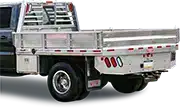
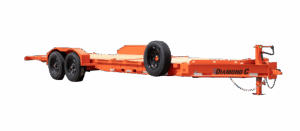








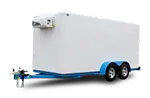


The trailer you want may be sitting on a lot right now. The real question is whether buying today gives you the best combination of price, specifications, availability, financing, and timing—or whether a little patience could improve the deal without costing you the exact trailer you need.
Trailer pricing does not follow one universal calendar. Manufacturers ship throughout the year, dealers carry different inventory levels, and an individual trailer’s age matters more than the month printed on the calendar. Still, buyers with some flexibility can watch four useful purchasing windows: year-end inventory reduction, model-year or specification transitions, changes in manufacturer replacement costs, and slower winter demand. None guarantees a discount, but each can create a better negotiating opportunity.
End-of-Year Clearance: The Most Reliable Window
November and December can be productive months for price-focused buyers, especially when a dealer has older in-stock units, wants to reduce inventory before winter, or has incoming factory orders that require additional lot space. Inventory carrying costs, insurance, maintenance, and tied-up capital all give a dealer reasons to consider a serious offer on a trailer that has been in stock for several months.
That does not mean every trailer receives an automatic year-end markdown. A popular configuration that arrived recently may remain firmly priced, while an unusually equipped trailer that has been on the lot longer may have more negotiating room. The model, stock age, local demand, replacement cost, and the dealer’s existing margin matter more than a blanket seasonal discount.
For example, a current Diamond C LPT is a heavy-duty low-profile telescopic dump trailer offered in 12-, 14-, and 16-foot lengths with GVWR packages ranging from 15,500 to 24,000 pounds. It is a substantially different purchase from a 6,000-pound GST single-axle telescopic dump or a 9,890-pound MDT medium-duty telescopic dump. A dealer may be motivated to move one particular LPT configuration while having little reason to discount another that matches local contractor demand. Diamond C’s current premium trailers use Lippert axles, and specifications, options, and manufacturer pricing can vary by GVWR package and build. :contentReference[oaicite:0]{index=0}
The same inventory-specific logic applies to enclosed cargo trailers from Wells Cargo, Darkhorse Cargo, Legend, United, H&H, and Liberty. Width, length, interior height, axle package, GVWR, rear-door style, wall construction, flooring, roof design, and installed options can create meaningful price differences between trailers that look similar in an online listing.
The tradeoff at year-end is selection. By late November or December, the most common colors, lengths, axle packages, and ramp configurations may already be sold. If you need an exact payload, deck length, dump-body size, interior height, door opening, or loading system, waiting solely for a clearance price can leave you choosing between a discounted trailer that does not fit the job and a factory order that will not arrive until later.
Year-end buying works best when you are flexible about color or minor options but unwilling to compromise on safety-critical specifications. Never accept the wrong GVWR, axle package, coupler, tire capacity, brake equipment, deck dimensions, or loading system simply because the unit is discounted.
Model-Year Changeovers: Follow the Manufacturer Calendar
Trailer model years are not as predictable as passenger-vehicle model years. Manufacturers may begin assigning the next model year before the calendar changes, and dealers can have multiple model years on the same lot at the same time. Spencer Trailers’ inventory, for example, can include later-model-year trailers well before January of that model year. That makes a fixed “August and September changeover” rule unreliable. :contentReference[oaicite:1]{index=1}
A prior-model-year trailer may become a good value when a newer unit arrives, but the year printed on the paperwork does not tell you whether the specifications are identical. Trailer manufacturers can revise standard equipment, option packages, warranty coverage, brakes, suspension choices, tires, wheels, ramps, jacks, electrical components, coatings, interior materials, and construction details during the year. Current manufacturer pages routinely state that specifications and features are subject to change. :contentReference[oaicite:2]{index=2}
Instead of assuming that two trailers are equivalent, compare them line by line. Confirm the complete model identity, VIN and certification label, GVWR, GAWR, axle count and rating, tire size and load range, wheel rating, brake equipment, coupler rating, jack capacity, empty weight, estimated payload, dimensions, ramp or door rating, floor material, warranty start date, and every installed option.
That comparison is especially important with heavy-duty Diamond C equipment and gooseneck trailers. The FMAX family includes multiple single-wheel, triple-axle, dual-wheel, and higher-GVWR configurations rather than one universal FMAX specification. Current FMAX offerings span approximately 15,500 pounds through 40,000 pounds GVWR depending on the exact model and package. LPX and HDT equipment trailers are currently offered in 15,500- to 24,000-pound GVWR configurations, with higher-GVWR packages receiving different frame, suspension, tire, coupler, and axle equipment. :contentReference[oaicite:3]{index=3}
Loading equipment can also differ. Diamond C uses specific loading systems such as MAX Ramps, XDR Ramps, and other model-appropriate ramp or dovetail configurations. The correct system depends on machine weight, tire or track width, concentrated loads, ground clearance, loading angle, and whether an open center is needed for a bucket or attachment. A prior-year trailer is only a bargain when its loading system fits the equipment you actually haul. :contentReference[oaicite:4]{index=4}
The best strategy is to ask whether any earlier-build or prior-model-year units are available and request an out-the-door quote for each comparable trailer. Then ask the salesperson to identify every specification or warranty difference. A lower price is meaningful only after you know what changed.
Steel Price Cycles and Why They Actually Matter
Steel is an important trailer-manufacturing input, but retail trailer prices do not rise and fall in direct proportion to a single steel-market chart. A finished trailer also includes axles, suspension, hubs, brakes, tires, wheels, couplers, jacks, hydraulics, pumps, batteries, wiring, lighting, lumber or specialty decking, paint or coating, freight, labor, warranty expense, and dealer preparation.
Public indexes for hot-rolled sheet, plate, structural shapes, and other steel products can help buyers understand whether manufacturing inputs are generally rising or falling. The Bureau of Labor Statistics publishes producer-price data for these categories, and those indexes can move substantially over time. They do not, however, tell you what a manufacturer paid for the material in a particular trailer or when that cost entered production. :contentReference[oaicite:5]{index=5}
There is usually a lag between a raw-material move and a retail quote. Manufacturers may already have steel under contract, dealers may own trailers built from earlier-cost material, and a price decrease in one input can be offset by increases in freight, labor, axles, tires, hydraulics, or other components. A dealer also negotiates from the cost of the trailer already on the lot and the expected cost of replacing it—not simply from today’s hot-rolled-coil benchmark.
Steel trends matter most when you are considering a factory order or when manufacturers announce price adjustments, freight changes, rebates, or temporary programs. Ask how long the written quote is valid, whether the price is protected through production, whether freight is included, and whether a material surcharge can be added before delivery.
Do not estimate a trailer’s steel exposure from GVWR alone. Two trailers with the same 7,000-pound GVWR can have different lengths, frame sections, crossmember spacing, top rails, fenders, ramp gates, floors, tongues, and empty weights. GVWR is a maximum allowable loaded-trailer rating, not a measurement of how many pounds of steel were used.
For an in-stock trailer, days on lot and replacement cost are usually more useful negotiation signals than a commodity chart. For a custom build, manufacturer pricing, quote protection, production lead time, and included options matter more than trying to predict the next monthly steel index.
Off-Season Buying: January Through March
January through early March can be slower for some trailer categories in south-central Indiana, particularly when winter weather delays landscaping, construction, agriculture, and outdoor projects. Lower seasonal traffic may give buyers more time to compare inventory, discuss trade-ins, arrange financing, and work through a custom configuration.
That opportunity is not universal. Snow-removal, restoration, motorsports, enclosed-cargo, and commercial buyers may still purchase throughout winter, and spring demand can begin earlier when weather improves. A trailer that is scarce nationally or popular locally may not receive a winter discount at all.
Winter negotiations are often most productive when the conversation covers the complete package rather than only the advertised trailer price. A dealer may have more flexibility on a spare tire, spare-tire mount, coupler lock, battery charger, tarp kit, wireless dump remote, tie-down equipment, cargo-control package, toolbox, hitch components, brake controller, delivery, or installation labor. Whether an item can be included depends on its cost and whether it is a dealer-installed accessory or a factory-built option.
Factory-integrated equipment should not be treated as a casual throw-in. Axle upgrades, GVWR packages, frame changes, hydraulic hoists, additional brakes, ramp systems, interior-height changes, rear-door construction, crossmember spacing, flooring, and major lighting changes may need to be specified when the trailer is built. Ask what can be installed correctly at the dealership and what requires a different factory configuration.
Buying before spring also gives you time to set up the tow vehicle correctly. You can verify receiver or gooseneck-hitch ratings, ball size, coupler height, electrical connector, brake-controller operation, breakaway system, safety chains, mirrors, tire pressures, cargo-control equipment, and loaded axle weights before a deadline-driven job.
Indiana requires a trailer or semitrailer with a gross weight of at least 3,000 pounds, when operated on a highway, to have brakes capable of controlling, stopping, and holding it. Those brakes must be controllable from the tow vehicle and arranged to apply automatically during an accidental breakaway. A discounted trailer is not a good purchase if the tow vehicle lacks the correct brake controller or the trailer’s braking equipment is not functioning properly. :contentReference[oaicite:6]{index=6}
A Quick Comparison: When to Buy What
| Window | Best For | Typical Advantage |
|---|---|---|
| November to December | Buyers flexible on color or minor options who are evaluating aged in-stock inventory | Possible movement on specific older units, especially when the dealer wants to reduce inventory |
| Model-year or specification transition | Buyers willing to compare an earlier build with the newest configuration | Potentially lower pricing, provided the GVWR, axles, brakes, warranty, dimensions, and options still match |
| Manufacturer cost or price adjustment | Custom orders, heavy equipment trailers, dump trailers, and goosenecks | Opportunity to lock a written quote before an increase or evaluate a new program after a decrease |
| January to March | Buyers who need time for accessories, hitch work, financing, delivery, or spring preparation | More time to negotiate the total package and complete tow-vehicle setup before peak demand |
What Actually Moves the Needle in Negotiation
Knowing the timing windows helps, but timing alone does not guarantee a deal. The strongest buyers make it easy for the dealer to understand exactly what they need and easy for both sides to compare the real total cost.
- Compare out-the-door prices, not only the advertised number. Ask for the trailer price, installed options, freight, preparation charges, documentation fee, tax, title, registration, delivery, financing costs, and trade allowance to be shown separately. As of July 1, 2026, Indiana’s Auto Dealer Services Division advises that it will not take enforcement action on documentation-preparation fees at or below $261.72. The state also says the fee must be included in the advertised sale price, disclosed in writing, and shown as a standalone item on the bill of sale. :contentReference[oaicite:7]{index=7}
- Do not assume cash automatically earns the lowest price. Some dealers value a fast cash transaction, while others may have manufacturer or lender programs tied to financing. Obtain a bank or credit-union preapproval as a comparison point, then ask whether the trailer price changes based on the payment method. Compare the total amount paid, interest rate, term, lender fees, prepayment terms, and any required down payment.
- Ask about trailers that have been in inventory the longest. A unit that arrived recently and matches current demand is a different negotiation from an earlier-build trailer that has remained unsold. Ask which units the dealership is most interested in moving, but verify why a trailer has remained available. An unusual color may be harmless; an unsuitable GVWR, deck length, interior height, ramp arrangement, or payload is not.
- Know the exact application before discussing price. Bring the weight and dimensions of the machine, vehicle, material, or cargo you plan to haul. Include attachments, fluids, pallets, tools, auxiliary tanks, and anything else that travels on the trailer. The usable payload is the trailer’s GVWR minus its actual empty weight and installed equipment, subject to axle, tire, wheel, hitch, and tow-vehicle limits.
- Compare exact specifications instead of shopping by size alone. “A 7×14 enclosed trailer” is not a complete specification. Identify the GVWR, axle ratings, brakes, tire load range, interior height, rear-door opening, ramp capacity, wall and roof construction, floor rating, crossmember spacing, side-door dimensions, electrical package, and warranty. The same principle applies to dump, equipment, utility, car-hauler, deck-over, and gooseneck trailers.
- Bundle only what you genuinely need. If you are purchasing a trailer with a Zimmerman truck body, adding a hitch or brake controller, ordering cargo-control equipment, or buying multiple units for an operation, discuss the complete package at the beginning. A bundled quote may create efficiency, but each component should still be itemized so you can tell whether the package is actually better.
- Verify the legal combination before buying a higher-GVWR trailer. A Class A CDL is generally triggered when the combination reaches at least 26,001 pounds GCWR or applicable combined weight and the towed unit exceeds 10,000 pounds GVWR or applicable actual weight. A trailer over 10,000 pounds does not, by itself, create the standard Class A threshold when the combination remains below 26,001 pounds. Commercial use, hazardous materials, passenger transport, state rules, and exemptions can change the analysis, so confirm the requirements for your operation. :contentReference[oaicite:8]{index=8}
- Plan for title and registration promptly. Indiana buyers generally need to apply for title within 45 days of purchase to avoid the administrative late-title penalty. Do not let a winter purchase sit in a building until spring without completing the required paperwork. :contentReference[oaicite:9]{index=9}
- For business purchases, focus on the placed-in-service date. Current federal guidance provides a 100-percent additional first-year depreciation deduction for qualifying property acquired and placed in service after January 19, 2025, subject to eligibility and applicable tax rules. A deduction reduces taxable income; it does not reduce the trailer’s purchase price dollar for dollar. Coordinate the purchase, delivery, readiness for use, financing, business-use documentation, and tax treatment with a qualified tax professional. :contentReference[oaicite:10]{index=10}
One Timing Mistake to Avoid
Waiting for the “perfect” deal can become more expensive than buying at a fair price. Spring often brings stronger demand for utility, equipment, dump, flatbed, and gooseneck trailers. When demand rises, popular lengths and GVWR packages can sell quickly, factory lead times can grow, and buyers may have less leverage on a trailer that several other customers are prepared to purchase.
The opposite mistake is buying the wrong trailer because it has the largest markdown. An undersized trailer can create payload, axle, tire, brake, or tow-vehicle problems. An unnecessarily heavy or high-GVWR trailer may reduce payload available to the tow vehicle, increase purchase and operating costs, or move a commercial combination into a different licensing or regulatory category.
Calculate the cost of waiting. Include rental fees, subcontracted hauling, repeated delivery charges, employee downtime, delayed projects, missed jobs, wear on unsuitable equipment, and the risk that the correct in-stock trailer sells. Compare that cost with the realistic—not imagined—savings you expect from waiting.
Timing your purchase for a favorable window is smart. Delaying a necessary purchase for an arbitrary discount target is not. The right decision depends on whether the exact trailer is available, whether the out-the-door price is competitive, how soon the trailer will begin earning or saving money, and how difficult the same configuration will be to replace.
A fair rule of thumb: buy when the exact trailer fits the load, tow vehicle, legal requirements, deadline, and out-the-door budget—and when the measurable cost of waiting is greater than the realistic savings another season might produce.
Check What’s on the Lot Now
Inventory changes quickly, and pricing opportunities are usually tied to individual stock numbers rather than an entire brand. Spencer Trailers currently carries Diamond C, Liberty, Delco, Darkhorse Cargo, H&H, Legend, United, Wells Cargo, Baseline Trailers by Diamond C, used trailers, and truck bodies from manufacturers including Zimmerman. The most useful starting point is reviewing current inventory at Spencer Trailers, identifying the units that meet your non-negotiable requirements, and then requesting an itemized out-the-door quote. :contentReference[oaicite:11]{index=11}
When you call, ask which qualifying trailers arrived earliest, whether any earlier-build or prior-model-year units are available, whether incoming inventory changes the pricing, and whether the advertised trailer includes every option shown in the photographs. Confirm the stock number because two trailers with the same basic model description may have different GVWR packages, tires, ramps, colors, floors, hydraulic equipment, or accessories.
You can also review recently sold trailers to see which brands, sizes, and configurations have moved through the dealership. Treat that page as a configuration and availability reference rather than a record of confidential final transaction prices. An archived advertised price may not reveal a trade allowance, financing arrangement, delivery charge, accessory package, or negotiated selling price. :contentReference[oaicite:12]{index=12}
If you have a specific configuration in mind and want to compare ordering with buying from stock, reach out directly. Ask for both scenarios in writing: the exact in-stock unit with its installed equipment and the factory-order build with its expected production time, freight, price-protection terms, deposit requirements, warranty, and estimated delivery date.
The answer to “is now a good time to buy?” is rarely just November, January, or a particular model-year changeover. It depends on the trailer, the stock age, the replacement cost, the exact build, the total transaction, and the cost of not having it.
So: what is the trailer, what will it carry, what tow vehicle will pull it, and what is your deadline? Those answers will tell you far more than the calendar alone about whether you should move now or wait for a better opportunity.


