









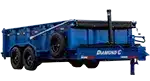

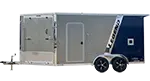
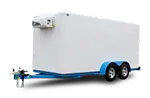
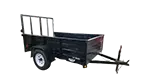

Most buyers who want to buy a trailer at auction do not know where to start looking. They have heard terms such as “government surplus,” “equipment auction,” or “online auction” and imagine one central website filled with discounted trailers. In reality, trailer inventory is scattered among federal and state surplus systems, national equipment marketplaces, regional auction companies, dealer-only networks, estate liquidations, repossession sales, and informal local listings. Each source attracts a different mix of utility trailers, enclosed cargo trailers, equipment haulers, dumps, flatbeds, and commercial goosenecks. Knowing which sources match the trailer you need is more than half the battle.
This post is strictly the WHERE. The inspection risks, title checks, transportation planning, and bidding strategy are covered separately. Here the focus is sourcing: which platforms carry what, how listings are structured, how to locate trailers before an auction closes, and what level of competition you are likely to face. Regardless of the source, remember that most auction trailers are sold as-is and where-is. A detailed-looking listing is not a substitute for confirming the VIN, manufacturer data plate, GVWR, axle ratings, ownership documents, pickup requirements, buyer’s premium, sales tax, and any deadline for removing the trailer.
Government Surplus Auctions
GSA Auctions (Federal)
The General Services Administration operates gsaauctions.gov, the official federal surplus auction website available to registered members of the public. Trailers can appear from civilian federal agencies, research facilities, public-land operations, federal fleets, and military installations. Inventory is unpredictable and can range from small utility trailers and enclosed cargo units to generator trailers, tank trailers, specialty support equipment, and military cargo trailers. Some listings involve an ordinary road trailer; others involve purpose-built equipment that may not be suitable for normal highway use without modification or separate transportation.
Federal listings normally identify the selling agency or property custodian, item location, basic description, photographs, inspection contact, payment requirements, and removal deadline. There is not a universal condition grade that makes one GSA trailer directly comparable with another. Federal surplus is generally sold as-is and where-is, and GSA specifically urges bidders to inspect before bidding. Ownership paperwork also varies. A trailer may include a state title, an SF-97 certificate for obtaining title, a bill of sale, or other transfer documentation specified in the listing. Do not assume that every federal trailer has a conventional clean title or can be connected to a truck and towed away. Some military locations require base-access approval, loading appointments, safety equipment, or removal on another roadworthy trailer.
State Surplus Programs
Every state has its own process for disposing of surplus vehicles and equipment. Indiana’s State Surplus Division is administered through the Indiana Department of Administration, and its current online public auctions are hosted on GovDeals. The most direct route is to begin with the official Indiana state-surplus website and follow its link to the active GovDeals listings. PublicSurplus is still used by some counties, municipalities, schools, and public agencies in Indiana and other states, but it is not the current primary platform for Indiana State Surplus Division online sales.
State and agency trailers can include lawn and grounds-maintenance utility trailers, highway-department equipment haulers, sign trailers, reel trailers, enclosed maintenance units, dump trailers, and commercial flatbeds. Their GVWRs vary widely, so do not assume every public-works trailer is a 10,000- or 14,000-lb unit. Government ownership can provide a more identifiable chain of custody, but it does not guarantee complete maintenance records or a fully accurate description. A listing may report only the last known operating condition, and the agency may have limited information about brakes, hubs, wiring, tires, hydraulic systems, or previous repairs. Treat the public seller’s identity as useful documentation, not as a warranty of condition.
County and Municipal Sales
Below the state level, county governments, cities, school districts, townships, universities, fire departments, utility departments, and municipal public-works fleets dispose of surplus property through several different channels. These can be some of the least-followed sources because there is no single national catalog containing every local sale. A county road department may use GovDeals, PublicSurplus, Purple Wave, a local auctioneer, a sealed-bid notice, or an auction announcement posted on the county website. A school corporation or municipality may use a completely different platform even when it is located in the same county.
Check county and municipal websites directly and look for pages labeled surplus property, public notices, commissioners’ notices, purchasing, asset disposal, or online auctions. In central and southern Indiana, that means monitoring Owen County, Clay County, Monroe County, Morgan County, Lawrence County, Martin County, and nearby municipalities rather than relying on one statewide search. Indianapolis and Marion County, for example, use GovDeals for surplus items. GovPlanet also handles government and military surplus, but local Indiana agencies are more commonly found through GovDeals, PublicSurplus, Purple Wave, or contracted regional auctioneers. These sales do not follow one dependable schedule, so saved searches and repeated checking matter.
Online Auction Platforms
IronPlanet and Ritchie Bros.
Ritchie Bros., IronPlanet, Marketplace-E, and GovPlanet are part of the RB Global group of marketplaces. Ritchie Bros. auction events and IronPlanet’s online auctions carry construction equipment, agricultural equipment, commercial trucks, semi-trailers, equipment trailers, flatbeds, goosenecks, dumps, and specialty transport equipment. The inventory often leans heavier than a neighborhood classified site, but there is no fixed minimum value or GVWR. A 25,900-lb tandem-dual gooseneck may appear beside a lighter tag trailer, small equipment hauler, or miscellaneous support trailer, depending on the consignor and sale.
Eligible IronPlanet and GovPlanet listings may include an IronClad Assurance inspection report with component ratings, comments, and photographs. That report is part of the qualifying listing; it is not simply an optional inspection that a buyer purchases by paying a higher premium. IronClad coverage is governed by its own policy and generally addresses whether the equipment is substantially represented by the report. It is not a mechanical warranty, and the buyer remains responsible for reviewing the entire report. Ritchie Bros. events may offer online bidding, timed bidding, live auctioneer-led bidding, and physical inspection periods. The inspection and pickup rules depend on the individual event and location, so read the event terms rather than assuming every Ritchie Bros. yard operates the same way.
Purple Wave
Purple Wave is a nationwide, internet-only, no-reserve equipment auction company with especially strong agricultural, construction, truck, government, and trailer inventory across the central United States. Its current auctions routinely include equipment located in Kansas, Missouri, Oklahoma, Texas, Nebraska, Iowa, Illinois, Indiana, Kentucky, Tennessee, Minnesota, and other states. Indiana inventory is not merely occasional; state agencies, local governments, dealers, farms, and private consignors can all place trailers through the platform. The practical limitation is not the platform’s territory but how far you are prepared to travel for inspection and pickup.
Purple Wave listings normally identify the item location, consignor or seller, removal contact, title or bill-of-sale status when known, and available inspection arrangements. Bidders are encouraged to ask questions and schedule an in-person inspection with the seller. The auctions are timed, internet-only events with automatic extensions when bids arrive near closing. Items are sold as-is, where-is and without reserve. As of 2026, Purple Wave generally adds a 10% buyer’s premium to the winning bid, with applicable sales tax calculated under the listing’s terms. That premium, transportation, title expenses, and any dealer-collected registration charges must be included when comparing the auction price with a trailer available locally.
AuctionTime
AuctionTime is operated by Sandhills Global, the company behind TractorHouse, MachineryTrader, and TruckPaper. It carries a large and frequently changing trailer category supported by independent auctioneers, equipment dealers, farms, construction companies, and fleet sellers. The selection includes bumper-pull equipment trailers, deck-over flatbeds, goosenecks, dump trailers, livestock trailers, grain trailers, semi-trailers, roll-off trailers, and other commercial equipment. Agricultural flatbeds and heavy goosenecks are common, but single-axle and light tandem-axle trailers also appear.
Search tools allow buyers to narrow results by category, manufacturer, model, year, auction type, state, country, and other listing-specific fields. GVWR may be stated in the description or specifications, but it is not consistently supplied or independently verified on every lot. Buyer premiums, payment deadlines, title handling, inspection access, and removal policies are set by the participating seller or auction company and therefore vary from one listing to another. Some AuctionTime lots have no buyer’s premium while others do. Contact the listed auctioneer before bidding when the description does not clearly show the VIN, GVWR, axle capacity, title status, or preview schedule.
Facebook Marketplace and Facebook Auction Groups
Most Facebook Marketplace trailers are offered at a fixed asking price rather than through a formal auction. However, regional equipment groups, farm-sale groups, and community auction pages sometimes use comment bidding, scheduled live sales, or links to an outside HiBid or auction-company catalog. These informal sales can expose you to trailers that never reach a national marketplace, especially homemade utility trailers, older farm trailers, small equipment haulers, and privately owned enclosed units. The smaller local audience can reduce competition, but it can also make pricing inconsistent in either direction.
Light-duty utility trailers and single-axle units are common on Facebook, but trailers of every rating appear, including commercial goosenecks and dumps. Do not assume the seller understands the difference between axle capacity, payload, and GVWR. Local pickup makes physical inspection easier, but most person-to-person trailer transactions are not processed through a protected platform checkout. A Facebook group administrator is not a title service, escrow company, or auction regulator. Keep communications documented, verify the seller’s identity and ownership paperwork, inspect the VIN and data plate, and never send a deposit merely because a seller claims that several other buyers are waiting.
eBay Motors
eBay Motors carries trailers through categories that include Other Vehicles & Trailers, commercial equipment, recreational vehicles, and specialty trailer listings. Both auction-style and fixed-price listings are available, and the national audience means you may compete with buyers far outside Indiana. Use the distance filter and local-pickup option to isolate trailers that can be inspected or collected economically. eBay provides more transaction structure than an informal social-media listing, and eligible vehicle purchases may qualify for Vehicle Purchase Protection or Secure Purchase services under eBay’s current terms. Those programs are not a blanket mechanical warranty, and eligibility depends on the listing category, transaction process, location, payment, and specific claim. Keep the purchase and messages on the platform, verify coverage before bidding, and price professional transportation before buying a trailer several states away.
Dealer and Repo Auctions
Dealer Liquidation Events
Trailer dealers may auction aged inventory, discontinued configurations, repossessed consignments, damaged units, and trade-ins that do not fit their normal retail program. These units can appear through EquipmentFacts, AuctionTime, HiBid, a local auction company, commercial truck auctions, or a dealer’s own online event. Manheim also handles trucks, trailers, RVs, and specialty vehicles, but most Manheim sales are wholesale events requiring dealer credentials through AuctionACCESS. Only specifically advertised public sales are open to retail buyers. Manheim Indianapolis is among the locations that may host public commercial-truck and equipment sales, but buyers must verify the eligibility and registration rules for the particular event.
A dealer liquidation trailer is not automatically better than a privately consigned unit. It may be a usable trade-in with a traceable VIN and title, or it may have been wholesaled because it needs repairs that do not make sense for the dealer’s retail department. The advantage is usually better paperwork and a business seller that can be identified after the sale, not a guarantee of condition. Read the auction terms to see whether a condition report is seller-supplied, auction-inspected, or limited to photographs. Check whether the sale is absolute or subject to reserve, whether a buyer’s premium applies, and whether the dealer will separately collect sales tax, title, or registration charges.
Finance Company Repo Auctions
Banks, credit unions, leasing companies, and equipment-finance lenders may liquidate trailers after a borrower defaults. Repossessed trailers are sold through regional auction houses, commercial truck auctions, dealer-only networks, public equipment platforms, and lender-specific liquidation pages. Some repossessions also appear on AuctionTime, EquipmentFacts, Purple Wave, IronPlanet, or Manheim, depending on the lender, repossession company, and type of collateral. GovPlanet is principally a government-surplus marketplace and should not be treated as a general directory of lender repossessions.
Finding repo inventory requires watching auction calendars rather than relying on one generic “repo trailer” search. Search for repossessed equipment, bank-owned equipment, secured-party sale, commercial asset liquidation, and lender-owned trailer together with your state or region. Review regional auctioneer email lists and public commercial-equipment sale calendars. Inspection access is often limited because the lender may know very little beyond the VIN, location, and basic operating status. Repossession can also mean missing keys, discharged batteries, damaged wiring, incomplete hydraulic controls, neglected brakes, or personal equipment left attached to the trailer. Build that uncertainty, the buyer’s premium, and transportation into your maximum bid.
Estate Sales and Local Auction Houses
Estate Sales
Trailers appear regularly in farm estates, contractor liquidations, rural property sales, and personal-property auctions. The trailer may be an older utility unit stored behind a barn, an equipment hauler used with a compact tractor, an enclosed trailer full of tools, or a premium trailer that has spent years indoors. Estate sellers are usually focused on settling and clearing the property, but that does not mean every trailer will sell cheaply. Well-advertised online estate auctions can attract equipment dealers and bidders from several states, while a poorly photographed local lot may receive little attention.
Estate listings can be found through EstateSales.net, AuctionZip, HiBid, Craigslist estate-sale listings, local newspaper notices, and auction-company websites. EstateSales.net provides location-based sale listings with photographs, descriptions, and directions, while AuctionZip and HiBid can surface live and online auction catalogs. For buyers around Spencer, monitor Owen, Morgan, Monroe, Clay, Lawrence, Martin, Greene, and Brown counties as well as the Indianapolis and Evansville auction markets. Preview periods may be limited to a few hours on one day, and pickup windows can be strict. A low winning bid loses its advantage quickly if the trailer cannot be safely moved or must be collected during a narrow weekday appointment.
Regional Auction Houses
Indiana has established auction companies that conduct farm, construction, fleet, truck, trailer, and equipment sales. Examples include Ted Everett Farm Equipment in Monrovia, Don Smock Auction Company in Pendleton, Polk Auction Company in Middlebury, Bright Star Auctions in northern Indiana, and Sohn & Associates in Evansville. Their inventories and schedules differ: some run recurring consignment events, while others conduct retirement, estate, government, or business-liquidation auctions. Many combine in-person preview with online bidding through their own system, EquipmentFacts, or HiBid.
Regional auctions can make inspection and pickup more practical than a trailer located across the country, but the online bidder pool may still be national. Do not assume that a rural sale will be lightly attended or cheaper than IronPlanet simply because the auctioneer is local. Dealer bidders, contractors, farmers, and online buyers watch strong equipment catalogs closely. The opportunity is greatest when a trailer is poorly categorized, described with limited keywords, scheduled in a mixed personal-property sale, or located outside the auction company’s normal customer base. Search both “trailer” and related terms such as flatbed, tag trailer, equipment hauler, utility, dump, gooseneck, deck-over, cargo, implement trailer, and machinery trailer.
Setting Up Alerts So You Don’t Miss Listings
Listings can appear with only days or weeks before closing, so build a repeatable search system. GovPlanet, IronPlanet, Purple Wave, AuctionTime, GovDeals, PublicSurplus, eBay, and many regional auction sites provide some combination of saved searches, watchlists, favorites, email notices, or auction-company mailing lists. The exact feature varies by platform. Save searches for the trailer type as well as manufacturer names, nearby states, desired deck length, and common GVWR descriptions. On Facebook Marketplace, create alerts for several terms within a realistic pickup radius instead of using only “trailer.” Subscribe to EstateSales.net, AuctionZip, HiBid, and individual auctioneer notifications for your region. For sources without dependable alerts, bookmark the filtered trailer category and check it on a fixed schedule. A Google Alert for phrases such as “trailer auction Indiana,” “equipment auction Owen County,” “surplus trailer GovDeals Indiana,” and “farm retirement auction trailer” can uncover local notices that never receive national promotion, although it will not capture every social-media or closed-platform listing.
What Platform Matches What Trailer Type
| Platform | Best For | GVWR Pattern and Limitations |
|---|---|---|
| GSA Auctions | Federal fleet, cargo, utility, military, and specialty support trailers | No fixed range; verify the data plate, roadworthiness, transfer document, and removal terms |
| GovDeals / PublicSurplus | State, county, municipal, school, university, and public-agency surplus | Light utility through heavy commercial equipment; specifications depend on the selling agency |
| IronPlanet / Ritchie Bros. | Equipment haulers, dumps, flatbeds, goosenecks, commercial and specialty trailers | Often medium- and heavy-duty, but lighter trailers also appear; confirm whether an inspection report applies |
| Purple Wave | Farm, government, construction, truck, utility, and equipment trailers | Ranges from small utility units to commercial trailers; all lots require individual specification checks |
| AuctionTime | Agricultural flatbeds, equipment trailers, dumps, goosenecks, and semi-trailers | No platform-wide GVWR limit; ratings may appear only in the seller’s description or data-plate photographs |
| Facebook / local groups | Locally owned utility, cargo, landscape, farm, and privately sold equipment trailers | Commonly light- and medium-duty, but every class appears; seller-entered ratings are frequently incomplete |
| Estate sales | Farm trailers, contractor equipment, enclosed units, and older privately owned trailers | Varies widely; older units may have missing plates, unclear model identity, or bill-of-sale-only paperwork |
| Regional auction houses | Mixed consignments, fleet liquidations, farm equipment, public sales, and in-person previews | Full range from small utility trailers to heavy commercial units; terms are set by each auctioneer |
One Thing Most Buyers Get Wrong
They check one platform, do not see the right trailer, and conclude that auction inventory is poor. Auction supply is event-driven rather than steady. A federal agency lists property when it completes its disposal process. A county sells after equipment is declared surplus. A farm trailer appears when an owner retires, restructures, or replaces equipment. A dealer liquidation depends on inventory age and business needs. These sources can produce several relevant trailers in one week and nothing useful for the next month. There is no dependable rule that every federal agency clears trailers at the same point in the budget year or that every estate and farm auction follows one seasonal peak.
Buyers who consistently locate good auction trailers monitor several sources, use saved searches, read the complete terms, and know the correct model and configuration before assigning a value. Compare the VIN and data plate with the manufacturer’s actual model range rather than trusting an abbreviated auction title. For example, a 16-foot Diamond C LPX is a low-profile extreme-duty equipment trailer, not a light utility model. Current LPX configurations begin around the 14,900- to 15,500-lb class and extend to 24,000 lb, with Lippert axles used in the applicable standard packages. Its auction value should be compared with another LPX of similar length, GVWR package, axle configuration, ramp system, condition, and options. A 7,000-lb Diamond C GTU tandem-axle utility trailer is a different model class with dual 3,500-lb Lippert brake axles and a 4-inch channel frame. Treating those two trailers as comparable because their decks may have a similar length is how buyers establish the wrong ceiling before bidding begins.
And if the auction pipeline runs dry or the right trailer does not appear in the right condition, the Spencer Trailers inventory provides current listings from Diamond C, H&H, Liberty, Delco, Darkhorse Cargo, Legend, United Trailers, Baseline by Diamond C, and other stocked manufacturers and truck-bed lines. Inventory changes as units arrive and sell, so confirm availability and specifications before traveling. Sometimes a known-condition new trailer with documented GVWR, correctly matched Lippert axles on Diamond C’s premium lines, current equipment, manufacturer warranty, and dealer support is the cleaner path after auction premiums, transportation, tires, brakes, title work, and repairs are added. If you want to talk through what fits your budget and use, reach out directly. But if you are committed to the auction route, you now know where to look and how to separate a legitimate sourcing channel from a listing that only appears to be a bargain.


