


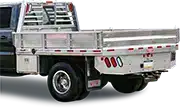
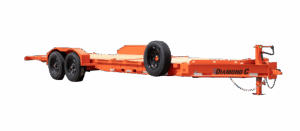




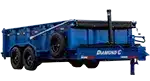




You haul gravel, equipment, landscaping materials, and whatever else the job throws at you. Your trailer takes the abuse without complaint. But those diamond plate fenders still need attention. Most owners ignore them until the finish is dull, the coating is chipped, corrosion has started around the hardware, or a dent has reduced clearance above the tire.
Diamond plate fenders are common on utility, dump, tilt, and equipment trailers sold here at Spencer Trailers, but the material, thickness, finish, and load rating vary by trailer. Current Diamond C LPX low-profile equipment trailers use smooth steel teardrop fenders in standard configurations, while the available 102-inch Max Width package includes heavy-duty 3/16-inch diamond plate drive-over fenders. Current Diamond C HDT tilt trailers and Diamond C LPT dump trailers offer diamond plate steel fenders, including heavier 3/16-inch upgrades. H&H, Liberty, and Delco trailers also use different combinations of smooth, tread-plate, removable, and drive-over fenders depending on the model. They help control road spray and debris, preserve safe clearance around the tires, and finish the trailer’s appearance. Here is how to take care of them correctly.
What Diamond Plate Fenders Are (and What They Are Not)
“Diamond plate,” also called tread plate, describes the raised pattern formed into the metal. It does not tell you whether the fender is aluminum or steel, how thick it is, whether it is coated, or whether it is strong enough to use as a step or drive-over surface.
Most open steel trailers use steel fenders that are painted or powder-coated. Current Diamond C steel trailers receive the DM Difference Maker multi-stage coating system, which uses surface preparation, a corrosion-resistant primer, and a powder topcoat. Other steel trailer manufacturers use their own powder-coat or wet-paint processes. Regardless of the brand, the coating is the primary barrier between the steel and moisture. Once a rock chip, scrape, cracked weld, or worn edge exposes bare steel, rust can begin.
All-aluminum trailers and some lightweight utility or car-hauler configurations may use aluminum tread-plate fenders. Bare aluminum does not develop red iron rust, but it does form a thin oxide layer naturally. That layer is normally protective, although the surface may become dull, chalky, stained, or pitted after exposure to road salt, fertilizer, harsh cleaners, or prolonged trapped moisture. Aluminum can also suffer galvanic corrosion where it contacts dissimilar metals, especially around unprotected steel fasteners.
Some aluminum fenders are bare or polished. Others may be anodized, clear-coated, painted, or powder-coated. Do not assume every silver-colored fender is bare aluminum. A metal polish that is appropriate for bare aluminum can haze, scratch, or remove a clear coating. Check the trailer build information, ask the manufacturer or dealer, or test any cleaner in a small hidden area before treating the whole fender.
The raised pattern can improve footing compared with smooth sheet metal, but it does not make every fender a step. A wet, muddy, oily, polished, or waxed diamond plate surface can still be slippery. Never stand on a fender or drive a tire over it unless that specific fender assembly is designed and rated for the purpose.
Cleaning: The Foundation of Everything
Start with a real wash, not a quick rinse. Work on cool metal out of direct sunlight. Rinse away loose sand and grit first so you do not grind abrasive debris into the finish. Then use lukewarm water, a pH-neutral automotive or trailer wash, and a soft nylon-bristle brush. Household dish detergent can strip waxes and protective sealants, so it is not the best routine cleaner for polished aluminum or coated steel.
The raised diamond pattern traps road grime, brake dust, clay, fertilizer residue, and organic material in the low areas between the ridges. Work the brush in more than one direction so it reaches both sides of the raised pattern. Use light pressure on painted or powder-coated surfaces. Aggressive scrubbing can dull the coating, especially along sharp bends and fender edges.
Do not use steel wool or a carbon-steel wire brush on aluminum. Small iron particles can become embedded in the surface and later create rust-colored staining. Also avoid oven cleaner, highly alkaline degreasers, muriatic acid, undiluted acidic cleaners, and aggressive wheel acids unless the product manufacturer specifically approves them for the exact metal and finish.
Rinse thoroughly, including the underside, mounting brackets, bolt heads, seams, and the narrow space between the fender and trailer frame. Soap or fertilizer left in a seam can be more damaging than the dirt you can see. Dry the fender with clean microfiber towels or allow it to air-dry completely before applying polish, primer, touch-up paint, wax, or sealant.
For stubborn road tar or asphalt splatter, use a dedicated automotive tar remover that is labeled safe for the existing finish. Test it in an inconspicuous area, follow the dwell-time instructions, and do not allow it to dry on the surface. On powder-coated or painted steel, keep strong solvents away from decals, seam sealers, plastic trim, wiring, and rubber components. On bare aluminum, follow the tar remover with a normal wash before polishing.
Mothers Mag & Aluminum Polish is a metal polish for uncoated metal, not a general-purpose tar remover. It can be useful after washing bare aluminum, but it should not be rubbed into painted, powder-coated, anodized, or clear-coated fenders.
How Often to Wash
For a trailer used regularly in normal conditions, inspect the fenders after each haul and give them a thorough wash at least monthly. That is a baseline, not a reason to leave corrosive contamination on the trailer for several weeks.
After driving on salt-treated roads or hauling fertilizer, manure, wet soil, concrete residue, chemicals, or other corrosive material, wash the fenders and undercarriage as soon as practical, preferably the same day. Rinse the undersides and mounting points rather than cleaning only the visible top surface. If the trailer is stored before it can be washed, do not cover dirty, wet fenders with a tarp that traps moisture against the metal.
Polishing Aluminum Diamond Plate
Polishing is appropriate only for bare, uncoated aluminum. Do not polish a silver-painted, clear-coated, anodized, or powder-coated fender with an abrasive metal polish. Those finishes should be cleaned and protected like automotive paint, using products approved for the coating.
Bare aluminum naturally develops a thin oxide film when exposed to air. That film is part of aluminum’s corrosion resistance, but it can make polished tread plate look cloudy or gray. Road film, hard-water deposits, and light surface oxidation can usually be removed with a quality aluminum polish. Deep white pitting, cracking around fasteners, or corrosion that has worked under a coating requires more than cosmetic polishing.
Use a polish specifically labeled for bare aluminum. Mothers Mag & Aluminum Polish is suitable for uncoated aluminum and diamond plate when used according to its directions. Apply a small amount to a clean microfiber or soft cotton cloth and work a limited area at a time. Rub back and forth rather than flooding the surface with product. A dark residue on the cloth is normal when polishing bare aluminum. Wipe the residue away before the polish dries, then buff with a separate clean cloth.
If an inconspicuous test spot does not produce the normal dark metal residue, stop. The fender may have a clear coating or another finish that should not be polished with an abrasive metal product.
The diamond pattern makes powered polishing more difficult than polishing a smooth panel. Raised ridges can catch a pad, tear foam, throw the tool off line, or cause excessive polishing at the high points. Hand polishing takes longer but provides better control around mounting bolts, folded edges, welds, marker lights, decals, and brackets. An experienced user may use a low-speed drill-mounted foam cone designed for metal polishing, but it should be kept moving and away from sharp edges.
After polishing, apply a sealant or protectant that is specifically approved for bare aluminum. Follow its preparation and curing instructions. Do not coat a rated step or drive-over fender with a slick wax unless the manufacturer approves that treatment for the walking or loading surface. Preserving traction is more important than producing a mirror finish.
Pay special attention to aluminum around steel bolts, brackets, and washers. White powdering, lifting around a fastener, or recurring staining may indicate moisture intrusion or galvanic corrosion. Clean and dry the area, inspect the hardware, and have persistent corrosion evaluated before the metal thins or the mounting hole enlarges.
Preventing Dents Before They Happen
Diamond plate can look heavier than it is. Fender construction ranges from relatively thin formed sheet on light utility trailers to 3/16-inch steel assemblies designed for demanding equipment use. Do not estimate strength from the raised pattern alone, and do not translate a measured thickness into a “gauge” without confirming the material. Steel and aluminum gauge conventions are different.
A few habits prevent most fender damage:
- Secure chains, binders, straps, hooks, and loose tools before moving the trailer. A chain that swings during loading or transport can chip the coating, dent the panel, or damage a marker light.
- When loading equipment with buckets, hydraulic arms, booms, blades, or outriggers, identify the full arc of movement before operating it near the fenders. Heavy equipment contacting a fender can fold the metal into the tire area.
- Keep ramps aligned with their intended support points. A ramp resting partly on a standard fender can buckle the fender even when the trailer itself is rated for the equipment.
- Do not lean lumber, pallets, attachments, or scrap against a thin fender during storage. Wind, settling material, and repeated pressure can bow the panel or loosen its mounts.
- Inspect bolt-on fender hardware, brackets, and welds during routine trailer inspections. Look for elongated bolt holes, missing hardware, cracked welds, fretting marks, loose braces, and fresh rust around attachment points.
- Never use a standard fender as a tie-down point. Secure cargo only to rated D-rings, stake pockets, rub rails, chain slots, or other approved securement points.
After any impact, check more than the visible dent. Verify clearance between the fender and tire across the full tire width. Look for sharp edges, exposed fasteners, bent braces, broken welds, damaged wiring, and marks showing that the tire has rubbed the fender. Remember that suspension movement can bring the tire closer to the fender while the trailer is loaded or traveling over bumps. A fender that clears an unloaded tire in the shop may still contact it on the road.
For bolt-on fenders, tighten hardware only to the trailer or fastener manufacturer’s specification. Overtightening can distort thin sheet metal or crush an isolating washer. Welded fenders do not have mounting bolts to tighten, but the welds and braces still need inspection. If a crack keeps returning after repair, the underlying vibration, misalignment, missing brace, or tire-contact problem must be corrected.
Dents in diamond plate are difficult to repair invisibly because the raised pattern stretches and deforms along with the underlying sheet. Minor damage may be straightened by a technician who understands the material, but hammering directly on the raised pattern can flatten it or create cracks. If the fender is sharply creased, torn, rubbing a tire, or damaged around its mounts, replacement is often the safer repair.
Replacement cost depends on the trailer, material, axle configuration, finish, brackets, lights, and whether the fender is a standard cover or a load-rated drive-over assembly. A generic bolt-on fender blank may be inexpensive, while an OEM powder-coated, removable, triple-axle, or 3/16-inch drive-over assembly can cost substantially more. Do not order a fender solely by trailer deck length. Use the manufacturer, model, VIN, axle spacing, tire size, mounting style, and exact measurements to identify the correct part.
Dealing With Rust Spots on Steel Fenders
If your trailer has steel fenders, the protective coating is your first defense. Diamond C’s DM Difference Maker process and the powder-coat or paint systems used on Delco, H&H, Liberty, and other steel trailers are designed to resist weather and normal road exposure. They are not immune to stone chips, dragged chains, harsh chemicals, salt, or abrasion along fender edges.
Inspect a chipped area promptly. Rust that remains limited to the surface is much easier to repair than corrosion that has spread beneath the coating. On a newer trailer, photograph the damage and contact the dealer before sanding or applying chemicals. Paint and coating warranty procedures may require dealer inspection, and an unapproved repair can make later evaluation more difficult.
Before working near the wheel area, chock the trailer, disconnect it from unintended movement, and protect the tire, brake wiring, lights, wood deck, and nearby painted surfaces from sanding dust and overspray. Wear eye protection, gloves, and suitable respiratory protection when sanding or spraying coatings.
Early Stage (Surface Rust)
If the rust is limited to a small reddish-brown area with solid metal underneath, first wash and dry the fender. Remove grease, wax, and road film with a cleaner recommended by the coating manufacturer. Sand or wire-brush away loose rust and lifting paint, then feather the edge of the surrounding sound coating with progressively finer abrasive material. The goal is to reach firm, clean material without unnecessarily thinning the fender.
Do not use one aggressive grit for every repair. A small chip may need only light sanding, while scaled rust may require a coarser abrasive before the edge is smoothed. Avoid grinding so deeply that you gouge the steel or overheat the panel.
After cleaning away all sanding residue, apply a compatible corrosion-inhibiting primer. Rust-Oleum Rusty Metal Primer is intended for properly prepared sound rusted or bare steel, but it must be used according to the current label and covered with a compatible finish coat. Match the topcoat to the trailer’s color and finish as closely as practical. A wet-paint touch-up may not perfectly match factory powder coat, but sealing the exposed steel is more important than leaving a chip open while waiting for a perfect cosmetic match.
Pitted or Active Rust
Pitting means corrosion has begun removing metal rather than merely staining the surface. Remove loose scale, flaking coating, dirt, oil, and contamination before applying any treatment. A rust converter can be useful where thin, tightly adhered rust remains in pits that cannot be removed without excessive grinding.
Corroseal Rust Converter and similar products combine rust-conversion chemistry with a primer-like film, but formulations and application requirements differ. Some converters use tannic or phosphoric chemistry, while others describe a different conversion mechanism. Do not assume every product creates the same compound, dries in the same amount of time, or accepts every topcoat.
Apply the converter only to surfaces and rust conditions listed on its label. Follow the required temperature range, number of coats, drying time, and topcoat window. Do not apply a rust converter over loose scale, grease, salt, glossy paint, or damp metal and expect it to compensate for poor preparation.
For an exterior trailer fender exposed to water, road debris, and ultraviolet light, use the compatible finish system required by the product instructions. Even when a converter also acts as a primer, a durable exterior topcoat is generally needed to protect the repair. Seal the edges of the surrounding coating so water cannot continue migrating underneath it.
When the Fender Is Too Far Gone
If rust has perforated the fender, weakened a mounting flange, opened a seam, or left the metal soft and flaky, cosmetic treatment is no longer enough. A rusted fender may not be part of the trailer’s primary frame structure, but it can still become a serious safety and serviceability problem. It may develop sharp edges, detach from its mounts, lose required tire clearance, expose wiring, or allow debris to be thrown from the tire area.
Replace the fender if it cannot remain securely attached and clear of the tire throughout the suspension’s movement. Also inspect the nearby frame, brackets, welds, fasteners, brake wiring, and light wiring. Severe fender corrosion is often a warning that salt and moisture have been collecting in adjacent areas as well.
A Seasonal Maintenance Schedule That Actually Gets Done
| Season | Task |
|---|---|
| Spring | Give the fenders and undersides a full wash. Inspect for winter salt damage, coating chips, aluminum pitting, loose hardware, cracked welds, damaged brackets, and reduced tire clearance. Document possible warranty issues before making repairs. |
| Summer | Wash according to use, with monthly cleaning as a minimum for a regularly used trailer in normal conditions. Polish only bare, uncoated aluminum. Check for dents, tire-rub marks, loose lights, and damage after heavy equipment hauls. |
| Fall | Wash before extended storage, remove trapped leaves and soil, repair exposed steel, and protect bare aluminum with a compatible sealant. Store the trailer clean and dry rather than covering contaminated, damp fenders. |
| Winter | If the trailer remains in service, rinse salt and deicing chemicals as soon as practical after exposure. Clean the underside and mounting points, not only the visible top. Inspect fender security and tire clearance before long trips. |
A Practical Note on Aluminum vs. Steel Fenders
If you are buying a new trailer and have a choice between aluminum and steel fenders, neither material automatically wins every application. Aluminum is lightweight and naturally resistant to red rust. Bare aluminum can still oxidize, stain, pit, crack around stressed mounting points, or corrode where it contacts dissimilar metals. It also tends to be more difficult to repair invisibly after a sharp crease.
Steel is heavier, but a properly designed steel fender can tolerate demanding equipment use and is often easier to weld or replace within an all-steel trailer structure. Its durability depends heavily on keeping paint or powder coat intact. Once bare steel is exposed, prompt cleaning, priming, and topcoating are essential.
The fender design matters as much as the material. A thin decorative tread-plate fender, a removable car-hauler fender, and a reinforced drive-over fender may all look similar in a photograph but have completely different capacities. Buy according to the trailer manufacturer’s rated configuration rather than assuming all diamond plate is load-bearing.
Current Diamond C LPX equipment trailers are rated from approximately 15,500 to 24,000 pounds GVWR depending on configuration. Standard LPX configurations use 12-gauge smooth steel teardrop fenders, while the 102-inch Max Width package uses reinforced 3/16-inch diamond plate drive-over fenders. That upgrade expands usable width and is specifically designed to carry loading traffic across the fender area.
Current Diamond C HDT hydraulically dampened tilt trailers and Diamond C LPT heavy-duty telescopic dump trailers are also available in configurations from approximately 15,500 to 24,000 pounds GVWR. Their published options include diamond plate steel fenders and 3/16-inch heavy-duty upgrades. These components are protected by Diamond C’s DM Difference Maker coating system and should be maintained as coated steel, not polished as bare aluminum.
H&H offers steel equipment and tilt trailers with several fender arrangements, including removable and reinforced drive-over designs on applicable models. Delco’s current steel equipment lineup also includes standard-fender, full-width, and drive-over configurations. Deckover trailers place the deck above the wheels and therefore do not use exposed side fenders in the same way as low-profile equipment trailers.
For landscaping and light utility work, a corrosion-resistant aluminum configuration may reduce routine paint repair. For construction equipment, skid steers, wide-track machinery, and frequent side loading, a reinforced steel drive-over system may be the better tool. The deciding factors should be the complete trailer design, tire clearance, intended loading method, repairability, and the manufacturer’s stated rating, not appearance alone.
Neither choice eliminates maintenance. Each material simply changes what you need to watch.
Products and Tools Worth Having on Hand
- pH-neutral automotive or trailer wash for routine cleaning
- Mothers Mag & Aluminum Polish for bare, uncoated aluminum only
- Rust-Oleum Rusty Metal Primer or another compatible corrosion-inhibiting primer for properly prepared steel
- Corroseal Rust Converter for suitable areas of tightly adhered rust, used according to the label
- Soft nylon-bristle brushes for cleaning the diamond pattern without damaging the finish
- Clean microfiber or soft cotton cloths for washing, polishing, drying, and buffing
- Automotive tar remover verified safe for the fender’s material and coating
- Touch-up paint or spray enamel compatible with the trailer’s existing finish
- Aluminum sealant or protectant approved for bare metal
- Nonmetallic detailing tools for cleaning around bolts, seams, brackets, and raised tread
- Eye protection, chemical-resistant gloves, and appropriate respiratory protection for sanding and painting
Keep the basic kit in your shop or garage, but keep the labels with the products. Surface preparation, temperature limits, drying times, and topcoat compatibility matter. A product that works on bare aluminum may damage powder coat, and a primer that works on sound rusted steel may not be correct for clean aluminum or galvanized hardware.
A fender that takes 20 minutes to wash and inspect today can require hours of sanding, wiring repair, tire-clearance correction, and parts replacement later. The goal is not only to keep the diamond plate sharp. It is to keep the fender securely mounted, safely clear of the tire, and protected against the contamination it sees on every haul.
If you have questions about replacement fenders for a specific trailer model, or if you are looking at a new trailer build and want to talk through fender material, thickness, mounting style, or drive-over options before you buy, reach out to us at Spencer Trailers. And if you are shopping for a new trailer with hardware that holds up, browse our current inventory. We stock Diamond C, Liberty, H&H, Delco, and more. Call us at (812) 829-0226 or stop in at 291 West State Hwy 46 in Spencer, Indiana. We can walk you through what holds up, what is rated to be stepped or driven on, and what to inspect before you drive it off the lot.


