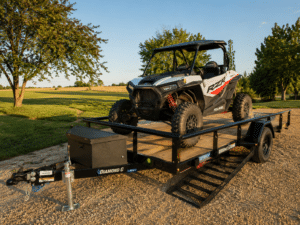
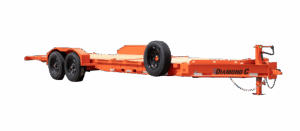









You’re standing in the lot, build sheet in hand, and the sales rep asks: “Diamond plate fenders or smooth sheet?” It is easy to treat that as a cosmetic decision and move on. In reality, the answer can affect dent resistance, corrosion maintenance, cleaning time, replacement difficulty, tire clearance, and whether a particular fender is suitable for anything beyond shielding the tires. The important details are the base metal, material thickness, mounting method, finish, and structural design—not simply whether the surface has a raised pattern.
This comparison comes up regularly at Spencer Trailers. Customers choosing a new Diamond C equipment trailer or an 83-inch-wide, 16-foot utility trailer may be comparing models with different standard fenders, optional heavy-duty fenders, removable fenders, or engineered drive-over systems. Availability varies by model, GVWR package, tire size, and production year, so the current manufacturer build sheet should always take priority over a generic description or an older listing.
What You’re Actually Looking At
Diamond plate—also called tread plate, floor plate, or checker plate—is sheet metal formed with a raised repeating pattern. It may be made from carbon steel, aluminum, or another alloy. The pattern can provide additional surface texture and may help disguise minor scuffs, but it does not reveal the material thickness or load capacity. A thin aluminum tread-plate fender and a 3/16-inch steel diamond-plate fender may look similar in photographs while performing very differently in real work.
Smooth sheet fenders are formed from flat steel or aluminum without a raised tread pattern. They may be stamped, rolled, brake-formed, welded, or bolted into place. Smooth steel is common on many utility, equipment, and car-hauler designs, while smooth aluminum and molded composite fenders also appear on enclosed and lightweight trailers. The fender material cannot be determined reliably from appearance alone, especially after it has been painted or powder-coated.
There is no universal trailer-fender size that fits every single- or tandem-axle trailer. Fender length, width, height, crown, and mounting location depend on tire diameter, axle spacing, suspension travel, deck width, and the clearance specified by the trailer manufacturer. A tandem trailer may use one long double fender over both tires or individual fenders over each wheel. When replacing one, match the actual measurements, material, mounting points, and tire-clearance requirements rather than ordering solely by axle count.
The Looks Argument
Diamond plate makes the stronger visual statement. The raised pattern reflects light from different angles and gives an open trailer a distinctly industrial appearance. Manufacturers such as H&H Trailers and Diamond C use tread plate on selected fenders, sides, floors, storage lids, frame extensions, and other visible components. On current Diamond C equipment and dump trailers, steel diamond-plate fenders are common, including standard-duty constructions and substantially thicker heavy-duty options on applicable configurations.
Smooth fenders can look more integrated on enclosed trailers. Cargo trailers from manufacturers such as Wells Cargo or Darkhorse Cargo may use painted steel, aluminum, or other fender constructions selected to coordinate with the exterior skin and trim. A smooth black, white, or color-matched fender can create a clean transition along the trailer wall without introducing another pattern. Exact materials and dimensions still vary by series, axle package, and production specification.
On open utility, car-hauler, and equipment trailers, diamond plate is common but not universal. Some buyers prefer the textured appearance, while others want a smooth, heavy-gauge fender that visually blends into the frame. On an enclosed trailer, the body design usually determines the fender style. On an open trailer, fender thickness, support, removability, and clearance should carry more weight than appearance alone.
Durability: It’s Not What Most People Assume
Diamond plate is not automatically stronger or more durable than smooth sheet. The raised pattern does not substitute for material thickness, alloy strength, proper forming, adequate support, quality welds, or secure bolt-on mounting. A well-supported smooth fender made from heavy steel can be considerably tougher than a lightly supported tread-plate fender made from thin aluminum. Two fenders with the same pattern can also have completely different load ratings.
For example, a 12-gauge smooth steel fender can resist routine impacts better than a much thinner aluminum tread-plate fender. A properly engineered 3/16-inch steel fender can provide another level of protection for equipment-trailer use. Even then, thickness alone does not make a fender safe to drive over or stand on. Drive-over fenders, such as those offered with certain Diamond C max-width equipment-trailer configurations, are designed as part of a complete system that includes the fender structure, frame extensions, mounting, and compatible loading equipment.
Steel is susceptible to rust wherever moisture and oxygen can reach bare metal. A quality coating system greatly improves protection, but stone chips, bucket contact, road debris, and damaged edges should be repaired promptly. Current Diamond C steel trailers use the DM Difference Maker multi-stage powder-coating system, which includes surface preparation, washing, corrosion-resistant primer, and a powder topcoat. That is a substantial protective system, but no coating eliminates the need to wash away road salt, fertilizer, manure, mud, and other corrosive contamination.
Aluminum does not develop the red iron-oxide rust associated with carbon steel, but it is not immune to deterioration. It can oxidize, discolor, pit in aggressive environments, and experience galvanic corrosion where dissimilar metals remain in contact in the presence of moisture or road salt. Aluminum is also generally easier to dent than comparably shaped heavy steel. Its advantages are lower weight and freedom from steel rust, not universal superiority in every impact or fatigue condition.
The tread pattern can also require more cleaning effort. Mud, clay, manure, road film, and dried grass can collect around the raised pattern and along formed edges. A smooth fender is generally easier to rinse, wipe, and inspect for damage. Tread plate can still be cleaned effectively with appropriate soap, water, and a soft or medium brush, but aggressive abrasives or harsh chemicals may damage polished aluminum, paint, or powder coat.
Traction: Who Actually Stands on Their Fenders?
People do step on trailer fenders while checking straps, reaching equipment, or moving around a loaded trailer. That does not mean every fender is designed to support a person. Diamond plate provides more surface texture than smooth sheet, but the pattern is not a structural rating or a declaration that the fender is a step. The safer solution is a manufacturer-designed side step, running board, deck extension, or specifically engineered drive-over fender.
A smooth painted or powder-coated surface can become slippery when wet. Tread plate may offer better initial texture, but mud, grease, snow, ice, or manure can make it slippery as well. Footwear, drainage, surface contamination, and the angle of the fender all affect footing. Never rely on the raised pattern alone, and never step on a removable, lightly supported, or visibly damaged fender unless the trailer manufacturer identifies it as an intended step surface.
Exterior fenders on enclosed trailers generally should not be treated as steps. Standing on an unsupported cargo-trailer fender can bend the skin, distort its brackets, crack a seam, or reduce tire clearance. Where frequent access is needed, select a trailer with a proper step located away from the tire or have an approved step installed without interfering with the frame, wiring, lights, suspension, or required clearances.
Cost Difference
There is no dependable industry-wide dollar range for upgrading from smooth sheet to diamond plate. The final price depends on whether the fender is steel or aluminum, its gauge or thickness, whether it is welded or bolt-on, the number of axles, the finish, required brackets, compatibility with upgraded tires, and whether it is part of a larger max-width or drive-over package. Manufacturer pricing and option availability can change, so a current dealer quote is more reliable than a generic online estimate.
On certain aluminum models from H&H Trailers, polished aluminum diamond plate is used as part of the trailer’s coordinated aluminum construction. On current Diamond C equipment and dump trailers, diamond-plate steel fenders are commonly standard, while thicker heavy-duty, smooth, removable, or drive-over configurations may be available on particular models. In other words, diamond plate is not always an upgrade, and smooth sheet is not always the base configuration.
On steel-framed trailers from brands such as Delco or Liberty, fender construction must be checked model by model. A manufacturer may use smooth stamped steel on one utility series, tread plate on an equipment trailer, and a different design on a dump or car hauler. Stock units may also include factory options that differ from the published base model. The VIN-specific build information and physical inspection are the best ways to confirm what is actually installed.
Replacement expense varies just as widely. Universal aftermarket smooth fenders can be easier to find in common sizes, but they may require drilling, fabrication, paint, or bracket changes. An exact original-equipment fender may cost more because it matches the trailer’s radius, axle spacing, mounting pattern, finish, lights, steps, and body lines. Freight can also be significant because tandem fenders are large even when they are not especially heavy. Include removal, welding, coating, wiring, and installation when comparing replacement costs.
A Quick Comparison
| Factor | Diamond Plate / Tread Plate | Smooth Sheet |
|---|---|---|
| Appearance | Textured, industrial appearance; common on many open work trailers | Clean, uniform appearance that can blend with the frame or exterior skin |
| Rust resistance | Depends on base metal and finish; aluminum will not rust, while steel tread plate requires coating protection | Also depends on base metal and finish; smooth aluminum resists rust, while exposed smooth steel can corrode |
| Impact resistance | Controlled mainly by metal, thickness, shape, bracing, and mounting—not by the raised pattern alone | Can equal or exceed tread plate when made from comparable or heavier material with proper support |
| Traction when wet | Provides added texture, but may still be slippery and does not automatically make the fender a rated step | Offers less surface texture; use a designated step rather than standing on the fender |
| Ease of cleaning | Usually requires more brushing around the raised pattern and formed edges | Generally easier to rinse, wipe, and inspect |
| Upfront cost | May be standard or optional; price depends on material, thickness, and the complete trailer package | May be standard or optional; no universal price advantage applies to every model |
| Replacement cost | Depends on OEM fit, material, thickness, finish, brackets, labor, and freight | Common aftermarket shapes may be easier to source, but modification and refinishing can add cost |
What We See Buyers Choose
At Spencer Trailers, buyers who care about a rugged appearance often gravitate toward diamond plate. ATV, UTV, car-hauler, and equipment-trailer customers may also choose engineered drive-over fenders when they need additional usable width. That is different from choosing an ordinary tread-plate fender merely because someone expects to stand on it. The complete loading system and its manufacturer-rated capacity are what matter.
Cargo-trailer buyers typically accept the fender style designed to match the enclosed body. Dump-trailer and utility-trailer buyers tend to focus more on steel thickness, tire protection, ease of repair, and coating quality. It is not accurate to assume that dump trailers normally use smooth sheet: current Diamond C dump trailers use durable 14-gauge diamond-plate fenders as standard, with super-heavy-duty 3/16-inch diamond-plate fenders available on applicable configurations.
The choice is more varied among car haulers and open equipment trailers. A buyer hauling a show vehicle may prefer removable or low-profile fenders that improve door clearance and maintain a clean appearance. A contractor hauling a skid steer may prioritize a heavy steel fender, substantial brackets, convenient side steps, and enough tire clearance to tolerate demanding jobsite use. Depending on the model, that heavy fender may be smooth or diamond plate. Both approaches can be appropriate when the construction matches the intended work.
So Which Should You Order?
If you need regular access beside the deck, order a trailer with dedicated side steps or another manufacturer-approved access feature. If you need to load equipment wider than the deck between the fenders, look for an engineered max-width or drive-over-fender package designed for that exact trailer. Choose diamond plate for its appearance and surface texture, but do not treat the pattern itself as proof that the fender is safe to stand or drive on.
If easy washing and a clean exterior are your priorities, smooth sheet can be a good choice when it is offered in the required thickness. If corrosion resistance and lower weight matter most, properly constructed aluminum may be attractive. If the trailer will encounter buckets, rocks, brush, and frequent jobsite contact, heavy steel may be the better fit. On Diamond C equipment and dump models where diamond plate is standard, compare the standard fender with the available heavy-duty, removable, smooth, or drive-over options rather than assuming smooth steel is automatically preferable.
And if you’re buying a unit off the lot and the fender style is already set, do not let the pattern outweigh the fundamentals. Inspect the fenders for tire rub, cracked welds, loose bolts, bent brackets, corrosion, and reduced clearance. Then verify the trailer’s GVWR, GAWR, empty weight, available payload, frame construction, coupler rating, brake system, tire and wheel ratings, suspension, floor, ramps, and tie-down capacity. Current Diamond C premium lines use appropriately rated Lippert axles as standard and receive the DM Difference Maker coating system, but every trailer still needs to be evaluated by its exact model and factory configuration. A properly matched hauling package with sound running gear will provide more value than a trailer selected mainly for shiny fenders.
Ready to compare specific models? Browse our current inventory to see what’s in stock right now, or reach out to the team at (812) 829-0226 and we’ll walk you through what’s available in the configuration that actually fits your haul. If you want to see what’s moved through the lot, check out our recently sold trailers to get a feel for what buyers in this area are actually choosing.