



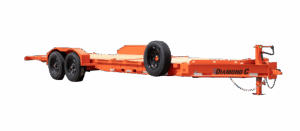











Your trailer tires look fine. The tread is still there. No obvious bulges. You have only put a few thousand miles on them. So they are good, right?
Not necessarily. Tread depth still matters, but it is only one part of trailer-tire safety. A tire can have plenty of tread and still be unfit for service because of age, cracking, impact damage, internal separation, chronic underinflation, overloading, or heat exposure. Calendar age begins on the date the tire was manufactured, while its in-service life begins when it is installed and used.
Why Trailer Tires Age Out Faster Than You’d Expect
ST, or Special Trailer, tires are designed specifically for free-rolling trailer axles. Their construction, load capacity, inflation requirements, and resistance to the lateral scrubbing that occurs during turns are different from the priorities built into passenger-vehicle tires. ST tires are not automatically short-lived, but the way trailers are stored and maintained often makes age-related damage a bigger concern.
Many trailers sit outside for weeks or months at a time while remaining loaded. During storage, the tires continue to be exposed to oxygen, ozone, sunlight, temperature changes, moisture, and pressure loss. Tire compounds contain antidegradants that help resist oxidation and ozone attack, and normal flexing can help protective waxes migrate toward the rubber surface. Infrequent use does not preserve a tire indefinitely, especially when it spends years outdoors or remains underinflated.
As rubber ages, you may see weather checking, sidewall cracks, tread-area cracks, flat spotting, or deterioration around the bead and valve stem. Some age-related weakening and internal separation may not be visible during a walk-around. A tire failure can damage the trailer’s fender, wiring, brake components, deck, or cargo and can make the combination harder to control. The consequences are particularly serious on a single-axle trailer because there is no second tire on that side carrying part of the axle load.
The 3-to-6-Year Window
There is no single federal rule requiring every trailer tire to be discarded at three, five, or six years. NHTSA notes that tire and vehicle manufacturers commonly recommend age-based replacement somewhere between six and ten years, regardless of remaining tread. Goodyear’s general guidance calls for replacement after six years in service and states that a tire should not remain in use beyond ten years from its manufacture date. The instructions from the specific tire manufacturer and trailer manufacturer should control.
For a work trailer that sees heavy loads, long highway trips, outdoor storage, or repeated summer heat, planning around a five-to-six-year replacement cycle is a reasonable conservative approach. Damage, pressure loss, overloading, a puncture, irregular wear, or a manufacturer’s shorter service limit can require replacement much sooner. Ten years is an outside limit used by some manufacturers, not a goal for squeezing a few more seasons out of a trailer tire.
- 0-3 years: Age alone is usually not the deciding factor, but check cold pressure before trips and at least monthly, including during storage. Inspect the tread, sidewalls, valve stems, and wheels regularly.
- 3-5 years: Continue pre-trip inspections and begin tracking the tire’s condition more closely. A professional inspection is sensible before heavy hauling, extended highway travel, or another season of frequent use.
- 5-6 years: Review the tire manufacturer’s age guidance and plan for replacement. Outdoor storage, commercial use, high loads, repeated pressure loss, or visible weathering strengthens the case for proactive replacement.
- 6+ years: Treat the tire as being in the later part of its service life. Replace it when the manufacturer’s service limit is reached, and do not continue using an older tire solely because it still has tread. No tire should be operated beyond the tire manufacturer’s maximum age.
Mileage does not cancel calendar age, and age does not cancel mileage-related wear. A seven-year-old tire with 500 miles may still be due for replacement because its materials have aged. A four-year-old tire with 15,000 miles may already be worn out or heat-damaged from heavy service. Judge every tire by its manufacture date, tread depth, inflation history, loading history, storage conditions, visible condition, and the tire manufacturer’s instructions.
How to Read the DOT Date Code
Highway-use tires sold in the United States carry a DOT Tire Identification Number, commonly called the TIN. The complete TIN ends with four digits identifying the week and year of manufacture. The complete number may appear on only one sidewall, so check the opposite side if the number you can see does not end in four date digits.
For example, DOT… 2319 means the tire was manufactured during the 23rd week of 2019. In 2026, that tire is more than seven years old. Whether it can remain in service depends on the manufacturer’s age limit and a qualified inspection, but it should never be treated as a nearly new tire simply because the tread looks deep.
The complete DOT string is often molded into the inboard sidewall. On some trailers, you may need a flashlight and inspection mirror to read it without removing the wheel. Clean the sidewall gently with soap and water if dirt is hiding the characters. If the tire’s identity or manufacture date cannot be confirmed, have a tire professional inspect it rather than guessing its age.
Tires manufactured before 2000 used a three-digit date code instead of the current four-digit format. Any legitimate highway tire carrying that older system is now decades beyond a reasonable service life and should not be placed back into service, even as a spare.
What UV and Ozone Actually Do to a Tire
Sunlight is one contributor to tire aging, but it is not the only one. Ultraviolet radiation, oxygen, ozone, heat, underinflation, overloading, and repeated flexing at excessive temperatures can all degrade rubber and the bonds between tire components. A utility trailer parked outside through Indiana summers and winters generally faces harsher storage conditions than one kept in a cool, dry, ventilated building.
Opaque tire covers can reduce direct sunlight, and proper storage can slow weathering. Keep tires correctly inflated, protect them from standing water and petroleum products, and avoid solvent-based dressings unless the tire manufacturer specifically approves the product. Periodic use may help bring protective waxes to the surface, but neither movement nor a tire cover resets the manufacture date or reverses deterioration.
Crack patterns alone are not a reliable way to diagnose exactly what damaged a tire. Fine weather checking may begin at the surface, while deeper cracks, exposed cords, bulges, tread distortion, localized swelling, or separation are clear reasons to remove the tire from service. Because internal damage can exist without obvious exterior symptoms, an older or questionable tire should be evaluated by a qualified tire technician rather than judged from appearance alone.
ST vs. LT Tires on a Trailer
This question comes up constantly. Some trailers are engineered for ST tires, while a smaller number of applications may be approved for properly selected LT, or Light Truck, tires. The prefix alone does not determine whether a replacement is safe. The trailer manufacturer’s specifications, tire size, load index, load range, inflation pressure, wheel rating, valve-stem rating, clearance, and speed rating must all work together.
| Characteristic | ST (Special Trailer) | LT (Light Truck) |
|---|---|---|
| Construction and application | Designed for free-rolling trailer axles, trailer loading, and lateral scrub during turns | Designed primarily for powered, steering, and load-carrying light-truck applications |
| Load ratings | Often provides greater capacity within a comparable physical size, depending on the exact service description | Capacity varies by size and may require a larger tire to equal the trailer’s original ST rating |
| Speed rating | Read the molded speed symbol; current products commonly include L, M, and N ratings for 75, 81, and 87 mph | Usually carries a marked speed symbol that varies by model, size, load range, and application |
| Aging | Follow the tire and trailer manufacturers’ inspection and replacement guidance | Subject to the same age, heat, storage, pressure, damage, and manufacturer-limit considerations |
An ST tire’s trailer-specific construction is a feature when that is what the trailer manufacturer specified. An LT substitution should be made only when the trailer or tire manufacturer approves the application and the replacement provides sufficient capacity at the permitted cold inflation pressure. The wheel, rim width, valve stem, and available clearance must also be compatible. Changing tire categories is not a proper cure for sway, overloading, poor weight distribution, worn suspension parts, or incorrect hitch setup. If you are running a heavy cargo or equipment trailer, use the certification label and current manufacturer specifications rather than relying on a general ST-versus-LT rule.
Load Range Matters Too
While checking dates, check the complete service description and load information. Trailer tires are available in several load ranges, including B, C, D, E, F, G, and higher ratings in certain sizes. Terms such as “6-ply rated” or “10-ply rated” describe an equivalent strength category; they do not necessarily mean the modern radial tire contains that number of physical body plies. The actual rated load, required cold pressure, and speed symbol molded into the tire are what matter.
Specifications can differ by size and product line. As one current example, a Carlstar Radial Trail HD ST205/75R14 Load Range C is rated for 1,760 pounds at 50 psi, while the Load Range D version is rated for 2,040 pounds at 65 psi. In ST225/75R15, many Load Range E products are rated around 2,830 pounds at 80 psi, but the speed symbol and construction can vary by manufacturer. Never transfer a capacity number from one size, load range, or brand to another without checking that tire’s actual markings and load table.
Start with the trailer’s certification label, including GVWR, GAWR, original tire size, and recommended cold pressure. The combined tire capacity on an axle must be sufficient for that axle’s rated and actual load, and the wheel and valve stem must be rated for the required pressure and capacity. A scale measurement is the best way to confirm real axle loading, especially with equipment or cargo that can be positioned in different places. Additional tire capacity does not increase the trailer’s GVWR, axle ratings, coupler rating, frame capacity, or legal payload.
A Quick Inspection Checklist
Perform a walk-around before every towing trip, not only before trips longer than 100 miles. Check pressure at least monthly while the trailer is stored because trailer tires can lose air without looking visibly low:
- Check every tire cold, including the spare. Use the cold inflation pressure specified on the trailer’s certification label, in the owner’s manual, or by the tire manufacturer for that application. Do not automatically use the sidewall maximum as a substitute for the trailer specification, and do not bleed pressure from a hot tire.
- Inspect both sidewalls for cracks, cuts, scuffs, bulges, exposed material, bead damage, leaking valve stems, missing valve caps, or deformation. Investigate any tire that repeatedly loses pressure.
- Inspect the complete tread face for minimum depth, embedded objects, flat spots, cupping, shoulder wear, center wear, or one-sided wear. Irregular patterns may indicate incorrect pressure, overloading, wheel damage, axle alignment, worn suspension components, bearing problems, or brake issues.
- Confirm the DOT manufacture date and compare it with the tire manufacturer’s replacement guidance. Also check that all tires on an axle are compatible in size, construction, load capacity, and inflation requirements.
- Inspect the lug nuts and use a calibrated torque wrench with the specification for the exact stud, nut, wheel size, and wheel material. Diamond C’s current maintenance guidance calls for re-torquing after the first 10, 25, and 50 miles, followed by checks every three months or 3,000 miles, with a visual inspection before every trip. Published Diamond C torque specifications range well beyond a single generic value, from approximately 90-100 ft-lbs on certain 15-inch aluminum assemblies to 275-325 ft-lbs on certain 5/8-inch flanged-nut steel-wheel assemblies.
This inspection takes only a few minutes, but it can catch an underinflated tire, loose wheel, failing valve stem, damaged tread, or aging spare before the trailer is moving at highway speed. It is a much better use of time than discovering the problem on the shoulder of I-70 with a loaded trailer.
What About Spare Tires?
A spare ages even when it never touches the pavement. Its exposure depends on where it is mounted: an uncovered side-mounted spare may receive substantial sunlight, while an under-deck spare may collect road spray, dirt, and moisture. Enclosed or covered storage reduces some exposure, but it does not stop oxidation or calendar aging. Check the spare’s date, cold pressure, sidewalls, tread, valve stem, wheel, and mounting hardware whenever you inspect the road tires.
Apply the same manufacturer age limit to the spare as you do to the tires in service. Also confirm that the jack is rated for the loaded trailer, the lug wrench fits, and the spare matches the required tire size, load capacity, wheel bolt pattern, wheel rating, and inflation pressure. A flat tire is bad enough without finding that the spare is underinflated, incompatible, or older than the tire that failed.
Brands Worth Knowing
Established trailer-tire lines include Goodyear Endurance, Carlstar Radial Trail HD, Maxxis M8008 Plus, and several Taskmaster offerings. Each line has multiple sizes and specifications, so do not buy by brand name alone. Compare the exact load index, load range, maximum load, required cold pressure, speed symbol, construction, warranty terms, date code, and dealer support. Goodyear Endurance uses its Durawall sidewall technology, Carlstar describes the Radial Trail HD as heat-resistant and puncture-resistant, and Maxxis markets the M8008 Plus specifically for trailer service, but the correct fitment still depends on the individual tire specification.
Price alone is not a dependable measure of safety or service life. A lower-cost tire that carries the correct ratings and comes from a traceable manufacturer may fit a particular application, while an expensive tire is still unsafe if it is overloaded, underinflated, too old, or installed on an underrated wheel. Check the date code before installation, retain the receipt, and register the tires so you can receive recall information. Current 2026 retail listings for four ST225/75R15 Load Range E tires range from roughly the low $400s for some value products to approximately $700-$850 for premium lines, before mounting, valve stems, balancing where applicable, disposal fees, and taxes.
If you are buying a used trailer, especially from a private seller, inspect all road tires and the spare and include possible replacement in your budget. Tires that are approaching five or six years old, have an unknown service history, show cracking or irregular wear, repeatedly lose pressure, or lack adequate load capacity deserve closer scrutiny. Do not assume that a recently purchased trailer has recently manufactured tires.
Have a trailer sitting in the driveway that you have not inspected lately? Grab a flashlight, locate the complete DOT code, check the cold pressure, and compare the tire’s ratings with the trailer certification label. If you have questions about what is installed on a trailer in our current inventory or need help selecting a trailer for a specific load, call Spencer Trailers at (812) 829-0226 or reach out online. We are located at 291 West State Hwy 46 in Spencer, Indiana. Trailer tires are one of those components where accurate specifications, regular inspection, and timely replacement are almost always less expensive than dealing with a failure on the road.


