


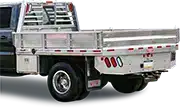
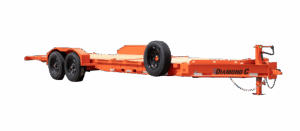






Pick the wrong trailer for a skid steer and you may know it before you reach the highway. The rear of the truck squats under excessive tongue weight, the trailer moves when a passing semi disrupts the air around it, and every brake application feels less controlled than it should. The machine does not care what the trailer cost or what the salesperson called it. Safe hauling depends on whether the trailer’s actual payload capacity, deck dimensions, axle and tire ratings, brakes, hitch, and load-securement system are matched to the machine you are carrying.
This post is about selecting the right trailer and driving it correctly once you are on the road. The loading process itself is a separate topic. Here we are focused on the decisions that should be made before the machine rolls onto the trailer and the road-handling practices that matter after it has been loaded and properly secured.
Know the Real Weight of What You Are Hauling
The skid steer and compact track loader category covers a much wider weight range than many buyers expect. A current Bobcat Classic S450 has a published operating weight of approximately 5,370 pounds. A CASE SR270B is approximately 8,117 pounds. A current Kubota SVL97-3 compact track loader is approximately 11,676 pounds in an open-station configuration and about 11,929 pounds with an enclosed cab. These are not interchangeable loads, and a trailer that comfortably carries the smaller machine may be overloaded by the larger one before an attachment is added.
Published operating weight is the correct place to start, but it is not automatically the exact weight that will be sitting on your trailer. Manufacturers do not all define operating weight in precisely the same way. Depending on the specification sheet, the published figure may include a standard bucket, normal fluids, a full or partially full fuel tank, an operator of a specified weight, or certain standard options. Read the footnotes for the exact machine and configuration so you do not omit installed equipment or accidentally count the same weight twice.
Add or verify the following:
- Attachments: Confirm whether the published operating weight includes the bucket shown on the machine. Grapple buckets, root grapples, scrap grapples, hydraulic breakers, brush cutters, augers, trenchers, and other attachments can change the load substantially. Current heavy grapple attachments can weigh roughly 900 to more than 1,300 pounds. An auger powerhead may add several hundred pounds before the bit is included, while breakers and rotary cutters can add considerably more.
- Fuel, fluids, and installed options: Do not automatically add a full tank of diesel if the manufacturer’s operating-weight definition already includes fuel. Do account for fuel or fluid not included in the published figure, along with enclosed cabs, counterweights, guarding, high-flow hydraulic packages, steel tracks, and other installed options that affect actual weight.
- Debris and carried equipment: Mud, clay, gravel, snow, and demolition material packed into a compact track loader’s undercarriage can add hundreds of pounds. Chains, binders, spare attachments, buckets, forks, fuel containers, and tools carried on the trailer are cargo too.
For example, a Bobcat Classic S770 has a published operating weight of approximately 9,154 pounds. Add a grapple weighing around 1,000 to 1,200 pounds and the machine-and-attachment load may already be in the 10,150-to-10,350-pound range before accounting for packed mud, loose tools, or other cargo. That combination cannot be evaluated from the loader’s model name alone.
The most reliable answer comes from a certified scale. Weigh the loaded truck and trailer by axle group whenever possible. That confirms not only the total combination weight but also the truck’s front and rear axle loads, the trailer axle load, and whether the load placement is producing an appropriate amount of tongue or gooseneck pin weight.
Trailer GVWR: How Much Margin Do You Actually Need
GVWR is the maximum allowable total weight of the trailer and everything carried on it. Payload capacity is not the same as GVWR. The usable payload is the trailer’s GVWR minus the trailer’s actual empty weight as equipped. Deck length, ramps, hydraulic tilt components, toolboxes, spare tires, heavier flooring, winches, and other options can all increase empty weight and reduce available payload.
A 10,000-pound GVWR equipment trailer may be appropriate for a lighter skid steer, but it should not be treated as a universal skid-steer trailer. Once the trailer’s empty weight is subtracted, its usable payload may be near or below 7,000 pounds. That can work for a smaller machine with a light attachment, but it is usually inadequate for an 8,000-pound loader carrying a bucket, grapple, or additional equipment.
A 14,000-pound GVWR trailer creates more working capacity, but the VIN plate and listed empty weight still have to be checked. Depending on construction, length, ramp system, and tilt equipment, a 14,000-pound trailer may weigh roughly 3,000 to 4,000 pounds or more. That can leave approximately 10,000 to 11,000 pounds of payload, but the exact figure must come from the specific trailer rather than a category-wide estimate.
For machines and attachments approaching or exceeding 10,000 pounds, a trailer in the 15,500-to-18,000-pound class often provides a more practical margin. The current Diamond C LPX low-profile equipment trailer begins with the LPX207 package at a 15,500-pound GVWR using tandem 7,000-pound LIPPERT axles. The LPX208 package is rated at 18,000 pounds and uses tandem 8,000-pound LIPPERT oil-bath axles with electric brakes. Higher-capacity LPX configurations are also available. Select the package by its listed payload, tires, coupler, brakes, and VIN rating, not merely by axle count.
H&H’s current 82-inch Gravity Tilt equipment trailer line includes 14,000- and 16,000-pound GVWR configurations. A 14,000-pound version may work well for a lighter wheeled skid steer or compact track loader, provided the machine, attachment, trailer options, and carried equipment remain below the trailer’s stated payload capacity. A loader near 11,000 pounds may require the higher-rated configuration or a different trailer once the trailer’s curb weight is included.
If you regularly haul heavier compact track loaders, multiple attachments, or other construction equipment, a Diamond C FMAX may be appropriate. FMAX is Diamond C’s Flatbed Max gooseneck line, with current configurations ranging from approximately 15,500 pounds to 40,000 pounds GVWR. Models include FMAX207, FMAX208, FMAX210, FMAX212, FMAX216, FMAX307, FMAX310, and FMAX312. Available loading configurations include MAX Ramps, XDR Ramps, straight decks, and hydraulic dovetails, depending on the model. A higher FMAX rating creates additional options, but it does not eliminate the need to calculate payload, truck capacity, hitch load, and legal combination weight.
Do not calculate a trailer’s legal capacity simply by adding the axle ratings. Part of a bumper-pull trailer’s weight is carried at the hitch, and part of a gooseneck trailer’s weight is carried in the truck bed. The manufacturer establishes the trailer GVWR as a complete system. The VIN certification label, tire ratings, wheel ratings, axle ratings, coupler rating, frame design, and hitch components all matter, and the lowest applicable rating controls.
Deck Width and Length: Fit Matters on the Road
A skid steer or compact track loader should fit on the trailer’s intended load-bearing surface. Low-profile equipment trailers commonly provide approximately 80 to 82 inches between the fenders. Full-width and deck-over trailers may provide a deck up to the standard 102-inch legal width, but the higher deck can increase loading angle and raise the machine’s center of gravity during transport.
Do not assume that every machine described as “72 inches wide” will fit an 82-inch trailer. Track width, tire width, bucket width, side steps, protective guards, and attachment geometry can all be different. The current Kubota SVL97-3, for example, is commonly listed with an approximately 81-inch bucket, leaving very little extra width on an 82-inch bed even though the machine’s tracks may be narrower. Measure the exact machine and the narrowest usable point on the trailer before buying.
Fenders should not be treated as load-bearing surfaces unless the trailer was specifically designed with drive-over fenders or another manufacturer-approved system. Any part of the machine extending beyond the deck must remain safely supported and secured, and the total loaded width must remain within legal limits unless the appropriate oversize permit has been obtained.
Deck length matters because correct load placement is more important than simply fitting the machine between the front rail and ramps. A 20-foot deck may be sufficient for many wheeled skid steers and shorter compact track loaders. A 24-foot deck provides additional fore-and-aft adjustment for a longer machine or a machine carrying a large attachment. A 28-foot deck may be useful for long implements, separately secured attachments, or specialized combinations, but the added trailer length and empty weight reduce payload and can make maneuvering more difficult.
There is no universal rule that every skid steer must be loaded in reverse. Many skid steers and compact track loaders are rear-heavy because of the engine and counterweight, so placing the heavier end toward the front often helps produce suitable tongue weight. The correct orientation, however, is the one permitted by the machine and trailer manufacturers that produces proper measured axle and hitch loading without exceeding the truck’s rear axle, tire, payload, or hitch ratings.
Trailer Deck Length vs. Machine Placement
| Trailer Deck | Machine Length Range | Tongue Weight Result |
|---|---|---|
| 20 ft | Most wheeled skid steers and shorter CTLs after attachment length is measured | Can work when the machine can be positioned to produce verified tongue weight without crowding the ramps or front rail |
| 24 ft | Longer CTLs, larger buckets, or a machine with a separately secured attachment | Provides more fore-and-aft adjustment for balancing the load over the trailer axles |
| 28 ft | Long implements, multiple secured articles, or specialized equipment combinations | Offers additional placement flexibility, but added trailer weight reduces payload and does not guarantee correct balance |
For a conventional bumper-pull trailer, tongue weight is commonly targeted at approximately 10% to 15% of the actual loaded trailer weight. Gooseneck trailers commonly place approximately 15% to 25% of their loaded weight on the truck. These are planning ranges, not permission to exceed the truck’s payload, rear gross axle weight rating, tire capacity, receiver rating, or gooseneck hitch rating. Confirm the finished setup on a scale rather than judging it by how much the truck appears to squat.
Trailer Brakes: Not Optional at These Weights
Indiana Code 9-19-3-3 requires a trailer or semitrailer with a gross weight of at least 3,000 pounds to be equipped with brakes adequate to control, stop, and hold the vehicle. The brakes must be capable of being applied by the driver from the towing vehicle, and the trailer must have an automatic breakaway function if it separates from the tow vehicle. Every equipment trailer suitable for hauling a skid steer is well above that threshold.
The presence of electric brakes does not guarantee that the system is working correctly. The truck’s brake controller, trailer wiring, grounds, connectors, magnets or hydraulic actuator, drums or rotors, breakaway battery, and wheel-end components must all be in serviceable condition. Brake lights only confirm that the stop-lamp circuit is operating; they do not prove that the trailer brakes are producing the required braking force.
Adjust the controller for the actual loaded trailer by following the truck, controller, and trailer manufacturers’ procedures. A common procedure involves testing the trailer-brake response at low speed on a level, dry surface and adjusting the gain until the trailer contributes firm, controlled braking without locking its tires. A setting that works with an empty trailer may be too low after a 10,000-pound machine is loaded, while excessive gain can lock the trailer wheels and reduce stability.
Current Diamond C trailers equipped with 8,000-pound-and-higher LIPPERT axle packages include LIPPERT anti-lock braking technology as standard for the applicable 2026 configurations, while ABS is available on certain 7,000-pound axle configurations. Verify the build sheet for the individual trailer. ABS can help preserve wheel rotation during hard braking, but it does not correct improper load placement, worn brakes, inadequate controller settings, or an underrated tow vehicle.
There is no universal rule that every trailer above 20,000 pounds must use air brakes or electric-over-hydraulic brakes. Many heavy equipment trailers continue to use appropriately rated electric brakes, while electric-over-hydraulic or air-brake systems are available on particular configurations. The correct system depends on the trailer, axles, tow vehicle, intended operation, and manufacturer certification. Air brakes should be used only with a towing vehicle and trailer designed as a compatible air-brake system.
Before every haul, inspect the trailer connector, verify controller output, test brake application at low speed, and confirm that the breakaway battery is charged. Attach the breakaway cable to a secure point on the tow vehicle that is independent of the safety chains and will pull the switch if the trailer separates.
Tow Vehicle Requirements
A trailer loaded near 14,000 to 16,000 pounds generally belongs behind a properly configured three-quarter-ton or one-ton truck, but the badge on the fender is not enough. Tow ratings vary by model year, cab, bed, engine, transmission, axle ratio, drive system, wheelbase, suspension, hitch type, and optional equipment. Use the towing guide and payload information for the truck’s exact VIN, then compare the anticipated load with the truck’s GCWR, GVWR, front and rear GAWR, tire capacities, payload label, and hitch ratings.
A diesel engine may improve pulling power and grade performance, but it also adds curb weight and can reduce available payload. That matters because tongue weight or gooseneck pin weight is carried by the truck. A combination can remain below the advertised maximum trailer rating and still overload the truck’s rear axle, tires, payload rating, or receiver.
For a bumper-pull trailer actually weighing 14,000 to 16,000 pounds, a 10% to 15% tongue-weight range represents approximately 1,400 to 2,400 pounds at the hitch. Every component in the connection must be rated accordingly, including the receiver, extension or reducer sleeve, weight-distributing equipment when approved, ball mount, hitch ball, coupler, safety chains, and attachment hardware.
A 2.5-inch or 3-inch heavy-duty receiver is common on current three-quarter-ton and one-ton pickups, but receiver-tube size alone does not establish capacity. Some 2-inch receivers have substantial ratings, and some larger receivers have lower ratings in particular configurations. Read the rating label and truck manual. The hitch ball must also be the correct diameter for the coupler, commonly 2-5/16 inches on heavy equipment trailers, and its stamped gross trailer weight rating must meet or exceed the intended load.
For equipment that is regularly hauled at higher weights, a gooseneck can provide better yaw stability and place the hitch load over or slightly ahead of the truck’s rear axle. You can see gooseneck equipment trailer options in the Spencer Trailers inventory. The change in hitch location does not make the load weight disappear. A heavy gooseneck may place several thousand pounds of pin weight in the bed, so the truck’s payload, rear axle, tires, frame-mounted hitch, and bed clearance must all be checked.
The Diamond C FMAX line is designed as a heavy flatbed gooseneck platform and is available in numerous GVWR and deck configurations. Diamond C’s premium FMAX, HDT, LPT, LPX, WDT, and DEC lines use LIPPERT axles as standard equipment. Match the exact FMAX model and loading system to the machine instead of assuming that every FMAX automatically has enough payload for every skid steer or compact track loader.
Road Handling: What Changes With a Loaded Skid Steer
Driving with a properly loaded equipment trailer is different from driving empty, and it is different again from towing a machine that concentrates a large amount of weight several feet above the road. The combination accelerates more slowly, requires more room to stop, reacts more strongly to steering inputs, and can be affected by wind, road crown, ruts, bridge joints, and passing vehicles.
Speed. The posted speed limit is a maximum under favorable conditions, not a target for every towing combination. Remain below the lowest applicable limit imposed by the road, truck, trailer, tires, or other components, and reduce speed for wind, rain, traffic, construction zones, downhill grades, rough pavement, and limited visibility. Heat buildup and impact forces rise with speed, while the time available to correct a problem decreases.
Lane changes. Signal early, check mirrors carefully, and make gradual steering inputs. A skid steer carried high on the deck increases the combination’s roll and yaw sensitivity. Abrupt lane changes can initiate trailer movement that becomes difficult to control. Allow more space than you would when driving the truck alone, especially when returning to the lane after passing.
Sway response. If sway begins, hold the steering wheel steady, ease off the accelerator, and avoid abrupt steering or hard tow-vehicle braking. When conditions and the controller permit, gentle manual application of the trailer brakes can help bring the trailer back in line. Do not accelerate in an attempt to pull out of sway. Reduce speed, stop in a safe location, and correct the cause, which may include insufficient tongue weight, excessive speed, a soft tire, improper load position, worn suspension components, or poor road conditions.
Following distance. Increase following distance substantially and leave enough room to make a smooth, progressive stop. Add even more space on wet or icy roads, at night, in construction areas, on downgrades, and when visibility is limited. The truck’s advertised braking performance does not represent the stopping distance of a loaded truck-and-trailer combination.
Bridges and railroad crossings. Reduce speed before rough bridge joints or railroad tracks and cross as squarely as the roadway geometry safely allows. Do not make a sudden diagonal maneuver or stop with the trailer on the tracks. Watch for low-clearance approaches where a long wheelbase, low deck, dovetail, jack, or rear stabilizer could contact the pavement. A hard impact can shift the machine or reduce tie-down tension, so stop and inspect the securement system after any severe jolt.
Attachment position during transport. Lower buckets, grapples, booms, and other accessory equipment onto the trailer or an approved support as directed by the manufacturer. Relieve hydraulic pressure when required and secure any component that could articulate, rotate, extend, or bounce. An attachment that can move independently may require its own securement. Measure the loaded height from the ground to the highest point rather than estimating it from the machine’s cab height.
Turns and grades. Enter curves and turns slowly enough to avoid abrupt braking while the combination is already turning. Select an appropriate gear before a long downgrade and use engine braking when available without allowing speed to build. Repeated hard braking can overheat truck and trailer brakes. When climbing, leave additional space because acceleration and lane-change capability will be reduced.
Indiana-Specific Considerations
Indiana’s ordinary legal limits generally include a maximum width of 8 feet 6 inches, a maximum height of 13 feet 6 inches, and a maximum gross vehicle weight of 80,000 pounds before an oversize or overweight permit may be required. The 80,000-pound figure is not blanket permission to operate at that weight. Single-axle, tandem-axle, bridge-formula, tire, vehicle, trailer, and posted-road limits still apply, and the ratings of a pickup-and-trailer combination will normally be far below the state’s absolute highway maximum.
A 102-inch-wide trailer is already at the ordinary 8-foot-6-inch width limit. Measure the machine and attachment at their widest points. Buckets, tracks, tires, steps, or attachments extending past the trailer can make the loaded combination oversize even when the trailer itself is legal. Measure overall height after loading as well, particularly when transporting machines with forestry guards, tall exhaust components, raised structures, or stacked attachments.
Indiana does not have one blanket seasonal-weight rule that can be assumed for every county road. INDOT, counties, towns, bridge authorities, and other road agencies may impose posted weight, axle, bridge, construction, or temporary restrictions that are lower than normal statewide limits. Check the planned route, including county roads and local bridges, rather than confirming only the interstate portion of the trip.
Do not confuse a trailer’s 10,000-pound rating with the CDL threshold. A Class A CDL is generally triggered when the combination has a GCWR of 26,001 pounds or more and the towed vehicle has a GVWR greater than 10,000 pounds. A trailer rated above 10,000 pounds does not, by itself, create a Class A CDL requirement when the combination’s GCWR remains below 26,001 pounds. Commercial use, vehicle configuration, exemptions, and interstate or intrastate operation can affect the rules, so businesses should verify their specific operation with the Indiana BMV, Indiana State Police, and applicable federal requirements.
Indiana also provides a 45-day period to register a newly acquired, previously unregistered vehicle or trailer without the late administrative penalty. Do not treat that window as permission to tow without the ownership documents, temporary registration, plate, insurance, or other credentials required for the particular transaction and operation.
Stop and Inspect Before the Highway
After loading and before entering highway traffic, perform a complete walk-around. Confirm that the coupler is fully seated and latched, the gooseneck or bumper-pull locking mechanism is pinned, the safety chains are properly connected, the breakaway cable is independently attached, the jack is raised, the ramps or hydraulic tail are secured, and all doors, toolboxes, spare attachments, and loose equipment are closed or restrained.
Inspect every tire for damage and verify cold inflation pressure against the tire and trailer requirements. Check wheel fasteners according to the trailer manufacturer’s service schedule, especially on a new trailer or after a wheel has been removed. Verify that the truck and trailer lights work, then use the brake controller’s test procedure to confirm that the trailer brakes actually apply.
Use the machine manufacturer’s designated tie-down points whenever provided. Each chain, strap, binder, hook, anchor, and connecting device must be appropriate for the load and have an adequate, legible working load limit. Do not attach securement devices to hydraulic cylinders, hoses, steering components, steps, guards, or other parts that were not designed as tie-down points.
Federal cargo-securement rules for heavy vehicles, equipment, and machinery weighing 10,000 pounds or more require at least four tie-downs, positioned as close as practical to the front and rear of the machine or attached at designated mounting points. Accessory equipment must be lowered and secured. Lighter machines remain subject to applicable cargo-securement requirements, and using a properly rated four-point system is a sound practice even when a particular machine falls below the 10,000-pound threshold.
After the first short, low-speed movement, stop in a safe location and inspect the load again before continuing onto the highway. Tracks and tires can settle against the deck, binder handles can move, and attachments can shift against their supports. Tighten or reposition the securement only as needed and in accordance with the binder and machine manufacturers’ instructions.
Commercial haulers subject to federal motor-carrier rules must inspect the cargo and securement devices within the first 50 miles and then again when the driver’s duty status changes, after three hours of driving, or after 150 miles, whichever occurs first. Even when those commercial intervals do not legally apply, checking the load at the beginning of the trip, after the first few miles, and during every fuel or rest stop is a prudent routine.
Finally, verify the combination on a certified scale. Check the truck’s front and rear axle loads, truck GVWR, trailer axle load, trailer GVWR, GCWR, hitch load, and tire capacities. Severe truck squat, a visibly nose-high trailer, or level-looking suspension cannot substitute for measured weights.
If you are not sure whether your current trailer is sized for your machine, reach out to Spencer Trailers in Spencer, Indiana with the machine’s exact model, published operating weight, attachment weight, and tow-vehicle information. We carry Diamond C, H&H, and Liberty equipment trailers in multiple GVWR classes, including heavy bumper-pull and gooseneck configurations as inventory allows. Call (812) 829-0226 or browse the current inventory. The right trailer is not merely the one with enough deck space for the machine. It is the one that remains within every applicable rating and handles predictably mile after mile.
What is your current setup? If you are regularly hauling a machine in the 8,000-to-10,000-pound range on a trailer that was not selected using its actual payload, hitch weight, brake system, and deck dimensions, run the numbers and weigh the combination before the next haul rather than after a tire, axle, brake, hitch, or handling problem appears.


