









You feel it before you fully understand it. A gentle fishtail may settle on its own, followed by a stronger movement that does not. Trailer sway can start subtly and become dangerous within seconds, and most drivers who have experienced a serious sway event will tell you the same thing: it was far more frightening than they expected.
The good news is that most trailer sway can be prevented. The solution usually comes down to correct loading, adequate tongue weight, properly matched towing equipment, sound tires, effective trailer brakes, and a tow vehicle that is rated for the complete loaded combination. Here is how to diagnose what is actually happening and what to do about it.
What Trailer Sway Actually Is
Sway, a form of trailer yaw, occurs when the trailer rotates from side to side around its vertical axis instead of tracking steadily behind the tow vehicle. Small disturbances can come from steering corrections, pavement irregularities, crosswinds, downhill grades, passing trucks, excessive speed, or abrupt maneuvers. A stable, correctly loaded combination normally damps those movements. An unstable combination may allow each swing to become larger than the one before it.
Speed is especially important because the forces involved increase as speed rises. There is no universal 55-mph point at which trailer physics suddenly change, and no single safe maximum applies to every combination. Stability depends on the tow vehicle, trailer geometry, loaded weight, tongue weight, tires, hitch, suspension, road, weather, and driver inputs. Drivers must remain within posted limits, the speed capability of the tires and equipment, and a speed appropriate for current conditions.
If sway begins, keep both hands on the wheel, look where you want the combination to travel, and avoid abrupt steering. Gradually release the accelerator and allow the rig to slow in a straight line. Do not accelerate in an attempt to pull out of the sway, and do not make a hard tow-vehicle brake application unless needed to avoid an immediate collision. If the brake controller has a manual control and conditions allow, a smooth manual application of the trailer brakes can help pull the trailer back into line. Once the movement settles, slow substantially and stop in a safe location to inspect the load, tires, hitch, and trailer before continuing.
But the real fix happens before you are on the road.
The Three Main Causes
1. Tongue Weight That’s Too Light (or Too Heavy)
Incorrect tongue weight is one of the most common causes of bumper-pull trailer instability. Tongue weight is the downward load the coupled trailer places on the hitch. For many conventional bumper-pull trailers, a useful starting target is approximately 10% to 15% of the trailer’s actual loaded weight. The correct requirement ultimately comes from the trailer, hitch, and tow-vehicle manufacturers, and every applicable rating must be observed.
Too little tongue weight generally means too much of the load is concentrated near or behind the trailer axles. That tail-heavy condition can make the trailer much more willing to oscillate. Excessive tongue weight creates a different problem: it can exceed the receiver, ball mount, hitch ball, coupler, tow-vehicle rear-axle, tire, payload, or suspension rating while removing useful load from the tow vehicle’s front axle.
On a conventional trailer that actually weighs 7,000 lb when loaded, 10% to 15% equals approximately 700 to 1,050 lb of tongue weight. That example is a planning range, not permission to exceed any component rating. Confirm the tow vehicle’s payload, rear Gross Axle Weight Rating, receiver limits in both weight-carrying and weight-distributing modes, and the ratings of the ball mount, hitch ball, coupler, and weight-distribution system.
A dedicated tongue-weight scale can help with compatible trailers, but scale capacities and prices vary widely. Commercial truck scales, individual wheel scales, or a qualified trailer shop may be more appropriate for heavier combinations. For the most useful measurement, weigh the trailer in its travel-ready condition with the equipment, fuel, attachments, tools, spare tire, and other cargo that will actually be carried.
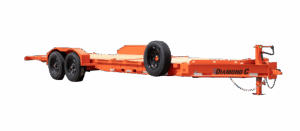
Load placement drives the result. Position equipment so the trailer develops adequate tongue weight without exceeding its Gross Vehicle Weight Rating, axle ratings, tire capacities, or the tow vehicle’s ratings. On a Diamond C LPX low-profile equipment trailer, for example, the machine should be positioned according to its center of gravity and verified axle and hitch loads, not simply pushed as far forward as possible. Attachments such as buckets, mowers, or counterweights can significantly change the balance. Cargo placed too far behind the axle group reduces tongue weight and increases sway risk, while cargo placed too far forward can overload the hitch and tow vehicle.
Gooseneck and fifth-wheel trailers use different geometry and commonly impose a higher percentage of their loaded weight on the truck than bumper-pull trailers. Always follow the manufacturer-specific loading instructions and verify pin or gooseneck load against the truck’s payload, rear-axle, tire, hitch, and Gross Vehicle Weight Rating limits.
2. Uneven or Shifting Loads
A load that starts reasonably balanced can shift in transit. Loose cargo, inadequately restrained equipment, liquids in partially filled containers, or a machine that was not centered from side to side can redistribute weight during braking, turning, or travel over rough pavement. Side-to-side imbalance can overload one tire or axle end even when the trailer’s total weight remains below its GVWR.
Walk around the trailer before departure and inspect it again after loading. A visibly low side is a warning, but appearance alone cannot prove that the axle loads are legal or safe. When the load is heavy or close to a rating, use a suitable scale to confirm the trailer’s total weight, axle-group load, tow-vehicle axle loads, and hitch load.
Use tie-down assemblies suited to the cargo and application, including properly rated chains, binders, straps, anchor points, and blocking where required. The working load limit of a securement system is not the same as its breaking strength. Inspect webbing for cuts, abrasion, chemical damage, heat damage, and failed stitching; inspect chains, hooks, binders, and anchor points for deformation, cracks, excessive wear, and improper repairs.
Recheck securement shortly after departure because tires can settle, suspension can compress, and straps or chains can lose tension. Commercial operators must follow the applicable federal and state cargo-securement inspection requirements, including the rules for the type of equipment being transported. Even when those commercial rules do not apply, an early reinspection and additional checks during the trip are sound practice.
3. Tire Pressure and Condition
Underinflated trailer tires can contribute to instability, excessive sidewall flex, heat buildup, irregular wear, and tire failure. Overinflation can also reduce performance and make a tire more vulnerable to impact damage. Trailer tires are available in many sizes, load ranges, constructions, and pressure ratings, so 65 or 80 PSI is not a universal target.
Inflate tires when cold to the pressure specified on the trailer’s certification or tire-information label, in the owner’s information, or by the trailer and tire manufacturer for the actual application. The pressure molded into the tire sidewall is generally the maximum cold inflation pressure associated with the tire’s stated maximum load; it is not automatically the correct pressure for every trailer. Never exceed the pressure rating of the tire, wheel, or valve stem.
Check all trailer tires with an accurate gauge before towing, including the spare. Confirm that every tire is the correct size and load capacity for the certified axle rating and that tires on the same axle are compatible. Inspect for tread separation, bulges, exposed cords, punctures, uneven wear, weather cracking, flat spotting, and damage around the bead or valve stem. Also verify wheel condition and lug-nut torque according to the trailer manufacturer’s procedure.
Tire age matters because deterioration can occur even when tread remains. The final four digits of a complete DOT Tire Identification Number identify the week and year of manufacture. A code ending in 1219 means the tire was manufactured during the 12th week of 2019. Age alone does not create one universal replacement date for every tire, but older tires deserve increasingly careful inspection. Follow the tire manufacturer’s age, inspection, and replacement guidance, and replace any tire showing damage or deterioration regardless of tread depth.
Do not overlook the tire’s speed rating. Many older Special Trailer tires were limited to lower sustained speeds, while many current ST tires carry explicit speed symbols. Operate no faster than the lowest-rated tire or towing component permits, and reduce speed further for heat, heavy loading, wind, rain, rough pavement, or other adverse conditions.
Other Factors Worth Checking
Speed is a factor many drivers underestimate. Sway susceptibility generally increases with speed, but there is no reliable rule that every bumper-pull trailer becomes unstable at 60 or 65 mph. A trailer that feels manageable at one speed can become unstable after a wind gust, lane change, downhill transition, or small steering correction. Slowing down is one of the most immediate ways to increase the stability margin.
Hitch condition also matters. The hitch ball must match the coupler’s specified diameter and have adequate capacity. The receiver, ball mount, hitch ball, coupler, pins, fasteners, and safety-chain attachments must all be properly installed, undamaged, and rated for the loaded trailer. A worn coupler, loose fastener, bent ball mount, cracked receiver, or excessive movement at the connection requires correction before towing.
The coupled trailer should normally ride level, unless its manufacturer specifies otherwise. Use a ball mount with the correct rise or drop and evaluate the trailer on level ground in its travel-ready condition. A visibly nose-high or nose-low tandem-axle trailer can distribute load unevenly between the axles and tires. Changing hitch height does not replace proper loading, and tongue weight should be measured rather than estimated from appearance.
Crosswinds and passing trucks create sudden lateral forces. A properly matched, maintained, and loaded rig should recover predictably from ordinary disturbances, although severe weather can overwhelm even a good setup. If passing semis or moderate wind gusts repeatedly initiate sway, reduce speed and stop to inspect the rig. Do not treat repeated sway as normal behavior that can be managed indefinitely with steering corrections.
The tow vehicle matters as much as the trailer. Wheelbase, curb weight, suspension, tire condition, payload, rear-axle capacity, receiver rating, and manufacturer tow rating all affect stability. A published maximum trailer rating does not mean the vehicle can tow every trailer of that weight under every loading condition. Passengers, cargo, aftermarket equipment, hitch hardware, and trailer tongue weight all consume vehicle payload and may cause a GVWR or axle-rating limit to be reached before the advertised maximum trailer weight.
Fixes That Actually Work
Weight Distribution Hitch
For compatible bumper-pull combinations, a properly selected and adjusted weight-distribution hitch can restore part of the load removed from the tow vehicle’s front axle when the trailer is coupled. Its spring bars transfer load through the hitch structure to the tow vehicle’s front axle and the trailer axles. This can improve steering response, braking balance, headlight aim, and overall control while reducing excessive rear suspension squat.
A weight-distribution hitch does not increase the tow vehicle’s GVWR, GCWR, payload, axle ratings, tire ratings, or maximum towing capacity. It also does not make incorrect tongue weight safe. Use one only when permitted by the tow vehicle, receiver, and trailer manufacturers, and follow their setup requirements. Some trailer frames, couplers, braking systems, and tow vehicles have special restrictions.
Select the system according to the trailer’s measured loaded tongue weight plus any applicable cargo carried behind the tow vehicle’s rear axle, using the hitch manufacturer’s instructions. A trailer with a 14,000-lb GVWR does not necessarily weigh 14,000 lb on every trip, and its required spring-bar rating cannot be chosen from GVWR alone. At the same time, a system must have enough capacity for the actual tongue load without exceeding the receiver or vehicle rating.
Manufacturers such as Andersen, Equal-i-zer, Reese, and others offer systems with different operating principles and capacities. Some integrate sway resistance or active sway-control geometry, while others require separate components. Correct installation and adjustment matter more than the brand name. After setup, verify tow-vehicle front and rear axle loads and trailer axle loads on a scale rather than judging the result only by fender height.
Friction Sway Control
A traditional friction sway-control unit mounts between the trailer A-frame and compatible hitch hardware. Its sliding friction mechanism resists relative movement between the trailer and tow vehicle. It can add damping to an otherwise properly matched and loaded combination, but it cannot correct inadequate tongue weight, overloaded components, damaged suspension, underinflated tires, or an undersized tow vehicle.
Compatibility and capacity depend on the manufacturer. Some conventional systems allow one friction control device, while certain applications use two; other weight-distribution designs use integrated four-point friction, cams, or different sway-control mechanisms. Follow the hitch manufacturer’s installation, adjustment, backing, lubrication, and severe-weather instructions. Do not assume that adding another friction bar automatically makes a heavier trailer safe.
If a bumper-pull trailer repeatedly sways despite correct measured weights, sound tires, proper alignment, and a properly adjusted hitch, stop towing until the complete combination has been inspected. Moving to a gooseneck or fifth-wheel connection may be appropriate for some heavy applications, but connection type does not excuse exceeding the truck or trailer ratings.
Electronic Trailer Brake Controller Tuning
If the trailer has electric or electric-over-hydraulic brakes, the controller must be compatible with the braking system and adjusted for the current load. Gain that is too low can let the trailer push the tow vehicle during braking. Gain that is too high can lock the trailer brakes or make stops abrupt. Follow the controller and trailer-brake manufacturers’ test procedures, usually beginning at low speed in a safe, traffic-free area and adjusting output until braking is firm and coordinated without wheel lockup.
The Tekonsha Prodigy P3 is a proportional controller that uses an inertial sensor to base output on tow-vehicle deceleration. By contrast, basic time-actuated controllers increase output according to elapsed time after the brake signal. Both types may include a manual control, but a manual control must be used smoothly and only when conditions permit. A controller’s manual trailer-brake application can help damp developing sway; applying the tow vehicle’s brakes abruptly can make an unstable event worse.
A conventional brake controller does not independently detect sway merely because it is proportional. Its primary job is to coordinate trailer braking with the driver-commanded stop. Dedicated electronic sway-control products and some factory stability systems use sensors and automatic interventions, but their capabilities and compatibility vary.
Many newer tow vehicles include trailer-sway mitigation within the electronic stability-control system. Depending on the vehicle, the system may reduce engine torque and selectively apply individual tow-vehicle brakes when it detects trailer-induced yaw. These systems are emergency aids, not substitutes for correct loading, adequate tongue weight, working trailer brakes, or a properly rated hitch. Consult the owner’s manual to understand how the system operates and whether any drive mode, trailer profile, or stability setting must be selected.
5th Wheel and Gooseneck Connections
If loads consistently approach the practical limits of bumper-pull towing, the correct solution may be a different trailer and connection type. Fifth-wheel and gooseneck hitches position the coupling in the pickup bed, near or slightly ahead of the rear axle as specified by the hitch and vehicle manufacturers, instead of behind the truck at the receiver. That geometry generally provides greater stability and capacity for heavy applications.
Compare complete ratings rather than isolated marketing numbers. A gooseneck hitch carrying a 30,000-lb rating does not make the truck or trailer a 30,000-lb-capable combination. The permitted load is limited by the lowest-rated relevant component and by the truck’s GVWR, rear GAWR, tire capacities, payload, GCWR, and towing instructions. Bed structure, installation hardware, safety-chain anchors, ball, coupler, and trailer ratings must also be adequate.
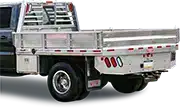
Diamond C offers FMAX gooseneck flatbeds in multiple current configurations for equipment, materials, hay, and other demanding loads. FMAX model ratings vary substantially by configuration, from approximately 15,500 lb up to 40,000 lb GVWR. Diamond C’s premium FMAX models use Lippert axles as standard and are built in Mt. Pleasant, Texas. Options and loading systems vary by model, axle package, deck length, and intended application, so the VIN certification label and current build specifications control.
Heavy-duty gooseneck flatbeds are also available from H&H and other manufacturers. If you regularly move heavy equipment, compare actual payload rather than GVWR alone. Payload equals the trailer’s allowable loaded weight minus its actual empty weight, and installed options, ramps, spare tires, toolboxes, and accessories can reduce usable cargo capacity.
A Quick Pre-Trip Checklist
- Measure conventional bumper-pull tongue weight and confirm the manufacturer-recommended percentage, commonly about 10% to 15% of actual loaded trailer weight
- Position cargo according to its center of gravity instead of automatically placing every heavy item as far forward as possible
- Confirm the load is balanced side to side and that no tire, wheel end, or axle is overloaded
- Secure cargo with properly rated tie-downs, anchor points, blocking, and binders suited to the load
- Inflate trailer tires cold to the pressure specified by the trailer or tire manufacturer, without exceeding tire, wheel, or valve limits
- Inspect tire condition, DOT date codes, tread, sidewalls, valve stems, wheels, and lug-nut torque
- Confirm the coupled trailer rides level unless the manufacturer specifies otherwise
- Verify the ball size matches the coupler and that the latch, pin, receiver, ball mount, and fasteners are secure
- Connect safety chains correctly, normally crossed beneath a bumper-pull tongue, with enough slack for turns but not enough to drag
- Attach the breakaway cable independently from the safety chains and confirm the breakaway battery and switch are functional
- Test running lights, turn signals, brake lights, clearance lights, trailer brakes, and the seven-way connection
- Set and test brake-controller gain for the current loaded condition
- Confirm the tow vehicle, hitch, trailer, axles, tires, and combination remain within every applicable rating
Run through this before every load, not just unfamiliar ones. Recheck the hitch, tires, and securement after the first portion of the trip and periodically thereafter. A familiar trailer on a familiar route is often where habits become sloppy. Sway does not care that you have made the drive a hundred times before.
One More Thing Worth Knowing
If you are shopping for a trailer and stability is a concern, frame design, tongue length, suspension, axle placement, tire specification, deck height, and intended load distribution all matter. Axles positioned farther rearward generally increase tongue weight for a given cargo position, but that is not automatically better; excessive hitch load can overload the tow vehicle. The manufacturer designs axle placement around the trailer’s intended loading envelope, and the correct choice depends on what you will carry and how its center of gravity sits on the deck.
Ask for the trailer’s GVWR, empty weight, available payload, axle ratings, tire capacities, coupler rating, brake type, deck dimensions, and loading-system specifications. Confirm those details on the certification label and current manufacturer documentation for the exact configuration. At Spencer Trailers, we carry Diamond C, H&H, Liberty, and other brands in configurations ranging from single-axle utility trailers to heavy equipment haulers, and we can help match the trailer to your tow vehicle, hitch, typical cargo, and operating conditions.
If you have experienced a sway event or want a second set of eyes on your hitch setup before a major haul, give us a call at (812) 829-0226. Bring the tow vehicle and, when practical, the trailer in its normal loaded configuration so the complete setup can be evaluated. We would rather spend 20 minutes checking the combination in the lot than have you troubleshoot it at highway speed on I-69. If you are still deciding on a trailer, take a look at what is recently sold to get a sense of the configurations local owners are using.
Get the loading, ratings, hitch, tires, brakes, and speed right, and you greatly reduce the chance that trailer sway will begin in the first place.


