













Pull up a VIN. Any VIN. Grab the one from the title of a trailer you’re about to buy, or copy the full number from a listing you’re considering. By the time you’re done with this walkthrough, you’ll understand what each section can tell you, what it cannot tell you, and which details must be verified on the trailer itself. You do not need a paid service for the basic identity checks.
This isn’t theory. We’re going to work through a current, valid trailer VIN character by character, explain where each lookup happens, and flag the exact points where you should pause and compare the result with the certification label, title, lien information, and seller’s paperwork. Keep a pen handy, and take clear photos of every VIN location before you pay.
The VIN We’re Decoding
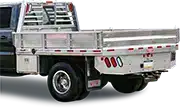
For this walkthrough, we’ll use a valid VIN from a 2026 Diamond C LPX207 equipment trailer listed by Spencer Trailers:
46U DE202 7 T 1 306408
(Shown with spaces for readability. The actual VIN has no spaces: 46UDE2027T1306408)
It contains 17 characters. It does not contain the letters I, O, or Q, which federal VIN rules exclude because they can be confused with the numerals 1 and 0. Before decoding anything, count the characters and confirm that you copied all 17 in the correct order.
Step 1: Decode Positions 1–3 (The WMI)
The first three characters form the World Manufacturer Identifier, commonly shortened to WMI. For a high-volume manufacturer, the complete three-character WMI identifies the manufacturer and the part of the world associated with that manufacturer. Do not try to identify a brand from positions two and three alone; all three characters work together.
Position 1 (Country or geographic area): Our VIN begins with 4. VINs beginning with 1, 4, or 5 are assigned within the United States. A first character of 2 is associated with Canada, while 3 is associated with Mexico. That tells us this VIN uses a U.S. WMI assignment, but you should still confirm the manufacturer’s registered name and location through the official database.
Positions 1–3 (Manufacturer): The complete WMI in this example is 46U. NHTSA’s manufacturer database identifies 46U with Diamond C Trailer Mfg. in Mount Pleasant, Texas. Diamond C has built trailers in Mount Pleasant since 1985, so the WMI, manufacturer name, and known production location are consistent with one another.
Other trailer manufacturers use their own registered WMIs. Similar-looking trailers do not share a WMI simply because they have the same body style, axle count, paint color, or coupler type. A flatbed, dump trailer, utility trailer, and enclosed trailer from four different manufacturers should each decode to the manufacturer that issued the VIN.
There is one important exception to the simple three-character explanation. Low-volume manufacturers use a special WMI structure in which position three is 9 and positions 12 through 14 complete the manufacturer identifier. Most buyers will not encounter that arrangement on a current mass-produced trailer, but it matters when reviewing specialty-built or limited-production equipment.
The practical lookup is the NHTSA vPIC decoder at vpic.nhtsa.dot.gov/decoder. Enter the full VIN for the most useful result. You can also search NHTSA’s Manufacturer Information Database when you want to confirm a WMI, the manufacturer’s legal name, or its reported location.
Write down the returned manufacturer name. In Step 6, you’ll compare it with the make or manufacturer shown on the title, manufacturer’s certificate of origin, registration, invoice, and physical certification label. Minor abbreviations can be legitimate, but the identities must be logically consistent.
Step 2: Read Positions 4–8 (The Vehicle Descriptor Section)
Characters 4 through 8 are the Vehicle Descriptor Section, or VDS. In our example, positions 4–8 are DE202. These characters are assigned according to the manufacturer’s own coding system, so there is no universal character-by-character key that applies to every trailer brand.
Federal VIN rules require trailer manufacturers to make several trailer attributes decipherable through their VIN coding and to submit their decoding information to NHTSA. For trailers, those attributes include the make, trailer type, body type, length, and axle configuration. The exact arrangement of those attributes within positions 4–8 is determined by the manufacturer.
That distinction matters because the VDS should not be treated as a universal specification sheet. Federal rules do not require every trailer VDS to reveal the exact GVWR, axle brand, individual axle rating, brake type, frame dimensions, suspension package, coupler rating, ramp system, hydraulic hoist, tire size, or optional equipment. A manufacturer may encode additional information, but you should not assume that it does unless you have that manufacturer’s current decoding guide.
In this example, the VIN-specific dealer record identifies the trailer as a 2026 Diamond C LPX207, 82 inches wide and 20 feet long, with a listed GVWR of 14,900 pounds. Those exact specifications come from the build and inventory record and must be confirmed on the physical trailer. They should not be reverse-engineered from DE202 by guessing what each character means.
What you can practically verify from this section, when the manufacturer’s data is available, includes:
- The trailer make and general trailer type
- The body configuration, such as equipment, utility, dump, flatbed, deck-over, or enclosed
- The nominal trailer length used in the manufacturer’s coding system
- The axle configuration encoded by the manufacturer
- Whether the decoded description is consistent with the trailer standing in front of you
Run the full VIN through vPIC, but understand that the amount of detail returned depends on the information submitted by the manufacturer and the structure of that manufacturer’s VIN schema. If vPIC returns only a partial description, contact the manufacturer or an authorized dealer with the complete VIN and ask for the original build configuration.
If the decoder describes a different body type, length range, or axle configuration from the physical trailer, stop and investigate. The cause might be a transcription error, a database limitation, a replaced component, an incorrectly issued document, or an altered identity. Do not decide which explanation applies until the physical VIN and paperwork have been checked together.
Step 3: Verify Position 9 (The Check Digit)
Position 9 is the check digit. It can be a numeral from 0 through 9 or the letter X. Its purpose is to detect many copying errors and invalid VIN combinations. In our example, position 9 is 7.
The check digit is calculated from all 17 VIN positions. Each letter is converted using the official federal transliteration table, while numerals keep their numeric value. Do not use a simple alphabetical sequence; the official values are specific. Each converted value is multiplied by the positional weight:
8, 7, 6, 5, 4, 3, 2, 10, 0, 9, 8, 7, 6, 5, 4, 3, 2
The ninth position carries a weight of zero because that is the value being tested. Add all the products and divide the total by 11. The remainder becomes the check digit. If the remainder is 10, the check digit is X.
For 46UDE2027T1306408, the weighted products total 282. Dividing 282 by 11 leaves a remainder of 7, which matches the character in position 9. That confirms the sample is internally consistent under the federal check-digit formula.
A failed check-digit calculation does not, by itself, prove fraud. First check for a mistyped character, a missing digit, or a visual mix-up such as B versus 8, S versus 5, G versus 6, or Z versus 2. Compare your entry with a clear photo of the VIN label and with the title. If the number was copied correctly and still fails, stop the transaction until the manufacturer, issuing state, or appropriate law-enforcement authority confirms the trailer’s identity.
NHTSA’s vPIC decoder should still be part of your process because it checks the VIN against manufacturer-submitted data and may return error information. However, do not treat a decoder page that produces limited results as proof that the check digit is valid. The manual calculation, an official VIN-validation process, or confirmation from the manufacturer gives you a separate verification point.
Step 4: Decode Position 10 (The Model Year)
Position 10 in our VIN is T. This is the model-year code, and it is one of the most useful characters for comparing the trailer with its title and sales paperwork.
The code follows a federally defined sequence of letters and numbers. The letters I, O, Q, U, and Z are not used as model-year codes. The sequence repeats every 30 years, so the position-10 character must be interpreted together with the trailer’s apparent age, manufacturing date, documentation, WMI, and manufacturer records.
Here’s the current portion of the cycle:
| Code | Model Year | Code | Model Year |
|---|---|---|---|
| L | 2020 | S | 2025 |
| M | 2021 | T | 2026 |
| N | 2022 | V | 2027 |
| P | 2023 | W | 2028 |
| R | 2024 | X | 2029 |
For our sample, T means model year 2026. Write that down and compare it with the title, manufacturer’s certificate of origin if available, dealer invoice, registration, and listing. All of those records should identify the trailer as a 2026 model unless an issuing agency has documented and corrected an earlier clerical error.
If the title says 2025 while position 10 decodes to 2026, do not accept a verbal explanation and promise to fix it later. Ask the titled owner or dealer to resolve the discrepancy with the issuing authority before the sale is completed. A title-year error can affect registration, financing, insurance, resale, warranty processing, and the ability to prove which trailer you legally own.
The model year is not necessarily the same as the calendar year in which the trailer was physically completed. A manufacturer can begin producing the next model year during the preceding calendar year. For example, a trailer carrying a 2026 model-year code may have a late-2025 manufacture date. That difference can be legitimate. What matters is that the VIN model year, the manufacturer’s certification, and the ownership documents are consistent.
Do not rely on a claimed universal rule that a model year can be a specific number of months ahead of the build date. The safer check is the actual month and year of manufacture printed on the federal certification label, followed by confirmation from the manufacturer when the timing appears unusual.
Step 5: Read Position 11 and Positions 12–17 (Plant and Serial)
Position 11 in our VIN is 1. This is the plant code. Plant-code meanings are manufacturer-specific, so the same character can mean different facilities for different brands. NHTSA’s decoder may display the plant city, state, or country when the manufacturer has supplied that information in a form the system can return.
You generally do not need to translate the plant code to make an ordinary purchase decision. It becomes more useful when confirming an original build record, investigating a recall, ordering VIN-specific replacement components, checking warranty eligibility, or separating trailers built at different production facilities.
Positions 12–17 in our sample are 306408. For a high-volume manufacturer using the standard structure, these positions form the sequential production portion of the VIN. Combined with the WMI, descriptor section, check digit, model year, and plant code, they identify this individual trailer.
Remember the low-volume-manufacturer exception discussed earlier. When position three is 9, positions 12 through 14 can be part of the extended WMI, leaving positions 15 through 17 as the sequential portion. That is why you should interpret the final six characters only after identifying the VIN structure.
What should you do with the serial portion? Compare it character by character across every available source:
Physical certification label, any secondary factory VIN marking, title, registration, manufacturer’s certificate of origin, bill of sale, lender paperwork, insurance documents, dealer invoice, and online listing.
Do not compare only the last four digits. A transposed or mistyped character anywhere in the VIN can prevent registration or create a future ownership dispute. If the title contains a clerical error, the titled owner should complete the issuing state’s correction process before transferring the trailer to you.
Step 6: Cross-Check Against the Physical Title
Now you have the basic decode. Run the following checklist against the paper title, or against the official electronic-title record and transfer documents when an electronic title is being used. Indiana began offering an electronic-title option on July 1, 2025, but an electronic record does not eliminate the need to verify the physical trailer.
- All 17 characters match exactly. Compare the physical certification label with the title, registration, bill of sale, invoice, and any manufacturer’s certificate of origin. Read the VIN from left to right and then right to left. Pay particular attention to B and 8, S and 5, G and 6, and Z and 2.
- The model year matches the position-10 decode. In our example, the title and sale documents should identify a 2026 model. Also check the manufacture month and year on the certification label so that the production timeline makes sense.
- The titled make is consistent with the WMI. The title may use an abbreviation, trade name, or shortened legal name, while NHTSA may display the manufacturer’s full registered name. Those variations can be legitimate, but a WMI assigned to one company should not accompany paperwork identifying an unrelated manufacturer.
- The physical configuration matches the records. Compare trailer type, body style, nominal length, axle count, and any weight data printed on the title, registration, certificate of origin, build sheet, or invoice. Do not reject a title solely because it does not display the exact GVWR; use the federal certification label for the manufacturer’s official GVWR and GAWR.
- The seller is legally authorized to transfer ownership. The seller should be the titled owner or an authorized signer acting through valid documentation. Do not accept an open title, an unsigned reassignment, or an undocumented series of private sales. A bill of sale does not automatically cure a broken title chain.
- Every lien has been released. If a lienholder appears on the title or electronic title record, require an accepted lien release before completing the purchase. In Indiana, an electronic lien is generally released through the electronic system, while a paper-title lien may require the lienholder’s release on the title or separate lien-release documentation.
Run all six checks. Every one of them. A clean-looking trailer can still have an incorrect title, cloned VIN, unresolved lien, or documentation carried over from a different unit. Appearance, paint, deck condition, matching wheels, and a professional-looking bill of sale are not substitutes for identity verification.
A mismatch is not automatically proof of criminal activity. Clerical errors happen, especially when a VIN is handwritten or manually entered. The correct response is still the same: pause the transaction and require a documented correction. Do not take possession and assume the BMV, lender, insurer, or next buyer will accept an explanation later.
Step 7: Run the Free Online Decoders
Manual decoding helps you understand the VIN’s structure. Online databases answer separate questions about manufacturer-submitted data, recalls, theft reports, and insurance-reported salvage history. No single free search proves that a trailer has a clean title or a problem-free history, so use the tools together.
NHTSA vPIC Decoder
Go to vpic.nhtsa.dot.gov/decoder. Paste the complete 17-character VIN and run the decode. The tool can return the registered manufacturer, model year, trailer attributes supplied through the manufacturer’s VIN-decoding submission, plant information when available, and diagnostic messages when the VIN cannot be interpreted normally.
Do not expect every field to be populated. Trailer manufacturers differ in how much data their submitted schema makes available, and older records can be less complete than current records. A blank model, body class, or plant field does not automatically invalidate the VIN. It means you need to compare the physical label and obtain the original build information from the manufacturer or dealer.
Also understand that vPIC is a VIN-decoding system, not a complete title-history, accident-history, theft, lien, or maintenance database. It tells you what the VIN is structured to represent. It does not prove that the physical trailer has never been rebuilt, stolen, damaged, or modified.
Safety recalls are checked separately at nhtsa.gov/recalls. Enter the VIN there and review any unrepaired safety recalls returned by the system. A no-recall result is useful but not conclusive because the lookup does not display every possible historical campaign, including certain older, repaired, newly announced, or small-manufacturer recalls. You can also search NHTSA recall records by manufacturer and contact the trailer manufacturer with the VIN.
NICB VINCheck
Go to nicb.org/vincheck. NICB currently allows up to five searches within a 24-hour period from one IP address. The service checks participating insurance-company records for vehicles reported stolen and not recovered, as well as certain salvage and flood records reported by participating insurers.
NICB clearly describes VINCheck as a limited tool, not a comprehensive vehicle-history report. It does not contain every theft, every police report, every uninsured loss, every lien, every repair, every state title action, or every insurer’s data. A clean VINCheck result should be treated as one favorable data point, not as a guarantee that the trailer is safe to buy.
Be careful with recommendations to buy an NMVTIS report for an ordinary trailer. The U.S. Department of Justice’s NMVTIS documentation excludes trailers and semi-trailers from the vehicles required to be reported to that system. A commercial provider may offer a report containing information from other sources, but buyers should not assume that an NMVTIS-branded search will provide a complete multi-state trailer title history.
For a used trailer, especially one being sold across state lines, strengthen the check by reviewing the original title, asking the issuing motor-vehicle agency what title-verification options are available, obtaining a lien release, confirming the VIN with the manufacturer, reviewing NICB and NHTSA records, and contacting law enforcement if the VIN label appears altered or the trailer is reported stolen. When a trailer has a salvage, rebuilt, flood, or other title brand, make sure that brand is properly disclosed and carried forward by the issuing state.
What the Certification Label Adds (and Why the VIN Doesn’t Replace It)
The VIN identifies the trailer and encodes certain manufacturer-defined characteristics, but it is not a substitute for the federal certification label. For a trailer, that label is generally located on the forward half of the left side in a position where it can be read from outside. Depending on the trailer’s construction, it may be attached to the tongue, left frame rail, gooseneck structure, or another compliant forward-left location.
The certification label includes critical information such as the manufacturer’s name, month and year of manufacture, GVWR, GAWR for each axle system, VIN, vehicle type, and the manufacturer’s statement that the trailer conforms to applicable federal safety standards in effect on the stated manufacture date. Tire, rim, and recommended inflation information may appear on the same label or an associated tire-information label.
The exact GVWR is especially important. Federal VIN rules do not require a trailer’s positions 4–8 to function as a universal GVWR-class code. The official on-trailer rating comes from the manufacturer’s certification label and supporting records. For the VIN in this walkthrough, Spencer Trailers’ VIN-specific listing identifies a GVWR of 14,900 pounds, but a buyer should still confirm that number on the physical certification label before accepting the trailer.
Do not estimate GVWR by adding the apparent axle capacities. The certified GVWR can be limited by the frame, coupler, suspension, tires, wheels, brakes, safety components, or the manufacturer’s overall design rating. Two trailers with similar-looking axles can have different certified GVWRs.
Also distinguish GVWR from payload. GVWR is the maximum allowable loaded weight of the trailer as certified by the manufacturer. Available payload is generally the GVWR minus the trailer’s actual unloaded weight as equipped. Added toolboxes, spare tires, ramps, winches, batteries, hydraulic equipment, decking changes, and other installed equipment reduce the remaining cargo capacity.
Compare the VIN printed on the certification label with the title and every other record. Look for evidence that the label has been removed, painted over, cut around, reattached, covered with a second label, or printed with inconsistent fonts and spacing. Normal wear is possible, but an unreadable, missing, or suspicious label should be resolved before purchase.
Always verify both the VIN decode and the certification label. They are not redundant. The VIN establishes identity and certain coded attributes; the label supplies the manufacturer’s exact certified ratings and production information.
One More Thing Before You Sign
If any step in this walkthrough produces a mismatch, don’t sign and plan to sort it out later. Sorting it out after payment can mean title-correction forms, inspections, manufacturer affidavits, lien disputes, registration delays, insurance problems, or involvement from law enforcement. In the worst case, a stolen or improperly identified trailer can be seized even though the buyer paid in good faith.
Some mismatches are ordinary clerical errors. Others involve title jumping, an unresolved lien, a replaced certification label, a cloned VIN, or deliberate fraud. You do not need to diagnose the cause in the seller’s driveway. You only need to refuse to complete the transaction until the issuing authority, manufacturer, lienholder, or titled owner provides documentation that resolves it.
A seller who refuses to let you write down the complete VIN, photograph the certification label, compare the title, or pause while you run the free checks is giving you useful information. That is not a minor inconvenience or a negotiating tactic. It is a reason to walk away.
After a legitimate Indiana purchase, do not leave the signed paperwork in a drawer. Indiana generally requires the buyer to apply for title within 45 days of acquiring the vehicle, and a late title application can trigger a $30 administrative penalty. Registration requirements also apply, so confirm the current BMV documents, fees, and deadlines for your transaction.
If you want to see what a clean title, valid VIN, matching certification label, and VIN-specific manufacturer paperwork look like on a Diamond C, H&H, Liberty, Legend, or Wells Cargo trailer, come by the lot at 291 West State Hwy 46 in Spencer. We maintain the available manufacturer and sales documentation for every unit we offer. Check our current trailer inventory or recently sold trailers to see what’s moved through recently. Questions about a specific VIN or a used trailer you’re considering? Call (812) 829-0226 and we’ll take a look with you.


