









Your trailer is sitting in a dark lot overnight. You wake up and it is gone. At that point, a $30-a-month tracking subscription can feel like the best money you ever spent. Without a working tracker, you are filing a police report, contacting your insurance company, and hoping somebody spots the trailer before it is unloaded, altered, or moved farther away.
GPS tracking for trailers has become a practical option for individual owners and commercial fleets, but the label on the box does not tell the whole story. Update frequency, cellular coverage, power source, battery capacity, installation location, weather resistance, and subscription terms all affect whether a tracker will be useful when you actually need it. Choosing the wrong type can leave you with a dead battery, delayed location reports, or a device that cannot communicate from where it was installed.
It is also important to distinguish a cellular GPS tracker from a Bluetooth finding tag. Devices such as an AirTag rely on nearby compatible phones to report an approximate location through a crowdsourced network. They do not provide independent cellular GPS reporting, and built-in unwanted-tracking alerts may notify a person transporting the tag. A Bluetooth tag can be an inexpensive secondary layer, but it should not replace a purpose-built cellular tracker on a high-value trailer.
Here is what you actually need to know.
Hardwired vs. Battery-Powered: Pick One Based on Your Situation
The first decision is the power source, and it matters more than the brand name printed on the device.
Hardwired trackers connect to a properly fused 12V power source and ground. On a trailer, that may be an onboard accessory, hydraulic, house, or dedicated tracking battery. Some commercial gateways can also draw power from the auxiliary circuit in the trailer’s 7-way connection while the tow vehicle is connected. However, a 7-way connection does not provide unattended power after the trailer is unplugged unless the tracker has its own backup battery or another trailer-mounted power source. The tow vehicle’s auxiliary circuit may also be switched, disabled, or configured differently from one truck to another.
A hardwired tracker can report frequently while power is available and may keep its internal backup battery charged during normal use. Installation time depends on the trailer, the device, cable routing, weather sealing, and whether an onboard battery already exists. The connection should include the correct fuse, secure ground, protected wiring, and any low-voltage cutoff recommended by the tracker manufacturer. Do not compromise the trailer’s breakaway-brake circuit or rely on its small emergency battery as a general accessory power supply.
Hardwired units work well on enclosed cargo trailers, dump trailers with hydraulic battery systems, refrigerated trailers, and equipment trailers that are connected to a tow vehicle regularly. They are not literally impossible to disable. A thief may disconnect the trailer, remove a visible device, cut exposed wiring, or park the trailer where cellular service is unavailable. A unit with an internal backup battery and power-loss alert provides better protection than a tracker that stops the moment outside power disappears.
Battery-powered trackers are self-contained and can be installed without tapping into the trailer’s wiring. Battery life varies dramatically. Small rechargeable consumer trackers commonly provide days or weeks of active movement reporting, not multiple years of second-by-second tracking. Rugged asset trackers with larger primary batteries can operate for months or years, but the longest estimates normally assume infrequent scheduled check-ins, limited movement, and a low-power sleep mode. Solar-assisted units can extend service intervals when they receive enough sunlight.
Faster reporting consumes more energy. A tracker that checks in every 10 seconds while moving will require charging or battery replacement much sooner than one that reports every few minutes or only a few times per day. When comparing battery claims, find out the exact reporting schedule used for the estimate, how many hours of movement were assumed, how the device behaves during theft-mode tracking, and how cold weather affects the battery.
Placement matters as much as battery size. The device needs to receive satellite signals and transmit over a cellular network. Do not seal a portable tracker completely inside a steel frame tube, metal toolbox, or other metal enclosure. Those locations can block both GPS and cellular signals. A concealed exterior location, weatherproof compartment, plastic housing, fender area, or underbody mounting point may work, but the tracker should be tested in its final position before you depend on it. Confirm that the device cannot fall off, be struck by road debris, collect water, or interfere with wiring, brakes, suspension, ramps, or moving parts.
Some owners use two independent devices: a powered primary tracker for frequent reporting and a concealed battery-powered backup with a separate power source. That arrangement provides redundancy if one unit loses power, is discovered, or stops communicating. It is most useful when the two devices do not share the same obvious mounting location or single point of failure.
How Theft Recovery Actually Works
A cellular trailer tracker normally obtains its position from GPS or another satellite-navigation system and then sends that location to the provider’s platform over a cellular data network. Current devices may use LTE-M, also called Cat-M1, LTE Cat-1, or another supported 4G service. GPS reception and cellular communication are separate: the device may calculate a location without cellular service, but it cannot immediately send that information to your phone until it reconnects.
Reporting intervals vary by device, power state, subscription plan, and cellular conditions. A powered tracker may update every few seconds or every minute while moving. An unpowered asset tracker may report less frequently when parked and switch to a faster schedule after motion is detected. Coverage in the United States does not automatically mean the device will work throughout Canada. Cross-border use depends on the provider’s plan, roaming agreements, supported frequencies, and service terms.
When the trailer leaves an authorized area, the app may send a push notification, text message, email, or dashboard alert. You can then review the device’s latest location, direction of travel, timestamps, and trip history. If the movement appears unauthorized, contact law enforcement and explain that you have an active location-tracking device on the stolen trailer. Do not follow, confront, block, or attempt to recover the trailer yourself.
Give the investigating agency the trailer’s VIN, license plate, description, tracker location, time of the last update, direction of travel, and a shareable map link if the platform provides one. A current location can improve the information available to law enforcement, but no tracker guarantees recovery. Cellular dead zones, underground structures, enclosed metal buildings, damaged antennas, battery failure, signal jamming, device removal, and delayed reporting can all interrupt tracking.
A few things that help recovery:
- Set a geofence, which is a virtual boundary around the trailer’s normal parking location. An alert is generated after the platform receives a qualifying location outside the boundary. That may happen quickly, but it is not necessarily instantaneous.
- Enable push notifications, text alerts, or email alerts for movement, geofence exits, low battery, and external power loss. On Android devices, confirm that battery optimization is not delaying the tracking app. On an iPhone, allow notifications and enable time-sensitive or critical alerts when the provider supports them.
- Keep the trailer’s VIN, license plate number, registration, title information, photographs, purchase documents, and insurance details in a location you can access without the trailer. Photograph permanent identifying marks, weld patterns, damage, accessories, toolboxes, ramps, decals, and modifications.
- Test the tracker before relying on it. Tow the trailer out of the geofence, verify that alerts arrive, confirm that the map updates during movement, and check whether the device still communicates when the trailer is parked in its normal location.
- Some providers offer stolen-asset support or assistance sharing information with law enforcement. Verify exactly what the service includes, when it is staffed, whether you must file a police report first, and whether the provider contacts an agency or only assists the account holder.
Geofencing: The Feature Most People Underuse
Geofencing is useful for more than theft protection. Set a fence around a job site and you can see when an equipment trailer arrives or leaves. Set one around your storage yard and receive an alert when a trailer moves after hours. A landscaping, construction, rental, or service business can also use arrival and departure records to confirm which trailer was sent to a particular job.
Geofence tools differ by platform. Many consumer systems use a circular radius around an address or map point. Fleet platforms are more likely to support custom polygons that follow an irregular lot, yard, customer property, or job-site boundary. Do not assume polygon fences, multiple zones, scheduled alerts, or unlimited saved locations are included with every subscription.
The smallest possible fence is not always the best fence. GPS accuracy changes with antenna placement, nearby buildings, tree cover, weather, and whether the trailer is inside or beside a metal structure. A fence drawn directly against the trailer’s parking space can generate nuisance alerts when the reported position shifts slightly. Start with a practical radius, often a few hundred feet, and test it. Increase the boundary where necessary without making it so large that a stolen trailer can travel a meaningful distance before crossing it.
Some platforms also support time-based rules such as, “Alert me if this trailer moves between 9 p.m. and 6 a.m.” That lets normal daytime hauling continue without repeated notifications while still flagging after-hours movement. Other systems handle this through notification schedules, authorized-use windows, or separate geofences. Check the actual app before buying if scheduled alerts are important to your operation.
Review your alert settings after changing storage locations. An old geofence around last month’s job site will not help when the trailer is now parked at your shop. Fleet owners should assign responsibility for checking device batteries, correcting trailer names, updating zones, and responding to alerts so that everyone does not assume somebody else is watching.
Fleet Management: When One Trailer Becomes Ten
If you run more than two or three trailers, the calculation changes. You are not only managing theft risk. You are managing utilization, dwell time, dispatch, inspections, maintenance, and accountability. A trailer that has been sitting unused for three weeks may be available for another crew, overdue for service, or parked at a location nobody remembered to document.
Fleet-grade platforms such as Samsara, Verizon Connect, and Motive offer trailer or asset tracking alongside vehicle telematics. Available hardware may include powered gateways, battery-powered units, solar trackers, trailer-connector cables, and optional sensors. Features and reporting intervals depend on the selected device, license, installation, and whether the trailer is receiving external power.
These platforms commonly include:
- Location and trip history showing departures, arrivals, routes, stop locations, and timestamps
- Dwell-time and utilization reports that help identify trailers sitting unused or remaining too long at a customer location
- Maintenance and inspection reminders based on dates, reported movement, mileage estimates, or other configured criteria
- Multi-user access, trailer assignments, groups, and role-based permissions
- Alerts for geofence activity, unauthorized movement, low battery, power loss, or a device that has stopped checking in
- Integrations or application-programming interfaces for dispatch, maintenance, rental, inventory, and other business systems
Samsara, for example, offers powered asset gateways for trailers along with optional wireless door, cargo, and environmental sensors. A door sensor can report open and closed events. A cargo sensor can indicate the presence or absence of cargo in an enclosed space; it does not weigh the load or calculate the trailer’s payload. Environmental and reefer integrations may provide temperature or refrigeration-system information when the correct hardware, gateway, and license are installed. Pricing is generally quote-based and depends on the fleet configuration.
Motive offers powered, battery, and solar asset-gateway configurations. Some installations can provide minute-by-minute tracking while connected to powered equipment and then fall back to scheduled battery-powered check-ins after the trailer is disconnected. Verizon Connect also offers powered and non-powered asset tracking for trailers, construction equipment, containers, and other mobile assets. Confirm the exact behavior of the proposed hardware instead of assuming every device in a fleet platform reports at the same interval.
For smaller operations with two to ten trailers, portable consumer trackers such as the LandAirSea 54 or Optimus 2.0 may provide enough location history, movement alerts, and geofencing without a full fleet-management contract. These units still require battery management and a tested installation location. Their fast-update settings can reduce battery life substantially.
Bouncie is primarily an OBD-II vehicle tracker. It can be adapted to equipment that provides the required constant power and ground, but it is generally more straightforward for tracking the tow vehicle than an unpowered trailer. When evaluating any consumer device, make sure it is designed for the trailer’s available power source, exposure to weather, and expected time between service visits.
Subscription Costs: What to Budget
| Tier | Typical Monthly Cost | Update Interval | Best For |
|---|---|---|---|
| Portable consumer | $15-$25/month | About 30 seconds to 3 minutes while moving, depending on plan and settings | One or two personal trailers with regular battery checks |
| Fast-update consumer | $30-$50/month | Approximately 3-30 seconds while moving on supported plans | Owners prioritizing detailed routes and faster theft alerts |
| Fleet or asset platform | Quote-based; often $15-$60+ per asset/month | Near-real-time when powered or moving; scheduled intervals in low-power mode | Commercial operations needing utilization, sensors, permissions, and reporting |
These are planning ranges, not guaranteed prices. Providers frequently change hardware promotions, activation charges, data plans, update intervals, contract terms, and multi-unit discounts. Faster updates may cost more or shorten battery life even when the subscription price stays the same.
Portable tracker hardware may cost roughly $15-$100, while rugged gateways, high-capacity battery units, solar trackers, wiring kits, mounting hardware, and sensor packages can cost several hundred dollars per asset. Commercial providers may include the hardware in a multi-year agreement, charge for installation, or require the equipment to be returned when service ends.
Calculate the complete cost over the period you expect to own the trailer. A $50 device with a $19.95 monthly subscription costs $768.20 over three years before taxes or accessories. An $80 device with a $29.95 monthly subscription costs $1,158.20 over the same period. Compare activation fees, annual discounts, cancellation penalties, hardware ownership, replacement warranties, data retention, additional-user charges, sensor licenses, and the cost of changing carriers or platforms.
Annual and multi-year discounts are common, but the amount varies. Before committing, test cellular coverage at your yard and typical job sites, confirm that alerts reach every required user, and verify the real battery life at your chosen update frequency. A cheaper contract is not a bargain if the platform cannot reliably report from the places where your trailer spends most of its time.
What to Look For in a Tracker
A quick checklist before you buy:
- Network coverage: Review the provider’s current coverage information for your home, storage yard, job sites, and normal routes. Ask which cellular network the device uses, whether it can roam, and whether Canada or other cross-border coverage is included. No carrier is strongest in every rural area.
- Power and battery behavior: Find out how the device reports while powered, disconnected, moving, and parked. For a battery unit, compare active movement hours and reporting frequency rather than relying only on the longest advertised standby estimate.
- Weather and impact protection: Exterior trailer environments are wet, dirty, hot, cold, and exposed to vibration. IP67 is a useful benchmark for many exterior installations, but it indicates protection under specific laboratory conditions. It does not mean unlimited submersion, direct pressure washing, or protection from an incorrect mounting location.
- Installation and signal quality: The tracker must be concealed without being completely shielded by metal. Confirm antenna orientation, mounting requirements, cable protection, fuse size, voltage range, and whether professional installation is recommended. Test GPS and cellular performance after the final installation.
- App and alert reliability: Read recent app reviews, not only hardware reviews. Check how quickly alerts arrive, whether multiple people can receive them, whether a browser dashboard is available, and how long location history is retained.
- Geofence, motion, tamper, and power alerts: Geofence and movement notifications should be basic requirements. For hardwired devices, look for external-power-loss and backup-battery alerts. For portable devices, require low-battery warnings that arrive early enough for you to act.
- Contract and data terms: Confirm cancellation rules, activation fees, annual commitments, hardware warranties, ownership of the device, downloadable history, privacy controls, and what happens to the account if a payment fails during a theft investigation.
Pairing a Tracker with the Right Trailer
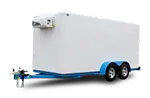
The value of tracking scales with the value of the trailer, the cargo, and the work that stops when the equipment disappears. A cargo trailer carrying $40,000 in tools deserves more than an inexpensive tag. A properly installed powered tracker with an internal backup battery, plus an independently powered secondary device, provides stronger coverage. A refrigerated trailer may also need compatible temperature, door, and reefer-status monitoring to protect the product as well as the trailer.
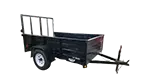
A small utility trailer used for weekend lawn equipment may be adequately covered by a basic battery-powered cellular tracker, provided the owner charges it, tests it, and enables movement alerts. A trailer stored for months at a remote property may be better suited to a long-life asset tracker or solar-assisted device that sacrifices second-by-second reporting for dependable unattended operation.
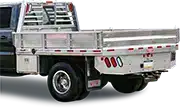
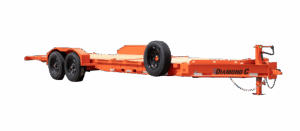
Diamond C and H&H trailers, both brands we carry, are offered in several trailer types and GVWR classes. Diamond C’s current lineup extends from the 6,000 lb GVWR GST single-axle telescopic dump trailer to commercial FMAX gooseneck flatbeds available at GVWRs up to 40,000 lb, depending on the model and configuration. Heavy-duty Diamond C models such as the LPX equipment trailer, HDT hydraulically dampened tilt trailer, and LPT telescopic dump trailer are available in multiple GVWR packages, commonly from 15,500 to 24,000 lb. Current specifications, options, and inventory should always be confirmed for the individual trailer.
A 25,000 lb GVWR Diamond C FMAX210 disappearing overnight is not only a major equipment loss. It can stop a crew, delay deliveries, strand machinery, create rental expenses, and disrupt several scheduled jobs. That business impact can make a commercial tracking subscription, backup device, and professional installation inexpensive compared with even one day of avoidable downtime.
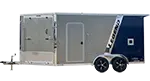
For enclosed trailers from brands such as Wells Cargo and Darkhorse, the contents are not visible from outside, so an owner may not immediately know whether the trailer is empty or carrying a full set of tools and materials. A tracker is especially valuable on those units, but the metal body also makes installation testing important. The device needs a location that is discreet and protected without blocking its satellite and cellular signals.
Tracking should be one part of a layered security plan. Use an appropriate coupler or gooseneck lock, consider a wheel lock, remove keys and remotes, park in a well-lit or controlled area, document the VIN, keep insurance current, and avoid leaving the trailer positioned for an easy straight-line hookup. No single lock or tracker can prevent every theft attempt.
If you are buying a trailer and want to talk through which models make sense with a tracking setup already in mind, reach out to our team at (812) 829-0226. And if you want to see what is currently on the lot, browse our inventory before you come out. Knowing what you want before you arrive saves everyone time.
The right tracker does not change what you haul, and it does not replace locks, insurance, or good parking practices. It gives you an earlier warning, a current location when conditions allow, and better information to provide law enforcement if something goes wrong at 2 a.m. That is an affordable layer of confidence for a trailer and cargo in which you have invested real money.


