












The Friday before Memorial Day can put an unusually dense mix of traffic on Indiana roads. Families are leaving town, construction traffic is still moving, and many boats, ATVs, side-by-sides, motorcycles, campers, and utility trailers are making their first long trip after sitting through winter.
If you’re hauling recreational equipment this weekend, a careful inspection before departure can make the difference between reaching the lake safely and spending the afternoon on the shoulder with damaged equipment, a blown tire, or an expensive tow bill.
The Pre-Trip Check You Can’t Skip
Spend at least 20 minutes inspecting the complete towing combination before you load the family and leave. Do not treat this as a quick walk-around after the truck is already running. Here is what matters most:
- Coupler and hitch ball. Confirm that the hitch ball size stamped on the ball matches the size marked on the trailer coupler. A 2-inch ball can sometimes appear to latch beneath a 2 5/16-inch coupler, but the connection is dangerously loose and can separate under load. Check the weight ratings of the ball, ball mount, receiver, coupler, and hitch pin as well. The lowest-rated component limits the connection.
- Safety chains. On a conventional bumper-pull trailer, cross the chains beneath the tongue when the trailer and chain design permit it. Attach them to the tow vehicle’s dedicated safety-chain loops, not to the hitch ball or a removable part of the ball mount. Leave enough slack for a full turn without allowing the chains to drag. Gooseneck safety chains should be attached to the approved anchors in the truck bed.
- Electric brakes. Test the brake controller with the trailer connected by using its manual control during a slow, controlled roll. Do not unplug the trailer connector to test the brakes because unplugging it removes normal brake-controller power. Test the breakaway system separately by confirming that its battery is charged, briefly pulling the breakaway pin, and verifying that the trailer brakes hold. Reinsert the pin immediately after the test. In Indiana, a trailer or semitrailer with a gross weight of at least 3,000 pounds must have brakes that can be controlled from the cab and applied automatically during an accidental breakaway.
- Lights. Have someone walk around the trailer while you test the running lights, brake lights, turn signals, hazard lights, clearance lights, and license-plate light. Inspect the plug and cable for corrosion, crushed terminals, or wiring that can contact the road. Confirm that reflectors and conspicuity tape, when equipped, are clean and visible.
- Wheel nuts/lug nuts. Use a calibrated torque wrench and the torque specification supplied by the trailer or wheel manufacturer. A breaker bar can tighten a loose nut, but it cannot confirm the correct torque and can easily overtighten wheel hardware. Tighten in the recommended sequence and recheck after wheel installation, tire service, or the first miles on a new trailer.
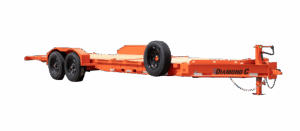
If you’re running a Diamond C FMAX gooseneck, inspect the gooseneck ball coupler, latch, locking pin, safety chains, jack legs, electrical cord, breakaway cable, and bed-mounted hitch hardware before loading. Current FMAX flatbed goosenecks use Lippert axles and are available in multiple configurations ranging from single-wheel models through heavy tandem-dual and triple-dual packages. If the trailer has MAX Ramps, XDR Ramps, a straight-deck ramp system, or a hydraulic dovetail, verify that every ramp, transport latch, spring, pin, and hydraulic component is fully secured. On an H&H tilt trailer, check the tilt-deck transport latch, pivot points, hydraulic or dampening components, battery, and any mechanical lock used to hold the deck in its travel position.
Overloading Toys Is the Most Common Mistake
One of the most common preventable hauling errors is confusing GVWR with payload capacity. Consider a 6×12 or similarly sized single-axle utility trailer with a 2,990-pound GVWR. A current base Polaris Sportsman 570 has an estimated dry weight of approximately 703 pounds. Two of them account for about 1,406 pounds before fuel, mud, winches, upgraded tires, storage boxes, helmets, ramps, tie-downs, spare parts, coolers, and other weekend gear are added.
The trailer cannot carry 2,990 pounds of cargo. Its frame, axle, wheels, tires, floor, gate, jack, spare tire, and installed options are already part of that weight. Actual payload is calculated by subtracting the trailer’s real empty weight from its GVWR. A current Diamond C PSA single-axle utility trailer is available in 10- to 14-foot lengths and 77- or 83-inch bed widths, with a standard 2,990-pound GVWR package. The available payload changes with trailer length and installed equipment, so use the certification label, manufacturer paperwork, or a scale instead of relying on an estimated internet dry weight.
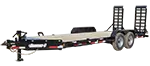
Bump to a properly equipped tandem-axle trailer and the available capacity changes significantly. The current Diamond C GTU is offered in 14-, 16-, 18-, and 20-foot lengths with an 83-inch bed, a 7,000-pound GVWR, two 3,500-pound Lippert electric-brake axles, and a 4-inch channel frame. A 2026 Polaris RZR Pro XP Sport has an estimated dry weight of approximately 1,833 pounds, but the transported weight will be higher after fuel, a roof, windshield, winch, bumpers, spare tire, tools, storage, and other accessories are installed. The GTU may provide substantial capacity for that type of machine, but the real payload must still be calculated from the specific trailer’s empty weight.
The rule is simple: know the trailer’s GVWR, each axle’s GAWR, the tire and wheel capacities, the hitch rating, and the tow vehicle’s limits. Weigh the loaded combination whenever the numbers are close or the equipment has been heavily accessorized. A public truck scale can provide separate steer-axle, drive-axle, and trailer-axle readings. Do not plan to operate continuously at the exact limit. Practical capacity margin helps account for added gear, inaccurate estimates, uneven axle loading, and items that get tossed into the trailer at the last minute, but that margin never allows any published rating to be exceeded.
Tire Heat Is a Real Problem in Late May
Trailer tires that have been parked through winter and are suddenly loaded for a long highway trip deserve careful attention. Heat is generated by tire flex, speed, load, underinflation, pavement temperature, and mechanical problems such as dragging brakes or failing bearings. An overloaded or underinflated tire flexes more than intended, builds heat quickly, and may fail even when the tread appears usable.
Check inflation pressure before departure while the tires are cold. As a practical standard, cold means the trailer has been parked for at least three hours or has traveled less than about one mile at low speed. Use the cold pressure listed on the trailer’s certification or tire-information label for the installed tire size and load configuration. Do not assume every trailer tire should be inflated to 50 or 65 PSI. Depending on size and load range, trailer tires may call for 50, 65, 80, 110, 125 PSI, or another specified pressure. The number molded on the tire sidewall identifies the pressure associated with the tire’s maximum marked load; it is not automatically the correct pressure for every trailer application. Never release air from a hot tire merely because the pressure has risen during travel.
Inspect the entire tread and both sidewalls, including the inward-facing side that is easy to miss. Cuts, exposed cords, bulges, deep cracking, impact damage, abnormal wear, or evidence of separation require professional inspection and usually replacement. Check the four-digit DOT date code so you know the tire’s age, but do not rely on a universal rule that every trailer tire automatically expires on its fifth birthday. Tire condition depends on construction, storage, heat, load history, maintenance, and manufacturer guidance. Older tires should receive increasingly careful inspection, and any tire with visible structural damage should be removed from service regardless of tread depth. Inspect the spare tire too.
If you’re running a Wells Cargo or another enclosed trailer loaded with dirt bikes, riding gear, fuel containers, and tools, verify the trailer’s actual loaded weight and tire capacity before leaving. Enclosed trailers have substantial side area, and a highway-speed tire failure can damage the fender, floor, wiring, brake components, and exterior skin while also upsetting the trailer’s tracking. If a tire fails, keep the steering steady, ease off the accelerator, avoid abrupt braking or steering, and move off the road only after the combination has stabilized.
Traffic Reality: Holiday Weekends Are Different
On a quiet weekday, the two-lane stretch of State Road 46 through Owen County can feel familiar and manageable. On the Friday before Memorial Day, the same route may include motorcycles, campers, boat trailers, farm equipment, local traffic, visitors unfamiliar with the road, and drivers making last-second turns. A long towing combination also needs more room to accelerate, merge, turn, and stop than an unloaded pickup.
A few adjustments actually matter:
- Add following distance. There is no honest one-size-fits-all claim that a particular trailer adds an exact number of feet to every stop. Stopping distance depends on speed, total weight, brake condition, brake-controller adjustment, tires, pavement, grade, weather, and tow-vehicle capability. Leave a visibly larger cushion than you would while driving the truck alone and increase it again in rain, on hills, or in heavy traffic.
- Watch for merges and sudden brakes. Assume that another driver will fill any open space in front of the truck. Look several vehicles ahead, stay out of unnecessary lane changes, and begin slowing early. Keep enough space that one car cutting in does not force an emergency stop.
- Respond correctly to sway. There is no safe speed or sway threshold to memorize. If oscillation begins, hold the steering wheel steady, avoid abrupt steering, gradually lift off the accelerator, and do not slam on the tow vehicle’s brakes. When conditions permit and the trailer has properly adjusted electric brakes, gently applying the trailer brakes with the controller’s manual lever can help pull the trailer back into line. Once stopped, correct the cause before continuing. Common causes include insufficient tongue weight, excessive speed, uneven loading, low tire pressure, worn suspension components, or an improperly matched hitch.
- Reduce speed on grades. Select a lower transmission range before beginning a steep descent rather than waiting until speed has already built. Use engine braking as permitted by the tow vehicle’s owner’s manual and apply the service brakes in a controlled manner instead of riding them continuously. Overheated truck or trailer brakes can fade and lose effectiveness.
Build Rest Stops Into the Plan
Make the first inspection stop soon after departure, generally after the first 10 to 20 miles. New tie-downs can settle, tires begin building heat, and a loose latch or improperly torqued wheel may reveal itself early. After that initial check, stop about every 90 to 120 minutes, at fuel stops, or sooner whenever the trailer feels, sounds, or smells different.
Walk around the entire combination. Check tire condition and use an infrared thermometer when available to compare tire and hub temperatures. Exact temperature varies with load, weather, braking, and road conditions, so comparison is often more useful than a single universal number. One wheel that is dramatically hotter than the others may indicate low pressure, overloading, a dragging brake, bearing trouble, or another mechanical problem. Do not place a bare hand on a potentially overheated hub, brake drum, or wheel. If something is excessively hot, identify and repair the cause rather than simply waiting for it to cool and continuing.
ATVs and side-by-sides can shift if a ratchet strap stretches, a hook changes position, or the suspension settles. Use tie-downs with visible working-load-limit labels and attachment points rated for the load. Secure the machine independently at multiple points so one failed strap does not release the entire vehicle. Keep straps away from sharp edges, exhaust components, brake lines, steering parts, and tires. Verify that the trailer’s gate, ramps, doors, and storage compartments remain latched.
While stopped, inspect the hitch connection for movement, damaged paint, metal dust, loose hardware, or abnormal heat. Some warmth can occur at a working hitch connection, but severe heat, discoloration, noise, or visible movement deserves immediate attention. Confirm the ball size, coupler adjustment, lubrication requirements, receiver hardware, hitch-pin retention, and tongue-weight condition before getting back on the road.
Load Distribution: Front-Heavy Is Right
A conventional bumper-pull trailer normally needs approximately 10% to 15% of its loaded weight on the hitch, provided that figure remains within the trailer, coupler, hitch, receiver, and tow vehicle ratings. Gooseneck trailers commonly place a higher percentage of loaded weight on the truck, often roughly 15% to 25%, but the correct range must come from the trailer and tow-vehicle manufacturers. The frequently repeated 60% of cargo ahead of the axles and 40% behind is only a starting point. Axle location, trailer design, cargo shape, and installed equipment determine the actual tongue or pin weight.
For a 7×16 enclosed trailer carrying two motorcycles, place the load so the trailer remains balanced from side to side and develops the correct tongue weight. A 2026 Harley-Davidson Street Glide weighs approximately 811 pounds in running order, so it can have a major effect on balance compared with a lightweight enduro motorcycle. Position the motorcycles according to measured load balance, not merely by pushing the heavier bike as far forward as possible. Secure each motorcycle independently to rated floor or wall-mounted anchors, and confirm that the anchors are attached to structural framing rather than only to plywood.
For a flatbed or utility trailer loaded with two ATVs side by side, center the combined weight laterally instead of intentionally placing the heavier machine on the driver’s side. Position the machines forward or rearward only as needed to achieve the proper tongue weight without exceeding an axle, tire, hitch, or tow-vehicle rating. Measure tongue weight with an appropriate scale or confirm the loaded axle weights at a public scale.
Use a weight-distribution hitch only when the trailer, hitch, receiver, and tow vehicle are approved for one and the owner’s manual calls for or permits it. The decision is not based on tongue weight exceeding 10% of the tow vehicle’s GVWR. Tongue weight counts against the truck’s payload capacity and affects the rear GAWR, receiver rating, and sometimes the front-axle load. A three-quarter-ton pickup may have substantial towing capability while still reaching its payload, rear-axle, tire, or receiver limit before reaching the advertised maximum trailer rating. The door-jamb certification label, receiver label, and owner’s manual contain the numbers that control.
A Quick Pre-Departure Checklist
| Item | Check |
|---|---|
| Coupler fully seated, latch locked, and retaining pin secured | Yes / No |
| Safety chains properly crossed or routed and attached to approved anchors | Yes / No |
| Trailer plug connected and all required lights working | Yes / No |
| Breakaway cable attached independently to the tow vehicle | Yes / No |
| Cold tire pressure at trailer-label specification; sidewalls and spare inspected | Yes / No |
| Wheel nuts torqued to the correct manufacturer specification | Yes / No |
| Loaded weight within GVWR, GAWR, tire limits, and tongue-weight target | Yes / No |
| All cargo secured independently with rated tie-downs; ramps and gates latched | Yes / No |
| Brake controller and breakaway system tested separately | Yes / No |
| Initial recheck planned after 10 to 20 miles; later rest stops scheduled | Yes / No |
If Your Current Trailer Is the Problem
Some of these checks bring up a harder conversation: the trailer you own may not provide enough payload, deck space, braking capability, or stability for the equipment you now haul. A single-axle trailer with a 3,500-pound GVWR is not automatically unsafe for two ATVs, but the answer depends on its empty weight, actual payload, deck dimensions, axle and tire ratings, brake equipment, condition, and the loaded weights of the machines. Two lighter ATVs may fit within the ratings of one properly maintained trailer, while two heavily accessorized machines and a pile of gear may overload another trailer that looks nearly identical.
Highway use also exposes weaknesses that may not appear during a slow trip around town. A trailer with aged tires, loose bearings, marginal payload, no required brakes, weak tie-down points, or excessive rear loading can become difficult to control at Interstate 69 speeds. Moving to a tandem-axle trailer does not eliminate the need for correct loading and maintenance, but it can provide additional tire capacity, braking, stability, deck length, and usable payload when correctly matched to the tow vehicle.
If you’re close to the GVWR ceiling every time you load, compare current trailers by actual payload rather than appearance alone. The Diamond C GTU provides a 7,000-pound GVWR on a tandem utility platform with two 3,500-pound Lippert brake axles. An H&H 82 x 18 Aluminum Speed Loader 7K tilt car hauler is currently listed with a 7,000-pound GVWR and a published curb weight of approximately 1,670 pounds, which calculates to about 5,330 pounds of payload before configuration changes or added options. A United 8.5 x 24 Classic enclosed car hauler is offered with a 9,990-pound GVWR, but its usable payload must be calculated from the completed trailer’s actual empty weight. Door opening, interior height, ramp rating, floor capacity, tie-down placement, and the dimensions of the side-by-side matter just as much as the number on the GVWR label.
Trailer prices and equipment packages change, so compare the current delivered price of trailers that genuinely meet the load instead of choosing solely by the lowest advertised number. The right trailer should provide enough deck or interior space, adequate payload, correctly rated tires and axles, functioning brakes, suitable tie-downs, and compatibility with the tow vehicle’s towing, payload, axle, and receiver limits.
You can see what’s in stock at Spencer Trailers’ full inventory, and if you have questions about matching a trailer to a specific load, call (812) 829-0226 or reach out through the contact page. Bring the year, make, model, dimensions, and actual operating weight of the equipment you plan to haul, along with the tow vehicle’s information. That makes it much easier to identify a trailer that provides the capacity and stability the trip requires.
Memorial Day should be about getting to the lake, campground, trail, or riding area safely, not getting stranded on the way. A careful pre-trip inspection, an early recheck, correct load balance, and realistic weight calculations take less time than a roadside repair and protect everyone sharing the road with you.


