








You pull into the job site, unhook the trailer, and get to work. Nobody is thinking about licensing paperwork. But if the wrong person gets stopped on the way there, operating a commercial combination without the required CDL can lead to citations, an out-of-service order, delayed equipment, and a very bad morning. Indiana follows the federal CDL classification system, and the rules become manageable once you understand that the combination threshold and the trailer threshold must be evaluated together.
Here is what Indiana requires, where the exemptions actually apply, and what you need to confirm before you hitch up a heavy combination.
The Core Threshold: 26,001 Pounds GCWR
The number that gets the most attention is 26,001 pounds, but that number is only the first half of the Class A test. For a combination used in commerce, a Class A CDL is generally required when the gross combination weight rating or actual gross combination weight is 26,001 pounds or more and the towed unit has a GVWR or actual gross vehicle weight of more than 10,000 pounds. Both conditions must be met.
Federal CDL rules use the greater of the applicable rated or actual weights. That means running light on a particular trip does not avoid the CDL requirement when the vehicle ratings already place the combination in Class A. It also means actual scale weight can matter when it is greater than the listed rating. An overloaded combination does not become legal because its data plates show lower numbers, and the actual weight may still place the driver within CDL jurisdiction.
Do not add the pickup’s advertised GCWR to the trailer’s GVWR. That double-counts the trailer capacity and produces an incorrect number. Under the federal definition, GCWR is generally the greater of a GCWR value displayed by the power-unit manufacturer on the applicable certification label or the sum of the GVWRs or actual gross weights of the power unit and the towed unit, using the combination that produces the highest value.
For a straightforward rating-based example, a one-ton pickup with a 14,000-pound GVWR paired with a Diamond C FMAX207 rated at 15,500 pounds GVWR produces a combined rating of 29,500 pounds. Because the combination is over 26,000 pounds and the trailer is over 10,000 pounds, a Class A CDL is generally required when that rig is operated in commerce and no exemption applies.
Here is the counterintuitive part: a combination can total more than 26,000 pounds without falling into Class A or Class B by weight. Indiana BMV guidance uses the example of a 26,000-pound GVWR power unit towing a trailer rated at exactly 10,000 pounds. The combination totals 36,000 pounds, but the trailer does not exceed 10,000 pounds and the power unit does not reach 26,001 pounds. Without placarded hazardous materials or a qualifying passenger configuration, that example is not a Class A, B, or C CDL vehicle under the federal classification test.
Start with the truck’s certification label for GVWR and axle ratings. Consult the correct manufacturer towing guide for that truck’s model, engine, cab, bed, axle ratio, drivetrain, and equipment. Then check the trailer’s VIN or certification plate for GVWR. Keep scale tickets when the actual loaded weight could approach a threshold. The truck’s towing capacity, payload capacity, hitch rating, tire ratings, and axle ratings are separate safety limits that must be satisfied even when the CDL calculation appears acceptable.
Class A vs. Class B: What the Difference Means for Trailer Haulers
Indiana follows the federal CDL classification structure:
- Class A: A combination used in commerce with a GCWR or actual gross combination weight of 26,001 pounds or more, whichever is greater, when the towed unit’s GVWR or actual weight is more than 10,000 pounds. This is the classification most often involved with heavy pickup-and-trailer combinations.
- Class B: A single vehicle with a GVWR or actual gross weight of 26,001 pounds or more, or that qualifying heavy vehicle towing a unit rated or weighing 10,000 pounds or less. Straight trucks, large dump trucks, and similar vehicles commonly fall into this class.
- Class C: A commercial vehicle that does not qualify as Class A or B but is designed to transport 16 or more people, including the driver, or is used to transport hazardous materials requiring placards or specified select agents or toxins.
For trailer drivers, Class A is usually the classification to examine, but hitch style, axle count, and trailer appearance do not determine the license class. A gooseneck is not automatically a CDL trailer, and a bumper-pull is not automatically non-CDL. A tandem-axle trailer can require a Class A CDL, while a combination involving more axles may remain below the CDL thresholds. The ratings, actual weights, commercial use, cargo, and any applicable exemption control the result.
When You Don’t Need a CDL: Indiana Exemptions
Not every heavy combination requires a CDL. The CDL rules apply to commercial motor vehicles used in interstate, foreign, or intrastate commerce, and Indiana recognizes specific exemptions for qualifying farm, recreational, military, emergency-response, and other limited operations. These exemptions have conditions. A registration type, farm plate, government plate, or claim of personal use is not a blanket waiver for every trip.
Agricultural Exemption
Indiana recognizes the federal farm-vehicle CDL waiver for qualifying operations. Under the standard farmer waiver, the vehicle must be controlled and operated by a farmer, including operation by the farmer’s employee or family member; it must be used to transport agricultural products, farm machinery, farm supplies, or a combination of those items to or from a farm; it cannot be used in the operation of a for-hire motor carrier except as specifically permitted; and it must remain within the applicable 150-mile area of the farm.
Federal covered-farm-vehicle provisions may also apply to certain properly designated vehicles, but eligibility depends on the vehicle, ownership or operation, cargo, registration, route, weight, and distance from the farm. Farm registration by itself does not turn a landscaping, construction, commercial delivery, or for-hire hauling trip into exempt farm transportation. The normal farmer waiver is generally limited to the driver’s home state unless an applicable reciprocity agreement or separate covered-farm-vehicle provision authorizes operation elsewhere.
Before relying on the exemption, verify who owns or controls the vehicle, who employs the driver, what is being hauled, where it is going, whether anyone is being paid to transport it, and how far the trip travels from the farm. Agricultural exemptions from CDL rules also do not necessarily exempt the operation from every vehicle-maintenance, weight, registration, insurance, cargo-securement, or safety requirement.
Recreational and Personal Use
A vehicle used solely for personal, nonbusiness transportation may fall outside the federal definition of a commercial motor vehicle because it is not being used in commerce. Indiana also recognizes an exemption for qualifying recreational vehicles used primarily to transport the owner’s family members or guests and their possessions for nonbusiness purposes.
The purpose of the trip matters. Moving a personally owned tractor for maintenance of a private property may be different from moving the same tractor to perform paid work. Hauling a race car, livestock, tools, building materials, or equipment can become commercial when it supports a business, produces compensation, promotes a commercial activity, or moves property as part of paid work. The fact that the driver owns the truck, trailer, or cargo does not automatically make the trip personal.
Emergency Vehicle and Government Operations
Military personnel operating qualifying commercial vehicles for military purposes are covered by a federal CDL exception. Indiana may also recognize exemptions for firefighters and other drivers operating properly equipped emergency-response vehicles necessary to preserve life or property or perform emergency governmental functions. Limited provisions also cover certain local-government employees operating snow- and ice-removal vehicles during qualifying emergencies.
These are purpose-specific exemptions, not a blanket exemption for every government-owned vehicle. A public employee driving an ordinary heavy truck-and-trailer combination for routine maintenance, construction, delivery, or equipment transportation may still need the proper CDL.
Endorsements: When the CDL Isn’t Enough
A Class A CDL provides the basic authority to operate a qualifying combination, but certain cargo and vehicle configurations require endorsements. The endorsement is based on what the driver is operating or transporting, not simply on the trailer’s GVWR.
| Endorsement | What It Covers | Relevant For |
|---|---|---|
| T (Double/Triple Trailers) | Operating a commercial combination with two or three separate trailers | Legal multi-trailer combinations on authorized routes |
| H (Hazardous Materials)* | Transporting hazardous materials that require placards or regulated select agents or toxins | Placarded fuel, chemicals, explosives, and other regulated materials |
| N (Tank Vehicle) | Transporting liquid or gaseous material in attached tanks with an individual rated capacity over 119 gallons and an aggregate rated capacity of at least 1,000 gallons | Qualifying permanent or portable tank configurations |
| X (Hazmat + Tank combo) | Combined tank-vehicle and hazardous-material authority | Qualifying tank vehicles carrying placarded hazardous material |
*The H endorsement requires a Transportation Security Administration security threat assessment, fingerprinting, and satisfaction of the federal hazardous-material endorsement requirements. A driver must also meet the applicable age and eligibility rules.
For most people hauling skid steers, excavators, construction materials, vehicles, landscaping equipment, or ordinary cargo, no cargo-specific endorsement is required beyond the correct CDL class. A single gooseneck or bumper-pull trailer does not require a T endorsement merely because it is attached to a truck.
Restrictions on the CDL matter too. A driver who tests in a vehicle without full air brakes may receive an air-brake restriction. Testing in an automatic-transmission vehicle can produce an automatic-transmission restriction, and testing with a truck-and-trailer configuration that does not meet the applicable tractor-trailer standards can create another operating restriction. Choose the CDL test vehicle based on the equipment the driver will actually need to operate.
What Triggers the CDL Requirement in Practice
It helps to work through rating-based scenarios that are common for Indiana trailer buyers. These examples assume the vehicles are being used in commerce, no exemption applies, no passenger or hazardous-material rule changes the classification, and actual scale weights do not create a higher value.
Hauling a skid steer on a gooseneck: A Diamond C FMAX207 has a 15,500-pound GVWR. Pair it with a properly configured one-ton pickup carrying a 14,000-pound GVWR, and the rating-based combination is 29,500 pounds. The trailer exceeds 10,000 pounds and the combination exceeds 26,000 pounds, so this is generally a Class A CDL combination for commercial use. The CDL calculation does not establish that the truck has enough towing capacity, payload, rear-axle capacity, hitch capacity, or tire capacity for the actual trailer and load; those limits must be checked separately.
Pulling a car hauler with a half-ton truck: A car hauler certified at 9,990 pounds GVWR paired with a pickup rated at 7,100 pounds GVWR produces a rating-based total of 17,090 pounds. It is below the combination threshold, and the trailer is not over 10,000 pounds, so a CDL is not required based on weight. The truck must still be rated for the loaded trailer, tongue weight, passengers, cargo in the bed, and hitch equipment.
Running a cargo trailer for business deliveries: A 7,000-pound GVWR enclosed trailer paired with a 10,000-pound GVWR truck produces a 17,000-pound rating-based combination. That is below the CDL weight threshold. Change the power unit to a 14,000-pound GVWR truck and the trailer to a 14,000-pound GVWR unit, and the combination becomes 28,000 pounds with a trailer over 10,000 pounds. That second setup is generally Class A for commercial operation.
Using a heavy Diamond C flatbed: The FMAX216 is available in 25,900-, 30,000-, and 40,000-pound GVWR configurations. Any of those ratings exceeds the Class A trailer-side threshold. When one is paired with a commercial tow vehicle, the combination will ordinarily exceed 26,000 pounds by a wide margin, making a Class A CDL necessary unless a valid exemption applies.
The math must be repeated whenever the truck or trailer changes. A driver cannot rely on the result from a different pickup, a different trailer, or another configuration of the same model. The certification labels and actual operating weights for the combination being driven are what matter.
A non-CDL result does not mean that no commercial-vehicle rules apply. Interstate business operations can become subject to portions of the Federal Motor Carrier Safety Regulations at weight levels below the CDL threshold, commonly beginning at 10,001 pounds GVWR, GCWR, or actual weight. USDOT registration, medical qualification, inspections, maintenance records, hours-of-service rules, load securement, and other requirements may apply depending on the operation and any exemption.
Commercial vs. Personal Use: The Line That Changes Everything
CDL requirements are tied to operation of a commercial motor vehicle. Federal rules define a commercial motor vehicle for CDL purposes as a vehicle or combination used in commerce to transport passengers or property when it meets the applicable Class A, B, or C criteria. Indiana applies those standards to qualifying intrastate operation as well as interstate operation.
The definition of commerce is broad. Crossing a state line is not required. Hauling your company’s skid steer to a local job, moving materials between business locations, delivering a customer’s vehicle, carrying tools for paid construction work, or transporting equipment that supports a revenue-producing operation can be commerce even when there is no separate hauling charge.
By contrast, genuinely personal transportation that has no business purpose may fall outside the CDL definition. The analysis depends on the real purpose of the trip, not the name written on the truck, who owns the cargo, whether the company has reimbursed fuel, or whether the driver describes the trip as a favor.
Indiana also has a for-hire endorsement for certain operations below the CDL level. A for-hire endorsement does not authorize someone to operate a vehicle that requires a CDL. Drivers and businesses should check whether that separate Indiana credential applies when the vehicle does not meet CDL thresholds but is being used in a covered property or passenger operation.
Do not rely on a general rule such as “my trailer is under 26,000 pounds” or “I am staying inside Indiana.” The trailer does not need to weigh 26,001 pounds by itself, and intrastate commercial operation is not automatically exempt. Apply the two-part Class A test to the complete combination and then determine whether the use is commercial or legitimately exempt.
Getting Your Indiana Class A CDL
The Indiana BMV administers CDL credentials, while CDL skills tests are conducted through BMV-authorized examination sites. A first-time Class A applicant must obtain the appropriate Commercial Learner’s Permit, complete any required knowledge examinations, and pass a skills examination in a representative combination vehicle. The skills test includes a vehicle inspection, basic control skills, and an on-road examination.
Entry-Level Driver Training is required for drivers obtaining a Class A or Class B CDL for the first time, upgrading from Class B to Class A, or obtaining certain endorsements for the first time. The training must be completed through a provider listed on the federal Training Provider Registry before the applicant can complete the applicable CDL testing process.
An Indiana applicant must hold the CLP for at least 14 days before attempting the CDL skills examination. A CLP holder may operate a commercial motor vehicle only while accompanied by a driver who holds the proper CDL class and endorsements and is qualified to supervise the operation.
Indiana applicants must generally be at least 18 years old for intrastate commercial operation. Drivers under 21 are restricted from most interstate commercial operation and cannot perform certain federally restricted work. First-time CDL applicants must also complete Indiana’s required human-trafficking awareness instruction.
Medical certification is part of the application and maintenance process. The examination must be performed by an examiner listed on the FMCSA National Registry of Certified Medical Examiners. Under the current electronic process, the certified medical examiner sends the Medical Examiner’s Certificate information to the National Registry, which transmits it to the driver’s state licensing record. Drivers should verify that the BMV has received and posted the certification before operating.
Specific fees, identity and residency documents, testing locations, appointment procedures, self-certification categories, and medical requirements are available through the Indiana BMV. Verify the current process at in.gov/bmv before beginning an application because testing procedures and document-submission systems can change.
How This Affects What Trailer You Buy
If you are shopping at Spencer Trailers and do not have a Class A CDL, trailer GVWR is a planning factor, but it is not the only number to consider. Start with the power unit’s certification label, determine the correct regulatory GCWR or combined rating, check actual operating weight when appropriate, and then apply the trailer’s more-than-10,000-pound test.
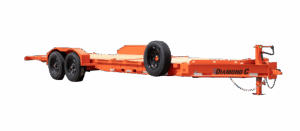
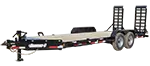
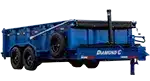
Many current heavy-duty Diamond C trailers exceed that trailer-side threshold. The FMAX207 is rated at 15,500 pounds GVWR, while LPX equipment trailers, HDT tilt trailers, and LPT telescopic dump trailers are offered in configurations ranging from 15,500 to 24,000 pounds GVWR. Higher-capacity FMAX configurations extend to 40,000 pounds GVWR. The exact model, GVWR package, length, options, and VIN certification plate must be checked because two trailers from the same product family may have different ratings.
The team at our lot on State Hwy 46 in Spencer can walk you through the GVWR, empty weight, axle configuration, brake equipment, coupler, tire, and payload information available for trailers we stock, including Diamond C, Liberty, H&H, and Legend models. If you want to see what is currently available in specific weight classes, the full inventory is online.
A trailer certified at 9,990 pounds instead of 10,001 pounds has a legally meaningful GVWR, but the difference does not always mean the two trailers have completely different frames or running gear. Some manufacturers offer derated configurations. Whatever the physical construction, the lower number on the certification plate is a binding maximum rating, not permission to load the trailer as though it carried a higher rating.
Do not overload a 9,990-pound trailer to avoid a CDL. Loading above the certified GVWR can violate vehicle and component limits, and federal CDL definitions can consider the actual gross weight when it is greater than the rating. A trailer that weighs more than 10,000 pounds in operation may satisfy the trailer side of the Class A test even if its listed GVWR is lower.
Indiana’s trailer-brake requirement is separate from CDL licensing. Under IC 9-19-3-3, trailers over 3,000 pounds GVWR require brakes. A driver must also make sure the tow vehicle, brake controller, electrical connection, tires, hitch, safety equipment, and load securement are suitable for the specific trailer.
Match the trailer to the load first. Calculate the loaded trailer weight, required payload, equipment footprint, concentrated axle loads, tongue or pin weight, ramp capacity, tie-down needs, and tow-vehicle limits. Then make sure the driver holds the license and endorsements required for the resulting combination. Selecting a trailer that cannot safely carry the intended load is not an acceptable way to remain below a licensing threshold.
Verify With the Indiana BMV
This post covers the general CDL classification principles Indiana applies under federal standards. It is not legal advice and is not a substitute for confirmation from the Indiana BMV, Indiana State Police Commercial Vehicle Enforcement Division, FMCSA, or a qualified transportation attorney. Exceptions are fact-specific, and a small change in trailer rating, actual load, vehicle use, cargo, route, or ownership can change the result.
If the operation crosses state lines, federal motor-carrier requirements may apply in addition to the CDL rules. Even when a CDL is not required, a commercial combination may still need a USDOT number, medical qualification, periodic inspections, compliant driver records, hours-of-service documentation, proper registration, and cargo securement. Farm, personal-use, short-haul, and other exceptions should be confirmed individually rather than treated as interchangeable.
A CDL authorizes the driver to operate a particular class of commercial vehicle. It does not certify that a particular truck can safely tow a particular trailer, excuse an overloaded axle, increase payload capacity, override a hitch or tire rating, or eliminate vehicle-registration and operating requirements.
Before you hitch up a heavy combination for the first time, check the truck’s certification label, the trailer’s VIN plate, the actual loaded weight when necessary, the purpose of the trip, and the driver’s credential. Spending a few minutes verifying those details is far better than discovering the problem during a roadside inspection.
Have questions about the GVWR and towing specifications of trailers in our inventory, or want to talk through a combination that is close to the threshold? Reach out to the Spencer Trailers team at (812) 829-0226. We’ll help you identify the correct trailer specifications so you can confirm the licensing requirements for your operation.


