


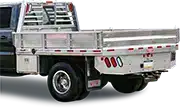
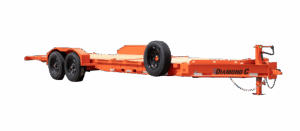



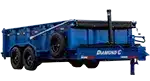


You just financed a new Diamond C dump trailer. The payment is locked in, the trailer is hitched, and you’re hauling loads every week. Then another driver backs into it in a parking lot. Or it disappears from a job site overnight. Or a piece of equipment shifts in transit and damages the floor, fender, or sidewall.
Now you’re staring at a loss and wondering what your insurance policy actually does.
Most trailer owners do not study the coverage details until they need to file a claim. That is a bad time to discover that liability coverage follows the tow vehicle, physical damage coverage applies only to a specifically listed trailer, business tools are excluded, or the insurer will settle a total loss for less than the remaining loan balance. Here is what the main coverage categories generally mean, what they may leave out, and where the most important gaps appear for financed, personal-use, and commercial trailer owners.
How Trailer Insurance Works (The Short Version)
Trailers do not all receive the same coverage automatically. Liability for an accident while towing may come from the tow vehicle’s personal or commercial auto policy. Damage to the trailer itself usually requires the trailer to be listed on an auto policy, covered by a dedicated utility or cargo trailer policy, or insured under another policy form appropriate for the trailer’s use. A limited amount of coverage may extend to certain small, non-owned, or temporarily attached trailers under some auto policies, but that should never be assumed for an owned dump, equipment, enclosed, or gooseneck trailer. Coverage can depend on the trailer’s VIN, GVWR, axle count, value, ownership, personal or commercial use, where it is stored, whether it is rented to anyone, and whether it is attached to the insured tow vehicle when the loss occurs.
If you are financing a trailer, the lender will normally require physical damage coverage and must be identified on the policy as the lienholder, loss payee, or additional interest required by the finance contract. That commonly means carrying both collision and comprehensive coverage with deductibles that satisfy the lender’s requirements. Indiana law does not require collision or comprehensive coverage simply because a trailer is being operated on the road, but your finance agreement can require it. If the policy lapses, the lender may also have contractual rights to purchase collateral-protection coverage and charge you for it, and that coverage may primarily protect the lender rather than your tools, equity, lost income, or other financial interests.
Collision Coverage
Collision coverage generally pays for sudden, accidental damage to an insured trailer caused by impact with another vehicle or object, or by the trailer overturning. Examples can include backing the trailer into a post at a job site, sideswiping a guardrail, overturning in a roadway accident, or having another vehicle strike the trailer while it is parked. If another driver is legally responsible, that driver’s property-damage liability coverage may ultimately pay. Your own collision coverage may also respond, subject to the deductible and policy terms, with the insurer later attempting to recover from the responsible party.
The basic claim calculation is straightforward when the damage can be repaired: the insurer determines the covered repair cost, subtracts the applicable deductible, and pays up to the policy’s limit or the trailer’s covered value. Deductibles of $250, $500, and $1,000 are common insurance options, although trailer-specific deductibles vary by carrier and policy. If a covered repair is estimated at $6,000 and the collision deductible is $500, the insurer’s payment would generally begin after the first $500, subject to depreciation, betterment, labor disputes, excluded damage, and any applicable policy limits.
Do not assume the collision coverage carried on your pickup automatically covers an owned trailer just because the trailer is attached. Some policy forms provide limited physical damage coverage for certain attached trailers, while others cover only the scheduled tow vehicle and require the trailer to have its own listed coverage. A properly insured standalone trailer may remain covered while attached, parked, or stored, but only if the declarations and policy language say so. Give the carrier the trailer’s VIN and ask for written confirmation that collision coverage applies both while towing and while the trailer is unhitched.
Comprehensive Coverage
Comprehensive coverage, sometimes called “other than collision,” addresses covered losses that are not caused by a roadway collision. Depending on the policy form, covered events commonly include theft, vandalism, fire, hail, wind, falling objects, flooding, lightning, animal strikes, and other specified weather-related or accidental losses. The exact list matters because comprehensive coverage is not a promise that every event other than a collision will be covered.
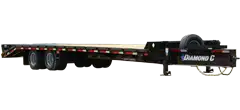
For a financed Diamond C LPT heavy-duty telescopic dump trailer, LPX equipment trailer, FMAX gooseneck flatbed, or another high-value work trailer, the lender will ordinarily require comprehensive coverage along with collision. If a financed trailer is destroyed by a covered fire or stolen and not recovered, the loan does not disappear. You remain responsible for the finance agreement even if a claim is denied, the policy has lapsed, the deductible is high, or the insurance settlement is less than the outstanding balance.
Comprehensive coverage normally has its own deductible, which may be the same as or lower than the collision deductible. There is no universal $100, $250, or other standard amount for trailer policies. More importantly, the deductible is only one part of the calculation. A total-loss settlement may be based on actual cash value, replacement cost, an agreed value, or a stated limit, depending on the contract. Review the loss-settlement provision rather than relying on the phrase “full coverage,” which has no single standardized meaning.
Theft Coverage
Theft is generally handled under comprehensive coverage, but it deserves its own section because trailer theft claims often involve questions about ownership, storage, security, recovery efforts, and the property that was being hauled.
If a Diamond C LPX equipment trailer, an enclosed cargo trailer, or a bumper-pull utility trailer is stolen, comprehensive coverage may pay for the trailer if it was properly listed and theft is a covered cause of loss. The insurer will normally ask for a police report, the VIN, title or registration, purchase and financing documents, photographs, keys, maintenance records, information about the storage location, and details about locks or tracking devices. A coupler lock, hardened chain, wheel lock, secure storage area, and GPS tracker are strongly recommended, but there is no universal rule that every trailer theft claim requires visible forced entry or one particular type of hitch lock. Some policies, endorsements, underwriting agreements, or theft-prevention discounts may impose specific security conditions, so those conditions must be checked in the actual contract.
The property being carried is a separate issue. A policy that covers the stolen trailer does not necessarily cover the tools, machinery, inventory, supplies, or personal property that were inside or loaded on it. Some personal-use trailer policies offer optional personal-effects coverage, but limits, deductibles, excluded property, and theft conditions vary. Business tools and equipment are frequently excluded from personal-effects coverage and from standard commercial auto physical damage coverage, making a separate inland marine or equipment policy essential.
Vandalism
Vandalism is commonly covered under comprehensive coverage. Examples include spray paint on an aluminum enclosed trailer, intentionally slashed tires, broken lights, damaged wiring, cut tarp material, or a forced cargo-door entry at a storage yard. Coverage still depends on the trailer being insured for comprehensive loss, the damage meeting the policy’s definition of vandalism or malicious mischief, and no exclusion applying.
The practical issue is the relationship between the repair cost and the deductible. If covered damage is estimated at $650 and the comprehensive deductible is $500, the maximum claim payment may be only about $150 before any excluded items or valuation adjustments. A claim may also become part of your loss history and can affect underwriting or premiums, although the result varies by carrier and state. Obtain photographs and a repair estimate, review any prompt-notice requirements, and discuss the situation with your agent before deciding how to proceed. Do not delay a police report or required notice when the damage involves theft, attempted theft, or significant property damage.
Contents: The Big Gap
Here is the coverage gap that catches many trailer owners flat-footed: physical damage coverage on the trailer usually does not automatically insure everything being carried on or inside it.
The trailer, permanently installed factory equipment, aftermarket accessories, removable tools, customer property, inventory, and heavy machinery can all fall into different insurance categories. A cargo trailer may be insured for $25,000 while the landscaping tools, construction equipment, or merchandise inside it receive little or no coverage under that trailer policy. Optional personal-effects coverage may be available for personal property, but it can have sublimits and exclusions for business property, motorized equipment, property held for sale, customer property, cash, electronics, or unattended theft. Permanently mounted accessories may need to be included in the trailer’s insured value, while detachable machinery may require a separate equipment schedule.
The coverage options for contents depend on what you own, what you are hauling, whether it belongs to a customer, and how the trailer is used:
- Commercial inland marine policy for business-owned tools, contracting equipment, and other property that regularly moves between your shop, trailer, vehicle, and job sites. Coverage territory, theft requirements, unattended-vehicle exclusions, valuation, and whether equipment is covered while operating should all be reviewed.
- Motor truck cargo coverage when a for-hire carrier is transporting property belonging to customers. This is different from coverage for your own tools and does not automatically insure every type of cargo, delay, loss of market, improper packing, or unattended load.
- Homeowner’s or renter’s policy for personal property in limited circumstances. Off-premises limits, deductibles, theft-from-vehicle conditions, business-property sublimits, and exclusions vary substantially, so a homeowner’s policy should not be treated as automatic cargo insurance.
- Contractor’s equipment or equipment floater for scheduled or unscheduled machinery such as a skid steer, mini excavator, generator, welder, compressor, or other mobile equipment. Confirm coverage while the machine is in transit, parked on the trailer, stored overnight, and operating at a job site.
If your trailer supports your livelihood and regularly carries thousands of dollars in tools or equipment, ask for a written coverage schedule instead of relying on a verbal statement that your “business policy covers it.” Inland marine and equipment premiums depend on equipment value, theft controls, operating radius, claims history, storage arrangements, and the type of work performed. The important point is to insure the property under a policy designed for property in transit and at temporary locations, rather than discovering after a theft that the commercial auto policy covered the truck and trailer but not the equipment.
Liability: Where Trailers Get Complicated
Liability coverage for trailer-related accidents is handled differently from coverage for damage to the trailer itself. The outcome depends on whether the trailer is attached, whether it is owned or borrowed, how it is used, its size and configuration, and the definitions in the personal auto, commercial auto, farm, or business policy.
While a qualifying trailer is properly attached to an insured tow vehicle, the tow vehicle’s liability coverage will often extend to bodily injury or property damage caused by the combined vehicle and trailer. That can include a trailer swinging into another lane, striking a parked vehicle while turning, or a wheel separation that damages another vehicle. However, commercial policies may automatically extend liability only to trailers below a specified weight or size. Heavier, multi-axle, dump, equipment, and gooseneck trailers may need to be specifically listed. Physical damage to your own trailer is still separate from liability coverage and normally requires collision and comprehensive coverage on the trailer itself.
Liability becomes less predictable when the trailer is detached. A personal auto policy may no longer be the applicable policy, but that does not mean every detached-trailer incident is automatically uninsured. Depending on the facts, a homeowner’s, renter’s, farm, premises-liability, commercial general-liability, or commercial auto policy may respond. Those policies also contain motor-vehicle, business-use, care-custody-control, and property-damage exclusions that can overlap. If a trailer will be staged at job sites, stored at a customer’s property, left in a public lot, or used as a stationary work platform, ask the agent to identify in writing which policy handles injuries or property damage while it is unhitched.
Trailer weight and business use also matter. Diamond C FMAX gooseneck flatbeds span heavy-duty GVWR configurations from approximately 15,500 pounds up to 40,000 pounds depending on the exact model and package. An FMAX hauling equipment for revenue is a substantially different insurance exposure from a small utility trailer occasionally used for personal projects. A personal auto insurer may restrict or exclude regular business use, hauling for compensation, delivery work, oversized equipment, or trailers outside its eligibility rules. Commercial operators may also need higher liability limits, scheduled-auto coverage, state or federal financial-responsibility filings, and contracts that name customers or project owners as additional insureds. Those requirements protect against third-party liability and do not replace physical damage or cargo coverage.
Deductibles and Actual Cash Value: What You’ll Actually Get
To understand what a claim will pay, read the declarations page, deductible schedule, covered-auto or covered-trailer designation, endorsements, and the policy’s loss-settlement clause. The purchase price, loan amount, policy limit, replacement cost, and claim payment are not necessarily the same number.
Many trailer policies settle total losses using actual cash value. ACV generally reflects the trailer’s value immediately before the loss, considering factors such as age, condition, comparable sales, installed options, prior damage, maintenance, local market conditions, and depreciation. Other policies may offer replacement-cost coverage, total-loss replacement for newer units, agreed-value coverage, or a stated-amount limit. A stated amount is often only the maximum payable and may still allow the insurer to pay the lower of that amount or ACV. It should not be confused with a true agreed-value provision.
Suppose a trailer originally purchased for $20,000 has a current covered ACV of $14,000, the deductible is $500, and the remaining finance balance is $16,500. A total-loss payment based on ACV could be approximately $13,500, leaving the owner responsible for the unpaid loan difference. Loan or lease payoff coverage, commonly called gap coverage, may help if it is available for that trailer and financing arrangement. However, gap coverage often has percentage caps and may exclude the deductible, overdue payments, late fees, negative equity from another loan, service contracts, or other financed add-ons. Verify the exact limit before depending on it.
Agreed-value coverage establishes a value accepted by the insurer and insured, usually supported by the purchase documents, build sheet, photographs, or appraisal. It can reduce disputes over depreciation in a covered total loss, but the settlement remains subject to the policy’s deductible, exclusions, fraud provisions, and total-loss definition. Replacement-cost or total-loss-replacement coverage can work differently and may require replacing the trailer within a specified period. Ask the agent to show you the precise loss-settlement wording rather than relying only on labels such as “agreed value,” “stated value,” “replacement cost,” or “full coverage.”
Key Exclusions to Know
Trailer policies vary, but common exclusions, limitations, or claim issues can include:
- Wear and tear, rust, corrosion, deterioration, tire failure, electrical failure, hydraulic failure, or mechanical breakdown that is not caused by a separate covered event
- Damage caused by improper loading, inadequate cargo securement, operation above the trailer’s GVWR or component ratings, or continued use after damage when those actions contribute to the loss
- Tools, machinery, inventory, customer property, household goods, or other contents unless a specific personal-effects, cargo, inland marine, or equipment coverage applies
- Intentional damage, fraudulent claims, conversion, voluntary parting with the trailer, or loss connected to an excluded criminal or dishonest act
- Rental, leasing, peer-to-peer sharing, or use by others for compensation unless the policy specifically permits that activity
- Commercial, delivery, for-hire, contracting, or business use when the trailer was insured and rated only for personal or recreational use
- Aftermarket equipment, custom fabrication, removable accessories, wraps, electronics, winches, tarp systems, toolboxes, or other additions that were not declared, scheduled, or included in the insured value
The accessory issue is especially important for owners who modify a trailer after purchase. If you add an aftermarket toolbox, winch, tarp kit, wireless hydraulic control, spare-tire package, custom rack, mounted compressor, or other equipment, save the invoice and installation photographs and send them to the insurer. Factory-installed equipment included in the original purchase documents may be treated differently from later additions. If the insurer does not know the accessory exists and no endorsement or adequate limit applies, the claim payment may not include its full value.
Practical Steps Before You Haul
| Situation | Coverage to verify |
|---|---|
| Financed trailer, personal use | Trailer listed by VIN; collision and comprehensive coverage; lienholder or loss payee shown; deductible and loss-settlement method approved by lender |
| Trailer hauling business tools | Commercial inland marine, contractor’s equipment, or equipment floater coverage for owned tools and machinery, including transit and job-site storage |
| Commercial tow vehicle | Commercial auto liability and physical damage with the trailer properly scheduled when required; correct business use, GVWR, operating radius, and drivers disclosed |
| Trailer stored unattached | Standalone comprehensive and collision coverage plus confirmation of which premises, homeowner’s, farm, or business policy handles detached-trailer liability |
| Owe more than ACV | Loan or lease payoff coverage, agreed value, or eligible replacement-cost protection, with all caps, exclusions, and total-loss conditions reviewed |
When you are shopping for a trailer, ask us at Spencer Trailers what information your insurer will need to quote the correct unit. We are not insurance agents and cannot interpret or bind coverage, but we can provide the accurate model identity, VIN, GVWR, axle configuration, dimensions, purchase documents, factory options, and intended trailer specifications. Check our current inventory to identify the trailer you are actually financing, and call us at (812) 829-0226 with questions about specs, GVWR, payload, or how buyers in Owen County commonly configure their units. Give your insurance agent complete information about the tow vehicle, trailer, personal or commercial use, cargo, storage location, operating radius, drivers, security equipment, and financing. The more accurately the risk is described, the less room there is for a coverage dispute.
One detailed conversation with your insurance agent before you sign the financing paperwork is worth far more than three conversations after a collision, fire, theft, or total loss.


