


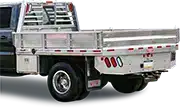
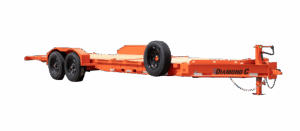



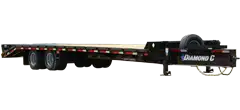
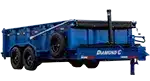

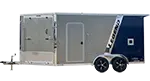
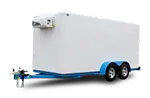
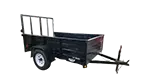

You spend several thousand dollars on a trailer, hook it up on a Saturday morning, and drive to the lumber yard. If someone rear-ends you at a stoplight, are you covered? Possibly, but the answer may involve more than one policy. If the trailer is stolen from your driveway overnight, are you covered? Not unless the trailer has applicable theft coverage under an auto endorsement, a separate trailer policy, or another policy that specifically applies. That gap between liability coverage for damage you cause and physical-damage coverage for the trailer you own is exactly what this post is here to close.
How Your Auto Policy Treats a Trailer
Many personal auto policies extend liability coverage from an insured tow vehicle to a utility, cargo, equipment, boat, or recreational trailer while it is attached and being used for an eligible personal purpose. That means if you are legally responsible for a crash while towing, the liability coverage on the tow vehicle may pay for other people’s injuries and property damage, up to your policy limits and subject to the policy’s terms.
Liability coverage does not normally pay to repair your truck or trailer. It protects you against covered claims made by other people. Indiana requires motorists to maintain at least $25,000 of bodily-injury liability coverage for one injured person, $50,000 for two or more injured people in one accident, and $25,000 of property-damage liability coverage. Those are minimum limits, not necessarily adequate limits for an accident involving a pickup, trailer, multiple vehicles, expensive cargo, or serious injuries.
Do not assume that the words “trailer” or “non-owned trailer” in a policy automatically answer every coverage question. Insurance contracts define owned trailers, borrowed trailers, utility trailers, recreational trailers, commercial trailers, and temporary substitute vehicles differently. Automatic liability coverage may also be affected by the trailer’s weight, number of axles, ownership, use, and whether it is attached to a vehicle listed on the policy.
The trailer itself is a separate physical-damage question. Collision and comprehensive coverage on your pickup do not automatically mean that the same protection applies to an owned trailer. Some insurers allow an owned trailer to be listed or endorsed on an existing auto policy. Others issue a separate utility-trailer, cargo-trailer, recreational-vehicle, or specialty-trailer policy. Certain policies provide only limited automatic protection, while others provide no physical-damage coverage unless the trailer’s VIN and value appear on the declarations page.
There is no dependable industry-wide rule that every auto policy covers trailers below a particular dollar amount. Limits, deductibles, exclusions, valuation methods, and trailer eligibility vary by carrier and state. A 7×16 enclosed cargo trailer can represent a substantial five-figure replacement cost once options, tax, accessories, and dealer-installed equipment are included. Even an open utility trailer can be worth far more than an owner realizes after adding upgraded wheels, a spare tire, a winch, storage boxes, ramps, or side extensions.
The same issue applies to equipment and dump trailers. The Diamond C GTU, for example, is a 7,000 lb GVWR tandem-axle utility trailer with dual 3,500 lb Lippert brake axles. Diamond C LPX equipment trailers are available in GVWR configurations from approximately 15,500 to 24,000 lb, while an FMAX212 gooseneck has a 25,900 lb GVWR and dual 12,000 lb Lippert axles. Depending on size and options, these trailers can be valuable assets that should not be assumed covered merely because they are connected to an insured pickup.
Another important distinction is use. This post concerns trailers used primarily for personal hauling. If you use the trailer to transport tools, materials, equipment, or merchandise for paid work, a personal auto or personal trailer policy may exclude the loss, restrict coverage, or require a commercial policy. Occasional business activity can be enough to create a coverage issue, so describe the trailer’s actual use honestly when requesting a quote.
When Your Auto Policy Is Probably Enough
There are situations where buying an additional standalone policy may not be necessary. The first is when your current insurer has already listed the trailer by VIN and provided the physical-damage coverage you want through an endorsement or scheduled-vehicle arrangement. In that situation, you may already have comprehensive and collision coverage without needing a completely separate policy number.
The second situation is a low-value trailer that you have deliberately chosen to self-insure. Suppose you own an older 5×8 open utility trailer with a modest actual cash value. After comparing the premium, deductible, likely settlement, and your ability to replace it, you may reasonably decide to carry liability through the tow vehicle and accept the financial risk of damage or theft to the trailer itself.
That is a financial decision, not proof that the trailer is covered. Towing infrequently or driving only a few miles does not make a physical-damage exclusion disappear. A trailer can be stolen, vandalized, damaged by hail, struck while parked, or destroyed by a falling tree even if it spends most of the year sitting at home.
Do not rely on homeowners or renters insurance without reading the policy. Some policies may provide limited protection for certain utility trailers, personal belongings, or equipment at the residence, but registered vehicles, trailers, property away from the residence, business property, and theft from a vehicle may be restricted or excluded. A homeowners deductible may also be much higher than the trailer’s value.
The auto policy or a deliberate self-insurance plan may be enough in practice when:
- Your insurance company has confirmed in writing that the owned trailer is listed for the coverage you expect, including its VIN, stated value or settlement basis, deductibles, and storage location.
- The trailer’s actual cash value is low enough that you can replace it without borrowing money or disrupting your household finances.
- You understand that liability coverage from the tow vehicle is not the same as comprehensive or collision coverage for the trailer.
- You do not regularly leave expensive tools, recreational vehicles, or personal property inside or on the trailer without separate coverage for those items.
- The trailer is used only for the personal activities disclosed to the insurer and not for contracting, delivery, landscaping, farming for income, or another business operation.
Be honest with yourself about the phrase “I can absorb the loss.” It is easy to say when the trailer is sitting safely in the driveway. It feels different when the trailer, its accessories, and everything loaded on it disappear at the same time.
When You Need a Separate Trailer Policy
A separate policy or a trailer-specific endorsement makes sense for many owners who have purchased a new, near-new, customized, or high-capacity trailer. It may also be required by a lender. Here are the situations where obtaining dedicated physical-damage coverage deserves serious consideration.
High value. Consider comprehensive and collision whenever the loss of the trailer would create a significant financial problem. This includes many enclosed cargo trailers, aluminum trailers, dump trailers, tilt trailers, equipment haulers, and goosenecks. A Diamond C LPX, HDT, LPT, or FMAX can represent a substantial investment before adding ramps, hydraulic components, tarps, toolboxes, spare tires, winches, upgraded wheels, or other options. Insure the actual trailer and configuration you purchased rather than relying on a generic model description.
Stored separately from your home. Tell the insurer if the trailer is kept at a storage facility, farm, vacant property, seasonal residence, job site, or another person’s address. The storage location can affect eligibility, premium, theft exposure, and coverage. A policy written on the assumption that the trailer is secured at your residence may not respond as expected if it is routinely stored somewhere else.
You carry tools or equipment. Trailer insurance generally covers the insured trailer, not everything being hauled inside or on it. Personal belongings may receive limited protection from a homeowners or renters policy, while an ATV, UTV, mower, tractor, compact loader, or other vehicle may need its own policy. Tools and equipment used for business commonly require an inland marine, contractor’s equipment, commercial property, or other business coverage form.
You own a specialty trailer. Dump trailers, hydraulic tilt trailers, enclosed car haulers, equipment trailers, and heavy goosenecks have components that may not be reflected in a generic utility-trailer limit. For example, a Diamond C LPT is a heavy-duty telescopic dump trailer offered in GVWR configurations from approximately 15,500 to 24,000 lb. An HDT is a hydraulically dampened tilt equipment trailer in a similar GVWR range. Pumps, cylinders, batteries, wireless controls, tarps, ramps, jacks, permanently installed toolboxes, and other accessories should be disclosed so the insurer can explain whether they are included in the insured value.
The trailer is modified or customized. Factory options and permanently installed aftermarket equipment may not automatically increase the claim settlement. Keep invoices for a winch, generator mount, upgraded floor, shelving, electrical system, air conditioner, solar equipment, custom cabinets, spare-tire carrier, security system, or other additions. Ask whether custom equipment must be listed separately.
You sometimes use it for business. A trailer titled in your personal name can still be used commercially. Hauling materials to a paid job, transporting customer property, delivering products, or carrying equipment for a business can change the correct policy type. Personal-use coverage should not be treated as a substitute for commercial auto, business property, motor truck cargo, or inland marine insurance.
What Comprehensive Coverage on a Trailer Actually Covers
The standard insurance term is comprehensive coverage, sometimes called “other than collision.” It commonly protects an insured trailer against covered non-collision losses such as theft, fire, vandalism, hail, wind, falling objects, glass damage, flooding, and contact with an animal. The exact covered causes of loss depend on the policy.
Comprehensive coverage is especially important when the trailer is unhitched. A trailer can be stolen from a driveway, damaged by a storm at a storage lot, vandalized at a trailhead, or affected by fire while sitting in a detached building. Liability coverage on the tow vehicle is not designed to reimburse you for those losses.
Comprehensive does not cover every problem that happens without a crash. Normal wear, rust, corrosion, deterioration, defective workmanship, neglected maintenance, hydraulic or electrical breakdown, battery failure, tire wear, and gradual water intrusion are commonly excluded. Damage caused by an uncovered mechanical failure may also be excluded, although resulting damage from a separate covered event can be handled differently. Read the actual exclusions rather than relying on a general description.
A tire blowout illustrates the distinction. Insurance normally will not buy a replacement for a worn or failed tire. However, if the blowout causes the insured trailer to overturn or strike another object, resulting body or frame damage may fall under collision coverage, subject to the policy and deductible.
Theft coverage also comes with practical claim requirements. Record the trailer’s VIN, year, make, model, dimensions, GVWR, color, license plate, purchase price, and identifying features. Keep the title, bill of sale, photographs, option sheet, accessory receipts, and financing documents somewhere other than inside the trailer. A police report will normally be required for a theft claim.
Pay close attention to how a total loss will be valued. Many policies settle on actual cash value, which generally reflects depreciation and the trailer’s condition immediately before the loss. Replacement-cost coverage, agreed-value coverage, and stated-amount coverage are not the same thing. A stated amount may serve as a maximum limit without guaranteeing that the full amount will be paid. Ask the agent to explain the settlement provision in writing.
There is no reliable universal premium for an $8,000 or $15,000 trailer. Rates depend on the trailer type, value, deductible, storage ZIP code, security, claims history, towing frequency, use, financed status, and selected coverage. Obtain quotes using the exact VIN and configuration instead of relying on a national price range from a blog or online forum.
Security still matters even when comprehensive coverage is in place. A properly fitted coupler lock, locked safety chains, wheel lock, secure gate, lighting, cameras, hidden identification marks, and a GPS-based recovery device can reduce the chance of a loss. Ask whether the insurer offers a discount or has specific security requirements, but do not assume a lock guarantees payment. The policy terms still control the claim.
Collision Coverage: Is It Worth Adding?
Collision coverage can pay for covered damage when the insured trailer collides with another vehicle or object or overturns, minus the deductible. Examples include striking a guardrail, backing the trailer into a building, clipping a post, jackknifing, rolling the trailer, or damaging it in a multi-vehicle crash.
If another driver hits your parked trailer, that driver’s property-damage liability coverage may ultimately pay if fault and coverage are established. Your own collision coverage can still be valuable when the other driver is uninsured, leaves the scene, disputes responsibility, or the claim takes time to resolve. Your insurer may then seek reimbursement from the responsible party.
Whether collision is worthwhile depends on more than how often you tow. Compare the trailer’s current value, the deductible, the annual premium, the likelihood and cost of repairs, your storage arrangement, and your ability to replace the trailer. Aluminum panels, enclosed bodies, hydraulic systems, engineered frames, axles, ramps, and specialized components can be expensive to repair correctly.
Owners should also consider the likely claim settlement. If an older trailer has a low actual cash value and a high collision deductible, the maximum practical benefit may be small. For a newer enclosed trailer, dump trailer, LPX equipment trailer, HDT tilt trailer, or FMAX gooseneck, one serious collision can result in a loss far beyond several years of premiums.
Do not use an arbitrary rule based only on five years of premiums. Ask for quotes with multiple deductibles, confirm the settlement basis, and compare the maximum amount you could receive after depreciation and the deductible. That gives you a more useful decision than a one-size-fits-all formula.
A Quick Comparison
| Scenario | Auto Policy Extension | Trailer Policy or Endorsement |
|---|---|---|
| Liability while towing | Often provided by the insured tow vehicle, subject to policy terms, limits, ownership, and use | Usually remains primarily with the tow vehicle; do not assume a trailer physical-damage policy adds road liability |
| Collision damage to your trailer | Not automatically included merely because the tow vehicle carries collision | Yes, when collision is purchased for the listed trailer and the loss is covered |
| Theft when parked or unhitched | Not covered by basic auto liability; any automatic or endorsed coverage must be verified | Generally covered when comprehensive is purchased, subject to deductible and exclusions |
| Hail, fire, flood, vandalism, or falling objects | Not normally covered for an unlisted trailer | Generally covered by comprehensive, subject to the policy |
| Trailer stored off-site | Do not assume coverage; disclose the actual storage location | Can be covered when the location and use meet underwriting requirements |
| Tools, equipment, vehicles, or other cargo | Generally not covered as part of the trailer | Usually requires separate personal-property, vehicle, inland marine, or commercial coverage |
| New or high-value trailer | Automatic coverage may be absent or inadequate | Scheduling the VIN, value, accessories, deductibles, and settlement method is strongly recommended |
What to Ask Your Insurance Agent
Before buying another policy, have a specific conversation with your current auto insurer. Do not ask only, “Am I covered when towing?” That question may produce an answer about liability while leaving the trailer itself uninsured. Ask:
- Does my policy provide physical-damage coverage for this owned trailer? Is the trailer listed by VIN, and does it have separate comprehensive and collision deductibles?
- Is the trailer covered when it is unhitched and stored at my home address? Are theft, hail, fire, vandalism, falling objects, flood, and animal damage covered?
- What happens if the trailer is stored at a separate location, storage facility, farm, job site, campground, or seasonal property?
- Does coverage apply to a rented or borrowed trailer, and does it pay for damage I am contractually required to reimburse to the rental company or owner?
- Is the settlement based on actual cash value, replacement cost, agreed value, or stated amount? How is depreciation calculated?
- Are the winch, ramps, tarp system, hydraulic components, battery, spare tire, toolbox, shelving, electrical equipment, and other installed accessories included in the insured value?
- Does the policy cover anything carried in or on the trailer? What separate coverage would apply to a UTV, ATV, mower, tractor, tools, personal belongings, or business equipment?
- Is any personal, farm, volunteer, racing, event, delivery, or business use excluded or restricted?
- Are there weight, axle, length, GVWR, tow-vehicle, driver, licensing, or storage-security requirements that affect eligibility?
- Does the policy provide roadside assistance, towing, recovery, debris removal, temporary storage, or trip-interruption benefits after a covered loss?
Get the answers in writing and review the declarations page and endorsements. A general email saying “trailers are covered” may still refer only to liability. The documents should identify the insured trailer, coverages, limits, deductibles, loss-payee information, and settlement method.
Insurance programs also vary by trailer type. A carrier that insures travel trailers may not write open utility trailers, commercial equipment trailers, horse trailers, or heavy goosenecks under the same program. Some national insurers offer utility- and cargo-trailer coverage, while other trailers are placed through specialty markets or independent agents. Availability and pricing depend on the state, trailer, use, and underwriting rules.
Finally, review your liability limits. Indiana’s legal minimum may not be enough if a heavy trailer crosses the centerline, becomes detached, damages several vehicles, or causes serious injuries. Higher liability limits and a personal umbrella policy may be appropriate, but the umbrella insurer must know about the tow vehicle, trailer, and any excluded business activity.
One More Thing: Financing and Lender Requirements
If you financed your trailer, the lender will commonly require comprehensive and collision coverage for the life of the loan. The agreement may require the lender to be listed as a loss payee, set a maximum deductible, and require enough coverage to protect the collateral. Those requirements are contractual even when Indiana law does not require you to purchase physical-damage coverage for the trailer itself.
Review the loan documents before taking delivery. If coverage lapses, you may violate the agreement. Some contracts allow the lender to obtain collateral-protection or force-placed coverage and charge the cost to the borrower. That coverage may primarily protect the lender’s interest and may be more expensive or less complete than a policy you purchase yourself.
Insurance also does not erase the loan balance automatically. If the trailer is totaled and the actual cash value is less than the amount you still owe, you can remain responsible for the difference. Ask the lender and insurer whether any loan-payoff or gap-type protection is available and what limitations apply.
At Spencer Trailers, we sell trailers, not insurance policies. But the insurance conversation should happen before the trailer leaves the lot, not after a theft, storm, or collision. Browse our current inventory to determine the actual model, GVWR, options, and purchase value of the trailer you are considering. Give that information, along with the VIN and intended use, to your insurer before pickup.
And if you want to talk through what you are hauling and which trailer fits your situation, reach out to us directly at (812) 829-0226. We can help you identify the correct trailer specifications and installed options so your insurance agent receives accurate information.
What’s sitting in your driveway right now without confirmed comprehensive coverage on it?


