












You found the trailer you want. Now the question is how you are actually going to pay for it. Many buyers choose to finance rather than pull the entire purchase price out of savings or business cash flow. That can make sense, but only when you understand the rate, term, fees, collateral requirements, and total cost of the loan. Trailer financing is usually straightforward once you know how lenders evaluate the borrower and the trailer. This is a practical walkthrough of how the process works in 2026, what paperwork to expect, and where buyers commonly make expensive mistakes.
Most Trailer Loans Are Secured Loans
That is the starting point. Most loans designed specifically for purchasing a trailer are secured by the trailer itself. The lender records a lien or other security interest, and the lien remains until the debt is paid and formally released. Depending on the lender and the transaction, the title may be maintained electronically or issued on paper with the lienholder shown.
What that means practically is simple: the trailer is collateral. If you default, the lender may repossess it under the loan agreement and applicable law. Repossession does not necessarily erase the debt. If the lender sells the trailer for less than the payoff balance, repossession costs, storage charges, and permitted fees, you may still owe a deficiency balance.
The potential upside is that secured financing often carries a lower APR than an unsecured personal loan or credit card offered to the same borrower. The collateral reduces the lender’s risk. That does not mean a secured loan is automatically cheaper, easier to obtain, or the right choice in every case. Origination fees, required insurance, dealer-arranged financing terms, and the length of the loan can change the total cost substantially.
For a hypothetical $15,000 trailer purchase, compare a trailer-specific secured loan against any unsecured option using the same amount borrowed and the same repayment period. Look at the APR, finance charge, total of payments, prepayment terms, and required down payment. A credit card may look convenient, but a high revolving rate can make it one of the most expensive ways to carry the balance.
Indiana buyers should also verify who is handling the title, lien, and registration paperwork. Indiana residents generally have 45 days after acquiring a newly purchased, unregistered vehicle to complete registration without the late administrative consequences that apply after the state window. The vehicle must be titled before registration can be completed. Do not assume that a temporary permit, lender approval, or signed buyer’s order means every BMV filing has already been finished.
How Credit Tiers Affect Your Rate
Lenders commonly group applications into broad credit tiers, but the names and score cutoffs are not universal. One lender may consider a borrower prime at a score that another lender treats as near-prime. Lenders may also use different versions of FICO, VantageScore, commercial credit data, or an internal risk model. A rough consumer-credit illustration looks like this:
| Credit Tier | Score Range (approx.) | Typical Rate Range |
|---|---|---|
| Tier 1 (Prime) | 720+ | Lowest available rates for qualified applicants |
| Tier 2 (Near-Prime) | 660–719 | Moderate rates that may still be competitive |
| Tier 3 (Subprime) | 600–659 | Higher rates, larger down payments, or shorter terms may apply |
| Tier 4 (Deep Subprime) | Below 600 | Limited options, higher costs, and additional approval conditions |
Those ranges are only a planning tool. They are not a rate sheet or an approval promise. Trailer-loan pricing changes with the lending market, the lender’s program, the amount financed, the age and type of trailer, the term, the down payment, and whether the purchase is for personal or commercial use. Check current offers directly with the lender and compare written terms rather than relying on a general online rate estimate.
Your score is only one part of the application. Lenders may also evaluate payment history, recent late payments, bankruptcies, repossessions, credit utilization, debt-to-income ratio, housing payment, employment history, stated use of the trailer, and the relationship between the trailer’s value and the amount being borrowed. A borrower with a high score but excessive monthly debt may receive worse terms than expected. A borrower with a lower score, stable income, a meaningful down payment, and a strong recent payment history may have more options than the score alone suggests.
A difference of 40 or 50 points can move an applicant between pricing tiers, but the effect is not automatic. The same score can produce different approvals at two lenders because each lender weighs the rest of the file differently. Before applying, review your credit reports for errors, pay revolving balances down when practical, and avoid opening several unrelated accounts immediately before the trailer purchase.
Loan Terms: How Long Can You Finance?
Many consumer utility, cargo, dump, car-hauler, and equipment-trailer programs offer terms somewhere between 24 and 84 months. The exact maximum depends on the lender, the amount financed, the trailer’s age, the purchase price, and the applicant’s credit. Higher-value commercial equipment, RV-style units, horse trailers, or trailers with living quarters may qualify for different programs and longer terms. A lender may also require a minimum amount financed before offering a 72- or 84-month option.
- Short terms (24–36 months) mean a higher monthly payment but usually produce the lowest total finance charge. They are a good fit when the payment is comfortably within the buyer’s budget and preserving a low monthly payment is not the main priority.
- Mid terms (48–60 months) are a common middle ground. They can keep the payment manageable without extending the debt far beyond the period when many working trailers experience their heaviest depreciation and wear.
- Long terms (72–84 months) reduce the required monthly payment, but the principal balance falls more slowly. That increases the risk of owing more than the trailer could reasonably bring in a sale or trade, especially during the early and middle years of the loan.
A $20,000 loan stretched over seven years may look comfortable when viewed only as a monthly payment. The longer term, however, usually means a larger total finance charge. It also keeps the lien in place longer and may require you to carry lender-approved physical-damage insurance for the full term.
Trailer depreciation is not identical across every category. Condition, maintenance, frame and floor damage, tire age, corrosion, modifications, brand reputation, options, local demand, and documentation all affect resale value. A well-maintained heavy-duty trailer may retain value better than a neglected light-duty unit, but no trailer should be treated like an asset guaranteed to appreciate.
Before accepting a long term, ask yourself how long you realistically plan to keep the trailer. If you expect to trade in three years, request an estimated amortization schedule and look at the projected payoff balance after 36 months. That number is more useful than simply deciding whether today’s payment fits your budget.
Dealer Financing vs. Going to Your Bank
You have two main paths: arrange financing directly through a bank, credit union, or equipment lender before you shop, or apply through the dealer’s financing partners when you purchase. You can compare both paths, but make sure you are comparing the same trailer price, down payment, amount financed, and term.
Dealer Financing
Dealers like Spencer Trailers may be able to connect qualified buyers with one or more finance sources familiar with trailers and equipment. Dealer-arranged financing can be convenient because the purchase order, VIN, model information, lender documents, and title paperwork can be coordinated as part of the same transaction. Same-day decisions are possible with some programs, but approval and funding are never guaranteed until the lender completes its review and all conditions are satisfied.
The dealer may submit an application to a particular lender or, with the applicant’s authorization, send it to multiple potential finance sources. Ask how the application will be handled, whether additional documents are likely to be requested, and whether each lender will perform a hard credit inquiry.
Dealer-arranged financing may include compensation to the dealer. Depending on the program, that compensation can be a flat fee, a percentage, or participation in the rate. Not every dealer-arranged loan includes a rate markup, and the amount is not automatically minor. The correct way to protect yourself is to compare the written APR and total cost with outside offers rather than guessing how the dealer is compensated.
Do not negotiate only from a monthly-payment target. A payment can be lowered by extending the term, increasing the down payment, or adding a large final payment. Ask for the cash selling price, down payment, trade allowance, payoff on any trade, taxes, government fees, documentation charge, optional products, amount financed, APR, term, and total of payments as separate numbers.
Bank or Credit Union
If you already have a relationship with a local bank or credit union, ask for a preapproval before committing to the purchase. Confirm that the approval actually covers the type of trailer you intend to buy. Some vehicle-loan programs exclude commercial use, older trailers, goosenecks, living-quarters units, private-party purchases, or trailers titled in a business name.
Credit unions often advertise competitive secured-loan rates, but they do not automatically beat banks or dealer financing. Membership rules, loan-to-value limits, age restrictions, processing time, and collateral policies can matter as much as the advertised rate. A local lender in Owen County or elsewhere in Indiana may understand the transaction well, while another lender may classify the same trailer as recreational equipment or commercial machinery.
Compare approvals using identical terms. A 7.5% offer over 60 months is not directly comparable to a 6.9% offer over 36 months or an 8.2% offer that finances more fees. Check whether the quoted APR assumes automatic payments, whether the rate is fixed, whether an origination fee is deducted from the proceeds, and whether the lender requires a personal guarantee for a business purchase.
Shopping with multiple lenders can create several credit inquiries. Under commonly used scoring models, inquiries for the same type of loan made within a concentrated rate-shopping period, generally somewhere between 14 and 45 days depending on the model, may be treated as a single inquiry for scoring purposes. They can still appear separately on your credit report, and trailer financing may not always be coded exactly like an automobile loan. Keep the comparison process focused rather than spreading applications over several months.
Bottom line: obtain a written bank or credit-union option when practical, then compare it with the dealer-arranged offer. Choose the contract with the best overall combination of APR, fees, term, required cash, collateral conditions, and flexibility. The lowest payment is not always the least expensive loan.
What Documents You’ll Need
The exact documentation depends on the lender and whether you are applying as an individual, sole proprietor, partnership, LLC, or corporation. Some well-qualified applicants receive an automated approval with limited documentation. Others must verify income, residence, business activity, or available down-payment funds before the lender will release money. Showing up prepared can prevent an approval from stalling.
- Government-issued photo ID, usually a current driver’s license or other identification accepted by the lender. The name and address should match the credit application or be supported by an explanation and updated documentation.
- Taxpayer and credit information, such as a Social Security number for an individual application or an EIN and entity information for a business application. The lender will also require authorization before obtaining a credit report.
- Proof of income or cash flow, which may include recent pay stubs, W-2s, 1099s, personal or business bank statements, tax returns, a profit-and-loss statement, or other records requested by the underwriter.
- Proof of residence and contact information, such as a utility bill, bank statement, lease, mortgage statement, or another approved document when the address cannot be verified electronically.
- Trailer purchase information, including the buyer’s order, year, make, model, VIN, cash price, taxes, fees, options, and intended use. The lender may also request the manufacturer’s certificate of origin or title information.
- Insurance and closing funds, including proof of any required physical-damage coverage, lender loss-payee information, down-payment funds, and ownership documents for a trade-in.
Do not assume that the liability coverage extending from your tow vehicle satisfies the lender. A secured lender may require comprehensive and collision or another form of physical-damage protection on the trailer itself and may require the lender to be listed as loss payee. Coverage requirements differ, so obtain an insurance quote before signing if the premium could affect your budget.
Self-employed buyers, farmers, and contractors sometimes need additional documentation because taxable income, gross receipts, and actual available cash flow are not the same thing. The lender may request one or two years of federal tax returns, several months of bank statements, current year-to-date financial information, or proof of active contracts. Bring complete records rather than only selected deposit screenshots.
For an LLC or corporation, be ready to provide the legal business name, formation documents if requested, EIN, ownership information, business address, and authorization showing who may sign. Many small-business equipment loans also require a personal guarantee from an owner, even when the trailer will be titled in the company’s name.
Down Payments and What They Do
A down payment is not required in every approved transaction. Strong applicants may qualify for financing that covers the full trailer price and, in some programs, certain taxes or fees. Other applicants may be required to contribute 10%, 20%, or more. The lender’s decision can depend on credit, loan-to-value limits, trailer age, commercial use, requested term, and the amount being financed.
A down payment helps in two straightforward ways. First, it lowers the principal, monthly payment, and total interest paid. Second, it gives the lender more equity in the collateral, which can improve approval odds or make a longer term available. A larger down payment does not guarantee a lower APR, but it can strengthen the overall application.
For a hypothetical $12,000 trailer, 10% down is $1,200 and 20% down is $2,400. For a hypothetical $25,000 trailer, 10% is $2,500 and 20% is $5,000. Those are simple examples, not quoted lender requirements or current trailer prices.
Ask whether the lender calculates loan-to-value from the purchase price, an invoice amount, a book value, or its own collateral valuation. If the approved advance is lower than the out-the-door amount, you may need cash for the difference, taxes, registration costs, optional products, or negative equity carried from a trade.
For an Indiana dealer transaction, review the buyer’s order carefully. Taxes, title and registration charges, optional products, and any documentation preparation fee should be clearly identified. As of July 1, 2026, the Indiana Secretary of State’s Auto Dealer Services Division stated that it would not take enforcement action against documentation preparation fees at or below $261.72. State guidance also requires that the documentation preparation fee be included in the advertised sale price and disclosed in writing as a standalone line item on the bill of sale.
If the trailer will be used in a business, financing does not by itself create or eliminate a tax deduction. The tax treatment generally follows the property’s eligible basis, business-use percentage, placed-in-service date, and the taxpayer’s elections. Under current federal law, qualified property acquired and placed in service after January 19, 2025 may qualify for 100% bonus depreciation. Section 179 may be another option for qualifying property, while business interest may be deductible subject to applicable limitations.
Those rules do not mean every financed trailer can automatically be written off in full. Personal use, mixed business use, income limitations, related-party purchases, depreciation elections, and later recapture can change the result. Loan principal is also not simply deducted as a monthly business expense. Talk with a qualified tax professional before signing if the timing or structure of the purchase is being driven by a tax plan.
A Quick Word on What You’re Actually Financing
Lenders do not classify every trailer solely by GVWR. They look at the trailer type, purchase price, age, condition, title status, intended use, borrower, and collateral market. A bumper-pull utility trailer used around a home may be handled through a consumer recreational or secured-vehicle program. The same trailer purchased by a landscaping company may be evaluated as business equipment.
Higher-GVWR equipment trailers, dump trailers, and goosenecks are more likely to be considered for commercial or equipment-finance programs, especially when titled to a business or used to generate revenue. That does not mean 10,000 pounds or 20,000 pounds is a universal financing cutoff. Each lender sets its own program rules.
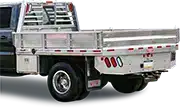
For example, the Diamond C FMAX is a gooseneck flatbed family with GVWRs that vary substantially by model and configuration, from approximately 15,500 pounds to as much as 40,000 pounds. It should not be described as one single 20,000-pound class of trailer. The exact VIN, model, axle configuration, published GVWR, empty weight, and equipment listed on the buyer’s order are what matter to the lender and buyer.
Manufacturer specifications also affect usable payload. GVWR is the maximum rated loaded weight of the trailer, not the amount of cargo it can carry. Approximate payload is determined by subtracting the actual empty or curb weight of the configured trailer from its GVWR, then accounting for installed options, tools, spare tires, attachments, and other items carried on the trailer. Never use the sum of axle ratings as a substitute for the certified GVWR on the trailer’s data plate.
Financing approval does not confirm that your tow vehicle, hitch, tires, brakes, insurance, registration, or driver’s license are suitable. In Indiana, a trailer or semitrailer with a gross weight of at least 3,000 pounds must have brakes adequate to control, stop, and hold the trailer, operable from the tow vehicle’s cab, with automatic breakaway application as required by law.
A trailer over 10,000 pounds does not automatically trigger a CDL by itself. For a commercial combination vehicle, the Class A threshold is generally a gross combination weight rating or actual gross combination weight of 26,001 pounds or more, whichever controls under the rule, with the towed unit exceeding 10,000 pounds. Passenger and placarded hazardous-material operations have separate triggers, and exemptions or additional commercial-carrier rules may apply. Verify the complete truck-and-trailer combination rather than judging licensing from the trailer sticker alone.
Standard, serial-numbered trailers with clear title or manufacturer’s certificate of origin documents are generally easier for a lender to evaluate than homemade trailers, heavily modified units, specialized living-quarters builds, or used trailers with uncertain ownership records. Specialty units can still be financed, but the lender may ask for an appraisal, additional insurance, a larger down payment, or a shorter term.
What to Ask Before You Sign
Ask for the APR, amount financed, finance charge, total of payments, and complete payment schedule, not just the monthly payment. A low payment can hide a longer term, more interest, a larger down payment, added products, or a final balloon obligation.
The APR is broader than the stated interest rate because it reflects the cost of credit using the interest rate and covered loan charges. For a consumer transaction, review the Truth in Lending disclosures before signing. A commercial equipment contract may present information differently, so business buyers should still request a written breakdown of the rate, fees, repayment schedule, collateral, and total contractual obligation.
Ask whether the rate is fixed or variable. Fixed-rate installment financing is common, but the contract controls. Confirm the first payment date, payment frequency, late-fee policy, grace period, returned-payment charge, default rate, and whether automatic payment is required to keep the quoted pricing.
Ask how early payoff works. Do not rely on a salesperson’s statement that you can “pay it off anytime.” Read the prepayment paragraph and ask whether there is a penalty, minimum finance charge, early-termination fee, or different payoff formula. Also confirm whether extra payments automatically reduce principal or are merely credited toward future scheduled payments.
Review every optional item separately. Extended service contracts, roadside programs, theft products, debt-cancellation products, and other add-ons can increase the amount financed and generate interest for the entire term. An optional product should not be presented as a lender requirement unless the lender actually requires it.
Finally, verify the exact trailer, VIN, model year, cash price, trade details, down payment, lienholder, insurance requirement, and out-the-door amount before signing. Keep copies of the buyer’s order, credit contract, title documents, warranty information, payment instructions, and any written promises. Do not leave blank spaces in a signed contract.
Ready to start looking at inventory before you work out financing? Browse what’s available at Spencer Trailers’ current inventory to get a realistic sense of current price ranges and available configurations. Once you know the specific trailer, selling price, GVWR, intended use, and down payment, the financing conversation becomes much more concrete. Or call us at (812) 829-0226 and we can walk through the available purchase and financing steps with you directly.


