


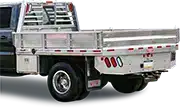
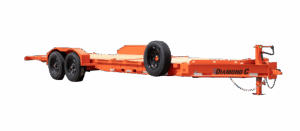




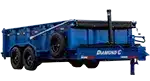


Walk our lot on any given week in Spencer and you’ll notice that certain trailers stay only a few days before they are headed to a job site, farm, landscaping route, or customer driveway. Other configurations take longer to find the right buyer. That pattern, built from years of selling trailers to people throughout Indiana and the surrounding region, tells you a lot about what buyers actually need versus what simply looks impressive in a brochure. This post is a rundown of the models and configurations that consistently attract attention at Spencer Trailers, organized by category and explained with current specifications so you can decide whether one fits your work.
We carry Diamond C, Liberty, Delco, Darkhorse Cargo, H&H, Legend, and Wells Cargo. Not every brand, size, axle package, or loading system sells at the same pace. What follows is an honest look at the trailers that routinely move and the practical reasons buyers choose them. Specifications can vary by model year, factory option, and the way a particular trailer is certified, so always confirm the VIN-specific GVWR, empty weight, payload capacity, axle ratings, tires, coupler, brakes, and dimensions on the trailer you are considering.
Utility Trailers: The Everyday Hauler That Never Sits Long
Liberty LU 6×12 Single-Axle
The Liberty LU 6×12 is one of the most-requested utility trailers at our counter. A common 72-inch-wide by 12-foot configuration uses a single 3,500 lb axle but is certified at 2,990 lb GVWR. That distinction matters: the axle rating is not the same thing as the trailer’s legal GVWR, and usable payload is the 2,990 lb GVWR minus the trailer’s actual empty weight and installed options. Typical equipment includes a treated-wood floor, channel-steel frame, top rail, stake pockets or integrated tie-down points, and a fold-down rear gate that works as a loading ramp.
Open-rail versions are usually among the most affordable full-size utility trailers on the lot, while wider beds, solid sides, upgraded gates, spare tires, and other options increase the final price. Current pricing should always be checked against the actual inventory listing rather than an old advertised figure. Properly matched to the tow vehicle, the LU is a practical choice for zero-turn mowers, compact lawn tractors, brush, landscaping material, household projects, and light equipment. It is easy to store compared with a tandem-axle trailer, but buyers still need to confirm the tow vehicle’s receiver rating, tongue-weight capacity, payload rating, and tire capacity before loading.
Lawn care operators and homeowners with acreage like this trailer for the same reason they buy a dependable chainsaw or compact tractor attachment: it is simple, useful, and likely to be used every week. The fold-down gate is often the feature that turns a browser into a buyer. Loading a mower through a full-width gate is faster and more repeatable than aligning separate portable ramps, provided the gate’s rated capacity and approach angle are appropriate for the machine.
H&H 16-Foot Tandem Utility
When the work gets bigger, buyers often step up to an H&H tandem-axle utility. A current 82-inch by 16-foot rail-side configuration is available at 7,000 lb GVWR with two 3,500 lb axles. That gives the buyer more deck space, a more stable tandem-axle footprint, electric braking equipment, and substantially more usable capacity than a 2,990 lb single-axle trailer. It works well for two ATVs, commercial mowing equipment, compact tractors, landscaping supplies, and building materials, as long as the combined cargo weight, attachment weight, and trailer weight remain within every applicable rating. These trailers sell year-round, but interest rises in spring when mowing crews, contractors, and property owners are preparing for the season.
Dump Trailers: The Category That Moves Everything
Dump trailers are among the most practical purchases on our lot for anyone doing regular site work. You load the material, secure or tarp it as required, transport it, raise the body at the destination, and return for the next load. The models that work best are not necessarily the trailers with the largest number on the VIN tag. The right choice has enough payload and volume for the material being moved, while staying within the tow vehicle’s GCWR, hitch rating, rear-axle rating, tire ratings, and available payload after passengers, tools, fuel, and pin or tongue weight are included.
Liberty 83-Inch x 14-Foot Heavy-Duty Dump, 15,400 lb GVWR
One of the most popular dump configurations we sell is the Liberty heavy-duty 83-inch by 14-foot dump trailer. Although this family is commonly described as a 14K dump, the current bumper-pull specification is 15,400 lb GVWR. Typical running gear includes two 7,000 lb electric-brake Dexter axles, an 8-inch I-beam frame and tongue, a 2-5/16-inch adjustable coupler, and a breakaway system. Liberty offers both scissor-hoist and telescopic-hoist versions in this size, so buyers should verify which lift system is installed on the exact trailer.
Current heavy-duty configurations are available with 24-inch or 40-inch sides, and the rear gate arrangement and other options vary by build. The 83-inch bed width and 14-foot length provide useful volume for mulch, soil, demolition debris, manure, brush, and similar material. Payload is not 15,400 pounds; it is the trailer’s GVWR minus its empty weight, and dense material can reach the weight limit well before the body looks full. Gravel, wet soil, concrete, and shingles require especially careful load calculations and even weight distribution.
A properly equipped three-quarter-ton or one-ton truck may be suitable for many loads behind this trailer, but truck class alone does not guarantee compatibility. Engine, axle ratio, cab style, bed length, hitch, tires, payload package, and manufacturer tow ratings all affect the legal and safe combination. The reason this size often outsells a smaller dump is not simply its maximum rating. A 14-foot body gives contractors and property owners enough floor area and volume to avoid making extra trips, while remaining more manageable than a much longer commercial dump. For buyers who know they will regularly move equipment and bulk material, purchasing enough trailer the first time can prevent an early upgrade.
Diamond C LPT Heavy-Duty Telescopic Dump
For buyers who work a dump trailer hard or want a more heavily optioned platform, the Diamond C LPT is the natural step up. The LPT is a heavy-duty low-profile telescopic dump offered from approximately 15,500 to 24,000 lb GVWR, with 12- to 16-foot bed lengths and bed widths of approximately 81 to 82 inches depending on the package. The standard 207 package uses two 7,000 lb Lippert axles, while higher-capacity packages can use three 7,000 lb axles or tandem 8,000 lb or 10,000 lb running gear. Every package must be evaluated by its certified GVWR rather than by adding axle ratings and assuming the result is cargo capacity.
The LPT uses a three-stage telescopic cylinder mounted toward the front of the dump body and reaches a published 45-degree dump angle. That geometry provides strong lifting leverage without relying on a rear-mounted cylinder arrangement. Current builds use a heavy dump body, with 10-gauge construction standard and heavier material available as an upgrade, plus a three-way rear gate and configuration-dependent ramp, tarp, hydraulic-jack, solar-charging, and remote-control options. The low-profile design helps with loading and center-of-gravity management, but the operator still has to distribute material evenly and keep the trailer level during dumping.
Diamond C builds its trailers in Mt. Pleasant, Texas, and has been manufacturing trailers since 1985. The LPT and Diamond C’s other premium lines use Lippert axles and receive the company’s DM Difference Maker multi-stage coating process, which combines surface preparation, washing, drying, primer, and powder finish rather than relying on a simple one-coat application. Current 2026 Spencer inventory lists six-year structural and two-year comprehensive warranty coverage on new Diamond C trailers; buyers should review the written warranty for exclusions, maintenance requirements, and component-specific coverage. The LPT costs more than a basic dump, but buyers who use the trailer several days per week often value its telescopic hoist, running-gear choices, frame engineering, finish, and factory-option range.
Equipment Trailers: Built for the Machine That Pays the Bills
Diamond C LPX207 20-Foot Equipment Trailer
Contractors moving compact excavators, skid steers, compact track loaders, trenchers, and similar equipment consistently look at the Diamond C LPX. The LPX is the Low Profile Extreme-Duty Equipment line, with current factory GVWR packages ranging from approximately 15,500 to 24,000 lb. Some dealer-stock LPX207 trailers are certified or derated at approximately 14,900 lb, while the current standard 207 package is listed at 15,500 lb GVWR. The 207 package uses two 7,000 lb Lippert axles with electric brakes, approximately 80 to 82 inches of bed width between the fenders, and 14-ply all-steel radial tires.
A 20-foot LPX207 is a practical size for many compact machines because it provides room to position the equipment for proper tongue weight without adding unnecessary deck length. Common loading equipment includes heavy-duty flip-knee ramps. Depending on length, width package, GVWR package, and factory configuration, the LPX can also be ordered with MAX Ramps or the X-Ramp system. Those systems should be selected around the machine’s tire or track width, ground clearance, concentrated load, and preferred loading angle rather than appearance alone.
The standard LPX uses a heavy I-beam frame, while Diamond C’s Engineered Beam technology is used on qualifying higher-GVWR packages and longer models. That distinction matters because not every LPX carries the same frame, axle, coupler, tire, or ramp specification. A properly configured LPX can haul many machines found on residential and light-commercial job sites, but the buyer must verify the machine’s operating weight with bucket, forks, mulcher, fuel, tracks, cab, counterweights, and any loose attachments included. A machine advertised at 7,000 pounds can be substantially heavier once it is ready for work.
The LPX sells because it combines useful deck height, strong fenders and tie-down provisions, multiple loading systems, Lippert running gear, and a broad range of ratings without forcing every buyer into a deckover trailer. Lower empty weight can create more usable payload, but only when the trailer remains strong enough for the concentrated wheel or track loads being carried. Payload should always be calculated from the VIN-specific GVWR and actual trailer weight, then checked against axle, tire, coupler, hitch, and tow-vehicle limits.
Liberty 20-Foot Split-Deck Tilt Equipment Trailer
For buyers who want a straightforward, budget-conscious way to move machinery without handling separate ramps, the Liberty 20-foot split-deck tilt is a consistent mover. The current 14K I-beam split-deck model is actually rated at 15,400 lb GVWR, measures 83 inches wide, and is available in 20- and 22-foot lengths. It uses heavy I-beam construction and tandem electric-brake running gear. The tilting portion lowers the rear loading angle while the stationary section provides a place for attachments or helps with load positioning. The exact operating procedure, deck split, latch arrangement, and hydraulic or dampening components should be confirmed on the individual trailer before use.
A tilt deck reduces the need to lift, store, and align loading ramps, which is valuable for operators who load several times per day. It is still important to approach slowly, keep the machine centered, understand when the deck will transition, and follow the manufacturer’s loading instructions. The 15,400 lb GVWR is the maximum allowable trailer-and-cargo weight, not a 15,400 lb payload rating. This model is a good fit for contractors who need a capable equipment trailer but do not require the higher GVWR, wider loading systems, or extensive option range available on Diamond C’s LPX or HDT lines.
Cargo and Enclosed Trailers
Darkhorse Cargo DHW 7×16 Tandem
The Darkhorse Cargo DHW 7×16 tandem-axle enclosed trailer has become a staple for contractors, motorsports users, mobile businesses, and buyers who want weather-resistant, lockable storage. A current 2026 Spencer-stock configuration measures 7 feet wide by 16 feet long with a full 7-foot, or 84-inch, interior height. It carries a 7,000 lb GVWR on two 3,500 lb axles with electric brakes and uses a 2-5/16-inch coupler and seven-way electrical connection.
Current DHW stock builds can include a rear ramp door with a ramp flap, a 36-inch by 78-inch RV-style side door, 16-inch-on-center floor and wall structure, .080 exterior side panels, a 3/4-inch high-performance floor, engineered-wood interior walls, recessed Cross-Track, a one-piece aluminum roof, interior LED lighting, four D-rings, wall vents, a stone guard, and an interior-mounted spare tire. Those details are much more useful than a generic claim about how the exterior skin is attached because they tell the buyer how the trailer can actually be loaded, organized, tied down, and maintained.
Landscapers use these trailers to keep tools and smaller equipment locked away between jobs. Mobile detailers, service technicians, contractors, bands, motorcycle riders, and racing teams use them as transport and organized workspace. A 7×16 may accommodate motorcycles, compact UTVs, or other powersports equipment, but buyers should not assume every side-by-side will fit. Measure the machine’s overall width, tire width, roof height, wheelbase, turning clearance, and loaded weight, then compare those figures with the rear-door opening, interior fender spacing, ramp rating, interior height, and available payload of the exact trailer.
Wells Cargo Road Force 6×12 Enclosed
The Wells Cargo Road Force is a strong choice when a buyer wants a smaller enclosed trailer from a long-established cargo-trailer manufacturer. The Road Force 6×12 single-axle configuration is rated at 2,990 lb GVWR and uses a single axle with 3,500 lb total axle capacity. A published 6×12 configuration has an approximate empty weight around 1,250 pounds and approximate payload around 1,740 pounds, although doors, interior finish, spare tires, ramps, cabinets, and other options can change those figures.
Road Force construction uses tubular-steel main rails and a steel-framed body with aluminum exterior skin. Depending on the specific model and build, a 6×12 can provide approximately 6 feet 6 inches of interior height, rear cargo access, and a side-entry door. Brake equipment and electrical connection can differ on a 2,990 lb single-axle build, so those items should be checked rather than assumed. This trailer works well for tools, household moves, event equipment, motorcycles, and light commercial cargo. It may be towable by a properly rated SUV or smaller pickup, but the tow vehicle still needs adequate trailer rating, hitch capacity, payload, tongue-weight allowance, tires, and braking performance.
Gooseneck Trailers: For Buyers Who’ve Outgrown Bumper Pull
Diamond C FMAX210, 25,000 lb GVWR
The Diamond C FMAX210 is one of the goosenecks that gets the most attention on our lot. It is a 25,000 lb GVWR Flatbed Max gooseneck with two 10,000 lb Lippert axles, a 102-inch-wide deckover platform, a 16-inch low-profile Engineered Beam frame, and Diamond C’s curved engineered gooseneck. Available lengths run from 20 to 40 feet depending on the selected loading style. Straight-deck, MAX Ramp, XDR Ramp, and hydraulic-dovetail configurations are available in qualifying lengths, so the model code alone does not identify the complete trailer.
Twenty-eight- and 32-foot builds are popular for equipment hauling because they provide enough deck to position compact excavators, track loaders, attachments, and other machinery for proper pin weight. Longer configurations are more common when the buyer needs additional freight space for commercial hauling. MAX Ramps on the FMAX210 are 44 inches wide, spring-assisted, and designed to provide a broad loading surface. Their width is useful for tracked and wheeled machines, but the operator still needs to compare the machine’s track spacing, tire placement, ground clearance, and concentrated loads with the ramp and deck ratings.
The FMAX210 fills the space between a bumper-pull equipment trailer and a larger commercial combination, but it does not automatically make every load legal behind every medium-duty pickup. A Ford F-450, F-550, Ram 4500, or Ram 5500 badge does not by itself establish towing capacity. Cab configuration, wheelbase, rear-axle ratio, chassis equipment, body weight, hitch installation, tires, truck GVWR, rear GAWR, GCWR, and available payload all matter. Gooseneck pin weight is carried by the truck and can use up payload before the trailer reaches its own GVWR.
For commercial operation, the federal Class A CDL threshold is based on the combination, not on the trailer alone. A Class A CDL is generally required when the combination has a GCWR or actual gross combination weight of 26,001 pounds or more, whichever is greater, and the towed unit has a GVWR or actual gross weight of more than 10,000 pounds, whichever is greater. A trailer over 10,000 lb does not create a Class A requirement when the entire combination remains below 26,001 lb. Commercial hot-shot operators also need to evaluate USDOT registration, medical qualification, hours-of-service, insurance, operating authority, apportioned registration, fuel-tax, cargo-securement, and state-specific requirements as applicable.
Diamond C FMAX212, 25,900 lb GVWR
Farmers, construction contractors, equipment dealers, and commercial haulers who need a tandem-dual gooseneck often move up to the Diamond C FMAX212. The FMAX212 is a real 25,900 lb GVWR Flatbed Max model with a 102-inch deckover platform, tandem-dual Lippert running gear, Engineered Beam construction, and available lengths extending from shorter equipment-hauling builds to 40-foot hot-shot configurations. Depending on the order, loading choices can include a straight deck, MAX Ramps, XDR Ramps, or a hydraulic dovetail.
The tandem-dual layout provides a different tire and load-support package from the tandem single-wheel FMAX210 and is useful for heavy equipment, hay, building materials, and commercial freight. It still does not provide 25,900 pounds of cargo capacity. Empty weight changes substantially with length, suspension, flooring, ramps, hydraulic equipment, toolboxes, jacks, and other options. The legal payload is the lowest remaining capacity among GVWR, axle ratings, tire ratings, coupler, hitch, truck ratings, and applicable road or bridge limits. Oversize or overwidth freight may also require permits even when its weight is within the trailer’s rating.
Car Haulers: Moving Vehicles Without Driving Them
Liberty LC10K Open Tandem Car Hauler
The Liberty LC10K open tandem car hauler is a practical option for moving project cars, work vehicles, off-road vehicles, and non-running equipment. The current LC10K is rated at 9,990 lb GVWR and is available 83 inches wide in 18- and 20-foot lengths. It uses two 5,200 lb Dexter electric-brake axles, a 5-inch channel-steel frame and wrapped tongue, removable diamond-plate fenders, a treated-pine floor, a formed front stop rail, side tie-down pockets, and a breakaway system.
A common 20-foot configuration combines an 18-foot main deck with a 2-foot Pro Grip dovetail made with Blackwood Pro lumber and uses 5-foot rear slide-out ramps. That layout gives the buyer a manageable approach angle without requiring the entire deck to be steel. Removable fenders help with door clearance on lower cars, but the buyer should measure the vehicle before purchase. Track width, tire width, wheelbase, front overhang, ground clearance, curb weight, and door position can all determine whether a particular car loads cleanly. Four-wheel tie-downs and securement rated for the vehicle are still required; a front stop rail is not a substitute for proper straps or chains.
Legend Open Aluminum Car Hauler
When lower trailer weight, corrosion resistance, and clean fit and finish matter, buyers often look at the Legend open aluminum car hauler. Legend’s current open car hauler uses an all-aluminum frame and is available in tandem-axle lengths from 16 to 24 feet, with GVWR packages from 7,000 to 14,000 pounds. Published specifications include 83 inches between the fenders, a 24-inch deck height, and 82-inch front-mounted loading ramps.
The lower empty weight commonly associated with an aluminum trailer can preserve more of the tow vehicle’s capacity for the car, tools, tires, fuel, and track equipment, but the exact advantage must be calculated against a comparable steel trailer rather than assumed. Aluminum also resists red rust, although it still requires inspection for damage, loose fasteners, galvanic corrosion around dissimilar metals, and wear at tie-down and ramp points. An open aluminum trailer does not provide weather or theft protection simply because it costs more. Buyers choose it for lower weight, corrosion resistance, appearance, and long-term ownership rather than enclosed protection.
A Quick Snapshot: Most Popular by Category
| Category | Top Seller at Spencer | Key Spec | Typical Buyer |
|---|---|---|---|
| Utility | Liberty LU 6×12 | 2,990 lb GVWR, 3,500 lb axle, ramp gate | Homeowner, lawn care |
| Dump | Liberty LD 83-inch x 14-foot | 15,400 lb GVWR, scissor or telescopic hoist | Landscaper, contractor |
| Equipment | Diamond C LPX207 20-foot | Dual 7,000 lb Lippert axles, approximately 14,900-15,500 lb GVWR | Contractor with compact equipment |
| Cargo / Enclosed | Darkhorse Cargo DHW 7×16 | 7,000 lb GVWR, 84-inch interior height, ramp door | Mobile business, motorsports |
| Gooseneck | Diamond C FMAX210 | 25,000 lb GVWR, 102-inch deck, du
Ready to find your trailer?Browse our full inventory or talk to the Spencer Trailers team. Related Reading |


