


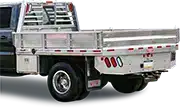
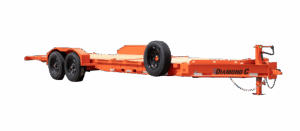



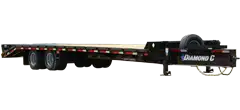
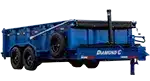

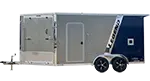
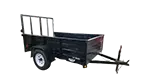

You’re standing on a lot looking at two utility trailers. One is $2,800. The other is $5,400. Both have four wheels, a hitch, and a deck. The salesperson tells you the expensive one is “better built.” That’s not enough of an answer. Before the comparison means anything, you need to know whether the trailers have the same GVWR, usable payload, axle capacity, brake equipment, frame construction, deck dimensions, ramp system, tires, finish, warranty, and dealer support. Two trailers that look similar from across the lot may be designed for very different duty cycles.
Here’s the real answer: it depends entirely on what you’re doing with it. For a homeowner hauling mulch twice a year, the $2,800 trailer may make more financial sense. But if you’re putting 200 or more hours a year on a trailer, loading equipment that costs more than your truck, operating close to the trailer’s rated capacity, or selling your work on the premise of showing up reliably, the premium tier can earn its price through higher-capacity components, more sophisticated loading systems, better corrosion protection, stronger warranty coverage, reduced downtime, and better resale demand.
At Spencer Trailers in Spencer, Indiana, we stock both ends of the market. This post is specifically about the high end: Diamond C and Legend, what makes them genuinely different, and the conditions where paying more actually pays off. It is not an argument that every buyer needs the most expensive trailer. It is an explanation of what the additional money should buy and how to determine whether those features matter for your work.
Diamond C: Engineered for Load, Not Just Listed for It
Diamond C trailers are built in Mount Pleasant, Texas. The family-owned company was founded in 1985 and has developed a broad lineup of utility, equipment, dump, tilt, and gooseneck flatbed trailers. One of the brand’s defining characteristics is its model-specific approach to frame design. Rather than treating every trailer as the same basic frame with a different deck placed on top, Diamond C changes the frame, neck, axle package, loading system, and other structural details according to the trailer’s intended capacity and application. :contentReference[oaicite:0]{index=0}
The signature feature on current Diamond C gooseneck flatbeds is the Engineered Beam. The FMAX is the company’s Flatbed Max gooseneck flatbed family, and current FMAX models use fabricated high-strength steel beams designed specifically for trailer loads. The material is placed where the beam needs strength instead of relying on a generic structural I-beam profile. Current FMAX construction also uses a curved, fabricated 12-inch gooseneck design, with the exact frame depth and steel configuration changing by model and capacity. The point is not that an ordinary beam automatically fails. The advantage is that Diamond C can tune the frame for concentrated equipment loads, deck length, pin weight, ramp geometry, and repeated dynamic loading. :contentReference[oaicite:1]{index=1}
Specific numbers show why the exact model code matters. The FMAX207 is rated at 15,500 lb GVWR and uses tandem 7,000 lb Lippert axles with a 14-inch Engineered Beam. The FMAX210 is rated at 25,000 lb GVWR and uses tandem 10,000 lb Lippert axles with a 16-inch low-profile Engineered Beam. At the upper end, the FMAX216 is offered in 25,900 lb, 30,000 lb, and properly configured 40,000 lb GVWR versions, with tandem 16,000 lb Lippert axles and a 16-inch or 18-inch Engineered Beam depending on configuration. Current FMAX deck lengths range from approximately 20 feet on shorter models to 44 feet on selected heavy configurations. GVWR is the rating for the complete trailer, so usable payload must still be calculated by subtracting the actual empty weight of the finished trailer shown on its certification information. :contentReference[oaicite:2]{index=2}
The loading equipment is equally model-specific. Depending on the trailer and selected package, current Diamond C systems include MAX Ramps, XDR Ramps, the X-Ramp, hydraulic dovetails, and self-cleaning dovetail configurations. Winch trays are available or standard on applicable FMAX packages, but winch capacity, mounting hardware, electrical supply, and line rating must be matched to the equipment being recovered. Diamond C also uses its DM Difference Maker multi-stage coating system rather than treating finish as an afterthought. None of these features permits overloading; they are tools for loading, securing, and maintaining a properly rated trailer more efficiently. :contentReference[oaicite:3]{index=3}
Diamond C isn’t only goosenecks. The LPX Low Profile Extreme-Duty Equipment Trailer covers approximately 15,500 to 24,000 lb GVWR in standard published configurations, with certain dealer-ordered units derated to 14,900 lb. The HDT Hydraulically Dampened Tilt and LPT Heavy Duty Telescopic Dump are also offered across roughly the 15,500 to 24,000 lb range, depending on model and axle package. At the lighter end, the GTU premium tandem-axle utility trailer is a 7,000 lb GVWR design with two 3,500 lb axles and a 4-inch channel frame, while the GST Single Axle Telescopic Dump is rated at 6,000 lb GVWR. Diamond C’s premium FMAX, HDT, LPT, LPX, WDT, and DEC lines use Lippert axles as standard equipment. On current 2026 production, Lippert ABS is standard on applicable 8,000 lb-and-higher axle packages and available on selected 7,000 lb axle configurations, subject to the exact model and production specification. :contentReference[oaicite:4]{index=4}
What the Warranty Says
Warranty coverage must be matched to the trailer’s model year rather than repeated as a single rule for every Diamond C ever built. Diamond C’s Warranty 2.0 program for eligible 2026-and-newer trailers provides a six-year limited structural warranty and two years of comprehensive limited coverage. The structural portion addresses specified parts of the trailer structure, including the main frame, crossmembers, railings, and subframe, subject to the written terms, exclusions, maintenance requirements, and claim procedures. Earlier model years generally carried the previous three-year structural and one-year comprehensive program, so a used 2024 or 2025 trailer should not be represented as having the same coverage as a qualifying 2026 unit. Tires, axles, brakes, hydraulic components, batteries, couplers, jacks, and other supplied parts may also carry separate manufacturer warranties. Read the warranty document for the exact VIN and model year before treating warranty length as part of the purchase value. :contentReference[oaicite:5]{index=5}
Legend Trailers: The Case for Aluminum
Legend Manufacturing is a family-owned Michigan trailer manufacturer that was incorporated in 2002 and began manufacturing trailers in 2003. The company is best known for all-aluminum enclosed and open trailers, although its current product range also includes steel-framed enclosed models. For buyers comparing premium products, the most important distinction is not simply the Legend badge. It is whether the specific trailer is an all-aluminum model, which Legend family it belongs to, and how that construction changes weight, corrosion behavior, floor design, warranty coverage, and intended use. :contentReference[oaicite:6]{index=6}
Aluminum construction can reduce empty weight, but there is no responsible universal claim that every aluminum trailer saves exactly 300 or 400 lb. Weight varies with trailer width, length, wall height, axle package, rear door, interior finish, cabinetry, flooring, spare tire, air conditioning, and other options. The correct comparison is the actual empty weight of two completed trailers with similar dimensions and equipment. Usable payload is the trailer’s GVWR minus its actual empty weight. A lighter trailer can provide more payload within the same GVWR, reduce the load placed on the tow vehicle, or allow a buyer to carry the same cargo with more capacity in reserve. It does not increase the tow rating of the truck, receiver, hitch ball, coupler, tires, or any other component.
The bigger argument for aluminum in Indiana is corrosion resistance. Aluminum does not develop the red iron-oxide rust that attacks an unprotected steel frame, which can be a meaningful advantage where trailers are exposed to winter road salt, moisture, fertilizer, and landscaping materials. That does not make an aluminum trailer corrosion-proof. Aluminum can oxidize, dissimilar metals can create galvanic corrosion, and steel components such as axles, hubs, brake hardware, fasteners, couplers, jacks, springs, and safety chains still require cleaning and inspection. An aluminum trailer used through an Indiana winter should be washed underneath, especially after salted-road travel, and inspected for trapped debris, damaged wiring, loose fasteners, and corrosion around connections between different metals.
Legend’s all-aluminum enclosed models use welded aluminum tube framing and a one-piece aluminum roof. Construction details vary significantly by line. Current Deluxe and Deluxe V-Nose models use closely spaced wall framing and aluminum crossmembers, while Thunder models are built to a different specification and warranty level. Enclosed-trailer floors are commonly 3/4-inch engineered wood over aluminum crossmembers, not automatically an all-aluminum plank floor. Certain open trailers, including the Utility Gate, use extruded aluminum flooring. This is why a buyer should inspect the specification for the exact model rather than assuming that every trailer carrying the same brand name is built identically. :contentReference[oaicite:7]{index=7}
Legend’s Specific Models Worth Knowing
- Legend Deluxe and Deluxe V-Nose: These are premium all-aluminum enclosed lines. Current flat-front Deluxe sizes include single-axle 6×10, 6×12, and 7×12 models, plus tandem-axle lengths from 6×12 through 7×20. Deluxe V-Nose models include single-axle 6×13, 6×15, and 7×15 configurations, with tandem models extending through 7×23. Published GVWRs generally run from 2,990 lb on single-axle configurations to approximately 7,000-8,500 lb on tandem models. Current Deluxe literature includes a limited lifetime structural warranty and a 25-year limited warranty on the aluminum roof, subject to the written warranty terms. :contentReference[oaicite:8]{index=8}
- Legend Thunder Series: Thunder is an all-aluminum enclosed family positioned differently from the Deluxe line. Current Thunder V-Nose offerings include compact single-axle models and tandem-axle trailers extending into contractor-friendly lengths. Published GVWRs range from approximately 2,200-2,990 lb on applicable single-axle models to 7,000 lb on many tandem models, while selected 8.5-foot-wide Thunder configurations are available with higher ratings. Thunder specifications include a two-year limited structural warranty and a 25-year limited aluminum-roof warranty rather than the Deluxe line’s limited lifetime structural coverage. :contentReference[oaicite:9]{index=9}
- Legend Open Deluxe and Utility Gate: Legend’s open aluminum range covers more than one type of flat-deck trailer. Open Deluxe utility models include single-axle and tandem-axle sizes, with published GVWRs from approximately 2,200-2,990 lb on single-axle versions and 5,000 lb on current tandem configurations. The Utility Gate is offered in current 7×12 and 7×14 configurations with a 2,990 lb GVWR, a 3,500 lb torsion axle, an extruded aluminum floor, and a 48-inch bi-fold rear gate. Legend also produces larger open car-hauler and equipment configurations, but their ratings and construction should be verified from the specific model’s certification label and current specification sheet. :contentReference[oaicite:10]{index=10}
Legend warranty coverage is not one universal three-year structural and one-year component package. It changes by product family. Current Deluxe enclosed models advertise limited lifetime structural coverage, Thunder enclosed models carry two-year limited structural coverage, Open Deluxe utility models carry three-year limited structural coverage, and current Utility Gate literature lists one-year limited structural coverage. Roof, axle, tire, door, electrical, and other component coverage may come from separate written warranties. The correct buying question is therefore not, “What is Legend’s warranty?” It is, “What warranty applies to this exact model, model year, and VIN?” :contentReference[oaicite:11]{index=11}
Side-by-Side: Where Premium Pays Off
| Situation | Budget Steel | Premium (Diamond C / Legend) |
|---|---|---|
| Hauling 50x/year, light loads | A properly rated and maintained model may provide the best value for occasional use | Premium loading systems, finish, weight savings, or warranty may be useful, but are not automatically necessary |
| Daily contractor use, 5+ years | Can work when correctly specified, but component quality, finish, parts support, and downtime become more important | Broader heavy-duty configurations, stronger warranty programs, recognized resale demand, and job-focused options can justify the premium |
| Near-GVWR loads regularly | Requires careful payload calculation, loading discipline, and verification of axle, tire, hitch, and brake ratings | More model-specific frame, axle, brake, ramp, and securement choices, but still must never be overloaded |
| Midwest salt exposure | Painted or powder-coated steel needs washing, chip repair, drainage, and regular undercarriage inspection | Aluminum avoids red rust in the main structure; Diamond C’s multi-stage coating protects steel, but both still require maintenance |
| Resale value | Value depends heavily on condition, specification, maintenance records, and local brand recognition | Recognized premium brands often attract a broader used market, although resale value is never guaranteed |
The Real Cost Calculation
A current Diamond C FMAX cannot be represented by one reliable retail price because the family includes multiple GVWRs, lengths, axle packages, brake systems, ramp arrangements, tire packages, toolboxes, hydraulic options, and other equipment. At the time of writing, Diamond C’s published base MSRPs for current FMAX models run from the high teens into the mid-$30,000s before destination charges, dealer-installed equipment, taxes, title charges, or discounts. A 15,500 lb FMAX207 and a 40,000 lb-capable FMAX216 are not comparable products simply because both have flat decks and gooseneck couplers. Before calling one trailer $8,000 more expensive, compare equal GVWR, actual payload, deck length, axle brand and rating, tires, brakes, ramps, winch preparation, coating, warranty, and delivered price. :contentReference[oaicite:12]{index=12}
Then run the numbers over the period you expect to own it. Include the purchase price, financing cost, insurance, tires, brake service, bearings, deck maintenance, battery replacement, hydraulic service, coating repairs, scheduled inspections, unexpected repairs, lost work, and eventual resale value. Downtime is often the largest hidden cost. For example, an $8,000-cheaper trailer that later requires a major repair plus three missed workdays can lose much of its initial advantage if those days would otherwise have produced several thousand dollars in gross profit. That is only an example, not a prediction that every lower-priced trailer will fail. The right calculation uses your actual billing rate, operating schedule, maintenance habits, available backup equipment, and local repair costs.
The same discipline applies to a Legend enclosed trailer. Compare two completed trailers with equivalent dimensions, rear-door capacity, interior height, axle rating, electrical equipment, wall and floor finish, and warranty rather than comparing a stripped aluminum trailer with an option-heavy steel unit. Also include the transaction and tax rules accurately. Indiana residents generally have 45 days to register a newly acquired unregistered vehicle, and late title applications can result in a penalty. Indiana’s dealer-document-fee guidance is updated annually: the Attorney General’s no-enforcement threshold was $251.05 beginning July 1, 2025, and increased to $261.72 beginning July 1, 2026; that guidance should not be described casually as an unlimited fee or an unchanged permanent cap. For qualifying business property acquired and placed in service after January 19, 2025, federal law restored 100% bonus depreciation, but that is a tax deduction rather than an instant discount, and eligibility depends on the purchaser, business use, basis, placed-in-service date, and other tax facts. Have a qualified tax professional apply the rules to your business before using a potential deduction to justify the purchase. :contentReference[oaicite:13]{index=13}
When You Should Buy Budget Instead
This is where a lot of trailer salespeople lose credibility: they never tell you when not to buy the expensive thing. So here it is. If the trailer will spend most of its life parked, carry modest loads, remain comfortably below its payload limit, and operate close to home where a repair would not shut down a crew, paying for the heaviest frame, most advanced ramps, largest axles, or longest warranty may not produce a meaningful return.
If you haul recreational equipment, seasonal loads, or light personal cargo such as ATVs, lawn equipment, mulch, or occasional furniture, a properly specified mid-grade steel trailer may be the right call. H&H currently offers utility products from light 2,990 lb GVWR configurations through 7,000 lb tandem utilities and heavier 9,900-14,000 lb models. Delco’s current dump-trailer range extends from approximately 7,000 lb to 22,000 lb GVWR depending on model. That means neither brand should be reduced to one price point or one light-duty category. Choose according to payload, axle package, hoist design, brakes, deck or floor construction, local service, and the number of work cycles the trailer will see. :contentReference[oaicite:14]{index=14}
The premium tier is not for everyone. It is most defensible for people who use a trailer frequently, need specialized loading equipment, operate in demanding environments, value a strong warranty and recognizable resale market, or repeatedly carry loads that justify a heavier configuration. A lower-priced trailer that is correctly rated, properly loaded, maintained on schedule, and used within its design limits is a better purchase than an expensive trailer that is overloaded or neglected.
What to Ask Before You Buy
Before committing to any trailer at any price point, three questions cut through the noise:
- What is the actual GVWR, empty weight, and usable payload, and what percentage of that capacity will I regularly use? Payload is not the same as GVWR. Subtract the finished trailer’s actual empty weight from its GVWR, then confirm that the load also stays within the axle, tire, wheel, coupler, hitch, receiver, tow-vehicle, and cargo-securement limits. Indiana requires brakes on trailers over 3,000 lb GVWR, including a system that meets the state’s control and breakaway requirements. For commercial operation, a Class A CDL threshold generally involves a combination rated at 26,001 lb or more when the towed unit is rated over 10,000 lb. A trailer rating over 10,000 lb by itself does not automatically create that Class A threshold when the qualifying combined rating is below 26,001 lb. Commercial status, actual ratings, use, and applicable exemptions still matter, so verify the exact combination before operating. :contentReference[oaicite:15]{index=15}
- What does the warranty cover, specifically, for this model year? “Structural” coverage is different from comprehensive coverage, and neither automatically covers wear items, misuse, overloading, corrosion, transportation, lost income, unauthorized modifications, or every component installed by a supplier. A qualifying 2026 Diamond C may carry six-year structural and two-year comprehensive limited coverage, while earlier Diamond C trailers follow the earlier program. Legend coverage varies from one product family to another. Read the complete warranty and confirm how claims are handled by the selling dealer.
- What’s the realistic resale market for this exact configuration in five years? Brand recognition helps, but buyers also look at capacity, deck length, axle rating, brake type, ramp design, corrosion, tire age, floor or deck condition, hydraulic leaks, wiring repairs, accident damage, maintenance records, and whether the VIN and title match the trailer. A recognized premium model in poor condition may be worth less than a carefully maintained mid-grade trailer. An unfamiliar brand with weak parts support and incomplete documentation can be harder to sell even when its initial purchase price was attractive.
We stock Diamond C and Legend at Spencer Trailers’ current inventory, and our selection changes regularly. Published specifications, factory options, dealer-installed equipment, prices, and warranty programs can change by model year, so use the certification label and written sales order for the trailer you are actually buying. If you’re trying to figure out whether a specific job warrants the premium tier or whether a mid-grade unit covers your needs, that’s a conversation worth having in person. Reach out or stop by at 291 West State Hwy 46 in Spencer. The answer isn’t always “buy the expensive one,” and we’ll tell you that straight.
What’s your current trailer costing you in maintenance, repairs, lost payload, difficult loading, and downtime? Put a real number on those costs, compare trailers with equivalent ratings and equipment, and you will have the starting point for an honest decision about whether it is time to move up.


