





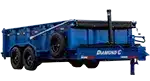

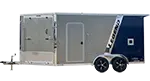
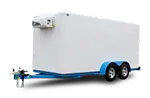
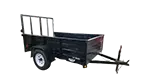

Steel trailers can rust when damaged coatings expose the frame to moisture, road salt, and oxygen. That is not a criticism of steel construction; it is a maintenance reality for any painted ferrous structure. Legend built its reputation by approaching that problem with aluminum tube construction on its premium enclosed, open, and snow-and-sport trailers. Aluminum does not form the red iron oxide associated with steel rust, and a properly engineered aluminum trailer can combine lower empty weight with strong resistance to winter-road corrosion. Legend now also offers steel enclosed cargo trailers, so the material and specifications should always be confirmed for the exact model being considered.
Spencer Trailers stocks and orders Legend trailers at our location on West State Highway 46 in Spencer, Indiana. Buyers regularly ask whether aluminum is worth the higher initial cost, how Legend’s current models differ, and which specifications matter most. Here is what actually matters about the brand and its current lineup.
Why All-Aluminum Construction Is a Real Advantage
Aluminum does not rust in the same way carbon steel does, but it is not maintenance-free. Aluminum naturally forms a protective oxide layer and can still experience surface oxidation, pitting, or galvanic corrosion when it remains in contact with road salt, trapped moisture, or dissimilar metals. Axles, brakes, couplers, fasteners, wiring connections, wheels, and door hardware may also contain steel or other materials that still require cleaning and inspection. An aluminum trailer used through an Indiana winter should be rinsed underneath, especially after exposure to road brine, and inspected on the same regular schedule as any other trailer. The advantage is that the aluminum frame itself does not depend on paint or powder coating to prevent conventional steel rust.
The weight advantage can be meaningful, but it should be evaluated from finished-trailer specifications rather than a blanket percentage. Aluminum has roughly one-third the density of steel, although an aluminum structure generally uses larger or differently shaped members to achieve its required strength and stiffness. The result is often a lighter finished trailer when two comparably equipped models are considered. Payload is calculated by subtracting the trailer’s actual unloaded weight from its GVWR. As a real-world example, a 2,990 lb GVWR Legend 7×12 Utility Gate configuration can weigh about 700 lbs before cargo, leaving approximately 2,290 lbs of published payload. Added options, a spare tire, toolboxes, batteries, racks, or permanent equipment reduce the remaining cargo capacity, so the VIN-specific weight and certification label should control every calculation.
Lower empty weight can also reduce the work required from the tow vehicle during acceleration, climbing, braking, and stop-and-go driving. At steady highway speed, aerodynamic drag from an enclosed trailer may influence fuel consumption more than a modest weight difference, so buyers should not expect a guaranteed mileage increase. The more important towing benefit is often having more of the tow vehicle’s rated capacity available for useful cargo. That benefit still has to fit within the truck’s receiver rating, hitch rating, payload rating, rear-axle rating, gross vehicle weight rating, and gross combination weight rating.
The Legend Lineup: Enclosed, Utility, and Snowmobile
Legend’s current catalog reaches beyond one trailer type. Its aluminum products include enclosed cargo trailers, snow-and-sport trailers, utility trailers, car haulers, equipment haulers, deckovers, and tilt models. Legend also offers Cyclone steel enclosed trailers and a galvanized steel dump-trailer line. For most buyers visiting our lot, the three most frequently discussed categories remain enclosed cargo, open utility, and enclosed snowmobile or powersports trailers.
Enclosed Cargo Trailers
Legend’s current aluminum enclosed cargo lineup begins with the Thunder V-Nose and progresses through the Flat Top V-Nose, Legend Deluxe, Deluxe V-Nose, and 8.5-foot-wide Trailmaster families. Thunder V-Nose models cover compact single-axle sizes as small as 5×9 as well as 6- and 7-foot-wide configurations, with 7-foot-wide tandem models extending through approximately 22 feet overall model length. Flat Top V-Nose and Deluxe V-Nose models are offered in 6- and 7-foot widths, with single- and tandem-axle configurations extending through the 7×23 size. The Trailmaster Flat Front, Trailmaster 3-Foot V-Nose, and Trailmaster Race Series serve buyers who need an 8.5-foot-wide cargo, vehicle, or motorsports platform, with current Trailmaster Flat Front lengths running from 16 to 32 feet.
GVWR depends on the exact model and running gear. Thunder V-Nose single-axle models range from approximately 2,200 to 2,990 lbs, while the standard tandem Thunder models are rated at 7,000 lbs. Flat Top V-Nose and Deluxe V-Nose single-axle models are commonly rated at 2,990 lbs, with tandem configurations available from 7,000 to about 8,500 lbs. The 8.5-foot-wide Trailmaster Flat Front spans approximately 7,000 to 14,000 lbs GVWR, depending on length and axle selection. Current aluminum enclosed models generally use E-Z Lube torsion running gear, but axle capacity, brakes, wheels, tires, coupler, and GVWR must be verified from the individual build sheet. Compact single-axle models may have an idler axle, while tandem 7,000 lb configurations commonly use two 3,500 lb axles with electric brakes. Rear and side-door equipment also varies: most 6- and 7-foot cargo models use a rear ramp and curbside entry door, while the compact 5×9 Thunder uses a swing-out rear door and does not include the same side-door arrangement.
One of the strongest practical features on Legend’s aluminum enclosed line is the one-piece aluminum roof. Eliminating a sheet-metal seam down the length of the roof removes one potential leak path, but it does not eliminate roof maintenance. Perimeter joints, vents, roof accessories, marker lights, fasteners, and sealants still need inspection. Buyers should also understand what “all-aluminum” describes. On these models, the structural tube frame, wall studs, roof bows, exterior skin, and roof are aluminum, while many configurations use a 3/4-inch engineered wood floor and engineered wood interior wall panels. For example, Thunder, Flat Top V-Nose, Deluxe V-Nose, Explorer Snow, and Trailmaster specifications commonly list engineered wood flooring rather than a bare aluminum cargo floor. That combination is normal and should be evaluated by looking at the complete construction specification, not only the frame material.
Aluminum Utility Trailers
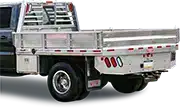
Legend’s open aluminum lineup includes the Aluminum Low Side, Aluminum High Side, Open Deluxe, Utility Gate, and Tilt Utility models, followed by open car haulers, tilt car haulers, equipment haulers, and deckover trailers. Deck material varies by product and configuration. Some models use treated wood, while Utility Gate units commonly stocked by Spencer may use an extruded aluminum floor. Gates also vary. The Utility Gate uses a 48-inch fold-in removable bi-fold ramp gate designed to reduce wind resistance compared with a tall upright mesh gate, while the Tilt Utility provides a dampened tilting deck for loading without a separate rear ramp.
The Aluminum Low Side and High Side are current 6×10 and 6×12 single-axle models rated at 2,990 lbs GVWR. The Open Deluxe covers single-axle sizes from 5×8 through 7×14, with ratings from about 2,200 to 2,990 lbs, and tandem 7×14, 7×16, and 7×18 configurations rated at 5,000 lbs. The Utility Gate is offered as a 2,990 lb single-axle 7×12 or 7×14 and as a 7,000 lb tandem model in longer configurations. A single-axle Utility Gate uses a 3,500 lb E-Z Lube torsion idler axle, while the 7,000 lb tandem version uses dual 3,500 lb torsion axles with electric brakes. Legend also uses spring axles on products such as the Low Side, High Side, and Open Deluxe, so “Legend utility trailer” does not describe one universal suspension package. The exact axle style, deck, gate, brakes, payload, and tire specification should always be checked model by model.
Snowmobile Trailers
Legend’s current snow-and-sport lineup includes the Thunder Snow, Explorer Snow, Deluxe Snow, Trailmaster, and Sport Lite. These models use aluminum tube frames and front and rear ramp doors to support drive-on, drive-off loading for snowmobiles, ATVs, and other powersports equipment. The 7-foot-wide Explorer Snow is available in single-, tandem-, and triple-axle configurations. Current Explorer Snow sizes include 7×17 and 7×19 single-axle models, several tandem lengths from 7×17 through 7×31, and a 7×31 triple-axle model. GVWR ranges from 2,990 lbs on single-axle units to approximately 7,000 or 8,500 lbs on larger configurations. Explorer Snow specifications include a one-piece aluminum roof, 3/4-inch engineered wood floor, white vinyl walls and ceiling, a lower wood kick panel, front and rear ramps, and model-specific storage and lighting.
Corrosion resistance is especially useful on a snowmobile trailer because winter road spray reaches the tongue, frame, fenders, axles, brake assemblies, wiring, and ramp hardware on almost every trip. An aluminum frame removes the conventional steel-frame rust concern, but road salt should still be washed away. Brake backing plates, wheel hardware, safety chains, couplers, jacks, fasteners, electrical grounds, and any steel components remain vulnerable. Aluminum can also pit when concentrated salt is allowed to remain in seams or against dissimilar metal. A winter trailer lasts longest when it is rinsed, dried, lubricated where specified, and inspected rather than treated as maintenance-free.
How Legend Compares to Other Brands We Carry
| Brand | Frame Material | Primary Strength | Best For |
|---|---|---|---|
| Legend | Aluminum tube on premium enclosed, open, and snow lines; steel enclosed models also available | Low-weight aluminum options, corrosion resistance, premium enclosed construction | Winter exposure, payload-sensitive hauling, cargo, utility, and powersports use |
| Wells Cargo | Steel or all-aluminum, depending on model | Broad enclosed and specialty-trailer selection | Cargo, commercial, automotive, motorcycle, and snowmobile applications |
| Darkhorse Cargo | Steel frame with aluminum exterior skin | Configurable enclosed trailers across multiple equipment levels | General cargo, contractor, powersports, and value-focused enclosed builds |
| H&H | Steel or aluminum, depending on model | Wide open, enclosed, utility, tilt, dump, and car-hauler lineup | Landscape, utility, equipment, vehicle, and dump applications |
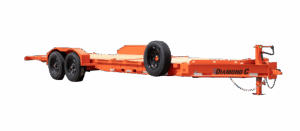
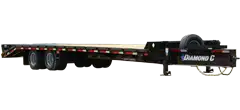
| Diamond C | Premium steel frame | Heavy-duty equipment, dump, tilt, and gooseneck engineering | Commercial equipment, dump, deckover, and high-capacity hauling |
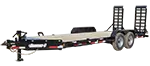
The comparison is not about one material or manufacturer winning every category. It is about matching the trailer’s construction, capacity, loading system, and maintenance requirements to the work. Wells Cargo offers both traditional steel-frame and all-aluminum products. H&H also builds both steel and aluminum models, so it should not be treated as an exclusively steel manufacturer. Darkhorse’s enclosed cargo products generally use a steel structural frame with aluminum exterior metal. Diamond C specializes in premium open steel trailers, including FMAX goosenecks, HDT tilt equipment trailers, LPT dump trailers, LPX equipment trailers, WDT tilt models, and DEC deckover equipment trailers. Diamond C’s premium lines use LIPPERT axles as standard, and its steel structures are protected by the DM Difference Maker multi-stage coating system. A buyer moving heavy machinery may prefer the capacities and loading systems available from Diamond C or H&H, while a buyer prioritizing lower empty weight and reduced frame-rust exposure may prefer a Legend aluminum configuration.
A Few Questions We Hear Often
Is aluminum as strong as steel?
Either material can produce a strong, safe trailer when the structure is designed for the properties of that material. Aluminum and steel do not have identical strength, stiffness, fatigue, or welding characteristics. Aluminum typically requires larger tube sections, different wall thicknesses, and careful joint design to deliver the intended capacity. That is why the meaningful comparison is not a loose statement that one material is stronger. Buyers should compare the trailer’s GVWR, GAWR, frame design, crossmember spacing, tongue construction, tie-down ratings, ramp rating, and certified payload. Legend’s aluminum models use engineered tube frames and model-specific structural members. The manufacturer places a certification label on the completed trailer showing its ratings and tire information; that label, rather than an assumption about the material, determines the legal maximum. Road shock should be managed by the suspension, tires, running gear, and complete frame design, not by assuming that extra frame flex is automatically beneficial.
Can aluminum trailers be repaired?
Yes, but structural repairs should be performed by a shop qualified to weld and repair aluminum trailers. Aluminum requires different filler material, preparation, heat control, shielding gas, and welding technique than ordinary carbon steel. A repairer should identify the alloy and understand whether the damaged part is a structural extrusion, sheet panel, tongue member, crossmember, or cosmetic skin. Improper heat input can weaken material around a weld or create a new stress concentration. Exterior panels, trim, doors, hinges, and other modular parts may be replaceable without reconstructing the main frame, and model-specific parts can often be sourced through a Legend dealer when available. The correct repair method depends on the location and severity of the damage, so a bent tongue or cracked structural weld should not be treated like a simple skin-panel replacement.
Do Legend trailers cost more than steel?
Comparable aluminum trailers usually carry a higher initial price than basic steel-frame trailers because of raw-material cost, extrusion design, welding requirements, and premium components. The comparison needs to be made between similarly equipped units, however. Width, length, interior height, axle capacity, brakes, wheels, ramp rating, wall finish, tie-downs, lighting, cabinets, spare tire, and warranty can create a larger price difference than the frame material alone. Aluminum may reduce future frame-rust repairs and can retain an attractive appearance with less coating maintenance, but it still requires bearing service, brake adjustment, tire replacement, sealant inspection, electrical maintenance, washing, and structural checks. Total ownership cost depends on exposure, annual mileage, loading practices, storage, maintenance, resale conditions, and how long the trailer remains in service. Buyers planning long ownership in wet or salty conditions often find the aluminum premium easier to justify, but it should be evaluated against the exact build rather than assumed to pay for itself automatically.
What to Look at When You Come In
When you inspect a Legend trailer at our Spencer location, begin with the VIN and certification label. Confirm the GVWR, GAWR, tire size, wheel rating, recommended tire pressure, and cargo capacity for that specific unit. Then inspect the tongue, coupler attachment, safety chains, jack, welds, crossmembers, axle mounting points, ramp hinges, door frames, and roof perimeter. Aluminum welds should be consistent and free from visible cracks, but appearance alone does not establish structural quality. Operate the rear ramp and side door, check the latches and holdbacks, and look for loose hardware, damaged seals, floor movement, water staining, or separation around the ramp transition. A small amount of engineered movement can be normal; cracking, looseness, delamination, or distorted hinge structure is not.
Measure the cargo path rather than relying only on the nominal trailer width. A current 7-foot-wide Thunder, Flat Top V-Nose, or Deluxe V-Nose commonly has approximately 79 inches of interior box width, not more than 81 inches. Rear-door openings can be narrower: approximately 74 inches on many 7-wide Thunder models and about 71 inches on Flat Top V-Nose or Deluxe V-Nose configurations. An 8.5-foot-wide Trailmaster Flat Front has approximately 97.5 inches of interior box width, about 83 inches between the interior fenders, and a rear-ramp opening around 90 inches wide. Standard interior height on many current aluminum cargo models is approximately 78 inches, although compact models and optional-height builds differ. For an ATV, UTV, motorcycle, mower, or car, verify overall width, tire width, mirror clearance, roof clearance, ramp-door opening, fender spacing, ramp angle, and usable floor length.
Ask us to calculate payload from the completed trailer, not merely from the axle ratings. GVWR is the maximum loaded trailer rating and may be lower than the arithmetic sum of the axle capacities. Part of the loaded weight is carried at the hitch as tongue weight, and the tow vehicle must have enough payload and rear-axle capacity to carry it. Confirm whether the trailer has brakes on the required axles, whether your vehicle has a compatible brake controller, and whether the breakaway system is operational. Indiana requires brakes on trailers with a GVWR over 3,000 lbs, which is one reason many light single-axle models are rated at 2,990 lbs while 7,000 lb tandem models use electric brakes. A trailer rated over 10,000 lbs does not by itself create a Class A CDL requirement. Under the usual federal and Indiana classification, the Class A threshold involves a combination rated at 26,001 lbs or more with the towed vehicle rated over 10,000 lbs, subject to the vehicle’s use and any applicable exemptions. Indiana buyers should also complete title and registration requirements within the state’s 45-day penalty-free window.
Browse our current trailer inventory to see which Legend units are available or on order, and review our recently sold trailers to compare sizes, GVWR ratings, axle packages, floors, gates, and enclosed-trailer options. Inventory specifications and prices can change, so confirm every feature from the individual listing, VIN label, and build sheet. If the size or configuration you need is not on the lot, we can help order an aluminum cargo, utility, snow-and-sport, car-hauler, or equipment model with the appropriate running gear and options. Contact us at (812) 829-0226 and we will walk through the build details with you.
The useful question is not whether aluminum is universally better than steel. It is whether lower empty weight, an aluminum structural frame, and reduced dependence on painted-frame corrosion protection match the way you haul and store your trailer. For many Indiana owners who tow through winter, park outdoors, or need to preserve as much payload as possible, those advantages are substantial. For other buyers, the capacity, purchase price, or specialized loading system of a premium steel trailer may be the better fit. The best way to decide is to compare the certification labels, construction, door openings, payload, running gear, and real build quality side by side.


