


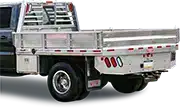
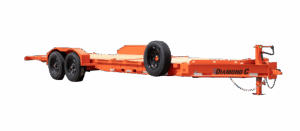







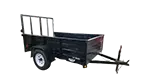

You probably don’t need a gooseneck. You don’t need a 20-foot flatbed. What you may need is a trailer that fits comfortably in a residential driveway, can be matched to a properly equipped pickup or SUV, and handles everything from lawn equipment to brush, bagged landscape material, powersports machines, and weekend cleanup runs. That’s exactly the space the Liberty LU3K single-axle utility trailer was built to fill.
Spencer Trailers carries the Liberty LU lineup, and it is one of those practical trailer families that gets recommended frequently around Spencer and Owen County. Liberty Trailers was founded in 1998 and builds trailers in Fillmore, Indiana, making the LU an especially natural fit for buyers looking for an Indiana-built utility trailer. It is not trying to replace a heavy equipment trailer or dump trailer. It is designed to provide a straightforward open utility platform with a useful rear loading gate, a treated wood deck, and enough available sizes to match common residential, agricultural, powersports, and light commercial jobs.
What the LU Series Covers
The compact single-axle model most buyers are considering is the Liberty LU3K. It is offered in nominal widths of approximately 60, 72, 78, and 83 inches, with available deck lengths ranging from 8 to 14 feet depending on the selected width and configuration. Not every width is produced in every length, so it is better to shop by the trailer’s listed inside dimensions than to assume every combination between 5×8 and 7×14 is available. Current Spencer Trailers inventory commonly includes configurations such as 72×10, 78×12, 83×12, and 83×14.
The LU3K uses a single 3,500-pound-rated axle with E-Z lube hubs, but the trailer itself carries a 2,990-pound GVWR. Those two numbers are not interchangeable. The axle rating describes the axle assembly, while the GVWR is the maximum allowable weight of the loaded trailer. Actual cargo capacity is the GVWR minus the trailer’s empty weight. For example, current 83×12 LU3K builds weighing about 1,200 pounds provide approximately 1,790 pounds of listed payload, while an 83×14 weighing about 1,250 pounds provides approximately 1,740 pounds. Options such as solid sides, additional tie-downs, a spare tire, or other equipment can change the empty weight and therefore the available payload.
For buyers who need more capacity, the broader LU family also includes the single-axle LU5K and tandem-axle LU7K, LU10K, and LU14K configurations. A current 83×14 LU5K, for example, carries a 5,000-pound GVWR and approximately 3,650 pounds of listed payload, while an 83×14 LU7K uses tandem 3,500-pound axles, electric brakes, a 7,000-pound GVWR, and approximately 5,150 pounds of listed payload. Those are materially different trailers with different hitch, brake, tow-vehicle, and loading requirements. Buyers should choose the model by cargo weight and operating conditions, not merely by deck dimensions.
On the LU3K, current specifications include a 4-inch channel steel frame, 2.5×1.5-inch tube top rails, rolled fenders, treated wood decking, radial tires, LED lighting, a 2-inch coupler, and a 7,000-pound drop-leg jack. Single-axle construction eliminates the tire scrub that occurs when tightly turning a tandem trailer and generally makes the trailer simpler to maneuver around a shop or driveway. Even so, an empty LU can weigh well over 1,000 pounds, so a trailer dolly, level surface, and safe handling technique are preferable to trying to muscle it into position by hand.
Mesh Sides vs. Solid Sides: Pick Your Job
Most standard LU utility trailers use an open rail-side body with tubular top rails and a treated wood floor. The rear ramp gate uses expanded metal over a steel gate frame. Spencer Trailers also receives solid-side LU builds, including current configurations with approximately 22-inch V-crimped steel sides. High-side, side-gate, color, tie-down, and other configurations can depend on current inventory or factory availability, so buyers should compare the actual build sheet rather than relying only on a broad model-family description.
- Open rail-side configurations are well suited to lawn mowers, ATVs, golf carts, compact equipment, hand tools, bagged material, and properly contained brush. The open sides make it easy to see the load, reach tie-down points, and clean the deck. They also present less solid surface area to crosswinds than a full-height steel-sided body. Brush, grass clippings, trash, and other lightweight material still need to be contained and secured so nothing can leave the trailer in transit.
- Solid-side configurations provide additional containment for bagged landscaping material, firewood, leaves, small debris, and similar cargo. The sides can make cleanup work more convenient, but they do not turn the LU into a dump trailer and do not replace proper tie-downs or a tarp. Dense materials such as sand, soil, and gravel can exceed a single-axle trailer’s payload surprisingly quickly, so the load must be weighed or calculated carefully and distributed within the trailer, axle, tire, hitch, and tow-vehicle limits.
The choice comes down to what you regularly carry and how you plan to unload it. An open rail-side LU is usually the more versatile equipment hauler. A solid-side build adds useful containment for property cleanup and landscaping work, but it also adds empty weight, wind area, and material that must be considered when calculating payload. On either version, cargo should be secured with appropriately rated straps or chains attached to suitable tie-down points. The side panels and rear gate should never be treated as the only cargo-securement system.
The Ramp Gate: Small Detail, Big Difference
A rear loading ramp gate is included on LU utility configurations, and current Spencer-stocked LU3K trailers commonly use a 48-inch rear gate. Many current builds also have additional vertical uprights in the gate frame. Lowering the gate creates a direct loading path for riding mowers, push spreaders, generators, powered wheelbarrows, ATVs, golf carts, and other wheeled equipment without requiring a separate pair of portable ramps.
The gate is useful, but the trailer and machine still need to be measured as a complete system. Check the machine’s overall width, including the mower deck, discharge chute, tires, attachments, and anything that extends beyond the wheel track. Confirm the clear gate opening rather than relying only on the advertised deck width. An 83-inch-wide deck gives many zero-turn mowers and powersports machines more room than a 60- or 72-inch model, but it will not fit every machine.
Also verify the equipment’s actual operating weight, the gate’s load rating, the trailer’s remaining payload, and the loading angle. A mower with fuel, attachments, bagging equipment, or ballast can weigh considerably more than its basic published dry weight. Equipment with low ground clearance or a long wheelbase may drag at the transition between the gate and deck, particularly when the trailer is parked on uneven ground. Load on level, stable ground whenever possible, keep bystanders clear, and follow the trailer and equipment manufacturers’ loading instructions.
How the LU Stacks Up Against Comparable Trailers
| Trailer | Type | Deck Size | Axle Config | Ramp Gate |
|---|---|---|---|---|
| Liberty LU3K | Rail-side utility | 60-83 in. wide; 8-14 ft. long by configuration | Single 3,500-lb axle; 2,990-lb GVWR | 48-in. rear ramp gate on current builds |
| H&H Rail Side | Rail-side utility | 60-82 in. wide; single-axle models through 14 ft. | Single 3,500-lb axle; 2,990-lb GVWR on 3K models | Full-width fold-flat ramp gate |
| Diamond C PSA | Premium single-axle utility | 77-83 in. wide; 10-14 ft. long | Single axle; 2,990-lb or available 6,000-lb GVWR package | Loading-gate configuration varies by build |
| Delco U1/U2/U3 | Rail-side utility | 60, 77, or 83 in. wide; 8-14 ft. long | Single 3,500-lb idler axle; 3K-class GVWR | Gate or ramps available as options |
The Liberty LU3K competes most directly with the H&H Rail Side Utility and single-axle Delco U-series trailers. The important differences are not simply the brand names. Compare the exact deck dimensions, frame construction, gate design, gate assistance, tire size, jack, coupler, tie-down layout, spare-tire equipment, empty weight, payload, warranty, and installed options. H&H’s comparable rail-side models include a full-width fold-flat ramp gate, while Delco’s standard configuration can be ordered with the buyer’s preferred gate or ramp arrangement.
The Diamond C PSA occupies a more premium position in the compact single-axle utility category. It uses Diamond C’s engineered 4-inch channel frame design and is available in 2,990- and 6,000-pound GVWR configurations, depending on how it is ordered. Current Spencer-stocked PSA trailers may include spring-assisted bi-fold gates and additional premium equipment, but the exact gate and option package should be confirmed on the individual unit. For buyers prioritizing a practical Indiana-built utility trailer at a value-oriented price, the LU3K remains a strong fit. For buyers who need greater structural capacity, more sophisticated gate options, or heavier-duty daily commercial use, stepping up within the Liberty range or comparing the Diamond C PSA and GTU lines may make more sense.
Who’s Actually Buying These?
Lawn care operators running a solo or two-person crew. Homeowners maintaining several acres. Small landscapers doing residential work. Farmers who want a lighter trailer for parts runs, fencing supplies, lawn equipment, or carrying scrap from field repairs. Powersports owners hauling an ATV, golf cart, or appropriately sized side-by-side. Those are the jobs where a compact LU can strike the right balance between deck space, payload, storage footprint, and purchase price.
It can also be a useful option for regular trips to a transfer station, compost facility, or recycling center. An open rail-side model works well for bagged waste and properly contained brush, while a solid-side model provides more containment for leaves and small debris. Local facilities can have their own rules concerning tarps, prohibited materials, load separation, and how debris must be secured, so confirm those requirements before loading. Whatever the side style, the load must remain contained throughout the trip.
A properly loaded LU3K can be compatible with many pickups and some SUVs, but it is not accurate to assume that every half-ton truck or crossover can tow every LU configuration. Check the tow vehicle’s specific tow rating, GCWR, receiver rating, ball size, payload capacity, rear-axle rating, and allowable tongue weight. The driver’s door-jamb label and owner’s manual apply to the actual vehicle, including its engine, axle ratio, cab, bed, drivetrain, passengers, and installed equipment. The trailer’s loaded weight, not its empty brochure weight, is the number that matters.
The same principle applies when moving from an LU3K to an LU5K or LU7K. More trailer capacity does not automatically give the tow vehicle more capacity. A heavier trailer may require a higher-rated receiver, a different ball and mount, trailer brakes, an in-cab brake controller, and a tow vehicle with substantially more available payload. The safest combination is one in which every component is rated for the actual load and the trailer remains within its certified GVWR.
A Few Things to Know Before You Buy
Single-axle trailers do not have the tire redundancy of a tandem. If a tire fails on the road, the trip stops until the tire is replaced. That is not a criticism of the LU; it is a category-level consideration. Carry a correctly sized, properly inflated mounted spare along with a jack and lug wrench capable of working with the trailer. Many Spencer-stocked LU trailers include or are equipped with a matching spare, but the exact inventory unit should be checked. Inspect tire condition and pressure, wheel-lug torque, hubs, lights, coupler engagement, safety chains, and the load before every trip.
Indiana’s trailer-brake requirement also matters when comparing LU models. Indiana law requires brakes on a trailer with a gross weight of at least 3,000 pounds when operated on a highway, along with a system the driver can apply from the tow vehicle and a breakaway provision. The LU3K’s 2,990-pound GVWR is below that threshold when the trailer is kept within its rating. Higher-GVWR LU models must have the appropriate compliant brake and breakaway equipment. Current LU7K builds use electric brakes, but buyers should confirm the brake arrangement on the exact LU5K, LU7K, or other higher-capacity unit and verify that the tow vehicle has the necessary controller and wiring.
Think about gate clearance and loading angle as well. A trailer that works perfectly on level pavement may behave differently at a crowned driveway, ditch entrance, field edge, or steep approach. Confirm the deck height, gate length, breakover angle, and equipment ground clearance. A wider trailer may solve a mower-deck clearance problem, while a longer trailer may improve load placement, but unnecessary extra length also increases the storage footprint and can make backing into a tight property more difficult.
Finally, neither open rails nor solid sides are substitutes for load securement. Small objects can pass through an open rail or expanded-metal opening. Tall brush can shift over the top. A mower can roll or bounce even when the parking brake is set. Use rated tie-downs in good condition, secure wheeled equipment against forward, rearward, and lateral movement, and close and latch the gate correctly. Never exceed the lowest rating among the trailer GVWR, axle, tires, wheels, coupler, safety chains, hitch, ball mount, or tow vehicle.
Pricing and What to Expect
New utility-trailer pricing has moved well beyond the older $1,500 entry-level figures that were common in past years. As of current 2026 Spencer Trailers listings, standard LU3K examples generally fall around $2,850 to $3,050, depending on width, length, color, spare-tire equipment, side configuration, tie-down package, and other options. Recent examples include 78×12 and 83×12 LU3K models near the upper-$2,000 range and an 83×14 LU3K around $3,050. An optioned color or solid-side build may be priced higher or listed for a current quote.
Capacity changes the price more substantially. A current 83×14 LU5K has been listed around $3,900, while current 83×14 and 83×16 LU7K tandem-axle models have been listed around $4,550 to $4,650. Longer LU7K models and LU10K or LU14K configurations can cost more. These are examples of current advertised inventory, not guaranteed prices for every future order. Steel costs, model year, transportation, factory changes, installed options, taxes, title and registration charges, and inventory promotions can all affect the final transaction.
Spencer Trailers keeps Liberty LU models in inventory, and availability shifts with the season. Spring and early summer are when compact utility trailers often move quickly, so if you’re looking for a 72×10, 78×12, 83×12, or 83×14 with a particular side style or color, it is worth calling ahead or checking the current inventory at spencertrailers.com before making the drive to Spencer. Read the individual listing carefully because two trailers with the same nominal deck size can have different sides, tie-downs, gates, spare tires, colors, empty weights, and prices.
Questions Worth Asking Before You Commit
Do I need open rails or solid sides? Choose according to the cargo you haul most often. Open rails are versatile for equipment, powersports machines, tools, and secured brush. Solid sides add containment for leaves, firewood, bagged materials, and cleanup debris. Neither configuration eliminates the need for straps, chains, blocking, or a tarp where appropriate, and neither should be loaded with dense bulk material without verifying weight and distribution.
What size do I actually need? Measure the complete machine, not just its tires. Include the mower deck, discharge chute, bucket, handlebars, attachments, rear bagger, and any component that changes the overall width or length. Compare those measurements with the usable deck, clear gate opening, fender location, and tie-down placement. Then check the machine’s operating weight against the trailer’s listed payload after accounting for fuel, tools, attachments, and any other cargo carried on the same trip.
Is the LU3K single axle enough? For many residential and light commercial jobs, its 2,990-pound GVWR and roughly 1,700- to 1,800-pound payload in common wider configurations are enough. For heavier zero-turn mowers, compact equipment, multiple machines, frequent commercial use, or cargo approaching 2,000 pounds, the LU5K or tandem-axle LU7K may be the more appropriate starting point. A tandem trailer adds stability and tire redundancy, but it also costs more, weighs more, requires more room to maneuver, and may require trailer brakes and additional tow-vehicle equipment.
What does the trailer weigh as it sits on the lot? Use the empty weight and payload shown for that specific trailer or its certification information. Do not calculate cargo capacity from the axle rating alone. Subtract the trailer’s actual empty weight from its certified GVWR, and remember that dealer- or owner-installed accessories reduce the remaining payload. Tongue weight also becomes part of the tow vehicle’s payload calculation once the trailer is connected.
If you’re weighing the Liberty LU against a comparable H&H, Delco, or Diamond C model and want a direct comparison from a dealer that carries all four brands, the team at Spencer Trailers is reachable at (812) 829-0226. Bring the dimensions and operating weight of your largest piece of equipment, along with the year, make, model, and towing information for your vehicle. That gives the team enough information to compare usable deck space, payload, gate clearance, brake requirements, hitch equipment, and price instead of recommending a trailer from deck dimensions alone.
Check out what’s available right now in utility trailer inventory and compare the actual LU builds currently on the lot in the width, length, side configuration, and weight rating your work requires.


