








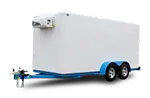
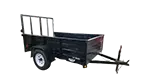

You spent a good chunk of money on that side-by-side. Maybe it is a 64-inch-wide Polaris RZR XP, a 60-inch Can-Am Defender, or one of the wide-stance sport machines that measures 72 inches or more. Now you need to haul it without damaging the machine, overloading the trailer, or discovering at the loading area that the tires do not fit between the trailer rails. The tie-down process for an ATV or UTV deserves more care than simply throwing straps over a lawnmower, and the trailer’s usable width, payload capacity, deck length, ramp design, and tie-down locations all matter.
Here is the practical version, based on current machine dimensions, current trailer specifications, and the loading mistakes we regularly see at the dealership.
Getting Trailer Width Right
Do not choose a trailer from a general statement that all side-by-sides are 60 or 64 inches wide. Current machines range from approximately 50-inch trail models to sport machines with stances of 72 or 74 inches. Four-seat and six-seat models are usually longer than their two-seat counterparts, but the number of seats alone does not determine width. Always verify the exact overall width, overall length, curb or wet weight, tire size, and any added accessories for your specific model and trim.
An 83-inch-wide utility trailer deck works well for many 60- and 64-inch side-by-sides. A 64-inch machine centered on an 83-inch deck has approximately 9.5 inches of deck clearance on each side. That is useful space, but rails, fenders, gate openings, ramp supports, tire sidewall bulge, and suspension movement can reduce the practical clearance. Measure the narrowest opening the machine must pass through, not merely the trailer’s advertised bed width.
A 72-inch machine can physically fit on an unobstructed 83-inch deck, leaving approximately 5.5 inches per side when perfectly centered, but that is a much less forgiving loading arrangement. A 74-inch machine leaves only about 4.5 inches per side. For frequent hauling of wide-stance machines, a full-width 102-inch deck-over trailer provides substantially more working room. Remember that a deck-over sits higher than a conventional utility trailer, so its ramps and approach angle must also suit the machine.
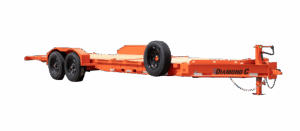
For a single ATV, which commonly measures about 46 to 50 inches wide, a 77-inch utility trailer normally provides ample width. The current Diamond C PSA Premium Single Axle Utility Trailer is offered in 77- and 83-inch bed widths and in lengths from 10 to 14 feet. Its standard package is rated at 2,990 pounds GVWR and uses a 3,500-pound idler axle; a separately configured 6,000-pound GVWR package uses a 6,000-pound electric-brake axle. The trailer’s payload is its certified GVWR minus its actual empty weight and installed accessories, so check the VIN label and weight documentation for the individual trailer.
Two conventional ATVs approximately 47 inches wide cannot be loaded side by side on a single 77- or 83-inch deck. They ordinarily need to be loaded one behind the other, sideways only on a trailer specifically designed and sized for that method, or on a sufficiently wide deck-over with appropriate loading access. Measure the machines in the exact orientation you intend to transport them before buying the trailer.
Ramp Selection and Approach Angle
Fold-down ramp gates are common on utility trailers and work well for many ATVs and UTVs. The Diamond C PSA and GTU, for example, can be equipped with an EZ Bi-Fold Gate. A gate or pair of ramps must be wide enough for the machine’s tire track, rated for the machine’s loaded weight, properly supported, and securely attached before loading begins.
Ground clearance by itself does not tell you whether a machine will load without dragging. Front and rear overhang, wheelbase, breakover angle, added bumpers, skid plates, rock sliders, running boards, larger tires, suspension settings, trailer deck height, dovetail length, and ramp length all affect clearance. A machine with plenty of ground clearance can still drag its nose at the bottom of a steep ramp or high-center where the ramp meets the deck.
Ramp angle is determined primarily by the vertical rise and the effective horizontal run. At a 24-inch deck height, a four-foot horizontal run produces an angle of about 27 degrees, while a five-foot run produces an angle of about 22 degrees. Reaching approximately 10 degrees at that same height would require more than 11 feet of horizontal run. Actual loading geometry changes with trailer attitude, ground slope, ramp construction, tire position, suspension movement, and any dovetail in the deck.
If your machine has a poor approach or breakover angle, use extensions or auxiliary ramps specifically rated and approved for the trailer and load. Never improvise with loose lumber, concrete blocks, or unsupported ramp sections. Another safe option is to position the tow vehicle and trailer on firm terrain that reduces the transition angle, provided the combination remains stable and the coupler stays connected. Test the fit slowly with a spotter before committing to the climb.
Do not assume a longer trailer automatically creates a shallower ramp angle. Deck length and ramp length are separate measurements. Also confirm that the gate’s published capacity applies to the way the tires load it; narrow tires can concentrate force on a small portion of expanded metal or on only one ramp crossmember.
Soft Straps Over the Frame: This Is Non-Negotiable
Never attach a hook to plastic bodywork, a brake hose, steering linkage, suspension arm, axle shaft, CV boot, exhaust component, or another part that the vehicle manufacturer has not approved as a securement point. Use the factory-designated transport points whenever they are identified in the owner’s manual. Depending on the machine and approved securement method, that may mean frame-mounted points, rated recovery or tie-down points, soft loops, axle straps, or tire-basket systems.
Soft loops are useful when the approved attachment point is a suitable frame tube and a metal hook could damage the finish or slip. They are commonly made from one- or two-inch synthetic webbing and are available in different lengths and working load limits. Use only rated tie-down equipment with readable labels, and make sure the strap, soft loop, hook, ratchet, trailer anchor, and vehicle attachment point are all suitable for the load. The system is limited by its lowest-rated component.
A common soft-loop arrangement passes one end of the loop through the other around an approved frame point, leaving the free loop available for the ratchet-strap hook. Position it so it cannot slide onto a sharp bracket, wiring harness, hot exhaust part, or moving component. Edge protection is necessary wherever webbing could be cut or abraded.
For recreational hauling, four independent restraint points are a strong minimum practice: front left, front right, rear left, and rear right. Arrange the straps so they resist forward, rearward, and sideways movement. Each machine should be secured independently, and the trailer’s D-rings or other anchors must be structurally rated for securement rather than used merely because they are convenient.
Do not automatically pull every UTV deeply into its suspension travel. Excessive compression can overload straps or attachment points, damage suspension components, and allow straps to loosen as the suspension moves. Follow the UTV manufacturer’s transport instructions. Frame securement may call for controlled suspension compression, while approved tire nets restrain the tires and generally allow the suspension to move normally. Whatever method you use, the machine must remain firmly restrained without damaging it.
- Select tiedowns by their working load limit, not their much higher break strength. For commercial transportation subject to federal cargo-securement rules, the aggregate working load limit of the securement system must be at least one-half the weight of the secured article; recreational haulers should also use a generous safety margin and follow every component manufacturer’s instructions.
- Do not calculate safety from the strap label alone. Soft loops, hooks, anchor points, and vehicle attachment points must also carry the required load.
- Stop in a safe location after the first few miles and inspect the load again. Recheck periodically and after hard braking, rough pavement, or a major temperature or weather change.
- Use proper edge protectors wherever webbing touches a sharp corner, weld bead, or abrasive surface. A loose piece of soft material that can fall out is not a reliable substitute.
- Lock each ratchet completely and secure the loose strap tail so it cannot flap, enter a wheel, or abrade against the machine.
- Do not route straps over the hood, roof, doors, seats, cargo box, or roof rack unless the vehicle manufacturer expressly identifies that component as a transport point.
Loading Multiple Units
Running two ATVs or one UTV plus an ATV on the same trailer changes both the space and weight calculations. A 2026 Honda FourTrax Foreman 4×4 has a published curb weight of approximately 635 pounds, including standard equipment, required fluids, and a full tank of fuel. Two would account for roughly 1,270 pounds before adding cargo boxes, winches, tools, coolers, spare fuel, mud, and other gear. Other Foreman and Foreman Rubicon configurations are heavier, so use the specifications for the exact model rather than treating one published weight as universal.
Trailer payload is not the same as GVWR. Calculate available payload by subtracting the trailer’s actual empty weight, including ramps, spare tire, toolbox, battery, options, and permanently mounted equipment, from the GVWR shown on its certification label. Then compare that payload with the ready-to-haul weight of every machine and every item of cargo. Axle ratings, tire ratings, wheel ratings, coupler rating, hitch rating, tow-vehicle limits, and gross combination limits must also be respected.
A tandem-axle utility trailer rated at 7,000 pounds GVWR is a versatile choice for two ATVs, one full-size UTV, or many UTV-and-gear combinations, provided the machines fit and the calculated load stays within every rating. The Diamond C GTU has an 83-inch bed, is available in 14-, 16-, 18-, and 20-foot lengths, and carries a 7,000-pound GVWR. Its standard running gear consists of two 3,500-pound Lippert electric-brake axles, and its main frame is four-inch channel. The usable payload varies with trailer length and installed equipment, so confirm the weight of the particular unit.
Tandem axles generally provide a more stable platform and distribute trailer load across four tires, but they do not make an overloaded or badly balanced trailer safe. A tire, hub, spring, or bearing failure still requires an immediate controlled stop and repair. Do not continue at speed on the remaining axle simply because the trailer is a tandem.
When loading two ATVs on a conventional utility trailer, place them in line only if the deck is long enough for both machines and for safe strap angles. Add the overall lengths and leave room for rails, tailgates, bumpers, winches, and independent securement. Staggering wheels does not materially shorten two machines loaded front-to-back, and it must never be used to justify contact between them. Each ATV needs its own securement system.
One UTV plus an ATV often requires more deck length than buyers expect. A two-seat UTV may be around 10 feet long, while a four-seat machine can approach or exceed 13 feet. Adding an ATV approximately seven feet long can therefore require a deck well beyond 16 or 18 feet. Verify actual bumper-to-bumper dimensions and the location of the trailer axles before selecting the final length.
Weight Distribution and Tongue Weight
For a conventional bumper-pull utility trailer, a useful target is generally about 10 to 15 percent of the trailer’s actual loaded weight on the hitch, unless the trailer, hitch, or tow-vehicle manufacturer specifies a different range. Too little tongue weight can promote sway. Too much can overload the receiver, hitch hardware, tow vehicle’s rear axle, tires, or suspension and can reduce steering and braking control.
Do not rely solely on the UTV appearing to sit ahead of the trailer axles. Machine weight is not distributed evenly, and engine location, passenger capacity, cargo-bed loading, accessories, and loading direction all change the center of gravity. Move the machine in small increments, secure it, and measure the resulting tongue weight. The final axle loads and gross trailer weight should be confirmed on a suitable scale when possible.
For two ATVs, loading the first machine against the front rail is not automatically correct. That arrangement may create excessive tongue weight, especially on a short trailer. Position the complete load as a system, then secure each unit so its placement cannot change. Heavy coolers, toolboxes, spare tires, fuel cans, and camping equipment must also be included in the balance calculation and tied down separately.
A dedicated tongue-weight scale or a properly used vehicle scale removes much of the guesswork. Measure whenever the load configuration changes. Tongue weight also counts against the tow vehicle’s available payload, along with passengers, cargo, accessories, and the hitch itself. Never exceed the tow vehicle’s receiver rating, maximum trailer rating, rear gross axle weight rating, tire capacities, or gross combined weight rating.
A Quick Comparison: Trailer Options for UTV Hauling
| Trailer | Deck Size | GVWR | Best For |
|---|---|---|---|
| Diamond C PSA Premium Single Axle Utility | 77″ or 83″ x 10′-14′ | 2,990 lb standard; 6,000 lb configured package available | Single ATV or a properly sized lighter UTV, after confirming payload, width, and brake configuration |
| Diamond C GTU Premium Tandem Axle Utility | 83″ x 14′-20′ | 7,000 lb | Two ATVs in line, one full-size UTV, or a UTV with properly distributed gear |
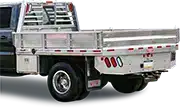
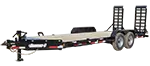
| Diamond C GDD General Duty Deck-Over Equipment | 102″ x 14′-24′ | 7,000-9,890 lb | Wide machines needing a full-width deck, with ramp angle and payload verified |
| Diamond C DEC Heavy Duty Deck-Over Equipment | 102″ x 20′-30′ | 15,500-23,000 lb | Long or wide multi-machine loads when the tow vehicle, hitch, licensing, and operating requirements match the trailer |
The heaviest trailer is not automatically the best UTV trailer. A 102-inch deck-over provides valuable width, but it has a higher deck and adds substantial empty weight. The Diamond C GDD uses Lippert axles and is the more proportionate deck-over choice for many recreational loads. The heavy-duty DEC also uses Lippert axles and is intended for much heavier equipment work. Its GVWR may place a tow combination into different licensing or commercial-regulation categories, so it should not be selected merely for extra width.
In Indiana, a trailer with a GVWR above 3,000 pounds must be equipped with brakes as required by IC 9-19-3-3. That makes the certified GVWR and actual configuration important when comparing a 2,990-pound single-axle trailer with higher-rated utility and equipment trailers. A brake-equipped trailer also requires a compatible brake controller and properly functioning breakaway system where applicable.
What to Check Before You Leave the Driveway
A deliberate pre-trip inspection takes only a few minutes and can prevent a lost load, tire failure, lighting citation, or dangerous sway event.
- Verify that every machine is restrained at four appropriate points or by another vehicle-manufacturer-approved system, with no visible ability to roll, slide, or pivot.
- Confirm that soft loops, hooks, tire nets, or axle straps are seated on approved attachment points and clear of plastic panels, brake components, CV boots, steering parts, sharp edges, and hot exhaust surfaces.
- Lock the ratchets and secure every loose strap tail. Make sure no hook can fall free if the suspension moves or strap tension changes.
- Cross the safety chains beneath the coupler when appropriate for the chain and hitch design, connect them to the tow vehicle’s designated attachment points, and leave enough slack for turns without allowing the chains to drag.
- Latch the coupler, install the safety pin or lock, connect the breakaway cable independently of the safety chains, and verify that the electrical plug cannot drag or pull tight in a turn.
- Test the running lights, brake lights, turn signals, electric brakes, brake controller, and breakaway system before entering traffic.
- Check cold tire pressure against the trailer tire and certification information. Inspect every tire for cracks, cuts, bulges, exposed cords, uneven wear, and adequate tread.
- Check wheel-lug torque according to the trailer and wheel manufacturer’s procedure, especially on a new trailer, after wheel service, and at the specified recheck intervals.
- Verify that the tongue jack is fully retracted and secured, ramps and gates are pinned or latched, doors and storage boxes are locked, and the spare tire is secure.
- Confirm that the loaded trailer, tongue weight, tow vehicle, receiver, ball mount, hitch ball, and all related components remain within their certified ratings.
If the ATV or UTV has a parking brake, set it as directed by the manufacturer and place the transmission in the recommended transport position. A parking brake or transmission park position is only a backup against rolling during loading and unloading; neither replaces properly rated tiedowns.
Load and unload on firm, level ground whenever possible. Keep bystanders away from the ramps, never stand downhill of the machine, use a spotter where visibility is limited, and avoid sudden throttle input. After loading, remove the key and inspect for loose cargo in the cab or bed that could leave the machine on the highway.
One More Thing About Wide Machines
A 64-inch side-by-side centered on an unobstructed 83-inch deck has approximately 9.5 inches of theoretical clearance per side. A 72-inch machine has only about 5.5 inches. Those numbers do not account for side rails, gate frames, fenders projecting into the loading path, offset wheels, oversized tires, suspension movement, or measurement differences between advertised stance and actual outside tire width.
Measure the machine at its widest fixed point and across the outside of the tires. Then measure the trailer deck, the clear distance between its rails, the gate opening, and the usable ramp spacing. Accessories such as wider wheels, wheel spacers, rock sliders, mirrors, doors, mud flaps, and aftermarket suspension can make the finished machine wider than the factory specification.
A properly secured machine should not visibly shift when the tow vehicle changes lanes, brakes, or travels over normal pavement. If you see movement, hear a ratchet striking the deck, notice a loose strap tail, or feel new sway, reduce speed smoothly and stop in a safe location. Inspect the securement, load position, tires, hitch, and trailer running gear before continuing.
If you regularly haul a 72- or 74-inch sport machine, an 83-inch utility deck may fit after careful measurement, but a 102-inch deck-over can provide substantially more working clearance. The tradeoff is a higher deck, different ramp geometry, greater trailer weight, and potentially a much higher GVWR. Select it because the complete configuration fits your machine and tow vehicle, not simply because the deck is wider.
We stock utility and equipment trailers across this range. Browse current inventory to see what is on the lot, or reach out to us directly and we will help match the deck width, deck length, ramp system, payload, axle configuration, and GVWR to your machines. Bring the exact year, model, trim, factory dimensions, ready-to-haul weight, and a list of aftermarket accessories. We can compare those details with the certification label and specifications of the actual trailer so you leave with a combination that fits and carries the load correctly.


