








Most people buying a trailer from us ask about payload, axle ratings, hitch type, and ball size. Every so often, someone asks the question that can matter even more for the work they plan to do: “Do I need a CDL for this?” That question trips up many buyers because the answer does not depend on the trailer’s GVWR alone. You also have to consider the tow vehicle, the manufacturer’s Gross Combination Weight Rating, actual gross weights, whether the vehicle is being operated in commerce, and whether a passenger, hazardous-materials, farm, recreational, or other special rule applies. Getting it wrong can lead to a citation, an out-of-service order, licensing consequences, and a load that cannot continue until a properly licensed driver arrives.
The Core Rule: 26,001 Pounds GCWR
The Federal Motor Carrier Safety Administration sets the principal weight threshold under 49 CFR Parts 383 and 390. For a property-carrying combination operated in commerce, a Class A Commercial Driver’s License is required when the combination has a Gross Combination Weight Rating or gross combination weight of 26,001 pounds or more, and the vehicle or vehicles being towed have a combined GVWR or actual gross vehicle weight greater than 10,000 pounds. The current federal definition uses the applicable rated or actual weight, whichever is greater, so both ratings and scale weights can matter. Both parts of the Class A test must be satisfied.
GCWR is more specific than simply guessing at the total based on what the truck and trailer happen to weigh on a particular day. Under the federal definition, GCWR is generally the greater of the power-unit manufacturer’s GCWR when that value is displayed on the required certification label, or the highest total produced by adding the GVWRs and/or actual gross vehicle weights of the power unit and all towed units. In other words, you cannot avoid the CDL threshold merely by loading lightly if the controlling ratings already place the combination at 26,001 pounds or more. Conversely, operating above a lower rating can cause actual weight to become relevant, but an actual scale weight never authorizes you to exceed a manufacturer’s GVWR, GAWR, GCWR, tire rating, hitch rating, or other legal operating limit.
For example, consider a truck with a 14,000-pound GVWR towing a trailer with a 14,000-pound GVWR. The sum of those ratings is 28,000 pounds, and the trailer is rated over 10,000 pounds. Unless an exemption applies, that is a Class A combination when it is operated in commerce. The same conclusion applies when a power unit has a controlling manufacturer GCWR of 28,000 pounds or more, even if adding two selected ratings would appear to produce a lower number. Use the federal definition and the vehicle documentation rather than relying on a single sticker, an online towing calculator, or an informal estimate.
Here is another point that often causes confusion: a combination can reach 26,001 pounds or more without automatically becoming a Class A or Class B vehicle. If the towed unit is 10,000 pounds GVWR or less, it does not satisfy the Class A trailer requirement. A Class B CDL would apply only when the power unit itself has a GVWR or actual gross vehicle weight of 26,001 pounds or more. A pickup below that individual-vehicle threshold does not become a Class B vehicle merely because its combined rating with a small trailer reaches 26,001 pounds.
Class A vs. Class B: The 10,000-Pound Dividing Line
| Scenario | GCWR | Towed Unit GVWR | CDL Required |
|---|---|---|---|
| Heavy pickup or work truck with a large equipment trailer | 26,001 lbs or more by the controlling rated or actual weight | Over 10,000 lbs by the controlling rated or actual weight | Class A CDL when operated in commerce, unless an exemption applies |
| Heavy straight truck with a small trailer | Power unit itself is 26,001 lbs or more | 10,000 lbs or less | Class B CDL |
| Pickup and trailer combination below the Group A threshold | Under 26,001 lbs by the controlling rated and actual weight | Any rating | No Class A or B CDL based solely on weight |
| Passenger- or hazardous-materials-regulated vehicle below the Class A and B weight thresholds | Varies | Varies | Class C CDL and the appropriate endorsement may still be required |
A Class A CDL covers a combination with a GCWR or gross combination weight of 26,001 pounds or more when the towed vehicle or vehicles exceed 10,000 pounds under the controlling rated-or-actual-weight test. This is the license associated with tractor-trailers, but it can also apply to a contractor, excavating company, landscaper, equipment dealer, or other business towing a heavy gooseneck or bumper-pull equipment trailer behind a properly rated work truck. The business does not have to be a trucking company, and the driver does not have to be paid by the mile. Operating the combination in furtherance of a business can be commercial operation for federal purposes.
A Class B CDL covers a single vehicle with a GVWR or actual gross vehicle weight of 26,001 pounds or more. It also permits that Class B power unit to tow a vehicle rated or weighing 10,000 pounds or less. A large straight dump truck, concrete truck, box truck, or similar heavy vehicle pulling a small utility trailer is a common Class B arrangement. The critical detail is that the power unit itself must meet the 26,001-pound threshold. A combination rating of 26,001 pounds does not create a Class B requirement when the truck itself remains below that threshold.
A Class C CDL can be required even when neither the Class A nor Class B weight threshold is reached. It generally applies when a vehicle is designed to transport 16 or more people, including the driver, or when the vehicle is used to transport hazardous materials requiring placards under federal law. Passenger, school-bus, hazardous-materials, tanker, and other endorsements have their own testing and qualification requirements. A buyer should therefore avoid treating 26,001 pounds as the only possible CDL trigger.
When a driver pulls more than one trailer, the applicable ratings or weights of all towed units are evaluated together. For example, a 6,000-pound-GVWR semitrailer followed by a 7,000-pound-GVWR full trailer places 13,000 pounds on the towed side of the calculation. If the controlling combination rating or weight is also 26,001 pounds or more, the operation falls into Class A. A doubles/triples endorsement is also required when operating the type of multiple-trailer combination covered by that endorsement.
Real-World Numbers: When Trailer Buyers Hit the Threshold
Let’s run through several examples using current trailer ratings and realistic buying situations. These examples are for understanding the federal weight classifications. The final determination still depends on the exact tow vehicle, trailer certification label, actual configuration, operating weight, use of the vehicle, endorsements, and any applicable exemption.
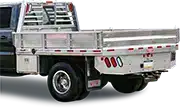
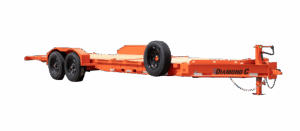
A current Diamond C FMAX210 gooseneck flatbed has a 25,000-pound GVWR. If it is paired with a work truck whose controlling GCWR is 40,000 pounds, the trailer exceeds 10,000 pounds and the combination exceeds 26,001 pounds. A driver using that combination in commerce would need a Class A CDL unless a specific exemption applies. The truck’s towing capacity, payload capacity, rear-axle rating, tire ratings, hitch capacity, and the trailer’s available payload must also support the actual load; possessing a CDL does not make an overloaded or improperly matched combination legal.
A current Diamond C FMAX207 is rated at 15,500 pounds GVWR. Because the trailer exceeds 10,000 pounds, the trailer side of the Class A test is satisfied. Whether a CDL is required then depends on the controlling GCWR or actual gross combination weight. If the applicable combination figure is 26,001 pounds or more and the trailer is being used in commerce, Class A applies. If the controlling combination figure remains below 26,001 pounds and no passenger or hazardous-materials rule applies, the combination does not require a federal Class A or B CDL based solely on weight.
Consider a 7,000-pound-GVWR tandem-axle utility trailer behind a half-ton or three-quarter-ton pickup. The trailer is below the 10,001-pound Class A dividing line. That means it cannot create a Class A requirement by itself. A Class B CDL would still be required if the power unit itself were rated or actually weighed 26,001 pounds or more, but that is not a typical pickup configuration. The operator must still comply with the truck’s towing limits, trailer-brake requirements, securement rules, registration requirements, and any commercial regulations that apply to the operation.
Now consider a 14,000-pound-GVWR equipment trailer behind a pickup with a 10,000-pound GVWR. Adding those two ratings produces 24,000 pounds, but that arithmetic alone does not complete the analysis. You must also check whether the power-unit manufacturer provides a higher controlling GCWR and whether the actual gross weights create a higher total under the federal definition. If the controlling figure remains below 26,001 pounds, no Class A or B CDL is required based solely on weight. If it reaches 26,001 pounds or more, the trailer is already over 10,000 pounds, so Class A applies when the combination is operated in commerce.
The correct approach is to check both the ratings and the actual loaded weights. Locate the truck’s GVWR and axle ratings on its certification label, review the manufacturer’s towing information for the exact model, engine, drivetrain, cab, bed, axle ratio, and equipment package, and inspect the trailer’s certification label for its GVWR and GAWR. Obtain a scale weight when necessary, especially after adding equipment, auxiliary fuel tanks, service bodies, tools, cargo, or trailer options. Do not substitute advertised “maximum towing capacity” for the capacity of the specific truck in front of you.
Also remember that “no CDL required” does not necessarily mean “no commercial rules apply.” In interstate commerce, a truck or truck-trailer combination can be a commercial motor vehicle for other Federal Motor Carrier Safety Regulations at 10,001 pounds or more, even though the higher Class A or Class B CDL threshold has not been reached. Depending on the operation, requirements involving a USDOT number, driver qualification, medical certification, hours of service, inspections, maintenance, cargo securement, and records may still apply.
The Personal Use Exemption
Federal CDL rules under Part 383 apply to drivers operating commercial motor vehicles in interstate, foreign, or intrastate commerce. FMCSA guidance recognizes that the occasional transportation of personal property for strictly non-business purposes is not subject to the federal commercial regulations in the same way as business transportation. The activity must be genuinely personal, with no compensation and no connection to an underlying business. A state’s own licensing requirements can still apply.
Examples can include moving your own household property, hauling a personally owned recreational vehicle, or transporting a personal car, boat, or horse for an unpaid hobby activity. A person towing a race car solely for personal recreation may be treated differently from a professional racer who receives prize money, sponsorship support, appearance fees, product support, or other compensation connected with the activity. The name on the title is not the only issue; the purpose of the trip matters.
Transporting tools, machinery, inventory, livestock, construction equipment, or other property in support of a business is not converted into personal use simply because the driver owns both the truck and the cargo. Towing an excavator to a customer’s job, moving equipment between company locations, delivering products, or hauling materials to a property being developed for business purposes can be operation in commerce even when no separate hauling fee appears on the invoice. Likewise, farm activity should be analyzed under the applicable farm-vehicle provisions rather than automatically classified as personal transportation.
The federal personal-property guidance is not a blanket recreational-vehicle exemption from every law. The truck and trailer must still be properly registered, safely loaded, within all component ratings, equipped with legally required brakes and lighting, and operated by a driver holding whatever non-commercial license the state requires. Travel into another state can also expose the driver to that state’s licensing, size, weight, equipment, and registration rules.
Bottom line on personal use: Strictly personal, non-business transportation of personal property generally falls outside the federal CDL rules, but the exception is based on the real purpose of the trip. Business-related hauling is commerce even when the driver is moving their own property and is not operating as a for-hire carrier. State licensing rules still have to be checked.
Indiana-Specific Considerations
Indiana generally follows the federal CDL vehicle groups. Class A covers a qualifying combination at 26,001 pounds or more with the towed vehicle or vehicles over 10,000 pounds. Class B covers a single vehicle at 26,001 pounds or more, including such a vehicle towing 10,000 pounds or less. Class C applies to covered passenger and hazardous-materials operations that do not meet the Class A or Class B weight definitions. Indiana also administers endorsements for doubles/triples, tank vehicles, passengers, school buses, hazardous materials, and combination tank/hazardous-materials operation where applicable.
Indiana also has a separate for-hire endorsement that can matter when a CDL is not required. Current Indiana BMV guidance includes certain motor vehicles with a GVWR of at least 16,000 pounds but not more than 26,000 pounds when they are used to transport property for hire. This is a state credential separate from a Class A, B, or C CDL. An Indiana operator who concludes that a combination is below the federal CDL threshold should therefore still determine whether the for-hire endorsement rules apply to the particular vehicle and business activity.
Qualified farm operations can receive relief from some CDL requirements, but the farm provisions are conditional rather than automatic. Generally, the vehicle must be controlled and operated by a farmer, family member, or employee; used to transport agricultural commodities, livestock, machinery, or supplies to or from the farm; not used in a disqualifying for-hire operation; and operated within the applicable geographic limits. Covered farm vehicles may also have registration or designation requirements, and operations involving placardable hazardous materials can fall outside important parts of the exemption. The federal rules distinguish between vehicles at or below 26,001 pounds and heavier covered farm vehicles operating within the registration state or within 150 air miles when crossing state lines.
Because farm, recreational, intrastate, and for-hire rules can turn on facts that are not visible from a trailer’s VIN or certification label, Indiana operators should verify their situation with the Indiana BMV, Indiana State Police Commercial Vehicle Enforcement Division, or a qualified transportation attorney. A dealer can provide the trailer’s specifications, but the buyer remains responsible for obtaining the correct license and endorsements for the way the vehicle will actually be used.
Common Trailer-Hauling Scenarios and CDL Status
- Contractor hauling an excavator on a 25,900-pound-GVWR trailer for business: The trailer is over 10,000 pounds. A Class A CDL is required when the controlling GCWR or actual gross combination weight reaches 26,001 pounds or more, unless a valid exemption applies. The threshold is 26,001 pounds or more, not an amount greater than 26,001.
- Weekend enthusiast pulling a 7,000-pound car hauler to an unpaid track day: No Class A or B CDL is ordinarily required based on weight when the combination remains below 26,001 pounds and the activity is strictly personal. Sponsorship, compensation, professional competition, or another business connection can change the commercial-use analysis.
- Small-business owner pulling a 14,000- or 15,500-pound equipment trailer: Check the truck’s controlling GCWR, the sum required by the federal definition, and actual loaded weights. Because the trailer exceeds 10,000 pounds, Class A applies if the combination reaches 26,001 pounds or more and is operated in commerce.
- Farmer hauling grain, livestock, hay, or machinery on a 16,000-pound trailer: A farm-related CDL exemption may apply only when all driver, vehicle, cargo, ownership or control, use, designation, and distance conditions are satisfied. Agricultural cargo alone does not automatically exempt the trip.
- Horse trailer with living quarters, 12,000-pound GVWR, strictly personal use: Federal CDL rules generally do not apply when the transportation is genuinely non-business, but the driver must still check Indiana and destination-state licensing, registration, length, weight, brake, and equipment requirements.
- Large straight dump truck rated at 26,001 pounds or more pulling an 8,000-pound utility trailer: Class B is the normal weight class because the power unit itself reaches the Class B threshold and the trailer does not exceed 10,000 pounds.
- Pickup and heavy trailer with a combined figure of exactly 26,000 pounds: The combination remains one pound below the Class A weight threshold, provided no higher manufacturer GCWR or actual gross-weight calculation controls. If the applicable figure is exactly 26,001 pounds and the trailer is over 10,000 pounds, Class A applies in commerce.
- Commercial combination below 26,001 pounds: A Class A or B CDL may not be required based on weight, but other DOT, medical, inspection, maintenance, securement, hours-of-service, registration, or Indiana for-hire requirements can still apply.
What Happens If You Get It Wrong
Operating a commercial motor vehicle without the required CDL class, endorsement, or valid driving privilege is more serious than an ordinary paperwork mistake. Depending on the violation and the enforcement authority, the driver can be cited, prohibited from continuing, or placed out of service. The truck, trailer, and cargo may remain parked until a properly licensed driver is available. Repeated or serious violations can affect the driver’s commercial driving privilege, and federal penalty amounts are adjusted periodically rather than remaining at one fixed dollar figure.
Employers have separate responsibilities. Federal regulations prohibit an employer from knowingly allowing, requiring, permitting, or authorizing a driver to operate a commercial motor vehicle without a current CDL of the proper class and with the necessary endorsements, or while subject to a disqualification, restriction, suspension, revocation, or applicable out-of-service order. A company cannot shift the entire responsibility to the driver simply by telling employees to determine the rules themselves.
Insurance can become another major issue after a crash. The effect depends on the policy language, state law, the type of coverage, and the facts of the loss, so an incorrect license does not support a universal statement that every claim will automatically be denied. However, the insurer, opposing parties, regulators, and attorneys are likely to examine whether the driver was properly licensed, whether the combination was overloaded, wheth


