







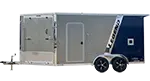
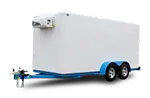


You pull up to the dealership, inspect the hitch, and see that the ball is bolted on tightly. You back up to the trailer, lower the coupler, close the latch, and drive away. A few miles down the road, the trailer separates from the tow vehicle.
One possible cause is a 2″ hitch ball being used under a 2-5/16″ coupler. The two sizes can look surprisingly similar, and an oversized coupler may appear to close around the smaller ball. It is not a safe match. The extra clearance allows excessive movement and can let the coupler come off the ball when the combination encounters bumps, dips, or changing tongue loads.
Matching a coupler to a hitch ball takes only a few minutes, but diameter is only the beginning. The ball, coupler, ball mount, receiver hitch, tow vehicle, safety chains, and every other load-bearing component must be compatible and properly rated. Here’s how the system actually works.
The Standard Sizes
North American conventional trailers commonly use hitch balls and matching couplers in four diameters: 1-7/8″, 2″, 2-5/16″, and 3″. The 1-7/8″ size is normally limited to small, light-duty trailers. The other three sizes cover a broad range of applications, but ball diameter alone does not establish towing capacity:
| Ball / Coupler Size | Available Capacity Range | Common Applications |
|---|---|---|
| 2 inch | Varies by the individually marked ball and coupler ratings | Utility trailers, small cargo trailers, landscape trailers, and other light- or medium-duty bumper pulls |
| 2-5/16 inch | Available from moderate-duty ratings through 30,000 lbs or more on certain purpose-built systems | Car haulers, equipment trailers, dump trailers, heavy bumper pulls, and many gooseneck trailers |
| 3 inch | Generally used in high-capacity systems; some couplers are rated to 40,000 lbs | High-capacity goosenecks and specialized commercial or agricultural equipment |
The 2″ coupler is widely used for lighter bumper-pull trailers, although some properly engineered 2″ components carry higher ratings than buyers may expect. The 2-5/16″ size is common on heavier bumper-pull equipment and dump trailers and on most conventional gooseneck systems. A 3″ ball is much less common and is generally associated with specially designed high-capacity gooseneck equipment. Never select a towing system from these typical applications alone; use the permanent ratings marked on the actual components.
Ball Ratings Are Not All the Same
The diameter tells you whether the ball and coupler are designed to fit together. The stamped capacity tells you how much the individual component is designed to handle. Those are separate requirements.
A 2-5/16″ hitch ball is available in several capacities. Current commercial products in that diameter include ratings from approximately 6,000 lbs through 30,000 lbs. Two balls can have the same diameter while using different shank diameters, shank lengths, materials, mounting arrangements, and manufacturing methods. Those differences affect the manufacturer’s assigned gross trailer weight rating and tongue- or vertical-load rating.
Do not estimate a ball’s capacity from its appearance, finish, shank size, or diameter. Read the rating marked on the ball or verify its part number against the manufacturer’s current documentation. The ball also must fit the hole diameter and thickness range specified for the ball mount, and its retaining nut must be installed and tightened according to the ball manufacturer’s instructions.
If you’re towing a Diamond C equipment trailer with a 14,000 lb GVWR, the selected coupler, hitch ball, ball mount, and receiver hitch must each be approved for that application and rated for at least the trailer’s applicable loaded weight and tongue weight. When planning the setup, using the trailer’s GVWR provides a conservative basis unless an equipment manufacturer specifies a different selection method. A 6,000 lb ball remains inadequate for that example even if its 2-5/16″ diameter fits the coupler.
The same rule applies to the coupler. A light-duty utility-trailer coupler is not interchangeable with a heavy-duty equipment-trailer coupler merely because both accept the same ball diameter. Follow both the gross trailer weight and maximum tongue- or vertical-load limits. The safe capacity of the complete towing system is controlled by its lowest-rated component, including the tow vehicle and hitch installation.
How to Read a Coupler Before You Buy
A trailer coupler should identify the required ball diameter and its capacity through a stamp, label, casting mark, data plate, or other manufacturer marking. You may see wording such as “2-5/16″” and “14,000 lbs GTW.” Do not tow when the required size or capacity cannot be established. Clean the coupler enough to locate its markings, check the trailer documentation, or have the coupler identified by a qualified trailer professional. A missing or illegible label does not prove that a coupler is defective, but guessing at its rating is unsafe.
Inspect the component as well as reading it. Bent mounting channels, cracked welds, heavy corrosion, distorted sockets, worn latches, missing hardware, or excessive looseness require attention before towing. Never modify a coupler or substitute latch parts unless the coupler manufacturer authorizes the repair.
The other thing to check is coupler style:
- Ball coupler: The common bumper-pull arrangement uses a socket and latch designed for a specified hitch-ball diameter. Straight-tongue, A-frame, and flat-mount versions are available, so both the attachment pattern and capacity must match the trailer.
- Adjustable-channel coupler: The coupler bolts to a vertical channel so its height can be changed to help the trailer ride level behind different tow vehicles. Adjustable construction does not automatically mean a lower capacity; use the ratings assigned to the complete coupler, channel, and fastener arrangement. Install the correct grade, size, number, and orientation of bolts specified by the manufacturer.
- Pintle-and-lunette connection: This system uses a pintle hook on the tow vehicle and a lunette ring on the trailer. It is common in commercial, agricultural, construction, and military-style applications. A lunette ring must be connected to a compatible, adequately rated pintle hook or combination hitch, not placed over an ordinary hitch ball unless the equipment is specifically designed and rated for that configuration.
Gooseneck Couplers Are a Different Animal
Standard bumper-pull trailers connect to a receiver-mounted ball behind the tow vehicle. A gooseneck trailer connects to a ball installed in or through the pickup bed, generally near or slightly forward of the truck’s rear axle. Moving the connection point into the bed changes the trailer’s geometry and can improve handling compared with a similarly loaded bumper-pull arrangement. Actual towing capacity still depends on the truck, installed gooseneck hitch, ball, coupler, trailer, tires, axles, brakes, and all applicable ratings.
Many gooseneck systems use a 2-5/16″ ball, with complete hitches and couplers available in several ratings, including 25,000- and 30,000-lb classes. High-capacity 3″ gooseneck systems also exist, including configurations rated as high as 40,000 lbs. That means “gooseneck” does not guarantee one ball size or one capacity. Read the gooseneck coupler marking and confirm the installed truck-bed ball matches it exactly.
A gooseneck coupler normally uses an adjustable inner tube with a socket and locking mechanism at its lower end. The coupler tube must remain within its prescribed adjustment range, with the specified locking hardware fully installed. Cushion and air-ride gooseneck couplers are also available on some trailers. A fifth-wheel kingpin-and-plate connection is another truck-bed towing system, but it is not the same as a ball-type gooseneck connection unless an approved adapter or interchangeable system is specifically designed and rated for the trailer and hitch.
If you’re looking at Diamond C or H&H gooseneck trailers, verify the coupler’s marked ball size, capacity, adjustment, latch operation, and compatibility with the hitch installed in your truck. Current Diamond C configurations can vary by model and selected options. A trailer equipped for a 2-5/16″ gooseneck ball requires a compatible truck-bed gooseneck hitch; a receiver-and-ball assembly behind the bumper is not a substitute.
The Most Common Matching Mistakes
Wrong Diameter (The Dangerous One)
A 2″ ball may fit inside some 2-5/16″ couplers closely enough for the latch to appear closed. That does not make the connection secure. Under road movement and changing loads, the oversized socket can move excessively on the smaller ball and may separate. Conversely, never try to force a smaller coupler over a larger ball or tow with a latch that will not close completely.
Physically verify the ball diameter against the coupler marking before every first hookup to an unfamiliar trailer. After lowering the coupler fully onto the correct ball, close and secure the latch as its manufacturer directs. Raise the tongue jack enough to place upward force on the connection and confirm that the coupler remains captured before retracting the jack completely. This check supplements, rather than replaces, proper inspection and component matching.
Underrated Ball for the Load
A 2-5/16″ ball rated for 6,000 lbs is overloaded when used for a trailer application requiring a 12,000-lb rating. The diameter fits, but the capacity does not. An overloaded component may bend, crack, loosen, or fail, particularly under impact and fatigue loading. Check the ratings of the ball, ball mount, hitch, coupler, safety chains, and tow vehicle instead of checking the diameter alone.
Also check tongue-weight limits. A component can have an adequate gross trailer weight rating yet still be unsuitable because its maximum tongue or vertical load is too low. Never assume that adding the ratings of separate components increases the system’s capacity.
Coupler Height Not Matching Ball Mount Height
Incorrect hitch height can leave a trailer noticeably nose-high or nose-low. That condition may change tongue weight, reduce clearance, and distribute load unevenly between the axles of a tandem-axle trailer. With the tow vehicle and trailer on level ground and loaded as they will be used, choose a properly rated ball mount with the rise or drop needed to keep the trailer frame approximately level.
Do not use hitch height as a substitute for proper cargo placement. Maintain the trailer manufacturer’s recommended tongue weight, remain within the tow vehicle’s rear-axle and payload limits, and confirm adequate clearance between the coupler, jack, truck, and roadway. Weight-distribution equipment should be used only where the tow vehicle, receiver, trailer, and coupler permit it.
Confusing Gooseneck and Bumper-Pull Setups
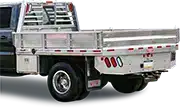
A bumper-pull cargo trailer connects behind the vehicle through a receiver hitch and appropriately rated ball mount. A gooseneck deck-over connects to a compatible hitch in the pickup bed. A fifth-wheel trailer uses a kingpin and fifth-wheel hitch. Matching ball diameter does not convert one connection type into another.
Adapters are available for certain applications, but an adapter should never be assumed safe simply because it physically connects the parts. Use only equipment approved for the specific trailer and hitch, follow the manufacturers’ installation requirements, and account for the adapter’s ratings and any effect it may have on trailer or hitch warranties.
A Quick Sizing Guide by Trailer Type
If you’re shopping for a trailer and want to know what you may encounter, the following guide describes common practice rather than a substitute for reading the actual coupler:
- Light utility, landscape, and small cargo trailers: Many use a 2″ ball and matching coupler, while very light trailers may use 1-7/8″ components. GVWR alone does not guarantee the diameter, so verify the marking before hookup.
- Mid-weight cargo trailers and car haulers: Depending on the specific model and GVWR, these may use either a properly rated 2″ system or a 2-5/16″ system. Do not assume every tandem-axle enclosed trailer uses 2-5/16″.
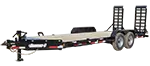
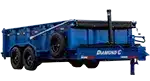
- Heavy equipment trailers, dump trailers, and large bumper-pull flatbeds: A 2-5/16″ ball and coupler are common, with 21,000- and 25,000-lb coupler options appearing on current Diamond C equipment and dump models. The correct rating and mounting style vary by model and configuration.
- Gooseneck trailers: A 2-5/16″ gooseneck ball is common, but the hitch and coupler may carry ratings such as 25,000 or 30,000 lbs. Certain higher-capacity trailers use a 3″ ball and compatible coupler. Verify the actual trailer rather than relying on the connection type.
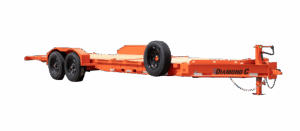
For example, current Diamond C bumper-pull models may be offered with different couplers according to their GVWR and configuration. The 7,000-lb GTU Premium Tandem Axle Utility uses dual 3,500-lb axles and may use a 2″ rated coupler system, while heavier LPX equipment, HDT tilt, and LPT dump configurations commonly use 2-5/16″ heavy-duty couplers or an appropriately rated pintle-ring option. Diamond C gooseneck flatbeds, including the FMAX family, use truck-bed connections whose coupler size and capacity must be confirmed for the specific model and selected GVWR.
What Spencer Trailers Recommends
Before buying or picking up any trailer, locate its federal certification label or data plate, normally attached near the front of the trailer or on the driver-side frame. Record the VIN, GVWR, GAWR, tire information, and other listed limits. Then inspect the coupler’s own ball-size and capacity markings. Trailer GVWR and coupler rating are related, but they are not interchangeable labels.
Select a hitch ball, ball mount, receiver, and coupler that fit one another and are each adequately rated. Do not exceed the tow vehicle manufacturer’s towing, payload, hitch, gross vehicle weight, gross combined weight, or axle ratings. The weakest applicable rating controls the combination. The trailer’s usable cargo capacity is its GVWR minus the trailer’s actual empty or curb weight and any installed equipment, but the loaded trailer should be weighed when accurate operating weights are needed.
Before moving, make sure the coupler is fully seated and locked, install its safety pin or lock, retract and secure the jack, cross the safety chains beneath a bumper-pull tongue when appropriate, connect the electrical plug, attach the breakaway cable independently from the safety chains, and test the running lights, turn signals, brake lights, and electric-brake operation. Confirm that the breakaway battery is charged and that chains and cables have enough turning clearance without dragging.
If you’re not sure what’s installed on your truck or what a specific trailer requires, call us at (812) 829-0226 or stop by 291 West State Hwy 46 in Spencer. Bring the tow vehicle when possible so the receiver size, hitch rating, ball diameter, shank installation, rise or drop, wiring, brake controller, and truck-bed hitch can be checked against the actual trailer. It takes only a few minutes to identify the correct hardware, and that inspection can prevent separation, component overload, poor trailer attitude, and expensive roadside damage.
Ready to find a trailer that fits your setup? Browse our current inventory or reach out directly and we’ll help identify the hitch hardware required for the specific trailer before you hook up and head out.


