


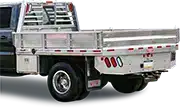





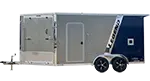
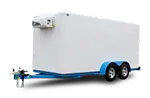


You’re standing in a dealer lot comparing two 7×16 enclosed cargo trailers. One is $500 cheaper. From ten feet away, the frames, siding, doors, and wheels may look nearly identical. So what’s the catch?
The price gap may reflect differences in frame design, steel sections, axle sourcing, brakes, tires, flooring, roof construction, corrosion protection, warranty coverage, freight, options, or dealer support. It is not safe to assume that every American-built trailer is automatically superior or that every imported trailer is poorly made. What matters is whether the manufacturer publishes usable specifications, supports the trailer after the sale, and builds the complete package for the work you intend to do. If you’re hauling expensive tools or crossing I-70 during an Indiana winter, the components underneath the trailer matter far more than the country name printed in an advertisement.
Steel Quality: It Starts at the Mill
Steel origin and trailer assembly location are two separate questions. A trailer assembled in the United States may contain imported steel or components, while an imported trailer may use traceable structural steel that meets a recognized specification. Under the Federal Trade Commission’s standard, an unqualified “Made in USA” claim generally means that final assembly and all significant processing occur in the United States and that all or virtually all components are of U.S. origin. A qualified statement such as “assembled in the USA with domestic and imported components” communicates something different.
For a buyer, the useful comparison is not a broad claim about domestic steel versus foreign steel. Ask for the actual frame design, main-rail dimensions, crossmember size and spacing, tongue construction, material thickness, rated payload, and certification-label information. Steel gauge by itself is not enough. The strength of a frame member also depends on its outside dimensions, shape, steel grade, orientation, unsupported span, weld details, and how the load is transferred into the tongue, suspension, and coupler.
A 12-gauge tube is thicker than a comparable 14-gauge tube, but it is not accurate to assign a universal percentage increase in trailer capacity from gauge alone. A properly engineered 14-gauge member in one location may be entirely appropriate, while a thicker member with poor geometry or inadequate reinforcement may still perform badly. Gauge terminology can also vary by material standard, so compare actual wall thickness whenever the manufacturer provides it.
Do not use the advertised GVWR as proof that every part of the frame is equivalent. GVWR is the maximum allowable total weight of the loaded trailer, including the trailer itself and its cargo. Payload is GVWR minus the trailer’s actual empty weight and any permanently installed equipment. A 7,000 lb GVWR utility or enclosed trailer does not automatically provide 7,000 pounds of cargo capacity, and it should not be selected for a skid steer or other machine unless the trailer’s available payload, deck rating, ramp rating, axle ratings, tire ratings, coupler rating, and the tow vehicle’s limits all support the load.
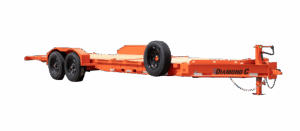
Diamond C Trailers is a family-owned manufacturer founded in 1985 and based in Mt. Pleasant, Texas. Its current LPX Low Profile Extreme-Duty Equipment Trailer is offered in configurations ranging from approximately 15,500 to 24,000 lb GVWR, not as a 14,000 lb model. Current LPX specifications list tandem 7,000 lb Lippert axles as the standard axle package, with higher-capacity and triple-axle configurations available depending on the selected GVWR package. Higher-rated and longer configurations can incorporate Diamond C’s Engineered Beam frame technology. Because the frame, axle package, bed width, empty weight, and payload change by configuration, the certification label and model-specific build sheet should control the comparison.
Diamond C also uses its DM Difference Maker multi-stage powder-coating system. The process includes surface preparation, washing, drying, a zinc-rich primer, a powder topcoat, and oven curing. That does not make the finish immune to rock chips, road salt, fertilizer, trapped moisture, or neglected damage, but it gives the buyer a documented coating process to compare with a trailer described only as “powder coated.”
Welds: The One Thing Photos Can’t Fake
A visual inspection can reveal warning signs, including missed joints, obvious cracks, severe undercut, excessive porosity, burn-through, incomplete weld length, poorly fitted parts, or repairs made over rust and contamination. Consistent bead appearance and clean fit-up are encouraging, but appearance alone cannot prove weld penetration, internal fusion, material strength, or the adequacy of the joint design. Those questions depend on the welding procedure, joint preparation, welder training, inspection process, and engineering behind the structure.
Country of origin does not determine whether a welder is skilled. The practical difference between manufacturers is often process control. Look for repeatable fixtures, consistent component fit, documented quality checks, traceable production records, and a warranty process that can identify the trailer by VIN. Automated cutting, forming, and robotic welding cells can improve repeatability when properly programmed and inspected, but automation does not replace sound engineering or final quality control.
H&H Trailers, headquartered in Clarinda, Iowa, identifies its current trailers as made in the USA and backs them with three-year frame and component protection. Its published warranty information also lists five-year axle and suspension coverage, subject to the written warranty terms and component requirements. Current H&H warranty information identifies Lippert Components and Rockwell American as axle vendors, so the actual axle installed should be confirmed from the tag on the individual trailer.
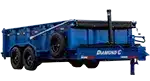
When you’re buying used and can inspect the trailer yourself, examine the complete structural load path rather than judging one attractive weld. Check the coupler mounting area, tongue or A-frame, main-rail transitions, suspension hangers, crossmembers, ramp hinges, jack mounts, tie-down attachments, and any location where the frame changes depth or direction. Look for cracked coating around weld toes, elongated bolt holes, deformed members, fresh paint covering a repair, or rust bleeding from a joint. On dump and tilt trailers, also inspect the subframe, pivot points, cylinder mounts, hoist structure, and hydraulic-component attachment points.
A trailer from Liberty Trailers should be inspected by the same standard rather than assumed to be structurally sound based only on the brand name. Liberty manufactures trailers in Fillmore, Indiana, and Sulphur Springs, Texas, and currently publishes a three-year limited structural warranty covering designated structural components, along with two-year limited coverage for nonstructural materials and workmanship. Warranty exclusions, maintenance requirements, commercial-use provisions, and the claims process still need to be read before purchase.
Axles: Recognized Suppliers vs. Unknown Sourcing
Axle identification is one of the most useful checks you can make on the lot. Lippert and Dexter are major North American suppliers of trailer axles, brakes, hubs, suspension components, and replacement parts. Rockwell American is another established component line used by some manufacturers. Recognized sourcing does not make an axle maintenance-free, but it usually gives the owner access to published capacities, serial-number identification, service information, brake specifications, and a broader replacement-parts network.
Current Diamond C premium lines, including FMAX, HDT, LPT, LPX, WDT, and DEC, use Lippert axles as their standard axle source. The exact axle rating and suspension design depend on the model package. An LPX, for example, may begin with two 7,000 lb Lippert axles and be configured with higher-capacity or additional axles. Do not substitute a generic assumption about axle brand for the specifications on the individual unit.
The axle label or serial number matters because “3,500 lb axle” is not a complete replacement specification. Hub face, spring-center measurement, spindle, brake size, bolt pattern, drop, camber, tube size, suspension type, and brake configuration all affect compatibility. Two axles carrying the same nominal rating are not necessarily interchangeable.
Be cautious when a trailer uses an axle with no readable tag, no serial number, no parts diagram, and no identifiable support channel. The risk is not automatically that the axle will fail. The risk is that routine service becomes harder because the owner cannot confidently identify seals, bearings, brake assemblies, hubs, or a complete replacement axle. Before buying, ask the dealer how replacement parts are ordered and whether common wear parts are stocked domestically.
A common 7,000 lb GVWR tandem-axle trailer may use two 3,500 lb axles, but the sum of the axle ratings is not the trailer’s payload. The trailer’s empty weight must be deducted from GVWR, and every component limit still applies. On some higher-rated trailers, GVWR can also be greater than the combined axle ratings because part of the loaded weight is designed to be carried at the hitch. That does not permit either axle, the tires, wheels, suspension, coupler, hitch, receiver, or tow vehicle to be overloaded.
Recognized axle brands generally improve the odds of finding hubs, bearings, seals, brake parts, and technical information without replacing an entire running-gear assembly. Same-day availability is never guaranteed, however. Parts availability depends on the exact axle, local inventory, model age, and whether previous owners modified the trailer.
Warranty Coverage: Read the Fine Print
| Brand / Origin | Frame Warranty | Axle Warranty | Parts Availability |
|---|---|---|---|
| Diamond C (USA) | 2026 and later models: 6-year limited structural coverage; pre-2026 models: 3-year structural coverage | Lippert axles on current premium lines; component coverage is subject to the applicable written warranty | Authorized dealer network, VIN-based support, published manuals, and manufacturer parts resources |
| H&H Trailers (USA) | 3-year frame and component overall protection | Published 5-year axle and suspension coverage; Lippert or Rockwell American may be used by model | Dealer network with manufacturer and component-vendor support |
| Liberty Trailers (USA) | 3-year limited structural coverage, plus 2-year limited materials and workmanship coverage for designated nonstructural components | Verify the axle supplier, serial tag, and component warranty on the individual trailer | Dealer-based warranty claims and manufacturer parts support |
| Imported or Private-Label Trailer | Varies by manufacturer and importer; obtain the complete written warranty before purchase | May use an established supplier or a private-label axle; verify the tag and replacement-parts source | Ranges from strong nationwide support to importer-only or dealer-only availability |
The warranty gap is not simply a contest over which company prints the largest number. A long warranty can be valuable, but it is not proof that every failure will be covered. Read what “structural” means, when coverage begins, whether it transfers to a later owner, which components have separate supplier warranties, and whether labor, diagnostic time, transportation, paint matching, downtime, or consequential losses are excluded.
For 2026 and later Diamond C trailers, the current written program includes six-year limited structural coverage and two-year limited comprehensive coverage, subject to its conditions and exclusions. Earlier Diamond C trailers remain under the warranty that applied to their model year. This distinction matters when evaluating used inventory; a blanket “three-year Diamond C warranty” description is no longer accurate for every unit.
Overloading, improper loading, unauthorized alterations, neglected maintenance, impact damage, commercial misuse outside the warranty terms, or repairs performed without approval can affect coverage. Save the purchase documents, photograph the certification label and axle tags, keep maintenance records, and contact the selling dealer before authorizing a repair that you expect the manufacturer to cover.
Where Imported Trailers Are Fine
There are well-built imported trailers and lightly built domestic trailers. Origin should narrow your questions, not make the decision for you. A small single-axle utility trailer used for occasional yard debris, a lawn mower, or household projects does not face the same load cycles as a commercial dump, tilt, equipment, or gooseneck trailer operating throughout the week.
For light residential use, a lower-priced trailer may be the sensible choice when it has a valid VIN and certification label, adequate payload, properly rated tires and wheels, a suitable coupler, reliable lighting, safe tie-down points, and local access to bearings, hubs, and other service parts. Inspect it by specification rather than assuming that a low price automatically means unsafe construction.
The honest answer is to match the tool to the job and leave room for the work you are realistically likely to do. Buyers often begin with light hauling and later add heavier mowers, pallets, attachments, building materials, or compact equipment. Purchase for the heaviest expected load, including attachments, fuel, pallets, batteries, toolboxes, spare tires, and other items that remain on the trailer.
No trailer has legal “reserve capacity” beyond the ratings printed by its manufacturer. A heavier domestic frame does not authorize loading beyond GVWR, GAWR, payload, tire capacity, wheel capacity, ramp capacity, or coupler capacity. In fact, heavier construction can reduce available payload when two trailers share the same GVWR. The benefit of a better-engineered frame is durability and controlled load distribution within the rating, not permission to exceed it.
For a 7×16 enclosed trailer, compare actual empty weight and available cargo capacity. Extra interior height, thicker flooring, additional wall posts, cabinets, finished walls, roof air conditioning, generators, shelving, spare tires, and heavy rear doors all add weight. A trailer with more structure may be the better product while carrying less cargo under the same GVWR. That tradeoff needs to be calculated, not guessed.
Resale Value: The Number That Surprises People
Name recognition, dealer support, parts availability, and documented specifications can improve resale value, but there is no reliable universal percentage that applies to every domestic or imported trailer. Used-trailer values change with model, age, location, season, configuration, condition, title status, tire age, corrosion, repairs, and demand. A five-year-old commercial gooseneck cannot be valued accurately from a generic percentage of its original sticker price.
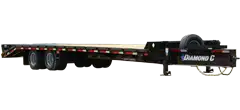
Well-known domestic brands often attract a larger pool of used buyers because shoppers can identify the model, locate specifications, obtain parts, and contact an established dealer network. A clean Diamond C gooseneck with a readable VIN, original build information, serviceable Lippert running gear, maintained brakes, sound decking, and no structural modifications is easier to evaluate than an unidentified trailer with missing labels and unsupported components.
Condition remains more important than the flag on the decal. Overloaded axles, cracked spring hangers, mismatched tires, bent ramps, rotted wood, damaged wiring, roof leaks, corroded crossmembers, poor repairs, and missing ownership documents can erase the resale advantage of a recognized brand. Conversely, a properly documented imported trailer with common service parts and excellent maintenance may sell more easily than a neglected domestic unit.
For enclosed trailers, buyers pay close attention to roof and wall leaks, door alignment, floor condition, wall fasteners, ramp-door capacity, frame corrosion, interior modifications, and whether electrical work was installed correctly. For equipment and dump trailers, they will also inspect suspension wear, brake condition, deck or dump-body damage, hydraulic leaks, battery condition, pivots, hoist mounts, and signs of chronic overloading.
Instead of assuming that a domestic trailer will retain a fixed 65 to 75 percent of its price or that an imported trailer will retain only 40 to 50 percent, check recent local listings and completed sales for the same brand, model, GVWR, length, axle package, and condition. Compare the actual purchase price rather than an inflated MSRP. Even a modest difference in retained value can exceed a small upfront discount, but the calculation must be based on real comparable trailers.
On an $8,500 purchase, every 10 percentage points of retained value equals $850. That is useful math, but it is not a prediction. Add expected maintenance, downtime, financing cost, insurance, usable payload, warranty coverage, and resale evidence before deciding whether the cheaper trailer is truly the lower-cost choice.
A Quick Q&A on Common Questions
Are all “Made in USA” claims accurate? They are not all the same type of claim. An unqualified “Made in USA” representation is held to the FTC’s “all or virtually all” standard. “Assembled in USA,” “built in USA with domestic and imported components,” and similar qualified claims have different meanings. Ask where final assembly occurs and whether the claim covers the frame, steel, axles, tires, decking, electrical components, hydraulics, and hardware. A VIN or American brand name by itself does not prove that every component is domestic.
Do imported trailers pass DOT requirements? New trailer manufacturers and importers are generally responsible for assigning a VIN, identifying the manufacturer, affixing the required certification label, and self-certifying that the trailer complies with applicable Federal Motor Vehicle Safety Standards. NHTSA does not pre-approve every individual trailer before sale. A certification label is important, but it is not a government quality grade and does not evaluate weld appearance, long-term corrosion resistance, dealer support, or ease of obtaining parts.
Federal certification also does not replace state operating requirements. In Indiana, a trailer or semitrailer with a gross weight of 3,000 pounds or more must have brakes adequate to control, stop, and hold the trailer, operable by the driver from the tow vehicle, along with automatic application in a breakaway. Buyers should also verify brake-controller compatibility, breakaway-battery condition, safety-chain rating, lighting, registration, and the towing rules of every state in which the trailer will operate.
A trailer over 10,000 lb GVWR does not automatically require a Class A CDL by itself. The general Class A threshold involves a combination with a GCWR or actual gross combination weight of at least 26,001 pounds and a towed unit with a GVWR or actual gross weight over 10,000 pounds, subject to the vehicle’s use, applicable exemptions, and state licensing rules. Indiana purchasers must also complete title and registration requirements within the state’s 45-day window to avoid administrative penalties.
What about enclosed cargo trailers specifically? Domestic manufacturers such as Wells Cargo and H&H Trailers offer established enclosed-trailer lines with published model information, dealer support, and written warranty programs. Wells Cargo currently advertises three-year limited warranty coverage on applicable cargo models, while exact construction and options vary by series.
Do not compare enclosed trailers by exterior size and siding color alone. Check main-frame members, tongue design, crossmember spacing, floor thickness and material, wall-post and roof-bow spacing, roof construction, interior height, door framing, ramp-door rating, hinges, spring assist, fastener spacing, undercoating, electrical routing, ventilation, payload, and water-sealing details. A better-built enclosed trailer may cost more because it contains more structure and better components, but each claimed advantage should appear in a build sheet, label, warranty, or model specification.
What to Look for on the Lot
- Read the federal certification label. Confirm the manufacturer, VIN, manufacture date, GVWR, GAWR for each axle, tire and rim information, and certification statement. Compare it with the title or manufacturer’s statement of origin. Use the VIN to identify the manufacturer, but do not use it as proof that every component came from the same country.
- Ask the dealer to show you each axle tag or serial number. Current Diamond C premium models use Lippert axles. Other brands may use Lippert, Dexter, Rockwell American, or another supplier by model. Record the axle capacity, serial number, brake type, and parts source before purchase.
- Inspect welds closely without relying on bead appearance alone. Look for cracks, missed joints, porosity, severe undercut, burn-through, poor fit-up, abrupt stops at critical transitions, or coating disturbed by structural movement.
- Inspect the complete tongue-to-frame and coupler load path, along with suspension hangers, crossmembers, ramp mounts, jack mounts, tie-downs, and frame transitions. The most highly stressed location depends on the trailer’s design and loading, so no single weld should be treated as the only important one.
- Ask for actual main-rail dimensions, material thickness, crossmember size and spacing, frame type, and model-specific payload. Steel gauge alone is not a complete measure of strength.
- Compare GVWR with the trailer’s actual empty weight. Confirm that the resulting payload is enough for the cargo, attachments, tools, fuel, spare tire, accessories, and permanent interior equipment you intend to carry.
- Verify the ratings of the tires, wheels, axles, suspension, coupler, safety chains, jack, ramps, tie-downs, receiver, hitch ball, and tow vehicle. The lowest-rated component or vehicle limit controls.
- On trailers requiring brakes, inspect the brake wiring, breakaway switch and cable, breakaway battery, junction box, seven-way connector, and brake operation. Do not assume that the presence of brake backing plates means the system is functional.
- Ask for the complete written warranty before paying a deposit. Confirm structural, component, axle, tire, coating, labor, transportation, commercial-use, transferability, maintenance, and claims-process terms.
At Spencer Trailers, the brands we carry, including Diamond C, H&H, Liberty, and Wells Cargo, are established American manufacturers with identifiable specifications and written warranty support. The exact axle package, empty weight, payload, frame construction, options, and warranty can still vary by model year and individual unit. If you want to compare what’s actually in our inventory right now, check the current inventory page or contact us directly at (812) 829-0226. We’re happy to pull out a trailer, read the certification and axle labels with you, and walk through the frame, brakes, ramps, flooring, and warranty before you buy.
The $500 difference on the sticker may be real, but the reason for it must be verified. Compare actual payload, construction, axle identification, brake equipment, corrosion protection, warranty terms, parts support, and local resale evidence. Do that math before you sign anything.


