




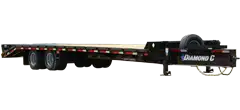
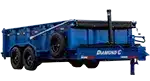

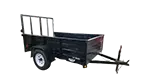

You bought a steel trailer to haul real loads. Dirt, grease, road salt, manure, and rust-colored mud from a job site are part of the work. Eventually, the trailer needs more than a quick rinse, so you bring out the pressure washer and start cleaning.
There is a safe way to do this, however. Excessive pressure, an aggressive nozzle, harsh chemicals, or poor drying can damage a protective finish and force water into brakes, bearings, electrical connections, hydraulic components, and enclosed cavities. A routine cleaning can then contribute to corrosion or create a maintenance problem that was not there before.
Steel trailers are durable, but their corrosion resistance depends heavily on the condition of the factory coating. Chips expose steel. Mud blocks drainage paths. Salt-laden water remains in seams and around suspension hardware. The undercarriage can stay wet long after the visible surfaces appear dry. Avoiding these problems is not complicated, but it requires a deliberate approach before you pull the trigger.
Start With the Right Pressure Setting
Many residential pressure washers operate between approximately 1,500 and 3,000 PSI, but the machine’s maximum rating does not tell you how much force is safe at the trailer surface. Actual cleaning force also depends on the nozzle angle, flow rate, distance, and how long the spray remains in one place. Begin with the lowest effective pressure and test an inconspicuous area before washing the entire trailer.
A 0-degree nozzle, commonly identified by a red tip, concentrates the stream into a very small area. At close range, it can cut wood fibers, lift decals, damage wiring, force water past seals, and chip or undermine paint and powder coat that is already damaged. Use a 25-degree or 40-degree fan nozzle for general washing. A wider fan is the safer starting point around painted surfaces, labels, lights, wiring, wood decking, hydraulic components, bearings, and brakes. Do not use a narrow jet on the trailer merely to remove a stubborn spot.
Distance matters too. Start at least 18 to 24 inches from painted or powder-coated surfaces and move closer only when necessary. Keep the wand moving and aim at a shallow angle near coating edges so the stream does not drive underneath a chip. Manufacturer instructions for the pressure washer, cleaning chemical, and trailer take priority over a universal pressure or distance recommendation.
Be especially cautious with any aftermarket undercoating, cavity coating, wax, or sealant. Diamond C uses its DM Difference Maker multi-stage coating system, which includes surface preparation, a zinc-rich epoxy primer, a powder topcoat, and oven curing. It is a coating system rather than a substitute for careful washing and prompt chip repair. Other trailer manufacturers and individual models may use different preparation, primer, powder, paint, galvanizing, or underbody protection, so confirm the finish before applying strong chemicals or corrosion products.
Sequence Matters: Top Down, Front to Back
Work from the highest surfaces downward. Start with the deck and upper rails, continue to the side rails and fenders, and then clean the frame, cross-members, suspension, and undercarriage. Working top to bottom prevents dirty water from repeatedly running over areas that have already been cleaned. Front-to-back progress also makes it easier to see which sections still need attention.
Pre-rinse the trailer with a broad, low-pressure fan before applying soap or degreaser. This softens mud and removes loose sand, salt, and grit. Do not scrub gritty deposits into the finish. Heavy dried mud should be allowed to soak and loosen instead of being attacked immediately with a concentrated jet.
Use a cleaner labeled as compatible with automotive paint, powder coat, galvanized steel, aluminum, rubber, wiring, and any other material it will contact. Follow the product’s dilution and dwell-time instructions rather than assuming every degreaser should remain for the same number of minutes. Work in manageable sections, preferably on a cool surface out of direct sun, and never allow the chemical to dry. Rinse completely because alkaline or acidic residue can stain finishes and contribute to corrosion.
Grease around a coupler, jack, pivot, hinge, or suspension component may be intentional lubrication. Cleaning these parts can remove protective grease, so inspect and relubricate them afterward with the lubricant specified by the trailer or component manufacturer. Do not direct degreaser or high-pressure water toward wheel seals, bearing caps, brake openings, hydraulic-cylinder seals, pump enclosures, or electrical boxes.
The Undercarriage Is Where Rust Actually Starts
The undercarriage deserves at least as much attention as the deck. Road salt and deicing brine accumulate on cross-members, axle tubes, suspension brackets, fasteners, and the backs of fenders. Mud can remain packed around hangers and braces, retaining moisture and concealing coating damage. Agricultural residue can be particularly corrosive and should be removed promptly.
Use a broad fan and a suitable undercarriage attachment, or angle the wand from outside the trailer without placing yourself beneath an unsupported unit. Never crawl under a trailer supported only by its tongue jack, stabilizer jacks, hydraulic hoist, tilt mechanism, or tow vehicle. If access beneath the trailer is necessary, chock the wheels and support it using appropriately rated equipment at manufacturer-approved points.
Focus on cross-members, suspension hangers, equalizers, axle tubes, spring seats, U-bolts, the backs of fenders, and areas where brackets meet the frame. Tandem-axle trailers have more suspension joints and sheltered surfaces than single-axle trailers, but the washing procedure should be based on the actual construction of the trailer rather than an assumed model, axle rating, or GVWR.
Pay attention to weld seams and bracket edges. Their irregular geometry can retain dirt and moisture, while nearby coating damage may be difficult to see until the surface is clean. Weld discoloration, visible cracking, lifting coating, or recurring rust staining warrants closer inspection after the trailer dries. Do not grind, weld, or structurally repair the frame without guidance from the trailer manufacturer or a qualified repair facility.
Inspect all intended drain openings and weep holes. Trailer frames may use channel, I-beam, formed steel, rectangular tubing, or a combination of sections, so not every frame has hollow rails or removable drain plugs. Never drill a frame member merely because water appears to be trapped. Clear only manufacturer-provided drainage paths, and ask the dealer or manufacturer about persistent water inside a structural member.
Drying: The Step Most People Skip
Pressure washing puts water into sheltered areas that receive little sunlight or airflow. Even when the deck looks dry, moisture may remain behind brackets, around bolt heads, inside coupler mechanisms, under loose coating, and near suspension components. Drying and inspection are therefore part of the wash, not optional finishing touches.
After the final rinse, park the trailer on firm, level or appropriately sloped ground where water can drain safely. Keep the wheels chocked. A leaf blower or clean, regulated compressed air can help remove standing water from seams, hardware, light housings, connector exteriors, and other accessible recesses. Wear eye protection, use moderate air pressure, and do not blow contaminants deeper into electrical boxes, brake assemblies, bearing seals, hydraulic reservoirs, or enclosed frame sections.
Electric drum-brake assemblies are designed for normal road exposure, but they are not intended to receive a concentrated pressure-washer stream. Water and cleaner can enter through openings or be driven past seals, potentially contaminating friction surfaces or bearings. Keep the nozzle well away from the hub and backing plate, use only a gentle rinse in that area, and allow the assembly to drain and dry naturally. If braking becomes weak, uneven, noisy, or grabby after washing, do not continue towing until the system has been inspected. Brake disassembly and compressed-air cleaning can expose hazardous brake dust and should be handled using the axle manufacturer’s service procedure.
Wheel wells and the undersides of fenders are additional moisture traps. Enclosed cargo trailers may also have floor-to-wall seams, interior wheel boxes, trim joints, and penetrations that can admit water if sprayed directly. Avoid forcing water toward exterior seams, doors, vents, or floor edges. If water enters the cargo area, dry the floor and wall junctions fully before loading or closing the trailer for storage.
Protecting Coatings Before and After
The factory finish is the trailer’s primary corrosion barrier. On current Diamond C trailers, the DM Difference Maker process uses prepared steel, a zinc-rich epoxy primer, a powder topcoat, and controlled curing. That durable system still requires routine washing, avoidance of harsh chemicals, and prompt attention to chips or scratches. The exact coating on another brand, an older trailer, or a repaired component may differ.
Before pressure washing, inspect for chips, scratches, bubbling, peeling, rust staining, loose decals, exposed wiring, damaged seals, and previously repaired areas. Photograph significant coating defects before cleaning. A pressure washer can enlarge a loose edge, so clean those areas with low pressure and a wide fan rather than directing the stream underneath the coating.
After washing and complete drying, inspect the marked areas again. For a Diamond C trailer that may still qualify for paint warranty coverage, contact an authorized dealer before sanding or applying a do-it-yourself coating because unauthorized repair may interfere with evaluation of the original defect. Warranty coverage generally does not turn impact chips, abrasion, chemical exposure, road damage, or neglected maintenance into manufacturing defects.
For non-warranty cosmetic chips, follow the trailer manufacturer’s touch-up instructions. Remove loose corrosion without enlarging the repair unnecessarily, clean and dry the surface, and use a compatible primer and topcoat. Zinc-rich primer can improve corrosion protection on properly prepared bare steel, but it is not automatically compatible with every existing powder coat or finish system. Test compatibility, observe recoat windows, and apply several controlled coats rather than one heavy coat that runs or cures poorly.
After the trailer is completely dry, an approved wax or corrosion inhibitor can provide additional protection. A lanolin-based product such as Fluid Film may be suitable for exposed steel, fasteners, springs, and selected undercarriage areas, but it remains a soft, non-drying film that attracts an initial layer of dust. Keep it off brake drums, brake shoes, rotors, pads, tire tread, traction surfaces, wood intended to accept a finish, and any surface that may soon be painted. It can soften some aftermarket undercoatings and may affect non-oil-resistant rubber, so verify compatibility before widespread application.
Frequency and Timing
| Use Case | Recommended Wash Frequency | Extra Focus Area |
|---|---|---|
| General hauling, dry conditions | Inspect regularly; wash when dirt or residue accumulates | Deck, fenders, coating chips |
| Construction / job site use | After muddy or contaminating use; otherwise as needed | Undercarriage, suspension, coupler |
| Winter road salt exposure | Rinse promptly after salted-road exposure when conditions allow | Full undercarriage, suspension, brakes, wiring |
| Agricultural / manure hauling | Promptly after each contaminating load | Deck or body, frame, crevices, drains |
Salt and deicing brine are major corrosion accelerators for steel equipment in Indiana and throughout the Midwest. Prompt rinsing is much more effective than waiting for a seasonal deep cleaning. Use enough low-pressure water to flush the residue away rather than merely redistributing it, and wash only where runoff can be managed legally and responsibly. Avoid washing when water will freeze on the trailer, pavement, brakes, coupler, or electrical connections.
Cleaning frequency should also reflect storage conditions. A trailer stored outdoors near fertilizers, livestock areas, industrial fallout, or standing vegetation may require more attention than one used more frequently but stored clean and dry. Inspection is the better guide than an arbitrary calendar interval.
A Quick Q&A on Common Mistakes
Can I use my pressure washer on the wiring harness and light connectors?
Do not direct a pressure-washer stream at connectors, lamps, grommets, the breakaway switch, battery box, junction box, or exposed harness entries. A gentle rinse from a distance is adequate. Disconnect the tow vehicle before washing, inspect for damaged seals or insulation, and let components dry before reconnecting power. If corrosion protection is needed, use dielectric grease only where the connector or component manufacturer recommends it; packing every connector with grease after every wash is unnecessary and can interfere with some terminal designs. Trailers equipped with electric brakes commonly use an RV-style 7-way blade connector so the tow vehicle can supply brake-control output, lighting, ground, and auxiliary circuits. Other properly wired connector types can also support electric brakes, so identify the actual system before servicing it.
My trailer has galvanized cross-members. Do I wash those differently?
Galvanizing provides sacrificial corrosion protection, but it can still be damaged by aggressive blasting, abrasion, strong acids, or highly alkaline cleaners. Use the same conservative fan nozzle and distance used on coated steel. Rinse thoroughly and inspect cut edges, welded areas, fasteners, and places where the zinc layer has been abraded. White or gray weathering on zinc is not automatically structural failure, but heavy flaking, red rust, or section loss should be evaluated.
Is it safe to pressure wash a trailer with wood decking?
Yes, if the pressure is kept moderate and the nozzle remains far enough away to avoid raising or cutting the wood grain. Use a wide fan, spray in the direction of the grain, and avoid prolonged soaking. Do not force water into board ends, fastener holes, floor seams, or the joint between the deck and steel frame. Let the deck dry fully before covering or storing the trailer. Follow the deck supplier’s instructions before applying sealer because treated lumber may need to reach an appropriate moisture level first.
What to Look For While You’re Down There
Washing a trailer is one of the best opportunities to perform a close visual inspection. Dirt can hide loosened hardware, coating damage, tire problems, and cracked components. Once the surfaces are clean and dry, check for:
- Cracked, separated, or rust-stained welds, especially around the tongue, coupler structure, suspension hangers, ramps, hinges, hoist mounts, and cross-member connections
- Leaf springs with cracked or broken leaves, displaced spring packs, worn shackles, damaged equalizers, or loose-looking U-bolts; U-bolt torque should be checked according to the axle or trailer manufacturer’s procedure
- Tire cuts, bulges, sidewall cracking, exposed cords, foreign objects, low pressure, or uneven wear that may indicate inflation, loading, suspension, bearing, or alignment problems
- Grease leakage around hubs, missing dust caps, damaged brake wiring, abnormal drum or hub discoloration, or brake complaints; magnet and shoe condition cannot be reliably determined from an exterior visual check alone
- Safety chains, attachment points, hooks, retainers, breakaway cable, breakaway switch, and battery condition
- Coupler latch, ball socket, pintle eye, gooseneck mechanism, safety pin, and mounting hardware for wear, distortion, corrosion, or improper adjustment
The coupler must be the correct type and rating for the trailer and load. Many heavier bumper-pull trailers use a 2-5/16-inch ball, while gooseneck and pintle systems use different connection hardware. Never infer coupler capacity from ball size alone; verify the rating stamped or labeled on the coupler and confirm that every towing-system component is adequately rated.
Do not test brakes by looking only at the drum face. Before towing, connect the trailer, verify all lamps, check brake-controller response at low speed in a safe area, and test the breakaway system according to its instructions without leaving the pin removed longer than necessary. Any cracked structural member, loose suspension component, leaking hub, damaged tire, or uncertain brake operation should be corrected before highway travel.
After the Wash: Storage Position
If the trailer is going into storage after washing, follow the manufacturer’s storage guidance and position it so deck and body drains can work as designed. A slight slope may help water leave an open utility deck or dump body, but the correct direction depends on the trailer’s construction and drain locations. Keep the trailer stable, chock the wheels, support it correctly, and do not create a steep tongue angle that overloads the jack or allows the trailer to move.
Do not cover a wet trailer with a non-breathable tarp. Trapped condensation can keep the coating, wood deck, electrical components, and hardware damp longer than open-air storage would. Let the trailer dry completely before covering it, provide ventilation, and secure the cover so it cannot rub through the finish in the wind. Avoid wrapping a tarp tightly around the undercarriage.
Want to know what factory coating a specific model uses? The team at Spencer Trailers can help identify the finish and recommended care for the Diamond C, H&H, Liberty, and Darkhorse Cargo trailers they sell. Current Diamond C trailers use the DM Difference Maker multi-stage coating system, while other brands, model years, components, and prior repairs may use different finishing processes. Call (812) 829-0226, browse current inventory, or reach out with questions before applying an unfamiliar cleaner, touch-up coating, or corrosion inhibitor.
A properly built steel trailer can provide many years of service, but longevity depends on use, loading, storage, climate, coating condition, and maintenance. Wash with a wide fan at the lowest effective pressure, keep concentrated spray away from seals and electrical and brake components, remove corrosive residue promptly, let the trailer dry, and repair coating damage correctly. Those habits protect the trailer far more effectively than an occasional aggressive pressure wash.


