








Opening day is weeks out and you’re already thinking about the logistics. Two ATVs, a UTV, a week’s worth of camp gear, extra fuel, coolers, recovery equipment, and possibly several hundred pounds of game, ice, and processing supplies on the return trip. That’s not a load you wing with whatever trailer happens to be parked behind the barn. Get the rig wrong and you can exceed the trailer’s payload, overload the tow vehicle’s receiver or rear axle, run out of usable deck space, or leave valuable equipment exposed overnight at a public campground.
Here’s how to think through a hunting setup that actually works from load-in to pack-out.
Start With the Weight, Not the Length
Most hunters size trailers by asking how many machines appear to fit on the deck. That’s backwards. Start with the trailer’s gross vehicle weight rating (GVWR), subtract the trailer’s actual empty weight to determine available payload, and then compare that payload with the real loaded weight of every machine, accessory, fuel can, cooler, storage box, spare tire, tool, and piece of camp gear. GVWR is the maximum permitted loaded weight of the trailer itself; it is not the amount of cargo the trailer can carry.
Current machine weights also vary much more than a model name suggests. A 2026 Polaris Ranger SP 570 has an estimated dry weight beginning around 1,168 pounds, while enclosed-cab and crew configurations can be considerably heavier. A 2026 Can-Am Defender HD7 is listed at approximately 1,482 pounds dry, and larger Defender, Ranger Crew, cab, and accessory-equipped packages can approach or exceed 2,000 pounds before fuel, tools, a windshield, roof, winch, spare tire, and cargo are added. A Ranger SP 570 and a base Defender HD7 therefore begin at roughly 2,650 pounds combined, but their road-ready hauling weight can be several hundred pounds higher. Use the specification sheet for the exact trim and, whenever possible, confirm the completed combination on a certified scale.
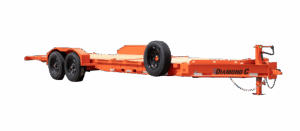
If you’re running two smaller ATVs, a properly configured 7,000-pound-GVWR tandem utility may provide enough payload and deck space, but the numbers still need to be checked. The Diamond C GTU is an 83-inch-wide bumper-pull utility offered in 14-, 16-, 18-, and 20-foot lengths with a 7,000-pound GVWR, two 3,500-pound Lippert electric-brake axles, and a 4-inch channel frame. It is not a single-axle trailer, and its usable cargo capacity is the 7,000-pound GVWR minus the actual weight of the completed trailer. H&H utility configurations are also available across several GVWR levels, including 7,000- and approximately 9,900-pound models, so compare the certification label and listed payload of the specific VIN rather than assuming every 7×16 has the same axle package or capacity.
Enclosed vs. Open Utility: Pick a Side
This debate comes up every fall, and the honest answer depends on what you’re hauling, the weather you expect, how long the trailer will sit unattended, and whether the trailer also needs to serve as secure camp storage.
The Case for Open Utility
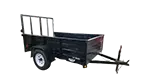
Open utility trailers generally cost less than similarly rated enclosed trailers, create less aerodynamic drag, are easier to inspect during a fuel stop, and provide better access when you’re loading muddy recovery gear or a properly contained animal. Most steel utility trailers use treated-lumber or aluminum flooring rather than a full steel-mesh deck. For example, the Diamond C GTU is available with a treated-lumber floor or an optional aluminum flooring system. Mud can be washed from either surface, but wood should be allowed to dry thoroughly and game should be placed in a sanitary, leak-resistant sled, tub, liner, or other washable containment system rather than directly on the trailer floor.
The Case for Enclosed
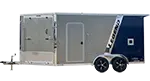
If you’re carrying optics, clothing, electronics, tools, or other weather-sensitive equipment, an enclosed trailer adds concealment, weather protection, and lockable storage. Wells Cargo, Darkhorse, Legend, United, and H&H all produce enclosed cargo configurations suitable for powersports use, but nominal box size is only the starting point. Check the rear-ramp opening, interior height, width between the fenders, ramp-door capacity, payload, axle ratings, tie-down locations, ventilation, and the machine’s height after adding a roof, light bar, windshield, or cab. Current 8.5-foot-wide enclosed models can range from 7,000 pounds to 9,990 pounds or more in GVWR depending on the series and axle package.
Aluminum construction reduces empty weight and does not develop the same red rust as carbon steel, but it is not maintenance-free. Aluminum can corrode, and the trailer may still have steel axles, fasteners, coupler components, brake hardware, and other mixed-metal parts that require inspection. Cleanup also takes more planning in an enclosed unit. Use removable floor protection, washable containment, adequate ventilation, and manufacturer-approved sealants or floor coatings. Do not cut drains through the floor or frame without confirming that the modification will not weaken the structure or affect the warranty.
A Practical Split
Some hunters run two trailers: an open utility for the UTV, ATVs, fuel, and muddy recovery equipment, plus a smaller enclosed trailer for dry camp supplies. That can be practical for a large group with two capable tow vehicles, but it also doubles the tires, bearings, registrations, security points, and parking space that need attention. For most hunters, the better answer is one trailer with enough verified payload and usable floor space, combined with lockable weather-resistant storage boxes for the equipment that should not remain exposed.
Mud and Off-Road: What Actually Matters on the Trailer
The trailer goes wherever the truck can safely tow it, but a highway trailer should not be treated like an ATV. Logging roads, maintained two-tracks, gravel access routes, and seasonal roads can still expose the frame, wiring, coupler, jack, brake assemblies, and rear ramp to ruts, washouts, branches, and rocks. Before leaving pavement, confirm that trailers are permitted on the route, walk questionable sections, and leave enough room to turn around without backing several miles in the dark.
- Ground clearance: Wheel diameter alone does not determine clearance. Axle style and position, suspension geometry, tire outside diameter, frame depth, deck height, rear dovetail, stabilizer jacks, spare-tire mount, and loaded suspension travel all matter. A 16-inch wheel does not automatically make a trailer more suitable for rough roads than a properly configured trailer using 15-inch wheels. Inspect the lowest fixed component and remember that the trailer will sit lower when fully loaded.
- Frame and running gear: Match the structure to the load rather than relying on a vague steel-gauge claim. The Diamond C GTU uses a 4-inch channel frame, engineered 2-inch channel crossmembers on 24-inch centers, tandem 3,500-pound Lippert brake axles, and 5-leaf slipper-spring suspension. Its optional Venture Edition adds all-terrain tires, a front mud shield, an integrated work light, and retractable ratchet straps, but those features do not change the trailer into a rock-crawling or severe off-road vehicle.
- Coating and corrosion protection: Inspect more than the visible top rail. Look under the tongue, around welds, behind lights, inside stake pockets, near suspension hangers, and anywhere mud can remain trapped. Diamond C’s DM Difference Maker coating is a multi-stage system that includes steel-shot blasting, a five-stage wash and pretreatment process, force drying, zinc-epoxy powder primer, powder topcoat, and heat curing. Even a high-quality coating still needs prompt washing after exposure to mud, road salt, fertilizer, blood, or other corrosive material.
- Ramp quality: Confirm the ramp or gate is rated for the machine’s actual axle load and tire contact area, not merely its total advertised weight. The GTU uses an EZ Bi-Fold Gate as its standard ATV and utility loading system, with tractor-gate configurations also available. Heavier machines, tracked equipment, or low-clearance side-by-sides may be better matched to a purpose-built equipment trailer with a longer approach and a manufacturer-approved MAX Ramps, XDR Ramps, or X-Ramp system where offered on that model. Never substitute loose lumber for a properly rated loading system.
Game Retrieval: The Return Trip Nobody Plans For
You packed in for the machines, but the load may be different on the way out. The weight of a field-dressed deer, bear, or elk varies widely with species, age, sex, and how the animal is processed. Once you add quarters, hide, antlers, coolers, ice, processing tubs, wet clothing, and recovery equipment, the return load can increase by several hundred pounds. Keep that reserve in the original payload calculation instead of assuming the trailer will be lightly loaded after camp supplies are used.
Open utility trailers can be practical for this job, but there are a few things to sort out before you’re standing in the dark:
- Use properly rated anchor points and tiedowns. The working load limit should be visible on the straps, chains, hooks, and hardware, and the lowest-rated component controls the capacity of the system. Secure each ATV or UTV with a method approved by its manufacturer, commonly using four independent points or a properly installed wheel-restraint system. Commercial cargo-securement rules use an aggregate working load limit of at least one-half the cargo weight as a minimum standard, but recreational haulers should build in additional margin and replace any strap that is cut, abraded, chemically damaged, or missing a readable rating label.
- Measure usable deck space, not nominal square footage. An 83-inch-by-16-foot deck provides about 111 square feet before accounting for rails, ramp hardware, wheel wells, storage boxes, tie-down angles, and the room needed to enter or exit a machine safely. A 14-foot deck provides about 97 square feet. Draw the footprint of each machine to scale, including bumpers and accessories, and leave a separate area for game containers, coolers, fuel, and camp gear. Never plan on placing loose cargo where it blocks the machine’s securement points.
- Use side rails, stake pockets, sideboards, or rigid containers for containment, but do not treat them as substitutes for tiedowns. The current GTU includes integrated upright tie-down locations and stake pockets, which can support a practical removable-sideboard setup when built and loaded correctly. A carcass, cooler, sled, or game tote must still be restrained against forward, rearward, and lateral movement during braking and turns.
Some hunters add manufacturer-compatible sideboards or a removable cargo-containment system specifically for the return trip. Keep the load low, centered, sanitary, and separated from fuel or chemicals. Follow current Indiana Department of Natural Resources requirements for tagging and transporting game, and recheck every strap after the first few miles because wet cargo, ice, and suspension movement can change tension.
Security: Don’t Leave It to a Padlock
Trailers carrying powersports equipment, tools, firearms, and hunting gear are high-value targets wherever they are left unattended. A coupler lock is a useful first layer, but no single lock should be treated as a complete security plan.
A trailer carrying one or more ATVs or UTVs can hold tens of thousands of dollars in machines and equipment. Build security in layers and avoid leaving firearms unattended in a trailer whenever another lawful storage option is available.
Start with a lock designed for the exact coupler body and latch, not merely the hitch-ball diameter. Common bumper-pull couplers use 1-7/8-inch, 2-inch, or 2-5/16-inch balls, but two couplers using the same ball can require different lock designs. Add a locked hitch pin or receiver lock on the truck side, a wheel immobilizer, and a lock that prevents the safety chains from being used to tow the trailer away. When the trailer is unhitched, lower or remove equipment that could make the tongue easy to lift and position the trailer so the coupler is difficult to approach.
For enclosed trailers, lock every door and latch point with hardware that fits closely and leaves as little exposed shackle as possible. A shrouded padlock, puck-style lock, or compatible cross-bar system can add resistance, but the door, hasp, frame, and fasteners must all be strong enough to support it. An enclosed trailer provides concealment and weather protection; it is not automatically a firearm safe. Store firearms and ammunition in accordance with applicable law, campground rules, and safe-storage practices.
At a permanent or semi-permanent camp, connect the frame to a property-owner-approved ground anchor, large structural post, or other fixed point with a hardened chain or rated security cable. A concealed GPS or cellular tracker with geofence alerts can add a recovery layer, especially when it uses an independent battery and cannot be disabled by disconnecting the trailer plug. Hardware prices and subscription terms vary, so compare coverage in the area where you hunt rather than buying solely on the lowest advertised price.
Matching the Trailer to Your Rig
| Use Case | Trailer Type | Suggested GVWR | Example Model |
|---|---|---|---|
| 1 ATV + gear | Open utility, approximately 6×10 to 7×14 | 2,990-7,000 lb, based on payload | H&H Rail Side Utility |
| 2 ATVs or 1 UTV + gear | Open tandem utility, 83 inches wide and 14-20 feet long | 7,000 lb when verified payload is sufficient | Diamond C GTU |
| Firearms + dry gear overnight | Enclosed cargo, commonly 6×12 to 7×16 | 7,000 lb tandem for heavier hunting loads | Wells Cargo or Darkhorse Cargo |
| Large UTV or multiple machines + full camp setup | Heavy utility or enclosed, commonly 8.5×20 or larger | 9,900-14,000 lb, matched to tow vehicle and licensing | H&H 14K Heavy Duty Rail Side or Legend 8.5 Enclosed |
One More Thing Before You Buy
Your truck’s advertised maximum tow rating is only one limit in a larger system. Check the truck’s GVWR, rear gross axle weight rating, payload label, gross combined weight rating, receiver rating, ball mount, hitch ball, tires, wheels, brakes, cooling requirements, and manufacturer towing guide for the exact cab, engine, axle ratio, drivetrain, and option package. Trailer tongue weight becomes part of the truck’s payload and rear-axle load, along with passengers, fuel, tools, a bed cap, and everything else carried in the truck. The lowest applicable rating is the limit, even when another published number is higher.
Indiana law requires a trailer or semitrailer with a gross weight of at least 3,000 pounds, when operated on a highway, to have brakes adequate to control, stop, and hold the trailer. The brakes must be controllable by the driver from the tow-vehicle cab and must apply automatically if the trailer accidentally breaks away. On a Diamond C GTU, both standard 3,500-pound Lippert axles are equipped with electric brakes, but the tow vehicle still needs a compatible, correctly adjusted brake controller. Inspect the breakaway switch, cable, battery, plug, grounds, magnets, drums, and adjustment before every hunting trip.
Heavier combinations can also affect licensing. For commercial operation, a Class A CDL threshold generally applies when the combination is rated or weighs 26,001 pounds or more and the towed unit is rated or weighs more than 10,000 pounds. A trailer exceeding 10,000 pounds by itself does not automatically trigger that Class A threshold when the entire combination remains below 26,001 pounds, although commercial-use rules, DOT requirements, exemptions, and non-business use need to be evaluated separately. Indiana buyers should also complete title work within the state’s 45-day window rather than parking a newly purchased trailer until the night before the season.
Ready to look at what’s actually in stock? Browse our current trailer inventory or call us at (812) 829-0226 and we’ll walk through what fits your truck, your machines, your loaded payload, and your typical hunt. We’re a family-owned dealer in Spencer, Indiana, and we carry Diamond C trailers built in Mt. Pleasant, Texas, where the company has manufactured USA-built trailers since 1985.


