


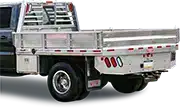
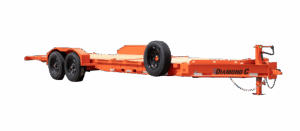







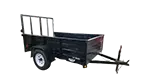

You walk onto a lot, spot what appears to be the same Diamond C LPX equipment trailer you saw eight months ago, and notice that the sticker is higher. The deck length looks the same. The Lippert axle package looks the same. It still carries Diamond C’s DM Difference Maker multi-stage coating system. So what gives?
Steel may be part of the answer, but a higher trailer price is not proof that steel alone caused the increase. A later-production trailer may also reflect changes in labor, tires, axles, suspension components, lumber, hydraulics, freight, tariffs, manufacturer incentives, or standard equipment. On a steel-intensive trailer, however, a sustained increase in steel costs can materially raise the manufacturer’s cost and eventually affect what the buyer pays.
Steel Is One of the Biggest Line Items in Most Trailers
A conventional trailer contains a substantial amount of steel. Depending on its design, that may include the main frame, crossmembers, tongue or gooseneck structure, fenders, deck supports, side rails, dump body, ramps, coupler components, and numerous brackets and reinforcements. Many traditional enclosed cargo trailers from manufacturers such as Darkhorse Cargo and Wells Cargo use steel chassis and framing, although both the market and Spencer Trailers’ inventory also include aluminum-framed alternatives. On a heavy-duty equipment hauler such as a Diamond C LPX or a 14,000 lb. GVWR Liberty LE equipment trailer, the finished unit contains thousands of pounds of structure, running gear, decking, and hardware, with steel representing a major share of the material cost.
Trailer manufacturers do not necessarily purchase only raw hot-rolled coil. Depending on the plant and design, they may purchase steel plate, sheet, tubing, channel, I-beam, structural shapes, expanded metal, and preformed components from mills or steel service centers. Those materials are commonly priced by weight, so a sustained increase in the cost per hundredweight or per ton raises the cost of building each frame, tongue, ramp set, and fabricated body.
The increase is rarely passed through on a perfect one-to-one basis. A manufacturer may have contracted material, steel already in inventory, or supplier pricing that temporarily delays the effect. Manufacturers and dealers may also absorb part of an increase, adjust discounts, change freight programs, or spread the added cost across an entire product line. Even so, when the cost of plate, tube, channel, and structural steel remains elevated, it normally works its way into wholesale prices, factory surcharges, dealer invoices, or future model-year pricing.
Why Steel Prices Move So Much
Steel is a globally traded industrial material, but the price paid by a US trailer manufacturer is shaped by both global conditions and the realities of the domestic mill and service-center market. Several forces can move at the same time.
- Raw material inputs. Integrated blast-furnace mills depend heavily on iron ore and metallurgical coal, while electric-arc-furnace mills use large amounts of recycled steel scrap and may supplement it with pig iron, direct-reduced iron, alloys, and other metallic inputs. Because electric-arc furnaces account for a large share of US steel production, scrap prices can be just as important to domestic steel costs as iron ore and coking coal.
- Energy costs. Electric-arc furnaces require substantial electricity, while rolling, reheating, forming, coating, and transporting steel also consume electricity, natural gas, diesel fuel, and other energy. A change in energy prices can therefore affect both mill production and the cost of delivering finished tube, plate, and channel to a trailer plant.
- Trade policy and tariffs. Import duties can raise the cost of imported steel and change the competitive price available from domestic mills. As of 2026, US Section 232 rules continue to impose substantial duties on many covered steel articles and derivatives, with the exact rate depending on the product classification. Those rules can change quickly, so manufacturers and suppliers have to price around both current duties and future uncertainty.
- Domestic capacity. Mill outages, maintenance, capacity utilization, service-center inventories, production lead times, and regional availability all matter. A mill can be producing plenty of steel overall while a particular thickness, grade, tube size, or structural shape remains difficult or expensive to source.
- Construction and industrial demand. Trailer builders compete for steel-processing capacity with the automotive, construction, energy, agriculture, appliance, machinery, truck-body, and heavy-equipment industries. Strong orders across several sectors can tighten availability even when trailer demand itself has not changed.
No single factor predicts what a trailer will cost next month. Steel mill product indexes can move sharply over a relatively short period, and the price of finished tubing, plate, channel, and fabricated components may rise or fall on a different schedule than the headline price for hot-rolled coil. Bureau of Labor Statistics data for 2025 and 2026 illustrate how materially steel and broader metal-product indexes can change over time.
How the Swing Reaches Your Sticker Price
Consider an 82-inch-by-14-foot H&H steel rail-side tandem utility trailer. The current 7,000 lb. GVWR configuration uses two axles rated at 3,500 lbs. each and has a published curb weight of approximately 1,610 lbs. The steel frame, tongue, rails, gate, and crossmembers represent a meaningful portion of that finished weight. If the manufacturer’s cost for the required tube, channel, sheet, and fabricated steel components increases, the material cost of each trailer increases with it.
Manufacturers do not all buy steel under the same arrangement, and they do not necessarily reprice on a fixed quarterly or semiannual schedule. Some purchase material under longer-term contracts, some work through steel service centers, and some buy a portion of their requirements at current market prices. Supplier agreements, existing inventory, production backlogs, and the timing of factory price-sheet updates can create a delay between a move in steel benchmarks and a change in trailer pricing.
Dealers experience a similar lag. A trailer already on the lot was purchased at a known invoice cost that reflects the manufacturer’s pricing, options, freight, and programs in effect when that unit was ordered or shipped. If new-production pricing later declines, a dealer’s existing unit does not automatically become less expensive to own. The dealer may discount it for competitive or inventory reasons, but a decline in the steel market does not retroactively reduce the original invoice.
This is one reason the same basic model can carry different advertised prices at different dealers. The units may have been ordered at different times, but they may also have different axle packages, tires, ramps, deck materials, spare tires, paint colors, storage options, freight charges, model years, factory incentives, or dealer-installed equipment. Compare the VIN-specific build sheet and the complete out-the-door quote rather than assuming that two trailers with similar model descriptions are identical.
Heavy vs. Light Trailers: Who Feels It More
As a general rule, a larger steel trailer has more absolute exposure to steel-price changes because it contains more plate, tube, channel, structural beam, and fabricated material. The relationship is not perfectly proportional, however. Steel grade, frame design, axle capacity, deck material, hydraulics, tires, brakes, suspension, and labor can all change the cost of one configuration relative to another.
Compare a 7-by-14-foot Darkhorse DHW enclosed cargo trailer with a Diamond C LPX210 equipment trailer configured with an 82-inch-wide, 22-foot deck and a 20,000 lb. GVWR. The Darkhorse is a 7,000 lb. GVWR enclosed trailer with two 3,500 lb. axles, while the 20,000 lb. LPX configuration uses a much heavier frame and two 10,000 lb. Lippert axles. On higher-GVWR LPX packages that are 22 feet or longer, Diamond C uses its Engineered Beam Technology. The LPX therefore carries considerably more steel and higher-capacity running gear, so the same increase in material cost per ton has a larger potential dollar effect on the LPX.
Lighter trailers are not immune. A single-axle steel utility trailer with a 2,990 lb. GVWR may still use a steel frame, tongue, side rails, fenders, gate, and crossmembers. Its absolute increase may be smaller, but the retail percentage does not have to match that of a heavy trailer because fixed costs such as the axle, coupler, tires, lights, wiring, labor, freight, and dealer preparation represent a larger share of the total price.
At the commercial end, heavy gooseneck flatbeds, deckovers, equipment trailers, and dump trailers from Diamond C, Delco, Liberty, and other manufacturers are especially steel-intensive. Diamond C’s FMAX gooseneck flatbed family, for example, ranges from approximately 15,500 lb. GVWR packages to 40,000 lb. GVWR packages on the highest-capacity configurations. The engineered neck, main beams, crossmembers, ramps, suspension structure, and deck supports make those trailers more sensitive in absolute dollars to changes in structural-steel and component pricing.
Buying Timing: Does It Actually Matter?
Yes, but not in a way that makes trailer shopping comparable to trading stocks or commodities. Steel is only one part of a finished trailer, and a falling steel benchmark does not guarantee that trailer prices will immediately decline. Labor, freight, tires, axles, lumber, hydraulic systems, tariffs, interest expense, warranty costs, and manufacturer demand may be moving in the opposite direction.
When steel and fabricated-component costs have been trending lower and a manufacturer has updated its price sheets or dealer programs, a recent factory order may benefit. Confirm that the quote actually reflects the current program rather than assuming a lower commodity chart has already reached the factory invoice. The relevant number is the dealer’s written price for the exact configuration, not the steel market by itself.
When material prices are rising, existing dealer inventory can sometimes be attractive because the unit may have been invoiced before the newest factory increase. That does not mean every older trailer is automatically cheaper. The dealer may have paid higher freight, the unit may include expensive options, or a newer production run may carry a promotional package. Ask for the model year, build details, axle package, included equipment, and complete price so you can compare equivalent trailers.
Periods of rapid material inflation require extra care on factory orders. A manufacturer may revise base pricing, option pricing, freight, or surcharges before the trailer is built. Ask whether the dealer’s written order locks the price, how long the quote remains valid, whether a factory adjustment can be passed through, what happens to the deposit if the price changes, and which taxes, documentation charges, delivery costs, and dealer-installed items are included.
What to Ask Before You Buy
A quick Q&A worth having with your dealer before you put money down:
Q: Is the price on this unit locked, or subject to change before delivery?
A: An in-stock trailer should be identified by VIN or stock number on the written buyer’s order, along with its options and agreed price. For a factory order, ask whether the base price, options, freight, and surcharges are locked or whether the agreement allows a manufacturer price adjustment before production or delivery.Q: Has the manufacturer issued any price increases recently on this model?
A: A knowledgeable dealer should be able to explain the current factory price sheet or program. Ask when an increase becomes effective, whether it applies to existing dealer orders, and whether the quoted unit was invoiced under the previous or current pricing. A pending increase may make an in-stock trailer attractive, but the decision should still be based on the complete configuration.Q: Are there comparable models at different price points I should look at?
A: Yes, but compare trailers designed for the same job. For enclosed cargo and lighter utility applications, an all-aluminum Legend or a Wells Cargo SS-series model may be worth comparing with a conventional steel-frame trailer. For equipment hauling, compare GVWR, empty weight, payload, deck dimensions, axle and brake packages, ramps, tie-down provisions, warranty, repairability, and service support. Legend even offers a 14,000 lb. GVWR all-aluminum HEQ equipment hauler, so material alone does not define a trailer’s working class.
Aluminum vs. Steel: A Real Tradeoff
Not every trailer is steel-framed. Legend builds all-aluminum enclosed cargo, utility, car-hauler, deckover, and equipment models. Wells Cargo offers specific all-aluminum SS-series trailers, including the Wagon SS, while many other Wells Cargo lines use a steel frame. The material description must therefore be checked model by model rather than applied to the entire brand.
Aluminum has its own commodity and manufacturing economics. Its cost is influenced by alumina and primary-aluminum markets, electricity, recycled aluminum, regional delivery premiums, import policy, extrusion and sheet availability, and fabrication requirements. A change in the relative price of steel and aluminum can narrow or widen the price gap between comparable trailers, but the result is not automatic because the two trailers may use different construction methods, component packages, curb weights, and production volumes.
Steel remains the most common frame material for heavy dump trailers, high-capacity gooseneck flatbeds, and many commercial equipment trailers, but a 14,000 lb. GVWR equipment trailer is not automatically steel-framed. Properly engineered all-aluminum models exist at that rating. At higher GVWRs, especially in severe-duty dump, deckover, and gooseneck applications, steel remains dominant because manufacturers can efficiently engineer, fabricate, reinforce, and repair the required structure. The right choice depends on payload, duty cycle, corrosion exposure, deck and ramp design, acquisition cost, and long-term service needs.
The Spencer Trailers Take
We see manufacturer price changes as they reach the dealer level. Notices from Diamond C, H&H, Liberty, and other suppliers may reflect steel, aluminum, axles, tires, freight, labor, tariffs, or a broader adjustment in manufacturing costs. Diamond C, a family-owned US manufacturer founded in 1985 and based in Mt. Pleasant, Texas, uses Lippert axles as standard on its premium lines and protects its fabricated steel with the DM Difference Maker multi-stage coating system. When factory costs change, the effect generally reaches new orders and later production before it changes the economics of trailers already in dealer inventory.
Our advice is simple. If you need a trailer and we have the right unit in stock at a price that works for your business, farm, or personal hauling needs, do not delay solely because someone predicts that steel is about to fall. The prediction may be wrong, and even a real decline in steel may be offset by changes in freight, labor, components, or manufacturer programs. An in-stock trailer represents a known configuration, a known delivery timeline, and a price you can evaluate today.
If you are ordering a custom build or a specific configuration we need to source, ask us about the current manufacturer price, available options, expected delivery terms, and whether the quote is protected against factory adjustments. We will explain what is included, what remains subject to change, and how an in-stock alternative compares. That is how we do business.
You can reach us at (812) 829-0226 or stop by 291 West State Hwy 46 in Spencer, Indiana. Check our current inventory to see what is in stock today, or contact us to ask about pricing on a specific model before steel markets move again.

