




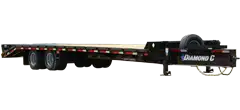
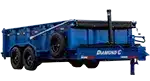

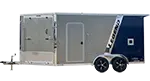
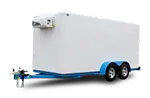

You just financed a 40-foot gooseneck or a 16-foot enclosed cargo trailer for your business. The dealer is preparing the delivery paperwork, your lender is finalizing the transaction, and then someone asks: “Do you have commercial trailer insurance lined up?” You realize you assumed the policy covering your pickup would automatically protect the trailer, its contents, and every type of work you plan to perform.
That assumption can leave a serious gap. A personal auto policy may provide limited liability protection for an attached trailer, but coverage depends on the policy language, the vehicle and trailer involved, and whether the trip qualifies as personal or commercial use. Regular business hauling, delivery work, transporting property for compensation, or operating a vehicle titled to a business may require a commercial auto policy. A lender may also require physical damage coverage with the lender listed as a loss payee before it will fund the purchase or allow the financed trailer to be released.
Commercial trailer insurance is not one standardized policy that covers every possible loss. Liability for an accident, damage to the trailer, damage to a customer’s freight, and theft of your own tools are separate exposures that may require separate coverage forms. Here’s how the major coverage types work, what lenders commonly request, and how to compare quotes without discovering a costly exclusion after a claim.
Why Personal Auto Insurance Falls Short
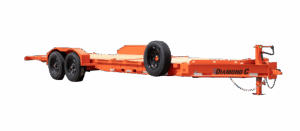
A personal auto policy may extend some liability coverage to a trailer while it is attached to an insured personal vehicle, but that does not mean every trailer or business activity is covered. Policies can restrict regular commercial use, delivery operations, vehicles owned by a business, transportation for compensation, and equipment that falls outside the insurer’s eligibility rules. For example, a 22-foot Diamond C LPX207 equipment trailer can be configured at 15,500 lb GVWR and used to move skid steers, compact track loaders, or other revenue-producing equipment. That is a materially different exposure from occasionally pulling a small personal-use utility trailer.
Liability coverage also should not be confused with coverage for the trailer itself. Even when liability follows the towing vehicle, the trailer may need to be specifically listed or scheduled for collision and comprehensive coverage. The policy covering the truck ordinarily does not automatically insure tools, machinery, building materials, merchandise, or customer property carried on or inside the trailer. Those exposures may require motor truck cargo, contractors equipment, tools and equipment, or another inland marine form. A commercial agent should review the towing vehicle, every trailer, the ownership of the property being hauled, and the exact nature of the business operation.
The Five Coverage Types That Matter
1. Commercial Auto Liability
Commercial auto liability pays covered claims for bodily injury or property damage when your business is legally responsible for an accident involving an insured vehicle. When properly written, the policy can address the towing unit and trailers that qualify as covered autos under the policy’s symbols, definitions, schedules, and endorsements. It may also pay covered legal-defense expenses. Examples include an attached trailer striking another vehicle during a turn, a trailer separating and damaging property, or improperly secured material falling into traffic. Coverage still depends on the policy terms, driver eligibility, listed vehicles, applicable exclusions, and whether the loss occurred during a covered business use.
Commercial auto liability is different from commercial general liability. General liability policies normally contain an auto exclusion and should not be treated as the primary protection for road accidents. Indiana’s basic financial-responsibility requirement is commonly expressed as 25/50/25, but those minimum limits can be far below the financial exposure created by a serious commercial towing accident. Interstate for-hire carriers subject to federal financial-responsibility rules may need at least $750,000 in public liability coverage for general freight, with higher limits reaching $5 million for certain hazardous-material operations. Customer contracts, brokers, job-site owners, and equipment leases may separately require a $1 million combined single limit or an umbrella policy. The correct limit depends on your operation; there is no universal rule that every commercial trailer owner must buy the same amount.
2. Cargo Insurance
For businesses hauling other people’s property, the relevant coverage is generally called motor truck cargo insurance. It protects the carrier’s legal liability for covered property in its care, custody, or control while being transported. Depending on the form, coverage may respond to losses involving collision, overturn, fire, theft, water damage, loading or unloading, or other listed causes of loss. It does not mean that every damaged item will automatically be reimbursed. The commodity, cause of loss, valuation method, deductible, transportation contract, and policy exclusions all affect whether and how a claim is paid.
This matters especially when you transport property for customers. An enclosed trailer may contain expensive trade-show displays, appliances, building materials, electronics, or inventory belonging to someone else. Cargo forms can exclude or restrict jewelry, cash, artwork, contraband, refrigerated goods, property left in unattended vehicles, improperly packed property, employee dishonesty, and other high-risk commodities. Load securement failures, unexplained shortages, ordinary wear, temperature changes, and water intrusion may also require specific endorsements or may be excluded. Federal cargo-insurance filings are generally required for interstate household-goods carriers and household-goods freight forwarders, but FMCSA does not impose the same cargo filing requirement on most general-property carriers. Shippers and brokers can still require cargo limits by contract.
If you haul your own tools, machinery, or inventory rather than accepting freight from other parties, motor truck cargo may not be the best fit. Contractors equipment, tools and equipment, installation floater, or another inland marine form may be more appropriate. Your agent should establish who owns the property, when responsibility transfers, where the property is stored overnight, and whether it remains on the trailer between jobs before recommending coverage.
3. Physical Damage Coverage
Physical damage coverage for an owned trailer is normally divided into collision and comprehensive. Collision generally applies when the insured trailer strikes another vehicle or object, overturns, or is damaged in another covered collision. Comprehensive generally applies to covered non-collision losses such as theft, vandalism, fire, hail, windstorm, falling objects, or certain animal-related losses. Some commercial insurers offer a fire-and-theft-with-combined-additional-coverage form instead of comprehensive for eligible risks. “Broad coverage” is not the standard name for this part of a commercial auto policy.
If you financed the trailer, the lender will commonly require physical damage coverage because the trailer is collateral for the loan. The trailer should be identified accurately by year, manufacturer, model, VIN, and insured value, with the lender shown as the appropriate loss payee or additional interest. The lender may also set a maximum deductible. A loss-payee designation protects the lender’s financial interest in covered physical damage; it is not the same as adding the lender as an additional insured for liability. Lender requirements vary, so use the exact insurance instructions supplied with your financing documents.
Ask how a total loss will be valued. Many policies settle physical damage on an actual-cash-value basis, which reflects depreciation and may be less than the loan payoff. A stated amount can function as a maximum limit rather than a guaranteed payment. Agreed-value, replacement-cost, loan-or-lease-gap, and custom-equipment endorsements may be available for certain trailers and operations, but they are not automatic. Even without financing, physical damage coverage is worth considering whenever replacing the trailer would create a substantial cash-flow problem for the business.
4. Inland Marine Insurance
Inland marine insurance covers many types of movable business property while it is being transported, temporarily stored, installed, or used away from the primary insured location. The name is historical; the coverage is frequently used for property traveling over land. Contractors equipment, tools and equipment, installation floaters, and transportation forms are all commonly associated with inland marine insurance.
Suppose an enclosed cargo trailer is parked at a job site overnight with saws, compressors, generators, testing equipment, or landscaping tools inside. A standard commercial property policy may provide limited off-premises coverage, while a properly written inland marine or tools-and-equipment policy can be designed for property that moves from job to job. Coverage is not automatic merely because the property was locked inside a trailer. Theft provisions may contain requirements or limitations involving forced entry, unattended vehicles, nighttime storage, locking devices, GPS tracking, proof of ownership, or per-item sublimits. Normal wear, mechanical breakdown, and unexplained disappearance are also commonly restricted or excluded.
Prepare an accurate inventory before requesting a quote. Record item descriptions, serial numbers, purchase dates, receipts, photographs, replacement costs, and the highest total value carried at one time. Frequently transported high-value items may need to be scheduled individually. Also tell the agent whether equipment is owned, leased, rented, borrowed, or left on the trailer continuously, because each arrangement can change the appropriate coverage.
5. Commercial Package Policy (Business Owner’s Policy)
A Business Owner’s Policy, or BOP, typically combines commercial property, general liability, and business-income coverage for eligible small and midsize businesses. A Commercial Package Policy, or CPP, is a more flexible package that may combine several commercial coverage parts for businesses that do not fit a standard BOP. The terms should not be used interchangeably. Most importantly, a standard BOP does not include commercial auto insurance for the business’s owned trucks and trailers.
Some insurers may add inland marine coverage or limited hired-and-non-owned auto liability to a business package, but that does not replace a properly written commercial auto policy for owned towing vehicles and trailers. A contractor with several Darkhorse Cargo trailers operating daily will usually need the trucks and trailers scheduled on a commercial auto policy, with separate inland marine coverage for tools and equipment where appropriate. A BOP or CPP can still cover the shop, office, business personal property, general liability, and business income. Pricing the policies together may produce account credits, but bundling should never be allowed to hide a missing auto, cargo, or equipment coverage form.
What Lenders Actually Require
If you’re financing a trailer, the lender’s instructions and retail-installment contract control the insurance requirements. Requirements frequently include:
- Physical damage coverage, normally collision and comprehensive or another lender-approved form, with the financed trailer listed by VIN and an acceptable valuation basis
- The lender listed as loss payee or additional interest on the physical damage coverage, using the lender’s exact legal name and address
- Acceptable proof of insurance, such as a binder, declarations page, or other lender-approved evidence, before funding or delivery when required
- Continuous coverage during the loan term, an acceptable deductible, and any cancellation or lapse notification required by the finance agreement
Some lenders also require specific commercial auto liability limits, particularly when the loan is made to a business or the trailer will be used in a regulated hauling operation. Do not assume a newly purchased trailer is automatically protected for a fixed number of days under an existing policy. Any temporary newly acquired trailer provision depends on the policy language, how the trailer is owned, the existing coverages, and whether timely notice is given. Ask the agent to add the trailer before delivery and send the lender the required evidence. If federally regulated operating authority applies, make sure the insurer can issue any required filings or endorsements; an MCS-90 addresses public liability requirements and does not replace cargo or physical damage insurance.
A call to your commercial insurance agent before closing gives the agent time to verify the VIN, value, use, drivers, lienholder instructions, and required filings. Waiting until the trailer is ready for pickup can delay funding or leave important coverages unresolved.
What Affects Your Premium
Commercial trailer premiums are based on the complete exposure, not GVWR alone. Insurers consider the value and configuration of the trailer, the towing vehicle, where the equipment is garaged, who operates it, what it carries, how far it travels, prior losses, selected limits, deductibles, and the policy’s valuation method. A heavy commercial gooseneck hauling machinery presents a different combination of repair cost, road exposure, theft risk, and liability severity than a light utility trailer used for local service calls.
| Factor | Impact |
|---|---|
| Trailer type, GVWR, configuration, and value | Higher-value gooseneck, dump, tilt, refrigerated, and enclosed trailers can cost more to repair or replace; GVWR also helps the insurer understand the equipment and loads involved |
| Use type (own property vs. for hire) | Hauling customer freight for compensation creates cargo and contractual exposures that do not exist when transporting only the business’s own equipment |
| Annual mileage, operating radius, and routes | High annual mileage, interstate travel, congested areas, overnight trips, and unfamiliar routes can increase road exposure compared with local operations |
| Cargo or equipment carried | Hazardous materials, automobiles, refrigerated goods, electronics, livestock, oversize machinery, and theft-sensitive commodities can require specialized underwriting or endorsements |
| Driver history and qualifications | Insurers review motor-vehicle records, accidents, violations, experience, age, training, and whether each driver holds the license required for the combination being operated |
| Deductible and valuation method | Higher deductibles can reduce premium but increase claim-time expense; actual cash value, stated amount, agreed value, and replacement-cost options can produce different pricing and settlements |
| Garaging, security, and loss history | Fenced storage, lighting, locks, immobilizers, GPS tracking, cameras, and a favorable claims history may improve underwriting compared with unsecured overnight parking |
| Fleet size and ownership arrangement | Owned, financed, leased, rented, and borrowed trailers may require different policy symbols, schedules, loss-payee provisions, and physical damage forms |
Getting Quotes: How to Shop Smart
Don’t get one quote and compare only the premium. Commercial trailer insurance pricing and policy language vary significantly by carrier. A self-employed contractor pulling a small utility trailer to local jobs has different auto, equipment, and radius exposures than a motor carrier operating tractors and 53-foot refrigerated trailers across several states. The cheapest proposal may also be the one with the narrowest cargo classes, lowest off-premises tool limit, most restrictive driver schedule, or least favorable total-loss valuation.
Here’s a practical approach:
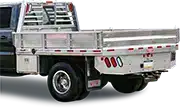
- List every trailer you own or plan to buy, including the year, manufacturer, exact model, VIN, body type, length, GVWR, empty weight when available, purchase price, estimated current value, garaging address, and lienholder. A Diamond C LPX equipment trailer in the current 15,500-to-24,000 lb GVWR range has a different exposure from a 7,000 lb tandem-axle utility trailer. Do not describe a truck bed as a trailer; mounted truck bodies belong with the vehicle and equipment information supplied to the insurer.
- Describe exactly how you use each trailer: hauling your own equipment, transporting customer property, operating for hire, making deliveries, renting the trailer to others, carrying hazardous materials, crossing state lines, or mixing personal and business use. Also disclose the maximum operating radius and where the trailer is stored overnight. A material misrepresentation about use, drivers, cargo, ownership, or garaging can jeopardize coverage.
- Get quotes from at least three suitable markets, including insurers or programs experienced with contractors, agriculture, commercial auto, transportation, cargo, and heavy equipment. A general small-business carrier may be competitive for a local contractor but may not write interstate motor carriers or specialized commodities.
- Compare limits, forms, and exclusions rather than premium alone. Review the auto-liability limit, trailer physical damage deductible, settlement basis, cargo limit, per-item sublimits, unattended-theft restrictions, operating radius, driver restrictions, loading and unloading coverage, debris-removal expense, towing, rental reimbursement, downtime, and coverage for permanently installed accessories. Confirm whether the trailer remains covered while detached, stored, or being serviced.
- Ask about scheduled equipment floaters if you regularly carry expensive tools or machinery. Schedule high-value items by description and serial number when necessary, and compare replacement-cost treatment with actual-cash-value settlement. Make sure rented or borrowed equipment is included if your business regularly uses it.
Independent agents who regularly handle commercial accounts can often approach multiple insurance markets and help separate the coverages that are frequently confused: commercial auto liability for road accidents, physical damage for the trailer, motor truck cargo for customer property, and inland marine for your own movable equipment. Ask the agent to explain every proposed coverage in writing and identify important exclusions. The certificate of insurance is only evidence that coverage was issued; the policy, endorsements, schedules, and exclusions determine what is actually covered.
A Common Gap: The Non-Owned Trailer
If your drivers pull trailers owned by customers, vendors, leasing companies, or other carriers, do not assume the physical damage coverage on your owned trailers applies. Trailer interchange coverage is designed to cover physical damage to a non-owned trailer being used under a written trailer interchange agreement. For rented or borrowed trailers that are not part of an interchange agreement, an insurer may offer non-owned trailer physical damage or another specifically tailored form. The name, eligibility rules, covered causes of loss, limit, and deductible vary by carrier.
Liability and physical damage must be evaluated separately. Hired-and-non-owned auto liability can protect against certain third-party injury or property-damage claims arising from business use of vehicles the business does not own, but it ordinarily does not pay for physical damage to the rented, borrowed, or interchanged vehicle itself. Trailer interchange coverage does not insure the cargo inside the trailer, and a rental company’s damage waiver may have limitations that differ from insurance. Before pulling someone else’s trailer, review the rental contract or interchange agreement, confirm who is responsible for damage, verify the required limit, and send the documents to your agent.
Ready to Buy a Trailer?
If you’re shopping for a commercial trailer and want to understand the specifications your lender and insurance agent will request, take a look at the current inventory at Spencer Trailers. Inventory changes regularly, but Spencer Trailers sells and has recently stocked trailers from Diamond C, Liberty, Delco, Darkhorse Cargo, H&H, Legend, United, Wells Cargo, and other specialty manufacturers, along with Zimmerman truck beds and selected used equipment. Available categories include gooseneck, equipment, tilt, dump, deck-over, utility, enclosed cargo, car-hauler, refrigerated, and specialty trailers across a wide range of GVWR ratings.
Our team can provide the exact year, manufacturer, model, VIN, dimensions, GVWR, axle configuration, purchase price, and financing information your insurance agent needs. For Diamond C premium trailers, current specifications should be taken from the individual model and build configuration; models such as the LPX, HDT, LPT, DEC, WDT, and FMAX can be offered in multiple GVWR, axle, length, ramp, and hydraulic configurations. Diamond C uses Lippert axles across its trailer line, and its current LPX equipment-trailer range is rated from 15,500 to 24,000 lb GVWR. Your insurer, rather than the dealer, will make the final coverage and underwriting decisions.
Reach out to us at (812) 829-0226 or stop by 291 West State Hwy 46 in Spencer, Indiana. Arranging insurance before delivery gives your agent time to schedule the correct trailer, satisfy the lender’s loss-payee instructions, review your cargo or equipment exposure, and issue any required proof of coverage. Insurance can feel like another piece of closing paperwork, but the distinctions between liability, physical damage, cargo, and inland marine coverage become extremely important when an accident, theft, fire, or total loss occurs.
What kind of work is the trailer doing for you, who owns what it carries, and what would it cost to replace the trailer and its contents tomorrow? The answers to those questions drive nearly every insurance decision you’ll make.


