


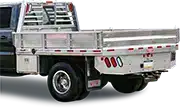
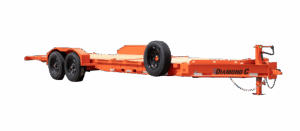



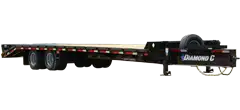
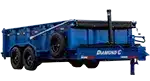

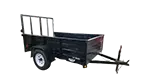

You back up to a pile of topsoil, gravel, or demolition debris and you need it gone. Not tomorrow. Not after you fight with an awkward tailgate or discover that the battery was never charged. Right now. That is the whole point of a dump trailer, and Delco builds its current dump line around practical loading, controlled unloading, and configurations that range from compact property-maintenance trailers to commercial goosenecks.
Spencer Trailers carries Delco equipment, and dump trailers are among the most closely compared units because the right choice depends on more than bed length or the number printed beside “GVWR.” You need to compare the trailer’s certified ratings, empty weight, hoist design, axle package, side height, towing connection, standard equipment, and the limits of the truck pulling it. Here is what you need to know before you buy. :contentReference[oaicite:0]{index=0}
Bumper-Pull Dumps: The Everyday Workhorse
Delco’s bumper-pull dump lineup is broader than a simple 10,000-to-14,000-pound category. The current range begins with the 7,000 lb. GVWR D1, offered in 60-inch-wide, 8- and 10-foot configurations. The D2 moves to a 12,000 lb. GVWR, 72-inch-wide, 12-foot platform. For contractors who need more bed area and capacity, the D3 and telescopic D5 series are 83 inches wide, available in 12-, 14-, and 16-foot lengths, and offered in the 14,000-to-16,000 lb. class depending on the certified configuration. The trailer’s VIN label and build sheet, rather than a general model-family description, determine the exact GVWR of the unit you are considering. :contentReference[oaicite:1]{index=1}
The frame construction also changes with the rating instead of relying on one frame description for the entire line. The compact D1 uses a 5-inch channel main frame, while larger models step into appropriately sized I-beam construction. Current D2, D3, D4, D5, and D6 specifications use heavy I-beam frames matched to their respective configurations, while the tandem-dual DD uses a 12-inch, 19-pound I-beam frame and neck. That matters because a trailer should be evaluated as a complete system: frame, crossmembers, body, axles, tires, wheels, coupler, brakes, suspension, hoist, and hydraulic components all have to work within their individual ratings. :contentReference[oaicite:2]{index=2}
- Typical GVWR range: 7,000 lb. through 16,000 lb. for the current bumper-pull dump families, depending on model, length, axle package, and certified build
- Hoist options: Model-specific hydraulic cylinder and underbody-hoist arrangements, with a published multi-stage telescoping system on the D5 series
- Sides: Solid steel sides measuring 18 inches on the D1, 21 inches on the D2, and 24 inches on the contractor-oriented D3 and D5, with high-side configurations available on applicable builds
- Gate: A three-way spreader gate is listed as standard across Delco’s current dump range, along with a pull-back tarp system, electric brakes, and loading ramps; exact equipment should still be confirmed on the individual trailer. :contentReference[oaicite:3]{index=3}
The three-way gate is worth calling out because it is more versatile than a basic pair of rear barn doors. Delco’s design can be operated as a full-width tailgate or opened from either side, giving the operator several ways to unload dirt, mulch, gravel, and similar material. The correct gate position depends on the material and the unloading method, and the operator should always make sure the trailer is level, the area behind the trailer is clear, and the gate is properly latched before raising the body. A spreader-style opening can help meter suitable aggregate, but it does not replace a purpose-built spreading machine when precise application depth is required. :contentReference[oaicite:4]{index=4}
Gooseneck Dumps: When the Job Gets Serious
Once load frequency, trailer length, or required capacity moves beyond what makes sense for a receiver-hitch trailer, a gooseneck becomes an important option. A gooseneck coupler connects to a 2-5/16-inch ball mounted in the pickup bed, placing the trailer’s vertical hitch load closer to the truck’s rear axle than a conventional bumper-pull connection. That geometry can improve stability and steering feel when the trailer and truck are properly matched, but it does not create towing capacity that the truck does not already have. The truck still must have sufficient manufacturer-rated towing capacity, GCWR, rear-axle capacity, payload capacity, tire capacity, bed-hitch rating, and braking capability.
Delco’s current gooseneck dump line does not begin at 20,000 pounds. The D4 and telescopic D6 cover the 14,000-to-16,000 lb. class in 83-inch-wide, 12-, 14-, and 16-foot configurations. Published standard specifications for these models include dual 7,000 lb. electric-brake axles, heavy I-beam frame and neck construction, a 25,000 lb. gooseneck coupler, 24-inch solid sides, a 10-gauge engineered bed, a three-way gate, a tarp, and ramps. Above those models, the DT is a 21,000 lb. GVWR, 83-inch-wide, 16-foot triple-axle dump. Delco’s current lineup page also lists the 20-foot, 96-inch-wide tandem-dual DD at 22,990 lb. GVWR; its detailed specifications include two 10,000 lb. electric tandem-dual axles, a 30,000 lb. gooseneck coupler, a 12-inch I-beam frame and neck, six-foot solid bin sides, and eight-foot slide-in ramps. :contentReference[oaicite:5]{index=5}
The telescoping hoist is one of the distinguishing features of the D5 bumper-pull and D6 gooseneck series. A multi-stage telescoping cylinder produces a long stroke from a relatively compact retracted assembly and applies lifting force through different geometry than a linkage-style underbody hoist. That can be valuable when repeatedly dumping dense material, but no hoist design can safely compensate for an overloaded trailer, material frozen to the bed, a load concentrated on one side, or a trailer parked on an unsafe slope. The complete hydraulic system also matters: cylinder size, mounting points, pump output, reservoir capacity, battery condition, electrical connections, control method, and duty cycle must all be maintained. :contentReference[oaicite:6]{index=6}
Telescoping vs. Scissor: A Practical Breakdown
| Feature | Scissor Hoist | Telescoping Hoist |
|---|---|---|
| Best for | Compact underbody packaging, general contractor use, and applications matched to the hoist’s certified capacity | Dense loads, longer hydraulic stroke, and buyers specifically choosing Delco’s D5 or D6 telescopic configuration |
| Lift stability | Linkage geometry can provide strong initial lifting leverage and support the body through its designed arc | Direct multi-stage extension provides substantial lift, but safe operation still depends on level ground and an evenly distributed load |
| Bed clearance | Keeps the cargo floor unobstructed, with the linkage, pivots, and cylinder positioned beneath the body | Keeps the cargo floor unobstructed, with the cylinder mounted at the front or beneath the body according to the trailer design |
| Maintenance | Requires inspection and lubrication of pins, bushings, pivots, cylinder mounts, hoses, and electrical-hydraulic components | Requires inspection of multi-stage seals, cylinder surfaces, pivots, hoses, fluid level, battery, pump, and mounting hardware |
Neither setup is automatically better for every operator. A property owner moving brush, firewood, or occasional mulch may be well served by a compact D1. A landscaper who needs a narrower trailer but more capacity may prefer the 72-inch D2. Contractors comparing 83-inch-wide bumper-pulls can choose between the D3’s standard model-specific lift arrangement and the D5’s telescoping cylinder. Gooseneck buyers make a similar comparison between the D4 and D6. The practical question is not which hoist wins on paper; it is which complete trailer matches the material, loading equipment, dump frequency, maintenance routine, truck, and legal operating weight. :contentReference[oaicite:7]{index=7}
Steel Sides and Why They Matter
Delco’s current dump bodies use steel construction, including a 10-gauge engineered bed on the principal D1 through DD configurations published by the manufacturer. Steel is a logical material for dump work because it provides good abrasion resistance, can tolerate repeated contact with rock and construction debris when used within its design limits, and can be repaired by a qualified fabrication shop. That does not mean aluminum is inherently unsuitable for every dump application. Aluminum can reduce empty weight and resist corrosion, while steel generally offers different impact, wear, repair, and cost characteristics. The right comparison must account for body design and material thickness rather than treating the metal alone as proof of durability. :contentReference[oaicite:8]{index=8}
Standard side height varies substantially by Delco model. The D1 uses 18-inch solid sides, the D2 uses 21-inch sides, and the D3, D4, D5, D6, and DT use 24-inch sides in their published standard configurations. The larger DD uses six-foot solid bin sides and a 96-inch-wide body. Delco also lists high-side configurations and floor or side-gauge upgrades among model-dependent options. Taller sides increase cubic volume, but they do not increase the trailer’s GVWR. A high-sided trailer can be overloaded surprisingly quickly with wet soil, gravel, broken concrete, or other dense material even when the body is nowhere near full. :contentReference[oaicite:9]{index=9}
Current Delco dump specifications emphasize equipment that is directly useful for hauling and loading. The manufacturer lists a pull-back tarp and loading ramps as standard across the dump line, with six-foot ramps on most models and eight-foot ramps on the DD. Tie-down D-rings, a rear receiver, rear stabilizer jacks, a spare tire and carrier, solar charging, wireless hydraulic control, and upgraded electrical or structural equipment are available on applicable models. Do not assume that an accessory shown in a photograph is included with every trailer. Compare the actual window sticker or build sheet, inspect the mounting hardware, and confirm the rated capacity of any anchor point or ramp before using it. :contentReference[oaicite:10]{index=10}
Comparing Delco to What Else Is on the Market
At Spencer Trailers we also carry Diamond C dump trailers, so customers often compare the two brands. Diamond C’s current lineup covers several distinct jobs rather than relying on one generic dump platform. The LPT is the heavy-duty low-profile telescopic dump, with current certified configurations running from approximately 15,500 lb. through 24,000 lb. GVWR. The DOD and DOD-GN deck-over dumps cover 15,500-to-23,000 lb. configurations, while the WDT serves the heavier 25,000-to-30,000 lb. segment. Diamond C’s premium lines use Lippert axles as standard, and the company applies its DM Difference Maker multi-stage coating process. Buyers who prioritize Diamond C’s engineered frame designs, telescoping systems, finish process, and available high-GVWR upgrades may prefer that route; buyers should compare actual trailers rather than assuming two units with similar GVWR labels are equipped alike. :contentReference[oaicite:11]{index=11}
H&H also has a legitimate and broad dump-trailer range. Its current offerings include a 2,900 lb. homeowner model, utility dumps from 5,000 to 9,990 lb., 14,000-to-16,000 lb. industrial and telescopic I-beam models, and TOPLINE telescopic dumps reaching 22,000 lb. GVWR. That makes H&H a relevant comparison at several capacity levels. Delco’s practical differentiators include its range from a 60-inch, 7,000 lb. dump through commercial gooseneck configurations, plus the standard three-way gate, tarp, ramps, and electric brakes published for the current line. H&H and Diamond C have their own strong equipment packages, so the useful comparison is standard equipment, upgrade cost, empty weight, body dimensions, hoist, warranty support, parts access, and the exact job the trailer must perform. :contentReference[oaicite:12]{index=12}
For buyers in the bumper-pull space, a 14,000 lb. trailer can be a strong fit for landscaping, farming, property maintenance, and construction, but it is not automatically within the safe towing capability of every three-quarter-ton or one-ton pickup. Verify the specific truck’s VIN-based tow rating, GCWR, GVWR, rear GAWR, payload label, receiver rating, ball mount, tires, wheels, and brake-controller compatibility. CDL status is also not determined by the trailer’s GVWR alone. For a Group A combination used as a commercial motor vehicle, the federal threshold is a gross combination weight rating or actual gross combination weight of at least 26,001 lb., inclusive of a towed unit with a GVWR or actual gross weight greater than 10,000 lb., subject to applicable exemptions and operating circumstances. Indiana also distinguishes declared registration weight from the ratings used to determine CDL applicability. After purchase, an Indiana title application generally must be filed within 45 days to avoid the administrative late-title penalty. :contentReference[oaicite:13]{index=13}
What to Ask About Before You Buy
A few things should come up in every dump trailer conversation at our lot:
- Certified ratings, axles, tires, and brakes. Do not assume that the sum of the axle ratings must equal the trailer’s GVWR. Part of a properly loaded trailer’s weight is carried vertically by the tow vehicle through the coupler, so a manufacturer may certify a GVWR above the combined GAWR while keeping every component within its rating. What matters is the certified GVWR, each GAWR, tire and wheel capacity, coupler rating, suspension, frame, brakes, and actual scale weight. Never exceed any individual rating. Indiana law requires a trailer or semitrailer with a gross weight of at least 3,000 lb. on a highway to have adequate brakes that the driver can apply from the cab, along with automatic brake application in an accidental breakaway. :contentReference[oaicite:14]{index=14}
- Hydraulic pump type and duty cycle. A 12-volt electric-over-hydraulic power unit is normal equipment on this class of dump trailer, but pump performance depends heavily on battery state, cable size, grounds, connections, fluid condition, ambient temperature, and the time allowed between cycles. Ask whether the unit is power-up/gravity-down or power-up/power-down, whether a wireless remote or solar maintainer is installed, where the charger connection is located, and what maintenance the manufacturer specifies. Continuous cycling without adequate charging and cool-down time can drain the battery, overheat electrical components, and slow the hoist.
- Tarp and load securement. Delco lists a pull-back tarp as standard on its current dump models, while some individual units may be equipped with upgraded tarp controls. A tarp is valuable for containing loose material, but it is only one part of securement. Commercial cargo must be restrained with suitable structures, blocking, tiedowns, or other systems as applicable, and all gates, latches, tarps, chains, and anchors must be in working condition. Equipment carried in the bed requires properly rated securement rather than relying on the sides or tarp to hold it in place. :contentReference[oaicite:15]{index=15}
- Ramps and equipment loading. Delco publishes six-foot ramps as standard on most current dump models and eight-foot ramps on the tandem-dual DD, but the presence of ramps does not mean every skid steer, mini excavator, tractor, or attachment can be loaded safely. Confirm individual ramp capacity, spacing, loading angle, rear-stabilizer requirements, bed-floor capacity, tie-down locations, concentrated-load limits, and the trailer’s remaining payload after all installed options. The machine’s full operating weight includes the operator’s attachments, fuel, counterweights, tracks or tires, and material in the bucket.
A Note on Payload Math
GVWR includes the trailer itself and everything carried on or in it. The basic starting point is GVWR minus the trailer’s actual as-built empty weight. For example, if a 14,000 lb. GVWR bumper-pull weighs 5,200 lb. with its installed tarp, battery, ramps, spare, and other equipment, the arithmetic difference is approximately 8,800 lb. That is a theoretical cargo figure, not permission to ignore axle, tire, wheel, coupler, hitch, truck, or load-distribution limits. Using 2,700 lb. per cubic yard as a planning estimate for a particular gravel product would produce about 3.25 cubic yards, but gravel density changes with stone type, size, moisture, fines, and compaction. Use the supplier’s material weight, quarry ticket, or a certified scale instead of estimating from bed volume alone.
For gooseneck buyers, a higher trailer GVWR may provide more payload potential, but the same calculation still applies. The current Delco DT is rated at 21,000 lb., and the lineup page lists the tandem-dual DD at 22,990 lb.; neither figure tells you payload until you know the exact trailer’s empty weight and configuration. Subtract the scaled or certified empty weight, then confirm the result against every component rating. Remember that gooseneck hitch weight is carried by the truck and consumes the truck’s available payload while also loading the rear axle and rear tires. A combination can be below the trailer’s GVWR and still overload the tow vehicle.
Buy for the material, machine, and workload you face on your hardest normal day, but size the entire combination together. More trailer capacity does not help when the truck, hitch, rear axle, tires, brakes, or license requirements become the limiting factor.
Ready to Look at Delco Dumps in Person?
We carry Delco trailers at 291 West State Hwy 46 in Spencer, Indiana, and current dump availability can change as units are sold or ordered. To see what is available now, check our full inventory online or call or text us at (812) 829-0226. We can walk through the data plate, standard equipment, installed options, empty weight, payload calculation, and truck requirements, and we can place a Delco beside comparable Diamond C or H&H equipment so you can evaluate the actual construction instead of relying on a headline rating. :contentReference[oaicite:16]{index=16}
Not sure whether a bumper-pull or gooseneck fits your situation better? That is the right question to start with. Reach out and tell us what you haul, the approximate weight of the material or equipment, how often you dump, what loading machine you use, and the year and configuration of your tow vehicle. We will help narrow the choices without selling you capacity that your work does not require or your truck cannot safely support.


