





You pull up to a job site with a skid steer that needs to move Thursday. Or maybe it is a 12,000-pound excavator with a rental-return deadline. The trailer you own right now either barely gets the job done or does not get it done at all. Either way, you are here to determine which Diamond C equipment trailer fits your machine, attachments, tow vehicle, and working conditions, not simply which trailer has the lightest empty weight or the biggest GVWR number on the lot.
Diamond C builds several equipment-focused platforms, including the ramp-loading LPX, the hydraulically dampened HDT tilt trailer, extra-wide bumper-pull choices such as the HXD, and gooseneck versions of its low-profile equipment trailers. When you need a longer 102-inch-wide deck or substantially higher ratings, the FMAX Flatbed Max gooseneck lineup extends from single-wheel models through 40,000-pound configurations. Diamond C has manufactured trailers in Mt. Pleasant, Texas, since 1985, and current trailers use the company’s multi-stage DM Difference Maker coating process. Each model serves a different job, so the correct choice starts with real weights, dimensions, loading geometry, and tow-vehicle ratings.
Start With the Real Weight, Not the Sticker Weight
Before discussing models, get accurate numbers for the equipment and the exact trailer. A trailer’s GVWR is the maximum allowable total weight of the loaded trailer, including the trailer itself, the machine, attachments, chains, binders, spare parts, tools, fuel cans, and anything else carried on it. Available payload is generally the trailer’s certified GVWR minus its actual empty or curb weight. Axle ratings alone do not determine usable payload, and the axle capacities, tire ratings, coupler rating, frame rating, and certified GVWR must all be respected.
For example, a trailer certified at 15,500 pounds GVWR with an as-built empty weight of 4,000 pounds has approximately 11,500 pounds of theoretical payload before cargo is added. A skid steer with a published operating weight of 9,500 pounds may become a 10,500-pound or heavier load after adding a bucket, forks, auxiliary attachment, accumulated material, and securement equipment. That load may fit on paper, but it leaves much less operating margin than the machine’s basic brochure weight suggests. Always use the trailer’s VIN label and actual scale weight rather than relying on a generic website weight for a differently equipped trailer.
Building a reserve of roughly 10% below the calculated payload limit is a sensible planning practice, especially when equipment weights or attachments change, but it is not a substitute for weighing the combination. Also check individual axle loading, tire loading, tongue or pin weight, and the truck’s rear-axle load. A trailer can remain under its total GVWR and still overload one axle, one tire, the hitch, or the rear axle of the tow vehicle because the machine is positioned incorrectly.
The LPX: Diamond C’s All-Around Equipment Workhorse
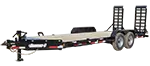
The Diamond C LPX is a low-profile, between-the-fenders bumper-pull equipment trailer. Current configurations cover deck lengths from approximately 16 to 30 feet, bed widths from about 80 to 82 inches, and GVWR packages extending to 24,000 pounds. The common capacity packages include the 207, 208, 210, and 307 configurations. These are generally associated with 15,500-, 18,000-, 20,000-, and 24,000-pound GVWR levels, although some dealer-stocked 207 trailers may be ordered or labeled at approximately 14,900 pounds. The certified rating on the individual trailer is the number that controls.
Current LPX trailers use Lippert axles. Depending on the selected package, axle arrangements include tandem 7,000-pound axles, tandem 8,000-pound axles, tandem 10,000-pound axles, or triple 7,000-pound axles. Higher-capacity packages also bring model-specific changes to the frame, coupler, wheels, tires, brakes, and suspension. Diamond C’s Engineered Beam Technology is used on qualifying higher-GVWR LPX builds, generally in applicable lengths of 22 feet and longer. On current 2026 production, Lippert ABS technology is standard with 8,000-pound-and-larger axle packages and available on 7,000-pound packages, but the build sheet should be checked to confirm that equipment on a particular trailer.
The LPX is a strong match for skid steers, compact track loaders, compact tractors, mini excavators, mowers, and similar equipment when the machine’s complete operating weight remains within the trailer’s as-built payload. It is not accurate to say that every LPX carries equipment of a particular ton class. A compact excavator with a cab, hydraulic thumb, quick coupler, and large bucket can weigh substantially more than a base open-station machine sold under the same model family. Track width, overall length, rear counterweight clearance, and attachment storage also influence which LPX length works.
Loading options are another important difference. The LPX can be configured with equipment-oriented ramp systems such as spring-assisted MAX Ramps, and qualifying max-width configurations can use the full-width X-Ramp system with frame extensions and drive-over fenders. Select the loading package for the actual track width, tire width, ground clearance, loading angle, and concentrated load of the machine. Do not assume that every ramp offered on a trailer has the same transitional capacity as the trailer’s full payload rating.
What the LPX does not do well is carry a machine that exceeds its certified payload, physically will not fit between the fenders, or cannot be positioned without overloading the hitch or rear trailer axle. A large excavator, wheel loader, or heavily equipped backhoe may require a 102-inch deckover or a higher-GVWR FMAX rather than a low-profile bumper-pull trailer. The deciding factor is the complete load calculation and geometry, not the equipment category printed on a rental agreement.
Heavier Bumper Pulls: When You Need More Deck Without Going Gooseneck
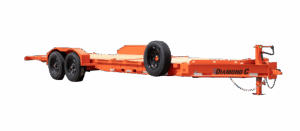
Diamond C offers other heavy-duty bumper-pull equipment configurations, but they are not simply larger versions of a basic LPX. The HDT is a low-profile hydraulically dampened tilt trailer offered in lengths from approximately 16 to 28 feet, with an 80- to 82-inch bed and GVWR packages from 15,500 to 24,000 pounds. It uses Lippert axles, beginning with tandem 7,000-pound axles and offering higher-capacity tandem or triple-axle packages. The tilt design eliminates the need to lift and deploy conventional ramps for many loads, and current configurations may be equipped with Diamond C’s Pro Tilt system, which allows the operator to select gravity or powered tilt operation.
For machines that are too wide for an 82-inch deck, the HXD provides a 102-inch-wide, low-profile, extra-wide tilt deck. Current HXD bumper-pull configurations are offered in approximately 22- and 24-foot lengths with GVWR options from 15,500 to 23,000 pounds. Its full-width layout can accommodate wider track machines and equipment that benefits from drive-over fender construction. The wider deck solves a fit problem, but it does not eliminate the need to check legal width, truck ratings, payload, axle loading, and securement access.
Longer decks solve several practical problems. They provide room for an extended boom, bucket, blade, counterweight, or second attachment, and they give the operator more choices for locating the machine’s center of gravity. However, a longer deck should not be treated as permission to move equipment arbitrarily far rearward. Too little tongue weight can create instability and trailer sway, while too much tongue weight can overload the receiver, hitch components, truck payload, or rear axle. Position the load according to the trailer and truck manufacturers’ instructions, then verify the result on a scale.
A longer bumper-pull deck also works for operators moving multiple smaller pieces, such as a compact tractor with implements, a skid steer with several attachments, or a mower and compact utility vehicle. Every item must be included in the payload calculation and secured independently as required. Concentrated track, wheel, or stabilizer loads also matter: frame design, crossmember spacing, floor material, ramp rating, and the intended loading path should be reviewed when carrying machines that place a large amount of weight on a small area.
Mid-Range Goosenecks: Gooseneck Capability, Mid-Size Loads
This is where the conversation shifts from bumper pull to gooseneck. The Diamond C LPX-GN applies the LPX’s ramp-loading, low-profile equipment layout to a gooseneck connection. Current LPX-GN configurations cover approximately 16- to 30-foot lengths, 80- to 82-inch bed widths, and GVWR packages from 15,500 to 24,000 pounds. The HDT-GN provides the hydraulically dampened tilt alternative in approximately 16- to 28-foot lengths with the same general 15,500- to 24,000-pound GVWR range. Both use Lippert axles with package-specific axle, brake, suspension, tire, and frame upgrades.
A gooseneck connection places the hitch point in the truck bed near or over the rear axle rather than behind the bumper. That can improve stability and distribute pin weight more effectively, especially with longer trailers, but it does not automatically increase payload. The LPX-GN and HDT-GN still must remain within their certified GVWR and component ratings, and the truck must have adequate payload, rear GAWR, GCWR, trailer-tow rating, hitch rating, and bed clearance.
Do not assume that every gooseneck uses the same ball size or coupler rating. The truck’s ball, hitch structure, safety-chain anchors, and installation must match the coupler and rating specified for the exact trailer. Higher-GVWR equipment can also create substantial pin weight. A truck may have enough advertised maximum tow capacity but run out of payload or rear-axle capacity once passengers, fuel, tools, an auxiliary tank, and trailer pin weight are included.
A 12,000-pound excavator illustrates why these calculations matter. Add a thumb, coupler, bucket, fuel, chains, binders, and trailer-mounted equipment, then subtract the gooseneck trailer’s actual empty weight from its GVWR. An 18,000-pound trailer can quickly become marginal, while a 20,000- or 24,000-pound configuration may provide a more workable payload. The machine’s length and center of gravity may also dictate a longer deck even when a shorter trailer has sufficient theoretical capacity.
Choose the LPX-GN when conventional ramps and a fixed deck suit the equipment. Choose the HDT-GN when a controlled tilt section provides a better loading angle or avoids handling ramps. Low-clearance rollers, tracked machines, and equipment with long wheelbases may benefit from a tilt configuration, while machines carrying loose attachments may be easier to position on a fixed deck with the appropriate ramp package. The correct design depends on the machine, not merely the trailer’s pull type.
The FMAX: When You Need a Heavy Flatbed Gooseneck
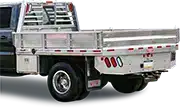
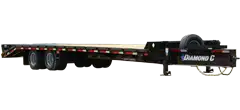
The Diamond C FMAX, short for Flatbed Max, is Diamond C’s Fleetneck flatbed gooseneck line rather than a single equipment-trailer model. The current family includes the FMAX207, FMAX208, FMAX210, FMAX212, FMAX216, FMAX307, FMAX310, and FMAX312. Depending on the model and selected package, GVWR runs from approximately 15,500 pounds to 40,000 pounds. Available 102-inch-wide deck lengths generally begin around 20 feet and extend to 44 feet on qualifying models.
FMAX models use Diamond C’s model-specific Fleetneck Engineered Beam construction and Lippert axle packages. The lineup moves from single-wheel tandem and triple-axle trailers into tandem-dual and triple-dual configurations. Capacity varies substantially among models: an FMAX207 is not interchangeable with a 25,000-pound FMAX210, a 30,000-pound FMAX310, or a 40,000-pound FMAX312 or FMAX216 package. The trailer’s complete model number, certified GVWR, axle arrangement, empty weight, brake system, coupler, tire ratings, and loading equipment all need to be confirmed.
For equipment hauling, the FMAX can be equipped with loading systems such as MAX Ramps, XDR extreme-duty knee ramps, a 12-foot hydraulic dovetail, or a straight deck with slide-in ramps, depending on the model and build. MAX Ramps create a wide loading surface, while XDR Ramps are designed for concentrated machines such as excavators and backhoes where an open center provides bucket or knuckle clearance. A hydraulic dovetail reduces the approach angle and simplifies loading, but its weight is part of the trailer’s empty weight and therefore reduces available payload compared with an otherwise similar lighter configuration.
The FMAX is appropriate when the job requires a wider deck, greater length, or more payload than the LPX and HDT families provide. Potential loads include backhoes, telehandlers, mid-size excavators, compact dozers, larger tractors, multiple machines, pallets, building materials, and mixed equipment loads. A description such as “full-size excavator” is not enough to establish suitability. Many excavators, loaders, graders, and dozers exceed the payload of even a 40,000-pound-GVWR trailer after the FMAX’s empty weight is subtracted.
Contractors regularly moving cargo in the 20,000- to 24,000-pound range may need to compare the 25,900-, 30,000-, and 40,000-pound FMAX configurations carefully. A 25,900-pound GVWR does not provide a 25,900-pound payload. Depending on deck length, axle package, hydraulic dovetail, storage, jacks, spare tires, winch, flooring, and other options, the trailer itself can consume a significant part of that rating. For the 40,000-pound upgrade, Diamond C uses a model-specific reinforced package and a 3-inch, 40,000-pound-rated gooseneck coupler, so the truck-side hitch system must be compatible and equally rated.
Line Comparison at a Glance
| Model | Type | GVWR Range | Deck Lengths | Best For |
|---|---|---|---|---|
| LPX | Bumper Pull | Approximately 14,900/15,500–24,000 lb | 16–30 ft | Ramp-loaded skid steers, CTLs, tractors, and compact excavators that fit between the fenders |
| HDT / HXD | Bumper Pull Tilt | 15,500–24,000 lb depending on model | 16–28 ft; HXD 22–24 ft | Tilt loading, low-clearance machines, and 102-inch-wide loads with the HXD |
| LPX-GN / HDT-GN | Gooseneck | 15,500–24,000 lb | 16–30 ft depending on model | Low-profile equipment hauling with a gooseneck connection and ramp or tilt loading |
| FMAX | Gooseneck Flatbed | 15,500–40,000 lb depending on model | 20–44 ft depending on model | Wide, long, or heavy equipment and multi-machine loads requiring a 102-inch deck |
Deck Length Isn’t Just a Capacity Number
A common mistake is buying the highest-GVWR trailer available in the shortest deck. Weight capacity does not guarantee physical fit or correct load distribution. A compact excavator may remain under the trailer’s payload while its boom, blade, bucket, or counterweight extends beyond usable deck space. Track position may prevent the center of gravity from being located correctly, and tie-down points may become difficult to reach. The loading ramps, dovetail, tilt pivot, stationary deck, and toolbox are not automatically usable cargo space for every machine.
Width matters just as much. LPX, HDT, LPX-GN, and HDT-GN decks are generally about 80 to 82 inches wide between the fenders. Measure the machine at its widest point, including tracks, tires, hubs, blades, outriggers, and attachments. Wider equipment may require a 102-inch HXD, another deckover configuration, or an FMAX. Equipment extending beyond the legal-width envelope may also require permits, markings, routing restrictions, or other compliance measures even when the trailer deck itself is 102 inches wide.
Measure the machine’s transport length with the bucket, boom, blade, loader, backhoe, or attachment positioned exactly as it will travel. Then allow enough deck space for safe loading, proper center-of-gravity placement, securement access, articulation, and clearance from the truck and ramps. There is no universal rule requiring exactly two feet of empty deck at each end. One machine may balance correctly with modest clearance, while another needs several additional feet so its tracks or axles can sit in the correct position.
A Quick Rule for Deck Selection
- Machine up to 14 ft long: An 18- to 20-foot deck often works, provided the machine can be balanced correctly and all securement points remain accessible.
- Machine 14–18 ft long: A 22- to 24-foot deck usually provides more practical positioning room for a bucket, blade, counterweight, or attachment.
- Machine over 18 ft long or multiple pieces: Compare 26-foot-and-longer configurations using the actual transport dimensions and combined payload.
- Wide, concentrated, or heavier equipment: Compare the 102-inch HXD, suitable deckover models, or an appropriately configured FMAX rather than relying only on additional deck length.
Don’t Forget the Truck Side of the Equation
The trailer rating is only half of the combination. Avoid selecting a tow vehicle based solely on labels such as three-quarter-ton, one-ton, or dually. Trucks with the same badge can have very different engines, transmissions, axle ratios, wheelbases, cab configurations, bed lengths, suspension packages, tires, payload ratings, GCWRs, and maximum trailer ratings. Use the certification labels and towing guide for the truck’s exact VIN and configuration.
Check the truck’s GVWR, GCWR, front and rear GAWR, payload rating, maximum gooseneck or conventional trailer rating, hitch rating, ball rating, and tire capacities. Subtract the weight of passengers, tools, fuel, an auxiliary tank, bed equipment, and other cargo from the available payload before adding trailer tongue or pin weight. On many heavy combinations, rear-axle capacity or payload becomes the limiting factor before the advertised maximum tow rating is reached.
The hitch system must also match the trailer. A bumper-pull LPX, HDT, or HXD needs a properly rated receiver, drawbar, hitch ball, fasteners, safety chains, brake controller, and electrical connection. A gooseneck needs a properly installed and rated under-bed or factory hitch system, matching ball size, adequate safety-chain anchors, electrical connection, cab-to-trailer clearance, and tailgate and bed-rail clearance. A high-capacity FMAX cannot safely be paired with a lower-rated ball or hitch simply because the truck can move it.
Indiana requires a trailer or semitrailer with a gross weight of at least 3,000 pounds, when operated on a highway, to have brakes adequate to control, stop, and hold the vehicle. The brakes must be controllable from the towing vehicle and must apply automatically in an accidental breakaway. Every equipment trailer discussed here is well above that threshold, so the truck needs a compatible brake controller and the trailer’s brakes, breakaway battery, switch, wiring, and battery charge should be checked before every trip.
Commercial licensing is based on the combination, not merely the trailer’s size. A Class A CDL is generally triggered when the combination has a GCWR of 26,001 pounds or more and the towed vehicle has a GVWR greater than 10,000 pounds, subject to applicable exemptions and the nature of the operation. A trailer exceeding 10,000 pounds by itself does not automatically create that Class A threshold when the combination remains below 26,001 pounds. Commercial operators may also face USDOT, inspection, hours-of-service, medical-card, registration, and insurance requirements depending on the combination and how and where it is operated.
What Spencer Trailers Stocks and What They Can Order
Spencer Trailers carries Diamond C trailers at its lot at 291 West State Hwy 46 in Spencer, Indiana. Inventory can include bumper-pull LPX and HDT equipment trailers, tilt trailers, deckover configurations, and FMAX goosenecks, but available lengths, axle packages, ramp systems, colors, and GVWRs change as units are sold and new trailers arrive. Check the live inventory or call before traveling when you need a particular model, stock number, or capacity.
If the correct combination is not in stock, Spencer Trailers can review special-order availability for a specific deck length, GVWR package, pull type, loading system, flooring, winch preparation, storage, spare tire, hydraulic equipment, and other factory options. Production schedules and delivery dates vary by configuration and manufacturer workload, so a fixed four-to-six-week lead time should not be assumed. Ask for a current estimate tied to the exact submitted build.
The staff can compare current manufacturer specifications, review the certified ratings on an in-stock trailer, and help calculate payload from that trailer’s actual empty weight. Bring the equipment’s make, model, operating weight, transport dimensions, attachment list, and photographs, along with the tow vehicle’s VIN-specific ratings. That information allows a more useful comparison than asking only for a “14K” or “20K” equipment trailer. Call (812) 829-0226 or reach out through the contact page.
Ask for an itemized out-the-door quote that separates the trailer price, installed options, tax, title, registration, and Indiana’s capped dealer documentation fee. Indiana buyers generally should apply for the title within 45 days of purchase to avoid an administrative penalty. A qualifying trailer acquired and placed in service for business use after January 19, 2025, may also be eligible for the restored 100% federal bonus-depreciation deduction, subject to the tax code’s qualification and business-use requirements. Confirm tax treatment with a qualified tax professional rather than treating the purchase price as automatically deductible.
If you want to see the kinds of configurations that have moved through the dealership, the recently sold inventory provides useful examples of model numbers, lengths, axle packages, ramps, hydraulic dovetails, and other options selected by regional buyers. Listed or archived prices should be treated as advertised figures rather than proof of the final transaction price, since trades, financing, accessories, delivery, taxes, and negotiated terms can change the total.
So, what is the heaviest and longest piece of equipment you move regularly, including every attachment? Start with its actual transport weight and dimensions, subtract the exact trailer’s empty weight from its certified GVWR, verify axle and hitch loading, and then compare that result with the truck’s ratings. Once those numbers are known, the right Diamond C configuration becomes a defensible equipment decision rather than a guess based on model size or pickup-truck badge.


