







You’re standing at the side of your trailer with a 4,000-pound skid steer on the deck and a handful of ratchet straps in your hand. The question isn’t whether to tie it down. The question is what you’re tying to. Stake pockets and D-rings are both common on utility, equipment, and flatbed trailers, but they are not automatically interchangeable. The right anchor depends on the cargo, the direction of restraint, the tiedown hardware, the trailer structure, and the verified working load limit of every component in the securement system.
Here’s a plain breakdown of how each system works, what determines its capacity, and when one is the better choice.
What Stake Pockets Are (and What They’re For)
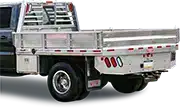
A stake pocket is a rectangular steel sleeve welded into a trailer’s side rail or rub-rail assembly. Dimensions vary by manufacturer, but many are sized to accept the narrow dimension of nominal 2×4 lumber or a fabricated steel stake. Their original purpose is to support removable sideboards, racks, and other stake-body structures. On many flatbed and equipment trailers, the pockets also provide convenient attachment locations for compatible strap hooks or other securement hardware.
The strength of a stake pocket depends entirely on the complete trailer construction. The pocket’s material thickness, welds, spacing, rub rail, side rail, and connection to the frame all matter. A pocket attached to a light utility-trailer rail should not be assumed to have the same capacity as one incorporated into a heavy flatbed’s structural rub-rail system. Two pockets can look nearly identical while having very different load paths and capacities.
That is the thing buyers need to remember: the shape of a stake pocket does not establish its working load limit. Do not assign a capacity based on appearance, steel thickness alone, or the rating of the hook placed inside it. Ask the trailer manufacturer or dealer whether that specific pocket is approved as a cargo anchor and whether an anchor rating is available. Under the federal cargo-securement rules applicable to commercial motor vehicles, tiedown assemblies manufactured on or after January 1, 2008, generally must be marked by the manufacturer with a working load limit. That requirement does not mean every trailer stake pocket carries a stamped WLL.
When Stake Pockets Work Well
- Landscaping cargo such as mowers, palletized material, and bundled supplies, when the pockets are approved for securement
- Building materials such as lumber, pipe, and conduit, with the correct number and arrangement of rated tiedowns
- Panels, gates, and similar flat cargo that must be restrained against sliding, tipping, and lifting
- Sideboard and stake-rack installations built to fit the trailer’s pocket dimensions
- Loads that benefit from several available attachment positions along a structural rub rail
Stake pockets can be fast and flexible for general cargo, but cargo weight alone does not determine whether they are suitable. A 2,000-pound object can generate severe forces during braking, cornering, or a crash. Use only pockets the trailer manufacturer recognizes as securement points, match the hooks to the attachment location, and make sure the complete tiedown arrangement prevents forward, rearward, lateral, and vertical movement.
What D-Rings Are (and Why They’re Different)
A D-ring is a steel loop mounted to a trailer deck, crossmember, frame member, wall structure, or reinforced mounting plate. Depending on the design, it may be forged, welded, surface-mounted, recessed, bolted through a reinforced structure, or welded to a structural member. Recessed rings sit close to flush when folded, helping preserve a clear deck for tires, tracks, pallets, and loading equipment.
A D-ring is not inherently stronger than a stake pocket simply because of its shape or location. Its usable capacity depends on the ring, mounting plate, fasteners or welds, supporting member, and the direction in which the load is applied. The rated capacity of the securement path is limited by its weakest component. A high-capacity ring attached to an inadequately reinforced wood deck or thin sheet metal does not create a high-capacity anchor point.
D-rings are sold in many sizes and ratings, and their published capacity may be expressed as a working load limit, load limit, or breaking strength. Those terms are not interchangeable. Breaking strength is not the allowable working load. Always use the manufacturer’s stated WLL for the exact ring and follow its mounting instructions, including plate thickness, fastener grade, reinforcement, weld size, and permitted pull angles. If a ring has no traceable rating or installation instructions, do not assume it is suitable for securing heavy machinery.
The math matters when you’re chaining down a 14,000-pound excavator. Under 49 CFR 393.106, the aggregate working load limit of the tiedowns used to secure an article must be at least one-half the article’s weight. That means a 14,000-pound machine requires at least 7,000 pounds of aggregate WLL, calculated according to how each tiedown is attached. You cannot simply add the printed ratings of every ring and chain without accounting for the tiedown configuration.
There is another requirement for heavy equipment. Under 49 CFR 393.130, a vehicle, piece of equipment, or machine operating on wheels or crawler tracks and weighing 10,000 pounds or more must be restrained against forward, rearward, lateral, and vertical movement with at least four tiedowns. Those tiedowns must be attached as close as practicable to the front and rear or to mounting points designed for securement. Accessory equipment such as an excavator’s boom, arm, bucket, or hydraulic attachment must be lowered and secured as required. Federal rules primarily govern applicable commercial motor-vehicle operations, but following these principles is sensible for any heavy-equipment haul, along with all state and local requirements.
Weld-On vs. Bolt-Down D-Rings
Bolt-down D-rings can be practical on trailers that were engineered for them or can be properly reinforced. Installation should not consist of running ordinary hardware through deck boards alone. The fasteners should pass through an approved steel mounting plate, crossmember, frame member, or other suitable reinforcement. Use the fastener grade, backing plate, torque, and installation pattern specified by the ring manufacturer, and inspect the installation periodically for loose hardware, elongated holes, corrosion, cracked decking, or deformation.
Weld-on D-rings eliminate bolted joints, but their safety depends on correct placement and welding. The supporting structure must be capable of carrying the intended load, and the weld procedure must match the ring, mounting plate, and trailer material. Welding an anchor to a thin crossmember or applying a large weld to an unsuitable area can weaken or distort the structure. Welding on a finished trailer can also damage wiring, wood decking, paint, galvanizing, and the manufacturer’s corrosion protection.
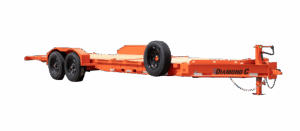
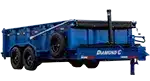
Factory-installed D-rings are normally the best choice because their location and attachment can be considered as part of the trailer build. Current Diamond C LPX, LPX-GN, HDT, and HDT-GN equipment-trailer configurations list four 5/8-inch D-rings, with additional rings available as an option. These equipment lines use Lippert axles, with axle quantity, capacity, suspension, GVWR, and other running-gear details varying by package. When comparing any models in Spencer Trailers’ equipment-trailer inventory, confirm the actual D-ring count, location, anchor rating, and cargo capacity shown for that individual trailer.
Head-to-Head: Stake Pockets vs. D-Rings
| Feature | Stake Pockets | D-Rings |
|---|---|---|
| Working load limit | Manufacturer- and installation-specific; never assume from appearance | Ring- and installation-specific; the weakest component controls |
| Load direction | Depends on pocket, rail, hook, and tiedown angle | Depends on ring design, mounting structure, and permitted pull angle |
| Best for | Sideboards and general cargo when approved as securement anchors | Equipment, vehicles, machinery, and concentrated loads when properly rated |
| Flexibility | Several fixed pocket locations along the side rail | Fixed locations selected around expected cargo positions |
| Retrofit considerations | Adding pockets requires proper attachment to a suitable rail or frame structure | Requires structural reinforcement plus an approved bolted or welded installation |
| Compatible hardware | Rated hooks or connectors that seat securely without side-loading or slipping | Rated chain hooks, shackles, straps, or other connectors approved for the ring |
The Real-World Call: Equipment Trailers
If you’re loading a skid steer, compact track loader, tractor, or mini excavator, start with purpose-built, verified equipment anchors. Do not select a trailer or securement system from the machine’s model name alone. Use its actual transport weight, including the installed cab, counterweights, bucket, forks, tracks, fuel, attachments, and any material being carried.
For perspective, Bobcat lists the S650 skid-steer loader at approximately 7,901 pounds of operating weight in its published specifications. Caterpillar lists the 305 CR mini excavator at up to approximately 12,688 pounds in a listed operating configuration. Actual transport weight can change with options and attachments, so check the machine’s identification plate, operator’s manual, or current manufacturer data and weigh the loaded combination when necessary.
Current Diamond C LPX and LPX-GN equipment trailers cover GVWR packages from 15,500 to 24,000 pounds and list four 5/8-inch D-rings, with additional rings available. The LPX is a bumper-pull low-profile extreme-duty equipment trailer; the LPX-GN is its gooseneck counterpart. Current HDT and HDT-GN hydraulically dampened tilt equipment trailers also list four 5/8-inch D-rings. These Diamond C premium equipment lines use Lippert axles. Exact payload is not the same as GVWR: subtract the trailer’s actual empty weight, installed options, tools, and onboard cargo from the trailer’s GVWR, while also staying within every axle, tire, wheel, coupler, hitch, tow-vehicle, and combination rating.
Other manufacturers and individual trailer models use different anchor layouts. Some equipment trailers include floor-mounted or recessed rings, while others use rub rails, stake pockets, chain spools, track systems, or a combination. Enclosed car haulers may place anchors for wheel nets, tire straps, axle straps, or track fittings. Never assume that four visible rings have a particular WLL merely because they came from the factory. Confirm the specifications for the exact VIN or stock unit.
Stake pockets can remain useful on an equipment trailer when the manufacturer approves them as anchors. They may help secure a separate bucket, forks, pallet, or other accessory, but every attachment must be independently prevented from shifting. The machine’s primary tiedowns should attach to the trailer and equipment at suitable, rated locations. A supplemental strap does not compensate for an underrated anchor, inadequate aggregate WLL, an unsecured hydraulic attachment, or too few tiedowns.
Adding D-Rings to a Trailer That Doesn’t Have Them
This comes up all the time. Someone buys a basic utility trailer and later decides to haul a UTV, ATV, mower, or compact machine. The trailer may have a wood floor and side-rail pockets but no convenient deck anchors. D-rings can often be added, but the safe installation method depends on the trailer’s frame, crossmembers, decking, wiring, finish, and intended cargo.
Before drilling or welding, identify the structural members under the deck and ask the trailer manufacturer whether modification will affect the frame, warranty, or published ratings. A wood deck by itself is generally not an adequate mounting structure for a heavy-equipment D-ring. A bolt-through installation normally needs appropriately rated hardware and steel reinforcement beneath the deck. A weld-on installation should be designed and completed by a qualified trailer repair or fabrication shop that can evaluate the intended load path.
Hardware and labor prices vary with ring capacity, backing plates, fasteners, deck removal, access to crossmembers, coating repair, and local shop rates. Obtain a written estimate for the complete installed system rather than comparing only the retail price of the ring. Also ask the installer to document the ring manufacturer, stated WLL, installation method, and any limitations on pull direction. Without that information, an impressive-looking retrofit may still leave you without a defensible anchor capacity.
If you’re shopping for a new trailer and know you’ll be hauling equipment, ask about anchor placement before you buy. Measure the distance between the machine’s designated front and rear securement points, account for attachments, and make sure chains or straps can reach the trailer anchors without rubbing against sharp edges, tires, tracks, fenders, or hydraulic components. It is usually easier to order the correct factory layout than to modify a finished trailer. Talk to our team at (812) 829-0226 and we can help match the trailer’s GVWR, payload, deck dimensions, loading system, and tie-down layout to the equipment you actually transport.
A Quick Q&A
Can I just use a chain through a stake pocket for heavy loads?
Only if the trailer manufacturer approves that pocket as a securement anchor, the connector fits properly, and the complete system has enough verified capacity. Do not assume the pocket is rated merely because a chain fits through it. For wheeled or tracked equipment, use suitable machine tie-down points and trailer anchors arranged to control movement in every required direction. Heavy equipment weighing 10,000 pounds or more requires at least four tiedowns under the applicable federal rule.
Are all D-rings the same?
No. Rings differ in material, dimensions, construction, mounting method, permitted pull direction, breaking strength, and working load limit. Check the manufacturer’s WLL and installation requirements. A rating assigned to the loose ring may not apply after it is attached to an inadequate plate, fastener, deck, or crossmember. If the rating and installation cannot be verified, do not rely on the ring for critical equipment securement.
Can I use a strap hook on a D-ring?
Yes, when the hook and ring are compatible and both are rated for the intended service. The hook should seat securely in the ring without loading the tip, binding against an edge, or being able to disconnect when the tiedown temporarily loses tension. Use edge protection wherever synthetic webbing could be cut or abraded.
Do I need to replace D-rings?
D-rings and their mounts require inspection before use, not merely once a year. Look for bent or elongated rings, cracks, severe corrosion, worn metal, damaged fasteners, loose backing plates, distorted crossmembers, and cracked welds. Remove a damaged anchor from service until a qualified person repairs or replaces it. Do not casually grind and reweld a cracked installation without first determining why it failed and whether the supporting structure has also been damaged.
Does the D-ring rating determine the capacity of the entire tiedown?
No. The usable WLL is governed by the weakest part of the securement system, including the chain or strap, binder or ratchet, hooks, shackles, anchor point, machine attachment point, and supporting trailer structure. The arrangement must also meet the required aggregate WLL and minimum tiedown count. A single high-rated component cannot raise the capacity of lower-rated components connected to it.
What Spencer Trailers Keeps in Stock
Spencer Trailers carries Diamond C and other trailer brands in utility, equipment, flatbed, dump, and enclosed configurations. Equipment-rated models commonly include purpose-placed D-rings or other factory cargo-control provisions, but features can vary by brand, model, package, year, and individual build. Always review the VIN-specific certification label, factory build information, and listing for the actual trailer rather than relying on a general model description.
If you need anchors added to a trailer you already own, or you’re trying to determine which trailer fits a particular skid steer, excavator, tractor, UTV, or vehicle, bring the machine’s operating weight, dimensions, attachment list, and securement-point information. Stop by 291 West State Road 46 in Spencer or browse current inventory online. The team can help you evaluate payload, deck space, axle configuration, loading angle, hitch requirements, and factory tie-down provisions.
The honest answer on stake pockets versus D-rings is this: neither anchor should be selected by cargo weight or appearance alone. Stake pockets offer flexible side-rail locations and can work well for general cargo when the trailer manufacturer approves them for securement. Properly rated and structurally mounted D-rings are usually the more practical choice for equipment with dedicated tie-down points, especially when chains need to connect near the deck or frame. Verify every working load limit, use the correct number and arrangement of tiedowns, secure attachments separately when required, and inspect the complete system before every trip. Know your cargo, know your trailer’s actual ratings, and know exactly how each anchor transfers the load into the structure.


