


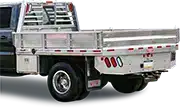
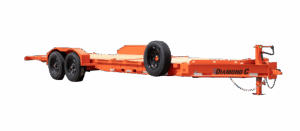




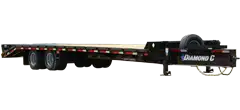



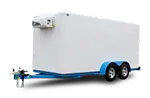


Most people walk onto a trailer lot thinking one of two things: either the price tag is completely fixed and asking for a better number is embarrassing, or every number on the board is inflated and you have to haggle like it is a flea market. Neither approach is accurate. Trailer pricing depends on the exact build, current inventory costs, factory programs, freight, accessories, financing, and how long the unit has been in stock. The useful question is not, “How much can I knock off?” It is, “What is a fair out-the-door price for this exact trailer?”
Here is an honest, dealer-side breakdown of what may move, what usually does not, and how to have a conversation that gets you a fair deal without damaging the relationship before the paperwork is even signed.
Start With What You Actually Need
Before you talk price, talk specifications. A Diamond C FMAX210, a 25,000 lb GVWR gooseneck flatbed, solves a completely different problem than a Liberty LU 83-inch-by-12-foot single-axle utility trailer rated at 2,990 lb GVWR. Even trailers with the same deck length may have dramatically different payload capacities, frames, axle packages, brakes, tires, couplers, loading systems, and intended uses. Diamond C’s FMAX family alone ranges from approximately 15,500 lb to 40,000 lb GVWR depending on the model and selected rating. Current Diamond C premium lines, including FMAX, HDT, LPT, LPX, WDT, and DEC, use Lippert axles as standard equipment, but the axle count, individual axle rating, brake configuration, tires, and suspension still vary by model. If you arrive knowing your cargo weight, required deck dimensions, tow vehicle limits, and primary use, you save time and signal that you are comparing the right trailers rather than shopping only by length or advertised price.
Legal and towing limits belong in this conversation too. The door-jamb label on your truck is important for payload and axle ratings, but it is not a complete tow-rating guide. Check the manufacturer’s towing guide or owner’s manual for your exact truck configuration, along with the truck’s GVWR, GCWR, rear-axle rating, receiver or gooseneck-hitch rating, tire ratings, and available payload after passengers, fuel, tools, and hitch weight are included. Indiana requires a highway-operated trailer or semitrailer with a gross weight of at least 3,000 lb to have adequate brakes that the driver can apply from the cab, along with automatic breakaway activation. For commercial operation, a Class A CDL is generally triggered when the combination has a GCWR or actual gross combination weight of at least 26,001 lb and the towed unit has a GVWR or actual gross weight over 10,000 lb. A trailer rated above 10,000 lb does not, by itself, automatically create a CDL requirement when the combined threshold is not met. Write down three things before you show up:
- The cargo weight and payload capacity you actually need. Add the trailer’s empty weight, installed options, spare tire, tools, and expected cargo to estimate the loaded trailer weight. Payload is the trailer’s GVWR minus its actual empty weight, and the final loaded weight must remain within the trailer’s GVWR, axle ratings, tire ratings, and component limits. Build in a practical reserve instead of planning to operate at the maximum rating on every trip.
- Your tow vehicle’s complete rated capacity. Use the manufacturer’s towing information for the truck’s VIN or exact configuration, the door-jamb payload and axle labels, and the ratings stamped on the hitch and related hardware. The lowest applicable rating controls, and a public scale is the best way to confirm actual truck, axle, hitch, trailer, and combination weights.
- The one or two features you will not compromise on and the two or three you can live without if the total price is right. Consider deck width and length, bumper-pull versus gooseneck, axle package, electric or hydraulic brakes, loading angle, ramp system, dump-body size, telescopic hoist, tarp, winch preparation, flooring, tie-down locations, and whether the trailer must accommodate concentrated equipment such as a skid steer, excavator, or backhoe.
What the Sticker Price Actually Represents
Some manufacturers publish a base MSRP, but the number attached to an in-stock trailer should reflect the actual model, size, GVWR package, factory options, freight, and dealer pricing. Diamond C, which has built trailers in Mt. Pleasant, Texas since 1985, publishes base pricing and model information, but the manufacturer also notes that specifications, components, options, availability, and MSRP can change. A base MSRP is therefore a starting point, not a promise that every trailer with the same model name will have the same price. A Diamond C equipped with a higher-GVWR Lippert axle package, upgraded brakes, premium tires, specialized ramps, additional storage, AlumaTrax or Blackwood flooring, hydraulic features, and the DM Difference Maker multi-stage coating system cannot be compared fairly with a basic trailer that merely has the same deck length.
Dealers have margin in a trailer, but the usable amount is often smaller than shoppers assume after inbound freight, setup, inspections, inventory carrying costs, advertising, facilities, warranty support, and staff time are considered. Two 20-foot equipment trailers can differ by thousands of dollars because one has a heavier frame, higher-rated axles, brakes on the required wheels, all-steel radial tires, a lower loading angle, premium ramps, additional tie-downs, or a more expensive finish. Asking for a major percentage discount without comparing identical builds usually leads to a polite but firm no. A better approach is to request the model number, VIN-specific build information, GVWR, empty weight, axle and tire ratings, included options, warranty coverage, and a written out-the-door quote.
That said, a few things actually can create room:
- Units that have been in inventory longer than comparable trailers. There is no universal 90-day rule, and not every dealer finances inventory the same way. However, an older unit may represent floor-plan interest, tied-up cash, earlier model-year inventory, or a build that has received less buyer interest. Ask how long the trailer has been available and whether the price already reflects its age.
- End-of-month, quarter, or program timing. Sales goals, manufacturer incentives, lender programs, and inventory objectives can affect a deal, but they do not guarantee a discount. Timing is useful leverage only when the dealer has a real target or program to work with.
- Buying more than one unit. If you are outfitting a business, replacing several trailers, or buying a cargo trailer and a flatbed together, say so before the quote is finalized. Multiple-unit purchases can reduce the dealer’s selling cost per transaction and may create room in the combined package, delivery, or accessories.
- Ordering from the factory versus buying off the lot. A factory order is not automatically cheaper. It may be priced at the manufacturer’s current schedule and can include freight, option costs, a deposit, and a production lead time. The advantage is that you pay for the configuration you need instead of accepting expensive features you do not use. Ask whether the quoted price is protected against factory increases, whether the deposit is refundable, what happens if a component changes, and whether the estimate includes delivery to the dealership.
The Add-Ons: Where Dealers Actually Have Room
This is where many buyers leave value on the table. Some accessories and dealer-installed upgrades provide more flexibility than the core trailer price, although the amount varies by product and labor involved. It is also important to separate dealer-installed accessories from factory options. A spare tire carrier, tie-down package, battery charger, tarp kit, winch, or accessory wiring may be installable at the dealership. A different axle package, structural side door, dump hoist, frame configuration, rear cargo-door design, or major flooring change may need to be specified when the trailer is built.
If the base price is already competitive, ask the dealer to quote the exact accessories you need as one package. On Diamond C equipment and flatbed trailers, that conversation might include the appropriate factory loading system, such as MAX Ramps, XDR Ramps, or an X-Ramp where offered, rather than treating every ramp design as interchangeable. MAX Ramps are intended to provide broad loading surfaces, while XDR Ramps are designed for concentrated equipment and provide clearance between the ramps. The correct choice should be based on the equipment’s tire or track width, ground clearance, concentrated load, bucket or attachment position, and loading angle, not simply which option costs less.
Common add-ons and factory options that are worth discussing as part of a package include:
- Spare wheel and tire, the correct load range, and a compatible carrier or under-deck mounting system
- E-track, properly rated D-rings, stake pockets, chain trays, rub rail, additional tie-down points, or securement storage
- Interior or exterior LED lighting, work lights, loading lights, battery charging equipment, wireless hydraulic controls, or an electric tarp on an appropriate dump trailer
- The correct loading system, including model-compatible ramps, an X-Ramp, MAX Ramps, XDR Ramps, rear stabilizers, or a hydraulic dovetail where available
- Rear-door configuration, side-access-door size and location, roof vents, wall lining, or interior height on an enclosed trailer, preferably specified at the factory when structural changes are required
- Model-appropriate flooring such as pressure-treated lumber, oak, Blackwood, or AlumaTrax where offered, based on equipment weight, traction needs, maintenance, and intended service
Instead of negotiating each item separately, try: “If I take this trailer with these three accessories and the quoted installation, what is the best out-the-door package?” That gives the dealer several places to find value without pretending that every line item has the same margin. Make sure the final buyer’s order identifies the exact part, quantity, labor, warranty treatment, and whether installation will be completed before delivery.
Financing vs. Cash: The Real Math
There is a persistent myth that paying cash always produces the biggest discount. Sometimes a clean cash transaction helps. Often it does not, because the dealer’s economics can differ between cash and financed purchases.
When a dealer arranges financing through a lender, the dealer may receive a flat fee, participation, or another form of compensation, depending on the program. That arrangement is not universal, and it does not mean financing is automatically better for the buyer. The buyer still needs to compare the APR, loan term, amount financed, total of payments, lender fees, required down payment, collateral requirements, late-payment terms, and any prepayment conditions. A lower monthly payment created by a longer term can cost substantially more than a higher payment on a shorter loan.
What this means practically:
- Do not negotiate from the monthly payment alone. Ask for a written cash out-the-door price and a written financed out-the-door price, including every fee, accessory, rebate, and financing condition. If a discount depends on using a particular lender, the quote should say so.
- If you have a preapproval from a bank or credit union, bring the rate, term, approved amount, and expiration date. It provides a real comparison and shows that you are prepared to complete the purchase, but give the dealership an opportunity to quote a competing program on the same amount and term.
- Ask about current participating-lender promotions rather than assuming a particular brand has 0% financing. Diamond C identifies Sheffield Financial and Synchrony as financing partners, but dealer participation, eligible buyers, trailer models, promotional APRs, terms, and approval requirements vary. Read the written offer and compare total borrowing cost, not just the advertised rate.
Cash clearly helps when you do not want to pay interest, lender approval is unavailable, or the available loan terms do not make financial sense. It can simplify the closing, but it does not eliminate sales tax, title charges, registration, or properly disclosed dealer fees. Business buyers should also keep taxes separate from price negotiation. Federal law restored a 100% additional first-year depreciation deduction for qualifying property acquired and placed in service after January 19, 2025, but a trailer’s eligibility depends on its business use, ownership, tax basis, placed-in-service date, related-party rules, and the buyer’s individual tax situation. Bonus depreciation or a Section 179 deduction is not a dealer discount and should not be used as a reason to overpay. Confirm the treatment with a qualified tax professional.
Doc Fees and “Other Fees”: Ask Before You Sign
Indiana does regulate dealer document preparation fees. As of July 1, 2026, the Indiana Auto Dealer Services Division advises that it will not take enforcement action on document preparation fees at or below $261.72. A compliant document preparation fee must be included in the advertised sale price and affirmatively disclosed in writing during negotiations, with the amount shown as a separate line item on the buyer’s order or purchase contract. The fee is dealer-charged, not a state-required tax, and a dealer may charge less or charge no document preparation fee. Do not confuse it with actual BMV title, plate, registration, lien, or temporary-permit charges.
Ask for a complete buyer’s order before signing or authorizing financing. The written out-the-door total should identify the trailer price, installed accessories, trade allowance, document preparation fee, sales tax, title and registration charges, lender-related charges, delivery, and any amount already paid. Watch for:
| Fee | Legitimate? | Negotiable? |
|---|---|---|
| Document preparation / title paperwork fee | Yes, when properly included, disclosed, itemized, and within Indiana’s applicable limit | The dealer may use a standard fee, but you can negotiate the total out-the-door deal |
| Sales tax (generally 7% for a taxable Indiana purchase) | Yes; exemptions and out-of-state treatment depend on the transaction | No, when legally due |
| License plate / title / registration | Yes, when it matches the applicable state charge | No, although an incorrect charge should be corrected |
| Freight / delivery charge | Yes, when clearly disclosed and connected to inbound freight or requested delivery | Sometimes; compare whether it is already included in the advertised or quoted price |
| “Dealer prep,” “inspection,” or “lot fee” | It depends on what is provided and how the charge was advertised and disclosed | Yes; ask for an explanation and negotiate the complete out-the-door price |
The line to examine closely is any vague dealer-created fee added after you agreed to an advertised price. Ask what work it covers, whether it was included in the advertised amount, and whether it duplicates document preparation, freight, setup, or another charge. Do not object to a legitimate government fee simply because it increases the total, but do require the numbers to match the paperwork. Indiana residents generally must title and register a newly acquired, unregistered vehicle within 45 days after purchase or acquisition, so confirm who is submitting the title work, what temporary documentation you will receive, and whether you must complete any BMV step yourself.
A Quick Q&A on Common Sticking Points
Q: Should I make a lowball offer to start?
An unsupported lowball offer is usually counterproductive. A new trailer has a traceable factory cost, freight cost, option list, and current market value. Bring a reasonable counteroffer based on a truly comparable trailer: the same model year, model code, dimensions, GVWR, axle count and rating, brake system, tires, coupler, ramps, floor, included accessories, warranty, freight, and dealer fees. A cheaper trailer with a lower axle package or fewer options is not evidence that an otherwise similar heavy-duty build is overpriced. Ask, “What is your best written out-the-door number on this exact VIN?” and negotiate from a complete figure.
Q: Can I trade in my old trailer?
Yes, many dealers accept trades. The offer will often be below a private-party asking price because the dealer assumes title risk, inspection, repairs, cleaning, advertising, carrying cost, and resale responsibility. Condition matters: bring the title, VIN, model information, GVWR label, maintenance records, keys, spare tire, and details about the brakes, bearings, tires, deck, hydraulics, lights, rust, and previous damage. Ask the dealer to show the new-trailer selling price and the trade allowance as separate numbers so a higher trade figure is not simply offset by a higher purchase price. Compare real listings for similar trailers, but remember that an unsold asking price is not the same as a completed sale.
Q: Is it worth driving to another dealership for a lower price?
Sometimes, especially when the other quote is for the exact same build and the difference remains meaningful after fuel, time, delivery, temporary permits, and travel are included. However, the selling relationship has value. A local dealer in Spencer, Indiana who knows your name, services what they sell, helps identify the correct parts, and is reachable by phone at (812) 829-0226 can save time after the sale. Manufacturer warranty coverage is governed by the written warranty, and service may be available through other authorized dealers, but appointment priority, diagnostic help, parts availability, and willingness to handle a unit purchased elsewhere can vary. Compare the complete ownership experience, not only the first invoice.
Q: What if they won’t move at all?
Ask for value instead of forcing an unrealistic price reduction. On an in-stock trailer, that could mean an included spare wheel and tire, accessory installation, additional rated tie-downs, a battery charger, a tarp-related accessory, local delivery, or another compatible dealer-installed item. On a factory order, it could mean packaging the correct flooring, storage, lighting, ramp system, winch preparation, or hydraulic option into the quote. Do not ask for structural modifications that are unsafe or impractical on a finished trailer. Have every promised item written on the buyer’s order with its value and completion date. A package concession is still part of the deal even when the advertised trailer price does not change.
What Good Negotiation Actually Looks Like
The buyers who get the best deals are usually not the ones who walk in aggressively. They are the buyers who are prepared, know what they need, ask direct questions, compare equivalent builds, and treat the salesperson like a person rather than an obstacle. That sounds basic, but it affects whether the salesperson is willing to spend time finding an aged unit, checking a factory program, structuring an accessory package, comparing financing, or asking a manager to approve a tighter number.
Say something like: “I’m prepared to buy this trailer today if the specifications and out-the-door number work. I need this GVWR, this loading setup, and these accessories. Here is the written quote I am comparing. What is the best complete package you can offer?” For a factory order, replace “buy today” with “place the deposit today,” then confirm the build sheet, deposit terms, estimated production schedule, freight, and price-protection language. That is a serious closing statement, not an opening fight.
Before you agree, read the entire buyer’s order. The out-the-door price should account for the trailer, selected options, dealer-installed accessories, document preparation fee, applicable sales tax, title and registration, lender charges, trade allowance, deposit, and delivery. Verify that the model code, VIN, dimensions, GVWR, axle package, tires, brakes, coupler, ramps, floor, color, and promised accessories match what you inspected or ordered. Never rely on a monthly-payment discussion or verbal promise when the written contract says something different.
And honestly, if a dealer is professional, transparent about fees, knowledgeable about towing and payload, and gives you a fair price on the correct trailer, that is worth something. Browse current inventory here to see the actual models, specifications, options, and advertised prices available before you walk in. Inventory and pricing can change as units sell or new trailers arrive, so compare the specific stock number rather than relying on an old screenshot or a generic model description. If you have questions about a particular unit, trade, factory order, delivery, or financing option, reach out directly. We’ll give you straight answers and help you compare the numbers correctly.
The best deal is the one where you leave with the right trailer, a tow combination that stays within its ratings, written terms you understand, and a price that makes sense for the complete build. It should also be a deal where the dealer is still ready to answer the phone when you need parts, service, warranty guidance, or the next trailer.


