









You bought a truck. Now it is sitting in the driveway every weekend doing nothing. Meanwhile, somebody in your neighborhood is pulling a trailer full of unwanted furniture to the transfer station and charging the customer $250 or more for the job. That truck is a tool that is not earning. A properly sized trailer can change that math quickly, but only when you account for legal payload, disposal charges, fuel, insurance, labor, maintenance, taxes, and the value of your own time.
This guide is for people who want to turn a trailer purchase into income, not just haul things for friends for free. We will talk about which trailers fit which gigs, what current trailer configurations cost, and how many completed jobs it can take to recover the initial investment. The numbers below are practical planning examples based on current trailer configurations and 2026 asking prices, but they are not promises of revenue. Your actual return depends on local demand, job pricing, operating expenses, financing terms, and how consistently you book profitable work.
Which Side Hustles Actually Need a Trailer?
Three gigs dominate the truck-and-trailer income category: junk removal, general hauling and small moves, and landscaping or lawn care. Each one has a different trailer requirement. Buying the wrong trailer can leave you with too little legal payload, too little floor space, an unsafe loading angle, or more trailer than your truck and business actually need.
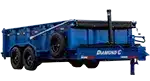
- Junk removal: You generally need usable volume, secure tie-down points, and enough legal payload for the material you accept. Mattresses and furniture are bulky but relatively light. Appliances, roofing debris, dirt, concrete, books, and construction waste can overload a trailer long before the bed looks full. Open utility trailers work well for furniture, brush, and mixed household cleanouts when the load is properly contained and covered. Operators who regularly handle loose, dense material may eventually benefit from a dump trailer, but the additional empty weight, purchase price, hydraulic system, and tow-vehicle requirements must be justified by the work.
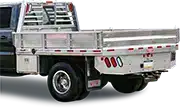
- Hauling and small moves: You may need a flat or low-sided open trailer for equipment, building materials, and weather-resistant cargo. An enclosed cargo trailer is often a better fit for furniture, boxed household goods, tools, and customer property that needs protection from rain and road spray. Enclosed walls reduce weather exposure and keep cargo out of casual view, but they do not eliminate theft risk. Commercial-grade locks, secure parking, cargo control, documented inventory, and appropriate insurance are still necessary.
- Landscaping and lawn care: You need a trailer that can carry mowers, trimmers, blowers, fuel containers, spreaders, and bags of material without exceeding the trailer or truck ratings. A utility trailer with a properly rated rear gate, usable tie-down points, and equipment racks is the common starting point. Measure the mower deck width, wheelbase, overall length, and ground clearance before choosing the bed and gate. A trailer that technically holds two mowers may still be inconvenient if the machines cannot be positioned with safe tongue weight and adequate access to the hand tools.
The Three Trailers Worth Buying for Side Income
1. Open Utility Trailer (6×12 or 7×14)
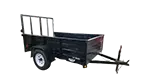
A light-duty 6×12 open utility trailer is a practical entry point for brush, bagged yard waste, furniture, small equipment, and local delivery work. Many single-axle utility trailers in this class are certified at 2,990 pounds GVWR, even when they use a 3,500-pound axle. The trailer’s axle rating does not increase the certified GVWR shown on its federal certification label. Legal payload is calculated by subtracting the trailer’s actual empty weight, permanently installed accessories, and anything carried on the trailer from its GVWR. Do not assume that every 2,990-pound trailer can carry more than 2,000 pounds. The frame, floor, gate, tires, coupler, axle, and finished trailer weight all affect the usable capacity.
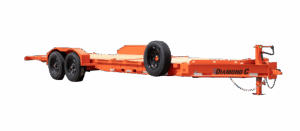
A tandem-axle 7×14 utility trailer commonly carries a 7,000-pound GVWR with two 3,500-pound brake axles. That configuration can provide substantially more payload than a 2,990-pound single axle, but the exact figure must still be taken from the trailer’s labeled GVWR and verified empty weight. H&H rail-side utility models, for example, are offered in several widths, lengths, and GVWR configurations rather than one universal specification. At the premium end, the Diamond C GTU is an 83-inch-wide tandem-axle bumper-pull utility trailer offered in 14- through 20-foot lengths. It is rated at 7,000 pounds GVWR and uses two 3,500-pound Lippert brake axles, a 4-inch channel frame, treated lumber flooring, and a rear loading system designed for regular equipment use. Available side and gate configurations should be selected around the cargo rather than appearance alone.
Current asking prices vary much more than older online guides suggest. A basic 2026 steel single-axle utility trailer in the 6×12 class may begin around $2,850 to $3,500. A current steel 7×14 tandem utility can be around $4,500 or more, while a premium Diamond C GTU equipped for commercial lawn or hauling work can run approximately $6,100 to $6,500 before sales tax, title, registration, accessories, and any lawful dealer fees. Spare tires, upgraded jacks, expanded-metal sides, equipment racks, tarps, locks, and additional tie-downs increase the out-the-door investment but may also make the trailer more productive.
2. Landscape Utility Trailer with Ramp Gate
Lawn care crews often choose H&H, Liberty, or Diamond C utility trailers because these manufacturers offer configurations suited to mower loading and daily commercial use. The important features are not just the trailer’s advertised length and GVWR. Check the gate’s stated load capacity, hinge and spring-assist design, ramp angle, deck height, side clearance, tie-down locations, floor material, and the space required to move between machines. A zero-turn mower can place a concentrated load on the rear gate, so the gate must be approved for the actual machine weight. The mower should be tied down to structural attachment points instead of relying on the side rails or parking brake to hold it in place.
A current Diamond C GTU provides a useful reference point for a premium landscape-oriented utility trailer. It has a 7,000-pound GVWR, dual 3,500-pound Lippert brake axles, a 4-inch channel frame, an 83-inch bed width, and available lengths from 14 to 20 feet. Standard equipment includes treated lumber flooring, a 24-inch Laser Grip dovetail, and an EZ Bi-Fold Gate, with other gate and side configurations available. Its steel receives the DM Difference Maker multi-stage coating process. Current pricing can range from roughly $4,500 for a simpler 7×14 steel tandem utility to more than $6,000 for a premium GTU configuration. Moving from 14 feet to 16 or 18 feet can be worthwhile for two mowers, but only after measuring the equipment and planning its loaded position. Extra floor length is useful only if the finished combination remains within the trailer GVWR, truck payload, rear-axle rating, hitch rating, and safe tongue-weight range.
3. Enclosed Cargo Trailer (6×12 or 7×16)
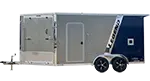
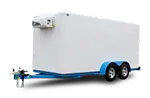
If you are doing small moves, mobile service work, event setup, or valuable-equipment hauling, an enclosed trailer can support higher-value jobs because it reduces exposure to rain, road debris, and casual observation. It can also serve as organized mobile storage between jobs. That does not make an enclosed trailer a secure unattended warehouse. Use quality coupler, door, and wheel locks, park in a controlled location, remove high-value tools when practical, and confirm that your insurance covers the trailer and its contents during commercial use.
Darkhorse Cargo, H&H, Wells Cargo, Legend, and other established manufacturers offer enclosed trailers in both light single-axle and tandem configurations. A current 6×12 single-axle cargo trailer may be certified at 2,990 pounds GVWR while using a 3,500-pound axle. Its payload is the labeled GVWR minus the completed trailer’s empty weight and all installed shelving, spare tires, ramps, tools, and cargo. In the tandem category, a 7×16 trailer with a 7,000-pound GVWR commonly uses two 3,500-pound brake axles. A current H&H 7×16 flat-top configuration, for example, lists an empty weight of approximately 2,220 pounds, producing a calculated payload of about 4,780 pounds before customer-added equipment. Specifications vary by roof profile, interior height, ramp door, wall construction, flooring, and options, so always verify the certification label on the exact unit.
A nominal 7×16 trailer provides 112 square feet of floor area based on its advertised dimensions, although actual clear interior space is affected by the wall structure, wheel boxes, front profile, cabinets, and door openings. Current 2026 pricing is closer to approximately $5,000 to $5,300 for many basic 6×12 single-axle enclosed trailers and approximately $8,300 to $8,400 for a 7×16 tandem model. Aluminum construction, extra height, heavier axles, finished interiors, electrical packages, cabinets, and premium doors can push the price higher. Build the payback calculation from the actual out-the-door quote rather than an outdated generic price range.
The Payback Math: How Many Jobs to Break Even?
This is the part many buyers skip, and it determines whether the trailer becomes a productive business asset or an expensive object sitting in the yard. Gross customer revenue is not the amount available to repay the trailer. Use contribution margin: the job invoice minus disposal fees, fuel, helper pay, payment-processing fees, job-specific supplies, tolls, and other direct expenses. Then compare that amount with the complete startup basis, including the trailer, Indiana sales tax, title and registration expenses, essential accessories, initial insurance costs, and any immediate business fit-out. The table below uses illustrative assumptions rather than guaranteed rates.
| Trailer Type | Estimated Startup Basis | Cash Contribution per Job | Jobs to Recover Startup Basis |
|---|---|---|---|
| 6×12 Open Utility | $3,500 | $135 on a $250 job after $115 of direct costs | 26 jobs |
| 7×14 Tandem Utility | $5,250 | $195 on a $350 job after $155 of direct costs | 27 jobs |
| 7×14-16 Landscape Utility | $7,250 | $300 per route day after direct operating costs | 25 route days |
| 7×16 Enclosed Cargo | $9,500 | $375 on a $650 move after $275 of direct costs | 26 jobs |
Under these assumptions, the trailer and essential startup equipment are recovered after approximately 25 to 27 profitable jobs or route days. At one completed job per week, that is roughly six months. At two jobs per week, it is approximately three months. Financing interest, canceled appointments, seasonal slowdowns, unpaid estimates, advertising, bookkeeping, and repairs can extend the schedule. These calculations also do not automatically include a wage for the owner’s labor. A business is not truly profitable merely because customer payments have equaled the purchase price of the equipment.
Job rates must be built around your market and the exact work. A junk-removal quote should consider load volume, estimated weight, stairs, loading time, travel distance, disposal location, minimum disposal charges, and material-specific surcharges. A $250 invoice may contribute only $135 toward overhead and equipment after direct costs. Lawn care trailers pay back differently because the trailer enables a recurring route instead of generating a separate trailer fee. A route of 15 lawns at $45 each produces $675 in gross revenue, but the useful number is what remains after labor, fuel, travel time, blades, trimmer line, maintenance, and other direct costs. Keep scale tickets and job records so future estimates are based on your own results rather than guesses.
Don’t Ignore the Operating Costs
The trailer purchase is a one-time capital expense. Tires, brakes, bearings, disposal charges, commercial insurance, licensing, repairs, secure storage, and compliance continue for as long as the business operates. Pricing jobs without these costs creates revenue without dependable profit.
- Dump and disposal fees: Transfer stations and landfills may charge by weight, volume, vehicle type, or material, and many impose a minimum charge. Mattresses, tires, refrigerators, air conditioners, electronics, shingles, concrete, hazardous material, and brush may have separate rules or surcharges. Contact the actual facility before quoting an unfamiliar load. Build the verified fee, travel time, and a reasonable weight allowance into the customer’s price. Never rely on one flat estimate for every load.
- Tires, brakes, and wheel bearings: Check tire pressure, tread, damage, lug-nut condition, lights, safety chains, breakaway equipment, and abnormal bearing play before commercial trips. Follow the trailer and component manufacturers’ service schedules. Current Diamond C maintenance guidance calls for recurring inspections at approximately six months or 6,000 miles for important systems, with more frequent attention when mileage, loading, road conditions, or commercial duty demand it. Instead of assuming one small annual bearing bill, create a broader maintenance reserve for tires, brake adjustment and replacement, bearings, wiring, breakaway batteries, suspension parts, and unexpected repairs. A planning reserve of several hundred dollars per year may be reasonable for a lightly used trailer, but high-mileage commercial operation can cost considerably more.
- Insurance and business compliance: Do not assume that a personal auto policy automatically covers paid hauling, customer cargo, or commercial trailer use. Ask the insurer in writing about commercial auto coverage, physical damage to the trailer, general liability, customer property or cargo coverage, roadside assistance, and any exclusions. A household-goods mover or for-hire carrier may also need operating authority, registrations, or other compliance beyond an ordinary trailer plate, depending on where and how the business operates. Premiums depend on the truck, trailer value, drivers, radius, cargo, claims history, and coverage limits, so a universal $100 or $200 annual estimate is not reliable.
- Decking, equipment, taxes, and financing: Inspect wood flooring for cracks, rot, loose fasteners, chemical damage, and concentrated wear. Replace boards based on condition rather than assuming every deck lasts a fixed number of years. Budget for straps, chains, edge protectors, tarps, locks, a spare tire, wheel chocks, a suitable jack, gate repairs, shelving, racks, signs, and secure parking. Indiana generally applies 7% sales tax to trailer purchases, and title, registration, and permitted dealer charges affect the startup basis. Federal law restored 100% bonus depreciation for qualifying property acquired and placed in service after January 19, 2025, but depreciation is a tax deduction, not an instant rebate or substitute for cash flow. Business-use percentage, eligible basis, financing, entity structure, and possible recapture should be reviewed with a qualified tax professional.
Single Axle vs. Tandem: The Right Answer for Side Income
First-time buyers often gravitate toward single-axle trailers because they usually cost less, weigh less, require fewer tires and bearings, and place less demand on the tow vehicle. A 2,990-pound-GVWR single axle can be the right business tool for light furniture, lawn debris, boxed goods, compact equipment, and local delivery work. Trailer length and axle count do not make one trailer inherently easier to back. Short trailers react quickly to steering input, while longer trailers respond more slowly. Practice and visibility matter more than the simple single-versus-tandem label.
A 7,000-pound tandem trailer offers much more total capacity than a 2,990-pound single axle, but it does not automatically carry twice the cargo. Payload equals GVWR minus the trailer’s empty weight and installed equipment. The tandem’s additional frame, axle, tires, brakes, and length increase its empty weight. For bulky junk, taller removable sides or a longer bed may improve productivity more than additional weight capacity. For dense loads, the higher GVWR can prevent overloads and reduce the need for an extra trip. Disposal costs are not always doubled by a second trip because some facilities charge by weight, but a second trip still adds time, fuel, vehicle wear, and possibly another minimum charge.
Tandem axles generally provide better load distribution and stability when the trailer is properly loaded, and a 7,000-pound commercial utility normally includes brakes on both axles. They also add four tires, additional bearings, more brake components, and greater maintenance cost. A second axle is not permission to continue driving normally after a tire failure. Slow down safely, stop, inspect for damage, and repair the problem before continuing. Pay the additional cost for a tandem when the expected cargo, legal payload, trip frequency, and contribution-margin calculation justify it, not because every side hustle automatically requires one.
One Thing to Check Before You Buy
Your truck’s complete towing limits must be verified using the owner’s manual, certification labels, and the towing guide for its exact VIN, engine, cab, bed, axle ratio, drivetrain, and equipment. Do not rely on a broad statement about what every half-ton or three-quarter-ton truck can tow. Check the maximum loaded trailer rating, gross combined weight rating, truck GVWR, available payload, rear gross axle weight rating, receiver rating, ball mount, hitch ball, tires, and brake-controller requirements. The lowest-rated component controls the combination. A bumper-pull trailer commonly needs approximately 10% to 15% of its loaded weight on the hitch. A 7,000-pound trailer could therefore place roughly 700 to 1,050 pounds on the truck before counting passengers, tools, bed cargo, and aftermarket accessories. That hitch load consumes truck payload and can overload the rear axle even when the advertised tow rating appears sufficient.
Indiana also requires appropriate braking equipment on a trailer or semitrailer with a gross weight of at least 3,000 pounds, including brakes that can be controlled from the towing vehicle and automatic breakaway operation as required by law. A newly acquired trailer must generally be titled and registered within Indiana’s 45-day penalty-free window. For CDL purposes, a trailer over 10,000 pounds does not by itself create a Class A CDL requirement. The Class A threshold applies when the combination has a GCWR or actual gross combination weight of at least 26,001 pounds and the towed unit has a GVWR or actual gross weight greater than 10,000 pounds. Separate federal and state commercial-carrier rules can apply below the CDL threshold, including rules affecting interstate commercial combinations rated at 10,001 pounds or more. Confirm licensing, USDOT, operating-authority, insurance, load-securement, and local business requirements for the exact service you intend to offer.
Where to Start
If you are not sure which trailer fits your specific gig, the fastest path is to talk through what you will haul, the heaviest realistic load, the cargo dimensions, how it will be loaded, how far you will travel, where it will be disposed of, and how many profitable jobs you expect each month. The right trailer for a solo junk-removal operator doing light household cleanouts on Saturdays is different from the right trailer for a three-crew landscaping company carrying multiple commercial zero-turn mowers every day. Bring the truck’s door-jamb ratings and hitch information so the trailer can be matched to the entire towing combination, not just the available inventory.
We stock Diamond C, H&H, Darkhorse Cargo, Wells Cargo, Liberty, and Legend trailers at our lot in Spencer. Browse current inventory to see what is available now, or reach out directly at (812) 829-0226 and we will help you compare the trailer’s GVWR, verified payload, axle and brake configuration, gate or ramp system, floor length, side options, and out-the-door cost against the work you are planning to do.
The question is not whether every trailer automatically earns back its purchase price. It does not. The useful question is which properly matched trailer gives your business enough legal capacity, efficiency, reliability, and contribution margin to recover the investment without overloading the equipment or underpricing the work. Buy from the numbers, track every job, and let real operating results determine when it is time to expand.


