


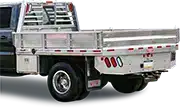
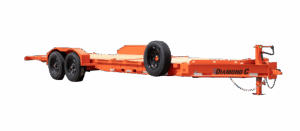







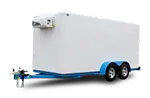


You’ve got a project coming up. Maybe you’re hauling a zero-turn mower to a job site, moving an ATV to a hunting lease, or finally clearing that barn full of scrap metal. You’ve borrowed a buddy’s trailer twice, and now you’re ready to buy your own. Good call. But walk onto any trailer lot without a plan and it is easy to spend two hours comparing trailers that were never right for your load in the first place, buy on appearance instead of capacity, and discover the mistake when you are already an hour down I-69.
This guide cuts through it. By the end, you’ll know which trailer type fits your actual load, what ratings and measurements to verify before you sign anything, how to match the trailer to your tow vehicle, and which established brands are available here in Indiana. Trailer specifications can change by model year and option package, so the certification label on the specific trailer always takes priority over a general brochure, online listing, or rule of thumb.
Start With What You’re Hauling, Not What Looks Cool
Most first-time buyers make the same mistake: they look at trailers before they list what they need to carry. Do that first. Use the equipment’s real operating weight, not just a stripped-down brochure number. Fuel, fluids, attachments, buckets, mower decks, spare tires, toolboxes, batteries, tie-down equipment, and anything else carried on the trailer all use available payload. Write down:
- The heaviest single load you’ll realistically put on the trailer, including attachments, fuel, tools, and other cargo
- The widest, tallest, or longest item you’ll regularly carry, including tire-to-tire width and any overhanging attachment
- Whether you need to drive onto the trailer, load from the side, dump loose material, or protect the cargo inside an enclosed body
- How often you’ll use it, how far you’ll tow it, and whether it will make occasional weekend trips or daily job-site runs
That list does more work than any trailer spec sheet. A buyer carrying a 1,500 lb skid-steer attachment needs a completely different deck, ramp system, tie-down layout, and axle capacity than someone moving two dirt bikes on weekends. Also measure door openings, barn entrances, garage clearance, and the space where the trailer will be stored. A trailer can have enough payload and still be unusable because the machine will not fit between the fenders or the trailer will not clear the storage gate.
The Three Trailer Types Most Indiana Buyers Need
Utility Trailers
Open deck, straightforward design, and one of the most flexible options available. Utility trailers work well for lawn equipment, ATVs, small tractors, lumber, landscape materials, appliances, and other cargo that does not need a roof. H&H trailers offers current steel and aluminum utility configurations in multiple side styles, deck widths, lengths, and GVWR classes. Diamond C also offers single- and tandem-axle utility trailers. Its current GTU tandem-axle utility is an 83-inch-wide bumper-pull model offered in 14- to 20-foot lengths with a 7,000 lb GVWR, two 3,500 lb Lippert brake axles, and a 4-inch channel frame. Do not assume that every 7×14 utility trailer has the same payload. Gates, sides, flooring, spare tires, toolboxes, and other options affect empty weight, so calculate payload from the certification information for the exact unit you are considering.
Cargo Trailers (Enclosed)
If your load needs to stay dry, remain out of sight, or be locked up overnight, an enclosed cargo trailer makes sense. Wells Cargo and Darkhorse Cargo are among the enclosed brands represented through Spencer Trailers, along with Legend and United models. A 7×14 enclosed trailer may be configured with a 2,990 lb rating or a tandem-axle 7,000 lb rating depending on the manufacturer and build, so size alone does not tell you its payload. Interior height, rear-door opening, wall construction, roof design, axle type, floor rating, crossmember spacing, and tie-down locations matter as much as exterior length. Prices vary considerably with GVWR, interior height, ramp doors, finished interiors, electrical packages, aluminum construction, and other options, so a fixed national price range quickly becomes inaccurate. A V-nose can add useful front interior space and improve tongue-area clearance, but it should not be purchased on the assumption that it will automatically produce a major fuel-economy improvement. Enclosed trailers are good choices for contractors, mobile vendors, motorsports users, and anyone carrying tools, inventory, electronics, or weather-sensitive equipment.
Equipment Trailers
If you’ve got a tractor, mini excavator, skid steer, telehandler, or heavy zero-turn, you need a trailer designed around the machine’s operating weight, wheelbase, ground clearance, and loading angle. Diamond C and Liberty offer equipment-trailer choices across several weight classes rather than one simple 10,000-to-14,000 lb category. Lighter equipment trailers may be rated around 7,000, 9,900, or 14,000 lb, while Diamond C’s premium LPX and HDT equipment lines are available in configurations beginning around 14,900 or 15,500 lb and extending through 24,000 lb, depending on the model and axle package. Diamond C’s premium equipment lines use Lippert axles as standard. Pay close attention to the loading system. Current Diamond C choices may include MAX Ramps, XDR Ramps, an X-Ramp, heavy-duty flip-knee ramps, or a hydraulically dampened tilt deck, depending on the model. A ramp that is too steep, too narrow, or not rated for the concentrated wheel load of your machine can make an otherwise capable trailer the wrong purchase.
GVWR, Payload, and Why These Numbers Matter More Than the Price Tag
The number that protects you legally and mechanically is the Gross Vehicle Weight Rating (GVWR). It is the manufacturer’s maximum permitted weight for the complete trailer and everything loaded on or in it. The rating appears on the trailer’s certification label and is not something an owner can increase by installing heavier tires, springs, wheels, or a larger coupler. Operating over the trailer’s limits can overload the tires, bearings, suspension, frame, coupler, brakes, or tow vehicle. It can also lead to loss of control, equipment damage, enforcement action, or an out-of-service situation when the combination is being operated commercially.
Payload capacity is generally calculated as GVWR minus the trailer’s empty or curb weight. For example, a trailer with a 7,000 lb GVWR and an actual empty weight of 1,800 lb would have approximately 5,200 lb available before additional cargo and permanently carried equipment are added. Manufacturer curb weights are often approximate and may not include every installed option. A spare tire, battery, tarp system, winch, toolbox, ramps, expanded-metal sides, or upgraded flooring can reduce remaining payload. For the most accurate number, weigh the empty trailer as equipped and subtract that scale weight from its labeled GVWR.
Axle ratings are important, but they do not independently determine the trailer’s GVWR. Two 3,500 lb axles provide 7,000 lb of combined axle capacity, while some heavier trailers use a GVWR that also accounts for properly supported tongue or gooseneck weight transferred to the tow vehicle. Always follow the trailer’s labeled GVWR and Gross Axle Weight Ratings rather than creating your own rating by adding axle numbers. The tires, wheels, suspension, frame, brakes, coupler, safety chains, hitch, ball mount, tow vehicle, and hitch receiver each have separate limits. The safe capacity of the combination is controlled by the lowest applicable rating.
A useful planning rule is to leave a capacity margin instead of buying a trailer that is already at its limit with today’s heaviest load. A target such as 15 to 20 percent of unused payload can provide room for tools, attachments, and future jobs, but it is a shopping margin, not permission to exceed any labeled trailer or tow-vehicle rating.
Match Your Hitch, This Is Not an Afterthought
Your truck or SUV’s receiver class is only one part of the towing system. It does not, by itself, determine what the vehicle can safely or legally pull. The vehicle’s tow rating, payload rating, Gross Combined Weight Rating, rear-axle rating, receiver rating, ball-mount rating, hitch-ball rating, tongue-weight limit, and the trailer’s loaded weight must all be considered. Common receiver-class ranges look like this, but the label on the individual hitch is the number that controls:
| Hitch Class | Typical Receiver GTW Range | Common Ball Size |
|---|---|---|
| Class II | Up to about 3,500 lbs | 1-7/8″ or 2″; verify the coupler |
| Class III | Commonly up to about 8,000 lbs in weight-carrying use | 2″ or 2-5/16″; verify the coupler |
| Class IV | Commonly about 8,000 to 14,000 lbs, depending on the hitch | Usually 2-5/16″; verify the coupler |
| Class V | Above 10,000 lbs; many truck receivers are rated around 16,000 to 20,000+ lbs | Usually 2-5/16″; verify the coupler |
Check your truck’s owner’s manual, towing guide, door-jamb payload label, and hitch receiver label rather than relying on a forum post or a maximum number advertised for a different cab, engine, axle ratio, or drivetrain. A weight-distribution hitch can improve how certain bumper-pull combinations carry tongue weight, but it cannot exceed the vehicle or receiver manufacturer’s ratings. Match the ball diameter to the coupler exactly and verify that the ball, shank, ball mount, pin, and receiver are all rated for the loaded trailer. A 2-5/16″ coupler must never be placed on a 2″ ball. If the trailer uses electric brakes, the tow vehicle also needs a compatible brake controller and correctly wired connector.
Steel vs. Aluminum: Pick One and Own the Tradeoff
Steel trailers often cost less upfront, provide excellent structural strength, and are widely serviceable by qualified trailer repair shops. The tradeoff is weight and corrosion control. Road salt, chipped coatings, trapped moisture, fertilizer, and neglected stone damage can expose steel and start rust. Construction quality and surface preparation matter as much as whether the finish is described as paint or powder coat. Diamond C, for example, uses its DM Difference Maker multi-stage coating system on current trailers. Even a high-quality finish still needs regular washing, inspection, and touch-up when damage exposes bare metal, especially after Indiana winter use.
Aluminum trailers from brands such as United or Legend generally cost more but can reduce empty weight and resist red rust. Lower curb weight may create additional usable payload when two comparable trailers share the same GVWR, but that advantage must be confirmed from the exact labels and scale weights. Aluminum is corrosion-resistant, not maintenance-free. Dissimilar-metal hardware, road chemicals, damaged surfaces, and poor electrical grounding can still create problems. Steel and aluminum also flex and repair differently, so structural work should be completed by a shop familiar with the material. Buy aluminum when its lower weight and corrosion resistance solve a real need; buy steel when initial cost, rugged construction, and straightforward serviceability matter more.
Five Things to Check Before You Buy Any Used Trailer
New is usually easier to evaluate. Used takes a sharper eye because maintenance, overloading, repairs, and storage history are not always visible in an advertisement. Run through this before you hand over cash:
- Frame, VIN, and welds. Match the VIN on the trailer to the title and confirm that the certification label is present and readable. Look underneath for cracked crossmembers, bent tongues, buckled frame rails, rust scale, elongated bolt holes, fresh paint hiding repairs, or welds that do not match the manufacturer’s work. Modifications around spring hangers, couplers, jacks, and ramp mounts deserve extra attention.
- Floor condition. Inspect wood decking from both the top and underside. Pay particular attention to the ends, fastener holes, areas above crossmembers, and sections that have held wet debris or leaking equipment. Probe suspicious soft spots carefully. Steel and aluminum floors should be checked for severe corrosion, cracks, distortion, loose fasteners, and damage from concentrated equipment loads.
- Tires and wheels. Tread depth alone does not tell you whether a trailer tire is safe. Check the DOT date code, load range, size, maximum load, cold-inflation requirement, sidewalls, valve stems, and spare tire. Reject tires with bulges, exposed cords, deep cracking, impact damage, or an inadequate load rating. Tire and vehicle manufacturers commonly publish age-based inspection or replacement guidance in the six- to ten-year range, so follow the guidance for the tire actually installed rather than assuming that visible tread makes an old tire serviceable.
- Lights, brakes, and breakaway system. Connect the trailer to a properly equipped tow vehicle and test running lights, brake lights, turn signals, clearance lights, electric brakes, and the brake controller’s manual function. On a braked trailer, inspect the breakaway switch, cable, battery, wiring, and charge circuit. A professional inspection should also check brake adjustment, drums or rotors, magnets or hydraulic components, wheel bearings, and seals.
- Coupler and safety equipment. Confirm the coupler size and rating, then check that it latches firmly onto the correct ball without binding or excessive movement. Safety chains or cables should have legible capacity information, sound attachment points, undamaged hooks, and working latches. On a bumper-pull trailer, they should be long enough for turns and crossed beneath the tongue without dragging. The breakaway cable should be attached separately rather than clipped to a safety chain.
What Spencer Trailers Carries (and Why It Matters for Local Buyers)
Buying locally in Owen County means you can inspect the actual trailer, verify the certification label, measure the deck and door openings, test the ramps, and ask questions before taking it home. It also gives you a nearby point of contact for parts, service, warranty guidance, and future trade-in discussions. Spencer Trailers at 291 West State Hwy 46 in Spencer lists inventory from Diamond C, Baseline, Liberty, Delco, Darkhorse Cargo, H&H, Legend, United, and Wells Cargo, along with truck-bed products from Zimmerman and Martin. Inventory changes as units are sold and ordered, so check the current listings rather than assuming a particular size or configuration is sitting on the lot. Diamond C, Spencer Trailers’ leading trailer brand, was founded in 1985 and builds its trailers in Mt. Pleasant, Texas.
You can browse current inventory at SpencerTrailers.com before you make the drive, or call (812) 829-0226 to ask about specific models, GVWR packages, axle configurations, ramp systems, and deck sizes that fit what you’re hauling. When calling, have the tow vehicle’s year, model, engine, drivetrain, payload information, receiver rating, and maximum tow rating available.
And if you’re not sure what you need yet, that’s fine. Reach out through the contact page and describe your use case. “I need to haul a John Deere 2025R with a loader and a small brush mower” is enough to start the conversation, but include the machine’s operating weight, attachment weights, overall width, and total transport length whenever possible. That information helps the dealer recommend the correct payload, deck length, axle package, tie-down layout, and loading system instead of guessing from the tractor’s model name alone.
New vs. Used: An Honest Take
For a first trailer, new often wins on simplicity. You receive a trailer with no unknown loading history, current paperwork, new tires and running gear, and the manufacturer’s applicable warranty coverage. You can also select the deck size, GVWR, gate, ramps, coupler, spare tire, toolbox, winch preparation, and other options around your actual work. The price difference between new and used is not a dependable fixed amount. In some categories the gap is small, while in others it can be several thousand dollars. A used bargain stops being a bargain quickly if it needs tires, brakes, bearings, decking, wiring, a breakaway battery, and title work before its first safe trip.
Used makes more sense on higher-value equipment, dump, tilt, enclosed, or gooseneck trailers when the discount reflects their age and condition and the buyer knows how to inspect them. Maintenance records, an unmodified frame, a clean title, and evidence that the trailer was not repeatedly overloaded are worth paying for. Compare the used trailer’s actual condition against the price of a current model rather than comparing model year alone.
For many first-time owners, the safest approach is still new, simple, and practical, but that does not mean buying the smallest or cheapest unit on the lot. Buy enough payload, deck space, braking capacity, and ramp capability for the real job. If choosing used, budget for an immediate professional inspection and assume that normal wear items may need attention before regular hauling begins.
A Quick Q&A for First-Time Buyers
Do I need brakes on my trailer?
Indiana Code 9-19-3-3 requires a trailer or semitrailer with a gross weight of at least 3,000 lbs, when operated on a highway, to have brakes adequate to control, stop, and hold it. The brakes must be controllable from the towing vehicle’s cab and must apply automatically in an accidental breakaway. In practical buying terms, tandem 7,000 lb utility and cargo trailers will be equipped with brakes, while many light single-axle trailers are rated at 2,990 lbs. Size alone does not decide the requirement. Verify the trailer’s rating, brake equipment, breakaway system, and whether your tow vehicle has the required controller. Also remember that a trailer rated over 10,000 lbs does not automatically require a Class A CDL by itself. The usual combination threshold is 26,001 lbs or more with a towed unit over 10,000 lbs, subject to the combination’s rated or actual weights, how it is being used, and any applicable exemptions.
What’s the best size for a first trailer?
A 6×12 or 7×14 open utility is a common starting point for homeowners and light contractors, but there is no universal best size. Measure the load rather than choosing from a popularity estimate. Confirm the usable deck length, width between the fenders, rear-gate opening, ramp width, ramp capacity, axle placement, payload, and tongue weight. A longer trailer can improve load positioning, but it also weighs more, needs more storage room, and can reduce available payload. A wider trailer may fit the machine but can be harder to maneuver through gates and crowded job sites.
Can I store it outside year-round?
Yes, with regular maintenance. Park it on a firm, well-drained surface, chock the wheels, protect the electrical connector, and keep leaves and standing water from collecting on the deck or roof. Wash road salt from the frame and running gear, inspect coating damage, maintain proper cold tire pressure, and shield the tires from prolonged sunlight when practical. Keep the coupler clean and lubricated according to its manufacturer’s instructions, maintain the jack, and charge or test the breakaway battery on braked trailers. A breathable protective cover can help selected components, but wrapping the tongue or trailer so tightly that it traps moisture can accelerate corrosion.
Ready to Buy?
The single best move you can make right now is to write down your three largest loads, their real operating weights, their dimensions, and every attachment that travels with them. Then check your truck’s tow rating, available payload, rear-axle rating, Gross Combined Weight Rating, receiver rating, and permitted tongue weight. That exercise will cut your decision time dramatically when you’re standing on the lot. After purchasing, make sure the VIN and paperwork are correct. Indiana buyers generally must apply for the title within 45 days of the purchase date to avoid an administrative penalty, even when another registration or temporary-permit deadline may be different.
When you’re ready, browse the current Spencer Trailers inventory online or stop by the lot on Hwy 46 in Spencer. Confirm the current price, availability, warranty terms, certification label, axle package, empty weight, payload, brakes, coupler, ramps, tires, and included options on the exact trailer before buying. There’s no reason to purchase the biggest trailer on the lot, and there is no value in buying one that is too small for the next realistic job. The right trailer is the one that fits your actual haul, your tow vehicle, your storage space, and your budget while leaving a sensible capacity margin. Start there.


