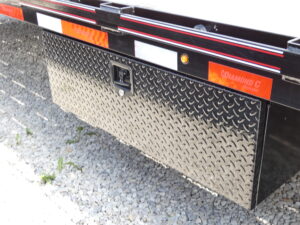












Most people buy a trailer when they need one. A job comes up, a project starts, the farm season kicks off, or a piece of equipment suddenly needs to move, and the trailer becomes the only thing standing between you and getting work done. That urgency can be expensive because it limits your ability to compare specifications, financing terms, in-stock configurations, and total out-the-door prices.
Buyers who consistently make stronger equipment purchases usually do one thing differently: they plan around their expected workload instead of waiting for a crisis. There are three useful planning windows during the year: late-year inventory clearance, the slower winter selling season, and the end-of-tax-year placed-in-service deadline for qualifying business equipment. None guarantees a discount, and trailer inventory does not follow the automotive calendar perfectly, but each window can give a prepared buyer more options and more time to make an apples-to-apples comparison.
Window 1: Year-End Model Clearance (October Through December)
Late-year clearance is less about an automatic changeover to completely redesigned trailers and more about inventory age, dealer carrying costs, annual sales goals, and room for incoming units. Trailer manufacturers may update specifications, option packages, pricing, or VIN model years without making every prior-year trailer obsolete. For that reason, an outgoing model-year trailer can still be an excellent purchase when its specifications match the job.
Consider a Diamond C LPX equipment trailer. The current bumper-pull LPX is available in lengths beginning at 16 feet, with GVWR configurations from 15,500 to 24,000 pounds. Its standard 15,500-pound package uses two 7,000-pound Lippert axles, with higher-GVWR axle, frame, tire, coupler, and suspension packages available. The Diamond C HDT is not a conventional flatbed; it is a low-profile, hydraulically dampened tilt equipment trailer offered in 15,500- to 24,000-pound GVWR configurations. A dealer may have more flexibility on an aged LPX or HDT near year-end, but there is no dependable industry-wide rule that guarantees a particular dollar discount. The meaningful number is the written out-the-door price for the exact VIN and configuration.
What to look for during clearance season:
- Units that have been in inventory for an extended period. Ask when the trailer arrived, whether it has been titled, whether it has been used for demonstrations, and whether any manufacturer or dealer incentives apply to that VIN. Inventory age can create negotiating room, but the dealer may own the trailer outright rather than finance it through a floor plan, so do not assume that every older unit must be heavily discounted.
- Demo or display units. A display trailer may still be sold as new if it has never been titled, but it should not be treated as automatically identical in condition to a newly delivered unit. Inspect the tires and date codes, deck, coupler, jack, wiring, battery, breakaway system, brakes, ramps, hydraulic components, doors, seals, and finish. On a Diamond C, inspect the multi-stage DM Difference Maker powder-coat finish for chips, scratches, or corrosion caused by lot exposure, and confirm when the factory warranty begins.
- Outgoing VIN-year units with the correct working specifications. Compare the actual axle ratings, GVWR, empty weight, available payload, frame construction, deck dimensions, tire capacity, brake type, hoist or tilt system, coupler, tie-downs, and loading equipment. For Diamond C equipment and gooseneck trailers, loading options may include Max Ramps, XDR Ramps, X-Ramp configurations on applicable LPX builds, slide-in ramps, or a hydraulic dovetail, depending on the model.
The trade-off is selection. A clearance buyer is usually choosing from what is already on the lot rather than configuring every detail. If you need a particular deck length, GVWR package, axle configuration, coupler, winch setup, ramp system, dump-body height, tarp, hydraulic jack, or tie-down arrangement, start calling dealers before the final weeks of December. A low price on the wrong trailer is not a savings if the trailer cannot safely and legally handle the intended load.
Window 2: Off-Season Pricing (January and February)
January and February are often slower shopping months for trailer dealers in Indiana and throughout much of the Midwest. Winter weather can delay construction, landscaping, agriculture, and recreational hauling, which may reduce walk-in traffic. That does not mean every dealer is overstocked or willing to discount every trailer. Heavy-duty equipment trailers, dumps, goosenecks, and enclosed trailers can remain in strong demand when contractors are planning for spring.
The advantage of the off-season is time. A buyer can compare an in-stock utility trailer, dump trailer, equipment trailer, or enclosed trailer without trying to close the purchase between jobs. Ask for an itemized quotation showing the trailer selling price, installed options, freight or destination charges, documentation preparation fee, sales tax, title and registration costs, financing charges, and any optional protection products. A lower advertised price can become a more expensive transaction after mandatory fees or unfavorable financing are added.
Winter can also be a practical time to place a custom order for spring, but do not rely on a universal four- or six-week production estimate. Lead times depend on the manufacturer, model, production backlog, axle and component availability, paint or finish selection, and the complexity of the build. A custom enclosed trailer, specialized dump trailer, or higher-GVWR Diamond C with upgraded suspension, hydraulic equipment, ramps, tires, brakes, or frame package may take longer than a standard inventory unit. Get the estimated production and delivery window in writing, understand whether the deposit is refundable, and leave room for weather, freight, and manufacturing delays.
Window 3: The Section 179 Deadline (Before December 31)
This window is different because the potential benefit comes from tax timing rather than dealer motivation. For a calendar-year taxpayer, December 31 is normally the last day to place eligible property in service for that tax year. A fiscal-year business follows the end of its own tax year instead.
Section 179 allows an eligible taxpayer to elect to expense some or all of the qualifying cost of business property in the year it is placed in service, subject to dollar limits, a phase-out, business-use requirements, and a taxable-income limitation. A trailer acquired for use in an active trade or business can generally qualify when it is purchased rather than leased and is used more than 50% for qualified business purposes. For tax years beginning in 2026, the federal Section 179 maximum is $2,560,000, with the limitation beginning to phase out when total Section 179 property placed in service exceeds $4,090,000. Those limits are far above the price of most individual trailers, but the taxable-income and business-use rules can still restrict the deduction.
Federal law also restored permanent 100% bonus depreciation for qualifying property acquired after January 19, 2025, subject to the acquisition, placed-in-service, related-party, property-type, and other applicable rules. Section 179 and bonus depreciation are different provisions. A business may use Section 179 first and apply bonus depreciation to remaining eligible basis, but it cannot deduct the same basis twice. A CPA can determine which order produces the best result, especially when the business has limited taxable income, a loss, multiple equipment purchases, or state adjustments.
What that means in practical terms is that a qualifying trailer purchase may reduce taxable income; it does not create a dollar-for-dollar tax credit. Suppose a business acquires a trailer with an eligible tax basis of $18,500, places it in service during the year, and qualifies to deduct the entire federal basis. At a hypothetical 24% marginal federal income-tax rate, the gross federal income-tax effect could be approximately $4,440 before considering entity structure, self-employment tax, the qualified business income deduction, taxable-income limitations, financing, basis adjustments, state taxes, or other items. The business still spends $18,500, and the actual tax benefit may be higher, lower, deferred, or unavailable.
The placed-in-service requirement is essential. Paying a deposit, signing a purchase agreement, obtaining financing approval, or receiving an invoice is not enough when the trailer is still being built or is not ready and available for its intended business use. A trailer ordered in December and delivered in February generally belongs to the later placed-in-service year. Buyers pursuing a year-end deduction should choose an in-stock unit or complete a custom order early enough to allow for final assembly, payment, delivery, inspection, and readiness for use.
A note on federal and Indiana tax treatment: Indiana does not simply duplicate the full federal first-year deduction. Indiana currently caps its own Section 179 allowance at $25,000 in the first year, even though it follows the federal phase-out threshold, and it generally requires an Indiana adjustment for federal bonus depreciation that is recovered through later state depreciation deductions. A federal deduction can therefore produce a different Indiana result. Business structure, taxable income, prior-year carryovers, percentage of business use, trade-ins, financing, and other property purchases also matter. Talk to a qualified CPA or tax attorney before making a trailer purchase primarily for a tax outcome.
How These Windows Can Stack
The most favorable timing can occur when a business finds an appropriately configured in-stock trailer during a late-year sale and places it in service before the close of its tax year. In that situation, the buyer may receive a lower negotiated price while also accelerating a federal deduction. The two benefits are separate: the dealer discount lowers the amount paid, while the tax provision determines when some or all of the actual eligible basis may be deducted.
For example, consider a 22-foot Diamond C FMAX207 gooseneck flatbed. The FMAX207 is a 15,500-pound-GVWR, single-wheel tandem-axle model using two 7,000-pound Lippert axles. Its payload is not a fixed 15,500 pounds and should never be confused with GVWR; available payload is calculated by subtracting the trailer’s actual empty weight and installed equipment from its GVWR. If a configured unit has a quoted price of $22,000 and the dealer discounts it by $1,200, the starting purchase cost is $20,800, not $22,000. Any accelerated deduction is based on the taxpayer’s eligible basis after discounts and applicable basis adjustments, potentially including certain capitalized acquisition costs, rather than the undiscounted asking price.
Negotiating Regardless of Season
Timing can open the door, but preparation determines whether the final transaction is actually competitive. The goal is not simply to obtain the largest advertised discount. It is to buy the correct trailer at a fair total cost, with suitable financing and no unexpected compromises in capacity, safety, or usability.
A few things that actually move the needle on trailer deals:
- Have funds or financing ready. Cash is not automatically the dealer’s preferred payment method because dealer-arranged financing may generate revenue or support a promotional selling price. A preapproval still helps because it establishes your budget and gives you a rate to compare. Ask for both the cash out-the-door price and the financed out-the-door price, then compare the APR, term, down payment, origination fees, required products, total of payments, and any prepayment restrictions.
- Ask about useful add-ons, not random extras. Depending on the unit and the dealer’s flexibility, value may come from a correctly rated spare tire and mount, tie-down equipment, tarp system, winch installation, battery upgrade, parts or service credit, delivery, or a compatible brake-controller installation for the tow vehicle. Confirm that every accessory is rated for the trailer and intended load. An extended service contract should be evaluated separately from the manufacturer’s warranty, with its exclusions, administrator, deductible, transferability, and covered components provided in writing.
- Compare specific units and total prices. A useful comparison identifies the model, VIN or stock number, GVWR, actual empty weight, axle ratings, tire capacities, deck or body dimensions, frame, suspension, brakes, coupler, jack, loading system, hydraulic system, warranty, installed options, and out-the-door price. When comparing a tandem-axle dump with a Diamond C LPT, for example, account for the LPT’s 15,500- to 24,000-pound GVWR range, telescopic dump cylinder, Lippert axle packages, body dimensions, frame package, tires, and options rather than comparing only bed length or an advertised price.
- Do not negotiate against a trailer you would not buy. A discounted 14-foot unit does not establish the market price for a 16-foot trailer with a different axle package, frame, payload, doors, ramps, or body. Likewise, a 15,500-pound-GVWR equipment trailer is not interchangeable with a 24,000-pound configuration simply because the decks are the same length. Define the non-negotiable specifications first, then compare trailers that meet them.
What to Watch Out For
Year-end clearance and off-season pricing can create opportunities, but every deal should be evaluated as a complete purchase rather than a sticker-price event.
Financing can offset the advertised savings. Compare the total amount financed and total of payments, not just the monthly payment. A modest discount can disappear when it is paired with a higher APR, a longer term, mandatory protection products, or a large origination fee. Also check whether the quoted payment assumes a substantial down payment, trade equity, or a final balloon payment.
Section 179 and bonus depreciation have placed-in-service rules. A signed agreement for a trailer that remains at the factory, is incomplete, or is unavailable for its intended business use does not automatically create a current-year deduction. Keep the purchase agreement, proof of payment or financing, delivery records, VIN information, business-use documentation, and the date the trailer became ready and available for work.
Off-season inventory may be limited or highly optioned. A winter lot may contain fewer basic trailers and more specialized units left from the prior season. A trailer with unnecessary hydraulic, tire, ramp, or appearance options can cost more than a new custom order. Conversely, removing an important option to obtain a lower price can create greater expense later. Compare the cost of the in-stock configuration with the cost and lead time of ordering exactly what the operation needs.
High-GVWR trailers require a complete tow-vehicle and licensing review. Trailer GVWR alone does not automatically trigger a Class A CDL. For commercial operation, the general Class A threshold is a combination with a GCWR or actual gross combination weight of at least 26,001 pounds, whichever controls under the applicable rule, including a towed unit with a GVWR or actual gross weight greater than 10,000 pounds. Personal-use, farm, intrastate, hazardous-material, passenger, and other rules or exemptions may change the analysis. Confirm the tow vehicle’s GVWR, GCWR, receiver or gooseneck rating, axle ratings, payload, tire capacity, and the driver’s licensing obligations before purchasing a heavy trailer.
Brake and breakaway requirements still apply even when the trailer is purchased on sale. Indiana requires a trailer or semitrailer with a gross weight of at least 3,000 pounds, when operated on a highway, to have brakes that can be applied from the towing vehicle’s cab and that apply automatically during an accidental breakaway. Verify that the tow vehicle has the correct brake controller for the trailer’s brake system, that the breakaway battery is charged, and that all brakes function before hauling.
Compare the entire Indiana transaction. Documentation preparation fees, title charges, registration, sales tax, installed accessories, delivery, and financing products should be itemized. As of July 1, 2026, the Indiana Secretary of State stated that it would not take enforcement action against documentation preparation fees at or below $261.72; because that amount can be adjusted, buyers should verify the current figure and negotiate the overall out-the-door price rather than focusing on one line item. Indiana residents must also register a newly acquired, unregistered vehicle or trailer within 45 days to avoid the applicable administrative penalty.
Putting a Plan Together
| Window | Best For | Main Advantage | Watch Out For |
|---|---|---|---|
| Oct–Dec clearance | In-stock units and buyers with flexible option requirements | Possible discount on aged inventory and completed dealer sales goals | Limited selection, lot wear, and specifications that may not match the job |
| Jan–Feb off-season | Patient buyers, detailed comparisons, and spring custom-order planning | Potentially quieter negotiations and more time to evaluate configurations | Less inventory on the ground and no guaranteed reduction in build lead time |
| Before Dec 31 (Section 179) | Calendar-year businesses acquiring qualifying equipment | Potential accelerated federal deduction under Section 179 or bonus depreciation | Placed-in-service deadline, business-use rules, income limits, and different Indiana treatment |
None of these windows requires a complicated purchasing strategy. The important step is beginning the process before the trailer becomes an emergency. Identify the heaviest equipment or material you will haul, determine the required deck or body dimensions, calculate realistic payload needs, confirm the tow vehicle’s ratings, and decide which options are essential. Then compare the exact specifications and out-the-door prices of trailers that can safely perform that work.
If you are a business owner who expects to need a trailer within the next year, ask your tax professional before the fourth quarter: “How would Section 179, bonus depreciation, and Indiana’s depreciation adjustments apply if I buy and place this trailer in service before the end of my tax year?” Bring the estimated purchase price, expected business-use percentage, entity type, projected taxable income, and information about other equipment purchases. That answer will show whether a year-end acquisition offers a meaningful tax benefit or merely moves forward an expense the business was not ready to make.
And if you’re ready to see what’s actually on the lot right now, browse the current inventory at Spencer Trailers or give us a call at (812) 829-0226 to talk through the load, tow vehicle, timeline, and configuration you need. Knowing when you need the trailer is only part of the decision. Matching the model, GVWR, actual payload, axles, frame, brakes, tires, and loading system to the work is what turns a seasonal deal into a sound equipment purchase.